
绿色保护主义

Search documents
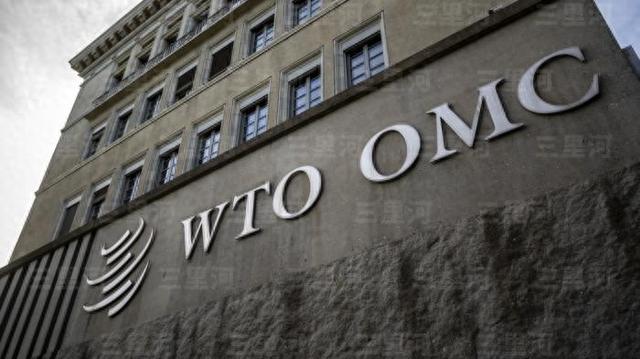
中国赢得关键裁决 有力守护全球经贸秩序
Xin Lang Cai Jing· 2026-02-08 04:02
Core Viewpoint - The World Trade Organization (WTO) ruled in favor of China in a dispute against the U.S. regarding the Inflation Reduction Act, stating that U.S. clean energy subsidies violate WTO rules and ordering the U.S. to eliminate these subsidies [1][4]. Group 1: Legal and Trade Implications - The ruling represents a significant legal victory for China, highlighting that U.S. actions violate the principle of national treatment and the WTO's prohibition on import substitution subsidies [4]. - This case serves as a precedent for other members, enhancing the confidence of developing and least developed countries in the multilateral trading system [4]. - The ruling demonstrates China's ability to leverage international trade rules to protect its interests, providing effective support for future trade protection cases [4]. Group 2: Impact on Clean Energy Industry - The victory preserves fair competition for China's clean energy industry in overseas markets, which has been facing challenges from trade protectionism [5]. - The ruling supports China's ongoing efforts in green manufacturing and renewable energy, reinforcing its leading position in these sectors [5]. - The decision is seen as a countermeasure against the rising trend of green protectionism, emphasizing that green goals should not serve as a pretext for discriminatory subsidies [6]. Group 3: Global Trade Dynamics - The U.S. response to the ruling has been to deny the validity of the decision, claiming that existing WTO rules do not address issues like overcapacity [6]. - The U.S. approach undermines the collaborative potential of the global clean energy supply chain, potentially leading to increased trade disputes [6]. - The ruling is viewed as a necessary step to curb the spread of green protectionism, advocating for fair and rule-based green development [6].

南共市与欧盟签署自贸协定 最终生效仍存不确定性
Xin Lang Cai Jing· 2026-01-18 10:11
Core Points - The Southern Common Market (Mercosur) and the European Union (EU) signed a free trade agreement in Asunción, Paraguay, marking a significant step towards creating one of the world's largest free trade areas amidst rising geopolitical tensions and trade protectionism [1] - The agreement requires approval from the parliaments of the respective countries before it can take effect, with potential resistance anticipated from some EU member states [1][4] Group 1: Trade and Economic Impact - The combined market of Mercosur and the EU encompasses over 700 million people, with a GDP that accounts for approximately 25% of the global GDP [2] - The agreement establishes a comprehensive framework to enhance trade in goods and services, investment, and economic development, with the EU committing to gradually eliminate tariffs on 92% of Mercosur's exports [2] - Mercosur will eliminate tariffs on 91% of EU products over the next 15 years, allowing for increased exports of automobiles, industrial machinery, electrical equipment, and pharmaceuticals to Mercosur countries [2] Group 2: Political and Strategic Implications - Analysts view the agreement as a win-win situation that meets both parties' needs for diversified trade partnerships and promotes economic and strategic autonomy [3] - EU Commission President Ursula von der Leyen emphasized the choice of "cooperation over division" and "fair trade over tariffs," aiming to establish a productive long-term partnership [3] - The agreement is seen as a firm opposition to isolationism and the use of trade as a geopolitical weapon, highlighting the importance of open markets for prosperity [3] Group 3: Uncertainties and Challenges - The approval process for the agreement may take one to two years in the EU, during which it could face revisions and negotiations [4] - France and other agricultural nations within the EU have expressed strong opposition, fearing that an influx of Mercosur agricultural products could harm local farmers, leading to strict safeguard measures in the agreement [4] - Environmental and climate issues are raising higher standards for Mercosur's agricultural exports, with some countries questioning the EU's "green protectionism" [5] - A no-confidence motion against the EU Commission could further complicate the agreement's implementation, as its approval is contingent on the political stability of the EU Commission [5]
全球气候治理的共识,越来越弱了?
虎嗅APP· 2025-11-21 09:31
Core Viewpoint - The article discusses the outcomes and challenges of COP30, highlighting the shift from setting climate goals to implementing them effectively, with a focus on the role of Brazil and the implications of geopolitical dynamics on global climate governance [2][7][12]. Group 1: COP30 Outcomes - COP30 revealed that the global temperature increase has been reduced to a range of 1.9-2.6°C due to the implementation of the "Nationally Determined Contributions" (NDCs) established by the Paris Agreement, contrasting with earlier predictions of over 4°C [2]. - Brazil, as the host country, has set a precedent by announcing its new NDC for 2024, aiming for a 2035 reduction target anchored to achieving carbon neutrality by 2050 [5][7]. - The conference emphasized the need for practical cooperation and the acceleration of low-carbon transitions, marking a shift in focus from goal-setting to implementation [7][12]. Group 2: Challenges in Climate Governance - There is a significant lag in the submission of new NDCs by countries, with nearly half yet to submit, indicating a lack of momentum in global climate governance [3][4]. - Geopolitical divisions, economic uncertainties, and funding shortages are major obstacles, with developed countries and developing nations experiencing distrust over climate financing [6][12]. - The Trump administration's withdrawal from the Paris Agreement and subsequent funding cuts have exacerbated these challenges, with an estimated $11 billion in climate funding affected [6][12]. Group 3: Trade and Climate Policy - The inclusion of "unilateral trade measures" as a formal agenda item was proposed by developing countries, reflecting the need for affordable low-carbon products and their smooth circulation globally [10]. - The article highlights the increasing discussions around trade policies in relation to climate action, as countries seek to avoid "green protectionism" while ensuring equitable and efficient global green transitions [10][11]. Group 4: Brazil's Role in Climate Action - Brazil's proactive stance in climate governance is evident through its reactivation of the Amazon Rainforest protection plans, which have led to a significant reduction in deforestation rates [12][13]. - The choice of location for COP30 in the Amazon region underscores the connection between climate change and ecosystem protection, emphasizing the urgency of addressing environmental degradation [11][12]. Group 5: China's Influence in Climate Governance - China has transitioned from a passive participant to a key player in global climate governance, with significant achievements in low-carbon product exports, reaching $121 billion in the first half of 2025 [15][16]. - The country is also shifting from being a follower in technology application to a leader in innovation, contributing to global low-carbon supply chains and supporting developing nations in their climate efforts [16][20].

全球绿色贸易面临双重挑战 智库报告提五大建议破局
Zhong Guo Xin Wen Wang· 2025-11-09 03:32
Core Viewpoint - The report highlights the dual challenges of "rule fragmentation" and "green protectionism" facing global green trade, and proposes a comprehensive set of policy recommendations to establish a more inclusive, collaborative, and effective global governance system for green trade [1] Group 1: Challenges in Global Green Trade - The report identifies increasing invisible barriers in global green trade, with tariff peaks for environmental products reaching as high as 35%, alongside complex certifications and discriminatory standards creating substantial technical trade barriers [1] - The lack of a unified international standard akin to HS coding is cited as the biggest challenge, leading to increased trade costs and hindering the circular economy [2] Group 2: Policy Recommendations - The report proposes five key policy recommendations, including the need for the international community to work together to restart negotiations on the Environmental Goods Agreement (EGA) within the WTO, expand the product list, and establish mechanisms for differential treatment and mutual recognition of green standards [2] - It suggests that countries should design domestic policy support systems tailored to their national conditions, enhancing fiscal support, improving green finance systems, and establishing platforms to promote green trade [2] - The report emphasizes the importance of strengthening North-South and South-South cooperation to facilitate green technology transfer and experience sharing, leveraging international organizations for coordination [2] Group 3: Digital Technology and Unified Coding - The report advocates for the integration of digital technology to empower green trade, proposing the development of digital green trade platforms and the use of blockchain for product traceability [2] - It suggests that China should take the lead in establishing a "China Green Trade Statistical Classification Reference Standard" to align with international standards, and promote mutual recognition of standards in key industries like photovoltaics and new energy vehicles [3] - The report envisions a promising future for green trade as global consensus and technological advancements grow, with China playing a significant role in promoting global green trade liberalization through reforms and openness [3]
绿色贸易不是零和博弈 虹桥论坛共商推动绿色贸易自由化之路
Zhong Guo Xin Wen Wang· 2025-11-09 03:30
Core Viewpoint - The eighth Hongqiao International Economic Forum emphasizes the need to oppose unilateralism and "green protectionism," advocating for a collaborative and fair global governance framework to facilitate the free flow of global green trade [1][2]. Group 1: Forum Highlights - The forum's main theme is "Breaking Walls, Setting Standards, Empowering," focusing on the urgent need to address climate change while recognizing the significant market potential of green industries [1]. - There is a contradiction between the urgent demand for green trade and the rise of fragmented green standards and carbon tariffs, which create new trade barriers [1]. Group 2: Key Statements - Wang Huiyao, founder of the Center for China and Globalization, stated that the green revolution is becoming a global consensus, reshaping the global industrial and technological landscape towards sustainability [2]. - Pascal Lamy, former Director-General of the WTO, emphasized that green trade should be integrated into a balanced framework of trade, environment, and development, advocating for future trade agreements to include clean development and fair cooperation [2]. Group 3: Policy Recommendations - The Globalization Think Tank released a report proposing five policy recommendations, including the acceleration of an inclusive multilateral trade framework and the optimization of domestic policy support systems [3]. - The report also suggests strengthening international cooperation, leveraging digital technology for green trade, and establishing a global unified coding system as part of the "China solution" [3].
聚焦“破壁·立标·赋能”,虹桥论坛共商绿色贸易自由化全球行动
Qi Huo Ri Bao· 2025-11-07 07:51
Core Viewpoint - The global green transition is irreversible, and there is a need to oppose unilateralism and "green protectionism" while promoting a collaborative and fair global governance framework to facilitate the free flow of green trade [1][2]. Group 1: Challenges in Global Green Trade - The urgency of addressing climate change and the significant market potential of green industries are driving strong trade demand, but fragmented green standards and unilateral measures like carbon tariffs are creating new trade barriers [1][2]. - Trade protectionism is identified as the biggest obstacle to green development, with the fragmentation of global green trade rules raising concerns about increased trade costs and uncertainties [3][4]. Group 2: International Cooperation and Standards - There is a consensus that countries lack sufficient agreement and clarity on rules regarding green transition and international cooperation, necessitating the sharing of China's green development experience and technology globally [2][4]. - The establishment of a collaborative governance mechanism involving governments, enterprises, and international organizations is essential to address the challenges posed by fragmented rules [5]. Group 3: Corporate Initiatives and Innovations - Multinational companies emphasize that technological innovation and collaboration across the entire industry chain are fundamental to breaking down barriers and achieving green development [5][6]. - Companies like BMW and Cargill are actively working on creating transparent green rules and standards, with Cargill focusing on sustainable agricultural practices and BMW advocating for comprehensive carbon footprint assessments [5][6]. - Chinese private enterprises are also taking significant steps in promoting green practices abroad, such as replacing fuel vehicles with electric ones in Africa and supporting local supply chains [6].