低碳产品

Search documents
我国与APEC其他经济体进出口总值达26.29万亿元
Ren Min Ri Bao· 2026-02-06 00:40
Core Insights - In 2025, China's total import and export value with APEC economies is projected to reach 26.29 trillion yuan, accounting for 57.82% of the total foreign trade value during the same period [1] - China has transitioned from "processing and manufacturing" to "R&D + manufacturing + services" within the regional supply chain, enhancing bilateral trade with APEC economies [1] - High-tech product exports are expected to reach 4.63 trillion yuan, reflecting a year-on-year growth of 8.1%, while imports in key sectors such as energy, agricultural products, semiconductor equipment, and precision instruments are also experiencing rapid growth [1] Trade Dynamics - New business models and formats are thriving, with cross-border e-commerce witnessing rapid growth [1] - Digital trade, represented by data flow and electronic documents, along with green trade in new energy and low-carbon products, are emerging as new highlights in foreign trade growth [1] Economic Context - The Asia-Pacific region's economic total has surpassed 60% of the global economy, with trade volume approaching half of the world's total, positioning it as an engine for global economic growth [1] - The Deputy Director of the General Administration of Customs, Zhao Zenglian, emphasized a focus on inclusive development, aiming to continuously release more open dividends and share opportunities in digitalization, intelligence, and green development with all parties [1]
G20峰会重申《巴黎协定》温控目标丨碳中和周报
2 1 Shi Ji Jing Ji Bao Dao· 2025-12-08 10:28
Group 1: G20 Summit and Climate Goals - The G20 summit reaffirmed the commitment to the Paris Agreement's temperature control goals, aiming to limit global temperature rise to within 2 degrees Celsius above pre-industrial levels, with efforts to restrict it to 1.5 degrees Celsius [2] - The summit highlighted the significant gap in global climate financing and emphasized the importance of aligning actual actions with commitments to effectively implement the Paris Agreement [2] Group 2: Hydrogen Energy Initiatives - The National Energy Administration of China announced the first batch of hydrogen energy pilot projects, including 41 projects and 9 regions, to explore innovative management models and diverse development paths in the hydrogen sector [3] - This initiative marks a transition from planning to large-scale demonstration in the hydrogen industry, focusing on various applications to enhance technological and economic viability [3] Group 3: Investment in Renewable Energy in Zhejiang - Zhejiang Province is promoting private investment in key energy projects, setting a minimum participation ratio of 10% for private investments in offshore wind, hydropower, and nuclear power projects, with offshore wind projects requiring at least 15% [4] - The province aims to optimize its energy structure and support the construction of a new energy system through financial incentives and the establishment of green low-carbon industrial parks [4] Group 4: Low-Carbon Product Launch by Tencent - Tencent launched six low-carbon products through its CarbonXmade platform, utilizing carbon capture technology to create everyday items from industrial CO2 emissions [5][6] - The initiative aims to make green materials accessible at comparable prices to traditional products, enhancing consumer experience without compromising on sustainability [6] - The use of carbon capture fibers in products like the "Gorilla T-shirt" demonstrates a full-chain reduction in emissions, showcasing the potential for market-driven carbon reduction solutions [6]
全球气候治理的共识,越来越弱了?
虎嗅APP· 2025-11-21 09:31
Core Viewpoint - The article discusses the outcomes and challenges of COP30, highlighting the shift from setting climate goals to implementing them effectively, with a focus on the role of Brazil and the implications of geopolitical dynamics on global climate governance [2][7][12]. Group 1: COP30 Outcomes - COP30 revealed that the global temperature increase has been reduced to a range of 1.9-2.6°C due to the implementation of the "Nationally Determined Contributions" (NDCs) established by the Paris Agreement, contrasting with earlier predictions of over 4°C [2]. - Brazil, as the host country, has set a precedent by announcing its new NDC for 2024, aiming for a 2035 reduction target anchored to achieving carbon neutrality by 2050 [5][7]. - The conference emphasized the need for practical cooperation and the acceleration of low-carbon transitions, marking a shift in focus from goal-setting to implementation [7][12]. Group 2: Challenges in Climate Governance - There is a significant lag in the submission of new NDCs by countries, with nearly half yet to submit, indicating a lack of momentum in global climate governance [3][4]. - Geopolitical divisions, economic uncertainties, and funding shortages are major obstacles, with developed countries and developing nations experiencing distrust over climate financing [6][12]. - The Trump administration's withdrawal from the Paris Agreement and subsequent funding cuts have exacerbated these challenges, with an estimated $11 billion in climate funding affected [6][12]. Group 3: Trade and Climate Policy - The inclusion of "unilateral trade measures" as a formal agenda item was proposed by developing countries, reflecting the need for affordable low-carbon products and their smooth circulation globally [10]. - The article highlights the increasing discussions around trade policies in relation to climate action, as countries seek to avoid "green protectionism" while ensuring equitable and efficient global green transitions [10][11]. Group 4: Brazil's Role in Climate Action - Brazil's proactive stance in climate governance is evident through its reactivation of the Amazon Rainforest protection plans, which have led to a significant reduction in deforestation rates [12][13]. - The choice of location for COP30 in the Amazon region underscores the connection between climate change and ecosystem protection, emphasizing the urgency of addressing environmental degradation [11][12]. Group 5: China's Influence in Climate Governance - China has transitioned from a passive participant to a key player in global climate governance, with significant achievements in low-carbon product exports, reaching $121 billion in the first half of 2025 [15][16]. - The country is also shifting from being a follower in technology application to a leader in innovation, contributing to global low-carbon supply chains and supporting developing nations in their climate efforts [16][20].


韩国石化业呼吁设定务实减排目标
Zhong Guo Hua Gong Bao· 2025-11-17 02:48
Group 1 - The Korean Chamber of Commerce, along with eight industry associations including the Korea Petroleum Association (KPA) and the Korea Chemical Industry Association (KCIA), expressed concerns that the proposed emission reduction plans by the Ministry of Climate, Energy and Environment may impose a heavy burden on the competitiveness of the petrochemical industry [1] - The government has proposed two emission reduction targets of "50%-60%" and "53%-60%" compared to 2018 levels, which exceed the industry's recognized limit of 48% [1] - The Chamber highlighted that the proposed 2035 reduction plan does not adequately reflect the current economic realities faced by the industry, which is dealing with challenges such as oversupply, increased tariffs from major economies, and prolonged domestic economic stagnation [1] Group 2 - In response, the Ministry of Trade, Industry and Energy (MOTIE) announced a loan support of 297.3 billion KRW for the next three years aimed at 16 carbon reduction-related facility investments and new R&D projects [2] - This initiative is expected to stimulate a total of 963 billion KRW in new private investments [2] - The first round of project selections identified nine projects, with a second round adding 16 more, including companies like S-Oil, HD Hydrogen, SK Plug Hyverse, and Hanwha Ocean Eco-Tech, which can receive loans up to 50 billion KRW (approximately 35.2 million USD) at a low interest rate of 1.3% [2]
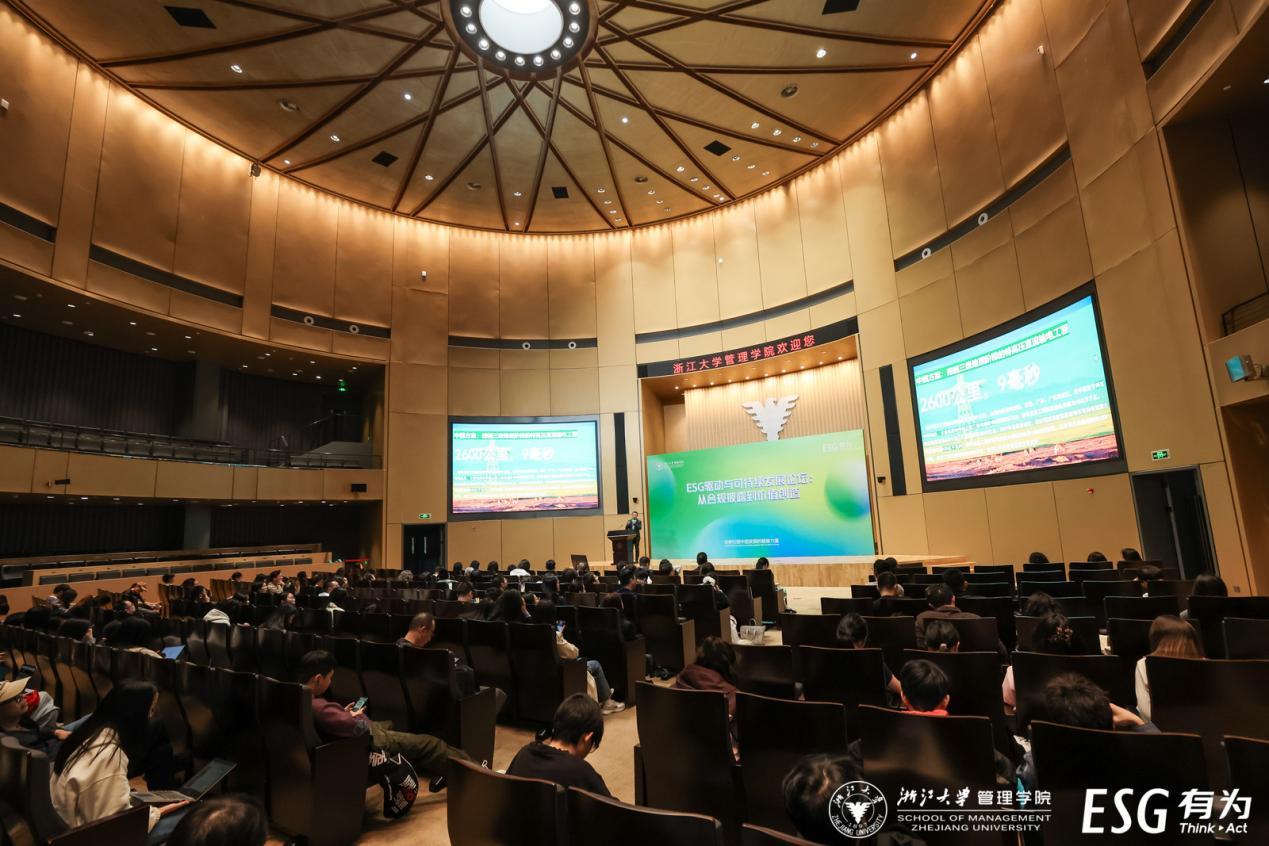
“ESG驱动与可持续发展论坛”圆满举行,“产学研金用”共探价值创造新路径
Mei Ri Jing Ji Xin Wen· 2025-11-05 11:06
Core Viewpoint - The forum emphasized that ESG (Environmental, Social, Governance) has evolved from a voluntary action to a core strategy for companies, driven by global sustainable development trends and the "dual carbon" strategy [1][3]. Group 1: ESG as a Strategic Imperative - ESG is now considered a "must-answer question" for listed companies, integrating environmental, social, and governance dimensions into corporate strategy for risk management and innovation [3]. - The essence of ESG is to drive businesses towards positive societal impact, rooted in a reflection on the negative externalities of industrial civilization and the need for sustainable development [4][6]. Group 2: Implementation and Challenges - The best driving force for ESG practice is the entrepreneurial spirit, which emphasizes balancing economic, social, and environmental values, contrasting with traditional shareholder primacy [6]. - Companies face the challenge of translating high-level ESG theoretical requirements into executable and quantifiable management strategies, especially as regulatory demands for ESG disclosures increase [6][8]. Group 3: ESG Reporting and Value Creation - ESG reports serve as platforms for showcasing sustainable practices and provide valuable insights for external stakeholders, with a focus on forward-looking non-financial indicators [10]. - Companies like Hikvision have integrated ESG principles into their operations, demonstrating how technology can align with sustainable development goals [9][10]. Group 4: Zero-Carbon Initiatives - The concept of zero-carbon parks is highlighted as a critical component for achieving urban and corporate sustainability, acting as a nexus for clean energy and economic growth [12]. - The construction of zero-carbon parks is seen as a key battleground for corporate green transformation and sustainable development from 2025 to 2030 [12]. Group 5: Capital and Industry Collaboration - Achieving ESG value creation requires breaking down barriers between industry and capital, emphasizing the importance of integrating ESG into investment decision-making [13][17]. - High-quality ESG information disclosure is crucial for facilitating collaboration between capital and industry, helping companies understand their sustainability management levels and enabling investors to identify risks and opportunities [18].