
绿色未来

Search documents
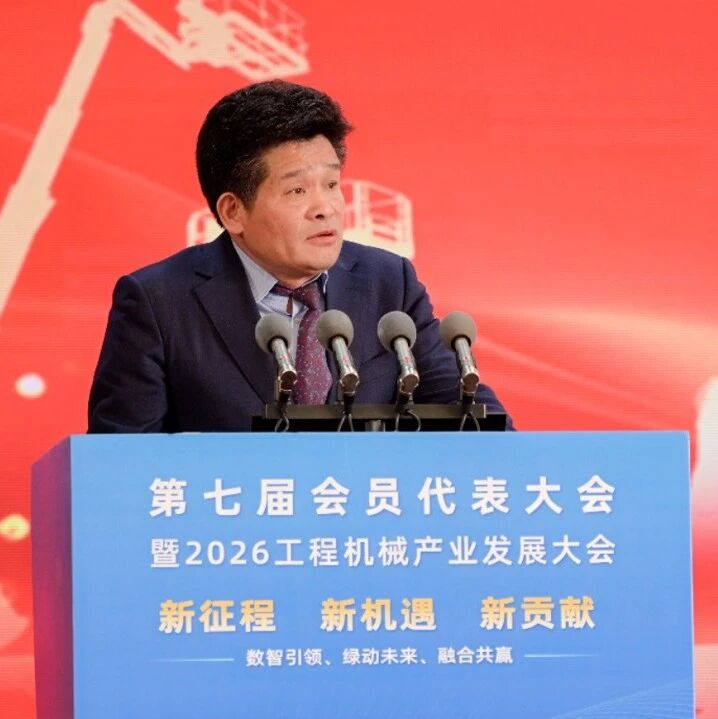
于孟生:《数智引领 绿色未来 全球共赢—打造工程机械产业全球新质生产力》
工程机械杂志· 2026-03-30 09:33
Core Viewpoint - The engineering machinery industry is at a pivotal moment, with opportunities for high-quality development driven by digitalization, green initiatives, and global collaboration [4][9]. Industry Status from Global and Domestic Perspectives - The global economy is experiencing a "divided but stable" trend, with significant regional disparities; emerging markets in Asia, Latin America, and the Caribbean are showing steady growth, while Africa is becoming a new highlight for global economic growth [4]. - Despite opportunities, the industry faces challenges such as high global energy costs and significant fluctuations in the RMB exchange rate, which has appreciated nearly 7% over the past year, potentially impacting domestic companies' overseas operations [4]. - China's manufacturing sector remains robust, with manufacturing value added maintaining the world's top position for 16 consecutive years, supported by national funding, trends towards smart and green technologies, and infrastructure demands [4]. Analysis of Submarket Development Trends - The mining equipment market is projected to be a trillion-dollar market by 2030, with steady growth expected in transportation, excavation, and auxiliary equipment due to rising mineral resource demand and the push for intelligent and green upgrades [5]. - The humanoid robot market is emerging as a new direction for industry transformation, with significant potential for application in various sectors, including industrial manufacturing and extreme operations [5][6]. Industry Development Pain Points and Transformation Pathways - The industry faces several pain points, including reliance on core components, challenges in overseas markets, and issues of overcapacity and homogenized competition [7]. - The core of transformation lies in innovation-driven strategies, focusing on high-value product upgrades and comprehensive lifecycle services, while green development and electrification are essential trends [7]. Global Development and Solutions - Chinese companies should learn from international firms like Komatsu and Liebherr, which emphasize profitability and localized operations [8]. - Recommendations include establishing localized ecosystems for R&D, manufacturing, and services, ensuring compliance in developed economies, and shifting from price competition to value competition [8]. Call for Industry Collaborative Development - The industry must work together to achieve high-quality development, moving away from vicious competition and fostering collaboration across the supply chain [9]. - Leading companies like Lingong Group are committed to driving innovation and sharing experiences to overcome industry bottlenecks and enhance China's global competitiveness in engineering machinery [9].

2025世界经济回顾丨中亚经济增长态势强劲
Xin Lang Cai Jing· 2025-12-26 04:40
Core Insights - The Central Asian region is experiencing robust economic growth, with Kazakhstan, Uzbekistan, Kyrgyzstan, Tajikistan, and Turkmenistan showing strong performance, driven by internal resilience and a shift in development models [1][2][3] Economic Performance - Kazakhstan's economy grew by 6.4% in the first 11 months, with the real economy expanding by 8.3%, supported by a 20.3% increase in transportation and a 14.7% rise in construction [1] - Uzbekistan's GDP increased by 7.6% in the first nine months, with a projected annual growth rate of 7.5%, driven by a 14.2% growth in construction and a 14% rise in services [2] - Kyrgyzstan's economy surged by 11.7% in the first half of the year, maintaining a 10.2% growth rate in the first 11 months, with construction output growing by 29% [2] - Tajikistan's GDP grew by 8.2% from January to September, with industrial output increasing by 24% and agricultural growth at 8.1% [2] - Turkmenistan's economy grew by 6.3% in the first 11 months, with construction, transportation, and trade as key growth drivers [2] Structural Changes - Economic growth is shifting from external dependency to a dual-driven model of internal and external factors, with domestic investment and consumption playing a more significant role [3] - The economic structure is diversifying, with rapid growth in the real economy sectors like construction and transportation, alongside an expanding share of modern services [3] Policy and Strategy - Central Asian countries are seeking a balance between promoting growth and managing risks, with inflation pressures leading to cautious macroeconomic management [3] - Long-term strategies are focusing on digital transformation and sustainable development, with initiatives like Kazakhstan's "Astana Hub" and green energy investments [3] China-Central Asia Cooperation - The cooperation between China and Central Asia is deepening, with significant trade and investment growth, including a trade volume of $14.9 billion between China and Kazakhstan in the first half of the year [5] - Major infrastructure projects are enhancing connectivity, transforming Central Asia from a "landlocked" to a "land-linked" region, with a 62% increase in cargo volume along the China-Central Asia transport corridor [5] - Emerging collaborations in digital economy, green energy, and high-tech sectors are fostering future economic growth points [6] - Institutional frameworks are being established to ensure long-term cooperation, focusing on capacity building and human resource development [6]
中亚经济增长态势强劲
Jing Ji Ri Bao· 2025-12-25 22:03
Core Insights - The Central Asian region is experiencing robust economic growth, with Kazakhstan, Uzbekistan, Kyrgyzstan, Tajikistan, and Turkmenistan showing resilience and a shift in development models, supported by deepening cooperation with China [1][5]. Economic Performance - Kazakhstan's economy grew by 6.4% in the first 11 months, with the real economy expanding by 8.3%. Key sectors include transportation (+20.3%) and construction (+14.7%). Fixed asset investment increased by 13.3% [2]. - Uzbekistan's GDP grew by 7.6% in the first nine months, with an expected annual growth of 7.5%. The construction sector grew by 14.2%, and services by 14%. Fitch upgraded Uzbekistan's credit rating to "BB" [2]. - Kyrgyzstan's economy surged by 11.7% in the first half and maintained a 10.2% growth rate in the first 11 months, driven by services (49.3% of GDP, +8.9%) and construction (+29%) [3]. - Tajikistan's GDP grew by 8.2% from January to September, with industrial output increasing by 24% and agriculture by 8.1% [3]. - Turkmenistan's economy grew by 6.3% in the first 11 months, with construction, transportation, and trade as key growth drivers [3]. Structural Transformation - Central Asian countries are shifting from external dependency to a dual-driven growth model, with domestic investment and consumption playing a larger role [4]. - The economic structure is diversifying, with rapid growth in the real economy and an expanding share of modern services such as trade, logistics, and finance [4]. - Policymakers are balancing growth and risk management, with inflation pressures prompting measures like interest rate hikes in Kazakhstan [4]. - Long-term strategies are focusing on digital transformation and sustainable development, with initiatives in technology and green energy [4]. China-Central Asia Cooperation - The economic vitality of Central Asia is closely linked to cooperation with China, marked by the second China-Central Asia Summit in 2025 [5]. - Trade between China and Kazakhstan reached $14.9 billion in the first half of the year, while trade with Kyrgyzstan increased from $17.4 billion to $23.6 billion in the first ten months [6]. - Connectivity projects are transforming Central Asia from a landlocked region to a land-linked one, with significant increases in cargo volumes and the launch of the China-Kyrgyzstan-Uzbekistan railway [6]. - Emerging cooperation in digital economy, green energy, and high-tech sectors is fostering future economic growth in Central Asia [6]. Institutional Framework - The signing of a permanent friendly cooperation treaty among six countries establishes six priority cooperation areas, enhancing institutional cooperation [7]. - The focus is on building local capacities through training, agricultural technology promotion, and poverty reduction mechanisms [7]. - The collective economic growth of Central Asia demonstrates the region's inherent vitality and resilience, supported by close ties with China [7].
只此青海
Zhong Guo Xin Wen Wang· 2025-12-11 13:20
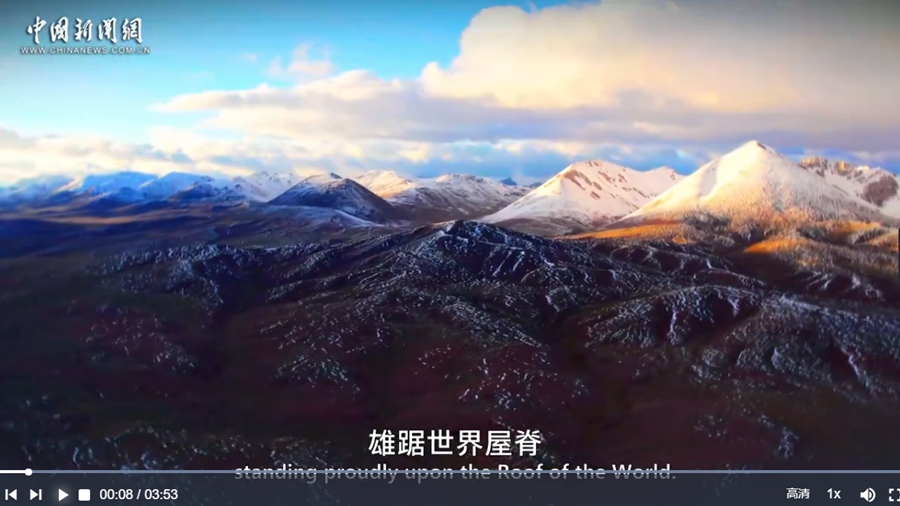
Core Viewpoint - The article highlights the significance of Qinghai as a vital region in China, emphasizing its role in environmental sustainability and green energy development [2] Group 1 - Qinghai is referred to as the "Third Pole of the Earth," indicating its geographical importance and unique ecological environment [2] - The region is described as the "Chinese Water Tower," which nourishes the surrounding areas and facilitates cultural exchanges [2] - Qinghai is undergoing a transformation from a barren landscape to a hub of green energy, showcasing China's commitment to a sustainable future [2]
科技创新、全球共治、绿色未来:天然橡胶产业探寻高质量发展新路径
Nan Fang Nong Cun Bao· 2025-12-06 03:05
Core Viewpoint - The forum on "High-Quality Development of Natural Rubber" emphasizes the importance of technological innovation, global collaboration, and sustainable development in shaping the future of the natural rubber industry [2][4][91]. Group 1: Technological Innovation - Technological innovation is identified as the core engine driving industry development, with breakthroughs in rubber tree cultivation and production techniques being highlighted [12][17]. - The establishment of a complete natural rubber industry system in China, along with advancements in biotechnological breeding and digital upgrades, is noted as a significant achievement [14][20][22]. - Challenges such as insufficient industry chain coordination and raw material quality instability are acknowledged, with proposed solutions including the development of big data platforms and enhanced processing capabilities [26][28][30]. Group 2: Global Collaboration - The global natural rubber market is projected to reach a demand of 15.565 million tons by 2025, with growth opportunities primarily in the tire and automotive industries [45]. - The forum discusses the need for the industry to collectively address global challenges such as climate change and trade policies, with initiatives for sustainable development being promoted [46][49]. - Companies are encouraged to adopt international collaboration strategies to enhance their competitive edge and drive high-quality development [61][64]. Group 3: Sustainable Development - The forum emphasizes the integration of Environmental, Social, and Governance (ESG) principles into the global supply chain, with China playing a key role in promoting sustainable practices in the natural rubber industry [71][73]. - Vietnam's commitment to sustainable development is showcased, with a goal of achieving 60% of rubber plantation areas certified for sustainable forestry management by 2030 [81][83]. - A joint initiative by major Chinese natural rubber companies aims to promote global green investment, trade, and development, reflecting a proactive approach to environmental responsibility [86][90].


2025国际能源变革论坛即将在苏州举行
Su Zhou Ri Bao· 2025-10-20 01:20
Core Viewpoint - The 2025 International Energy Transformation Forum will be held in Suzhou, Jiangsu Province from October 23 to 25, showcasing China's achievements in energy transition and international cooperation in the energy sector [1] Group 1: Forum Details - The forum's theme is "Ten Years Together in Energy Transformation Innovation Leading a Green Future" [1] - Key topics include international cooperation in new energy technology innovation, collaboration in global clean energy supply chains, and the construction of a new model for green low-carbon energy transition [1] - The event will feature participation from energy ministers of relevant countries, ambassadors to China, and leaders of international organizations [1] Group 2: Event Schedule - On October 23, there will be 11 sub-forums and 2 thematic activities [1] - The opening ceremony, keynote speeches, and results release will take place on the morning of October 24, followed by 2 high-level dialogues in the afternoon [1] - A closed-door seminar is scheduled for the morning of October 25 [1]
2025年国际能源变革论坛将于10月23—25日在苏州举行
Zheng Quan Shi Bao Wang· 2025-10-14 10:17
Core Points - The National Energy Administration will co-host the 2025 International Energy Transformation Forum with the International Renewable Energy Agency and the Jiangsu Provincial Government from October 23 to 25 in Suzhou, Jiangsu [1] - The theme of the forum is "Ten Years Together in Energy Transformation, Innovation Leading a Green Future" [1] - Key topics include international cooperation in new energy technology innovation, global clean energy industry and supply chain cooperation, building a win-win model for green low-carbon energy transition, and the construction and reform of the international energy governance system [1] - The forum will invite energy ministers from relevant countries, ambassadors to China, and leaders of international organizations to attend [1]
亚泰集团与玄风科技签署战略合作 将围绕核心业务和产品产业链开展合作
Zheng Quan Shi Bao Wang· 2025-06-06 13:15
Group 1 - Yatai Group signed a strategic cooperation agreement with Xuanfeng Technology, focusing on long-term mutual benefits and cooperation in core business areas [1][2] - The partnership aims to develop a full-chain renewable energy business, upgrading Yatai's building materials production base for low-carbon operations [2][3] - Both companies will collaborate on power management integrated circuits and related components to enhance power conversion and transmission efficiency [2][3] Group 2 - Yatai Group has a diversified industrial structure, including building materials, real estate, and pharmaceuticals, with a focus on circular economy and digital transformation [2][3] - The real estate sector encompasses development, construction, and property services, with a national layout and a focus on modern building practices [3] - The pharmaceutical sector includes a complete health industry chain, with smart manufacturing and a wide range of health management services [3] Group 3 - Xuanfeng Technology is a leader in vertical axis wind power generation, with a commitment to zero-carbon energy and a presence in over 10 countries [1] - The company has established three major R&D centers in the US, Germany, and China, and operates over 1,000 service points in China [1] - The collaboration will also explore opportunities in biotechnological projects related to precision medical testing, supporting China's health strategy [2][3]
