美元流动性紧缩

Search documents
类滞胀-将进一步发酵-勿低估美元流动性紧缩
2026-03-30 05:15
Summary of Key Points from Conference Call Records Industry Overview - The current market is experiencing a "stagflation-like" environment, characterized by rising inflation and stagnant economic growth, primarily driven by increasing oil prices and tightening dollar liquidity [1][2][3]. Core Insights and Arguments - **Market Performance**: The U.S. stock market has entered a correction phase, with the Nasdaq index down over 10% from its January peak, and the Dow Jones Industrial Average also falling more than 10% [2][3]. - **Oil Price Impact**: Oil prices have surged past $83 per barrel, reaching $100, negating the effects of fiscal tax cuts and significantly impacting consumer purchasing power [3][4]. - **Macroeconomic Data**: Recent macroeconomic indicators, including a decline in the composite PMI and rising import price indices, suggest a slowdown in economic growth, with Q1 GDP growth projected at only 1% [4][5]. - **Tightening Dollar Liquidity**: There are signs of tightening dollar liquidity, as evidenced by the overnight repo rates consistently exceeding excess reserve rates, indicating a shift towards a more restrictive monetary environment [1][6][7]. - **Credit Market Conditions**: High-yield bond spreads have widened, and there are emerging restrictions in private credit markets, indicating a tightening of credit conditions [7][8]. Additional Important Content - **Consumer Confidence**: The University of Michigan's consumer confidence index has been revised downwards, reflecting consumer concerns over rising inflation and economic uncertainty [4][5]. - **Comparison with Historical Context**: The current stagflation risks differ from the 1970s due to reduced reliance on imported energy and improved energy efficiency, but the impact is expected to be more severe than during the 2022 Ukraine crisis due to a lack of substantial policy support [5][9]. - **Asset Performance**: Traditional safe-haven assets like gold have underperformed, with the market now favoring the dollar and oil as primary safe assets [8][9]. - **Investment Strategy for 2026**: Given the current economic and market conditions, a defensive investment strategy is recommended, focusing on risk reduction and waiting for more stable market conditions before making significant investment decisions [9].
现货金银回升,金银市场惊现杠杆绞杀,现货白银跌幅收窄
Sou Hu Cai Jing· 2026-02-06 23:15
Core Viewpoint - The global precious metals market experienced significant volatility on February 6, 2026, with gold and silver prices plummeting sharply due to regulatory changes and market reactions to economic conditions [1][3]. Group 1: Market Volatility - On February 6, spot gold fell over 2.5% before narrowing to under 1%, while spot silver experienced a dramatic drop of nearly 10%, ultimately closing down 2% [1] - The day prior, London silver saw a single-day decline of 12.31%, with domestic silver T D dropping 11.64%, marking a 40% retreat from its historical high set on January 29 [1] Group 2: Regulatory Impact - The CME raised initial margin requirements for COMEX gold futures from 8% to 9% and for silver futures from 15% to 18%, effective after the close on February 6, which was interpreted as a direct crackdown on speculative trading [3] - This regulatory change forced high-leverage traders to liquidate positions, triggering a chain reaction of sell-offs, particularly in silver, which saw a daily volatility of 15%, the largest in five years [3] Group 3: Market Dynamics - There is a stark divide between short-term speculators and long-term investors, with many retail investors aggressively leveraging positions at high prices, leading to forced liquidations during market downturns [5] - Institutional investors, such as Morgan Stanley and Goldman Sachs, reduced their net long positions significantly before the crash, while retail investors continued to increase their holdings, indicating a misalignment in market sentiment [10] Group 4: Silver's Vulnerability - Silver's volatility is significantly higher than that of gold, with an implied volatility of 85%, attributed to its dual role as both a financial and industrial metal [6] - Industrial demand for silver, particularly in sectors like photovoltaics and electric vehicles, accounts for nearly 30% of global silver production, but expectations of a slowdown in industrial recovery have dampened demand prospects [6] Group 5: Broader Market Reactions - The sharp decline in precious metals triggered a broader market sell-off, with major U.S. stock indices dropping over 1% and Bitcoin falling below $65,000, alongside a more than 3% drop in oil prices [8] - Algorithmic trading exacerbated the situation, leading to a "gamma squeeze" effect that resulted in rapid selling by market makers, causing prices to plummet without substantial negative news [8]


发车!抛售接近尾声?
Sou Hu Cai Jing· 2025-11-19 13:16
Core Viewpoint - The article discusses the recent significant sell-off in global markets, driven by factors such as tightening dollar liquidity, delayed expectations for a Federal Reserve rate cut, and skepticism surrounding the AI bubble. Despite these challenges, there is a belief that the market will stabilize and present investment opportunities in the future [1][3][5]. Group 1: Market Conditions - A notable sell-off has affected various asset classes, including U.S. stocks, Japanese stocks, gold, and cryptocurrencies, leaving investors with limited safe havens [1][3]. - The primary drivers of the recent downturn include: 1. Tightening dollar liquidity due to U.S. government shutdown concerns, Treasury General Account (TGA) replenishment, and quantitative tightening (QT) [3]. 2. A significant drop in the market's expectation for a December rate cut by the Federal Reserve, from nearly 96% certainty to below 50% [3]. 3. Rising skepticism regarding the sustainability of the AI sector, as evidenced by a sharp increase in credit default swap spreads for companies like Oracle and CoreWeave [3][5]. Group 2: Investment Sentiment - A recent Bank of America survey indicates that 54% of fund managers believe that companies are over-investing, with 45% citing the AI bubble as a major tail risk [5]. - Despite the negative sentiment, there is optimism regarding the liquidity situation, as the U.S. Treasury has begun to release funds, potentially alleviating market liquidity concerns [5][8]. - The article suggests that the current AI bubble may not be at its end, positing that if it were to burst now, it would be one of the smallest and shortest-lived tech bubbles in history [8]. Group 3: Future Market Outlook - Historical data indicates that the year of the U.S. midterm elections (2026) is typically marked by significant market volatility, with an average intra-year drawdown of -17.5% but a subsequent average return of +31.7% in the following year [11][13]. - The earnings outlook for major U.S. companies is showing strong recovery, with a notable increase in the earnings guidance momentum score for S&P 500 companies [13]. - In the Indian market, strong domestic capital inflows and a recovering earnings cycle are supporting stability, despite a modest year-to-date increase of 8% [16][17]. - European markets are also showing signs of improvement, with MSCI Europe index earnings per share (EPS) growth exceeding expectations, particularly in the technology and financial sectors [18]. Group 4: Investment Strategy - The company maintains a "barbell" strategy for domestic markets, focusing on defensive positions in dividend and small-cap stocks while also investing in leading internet companies during market corrections [21].
黄金,正在急震
Sou Hu Cai Jing· 2025-11-18 12:24
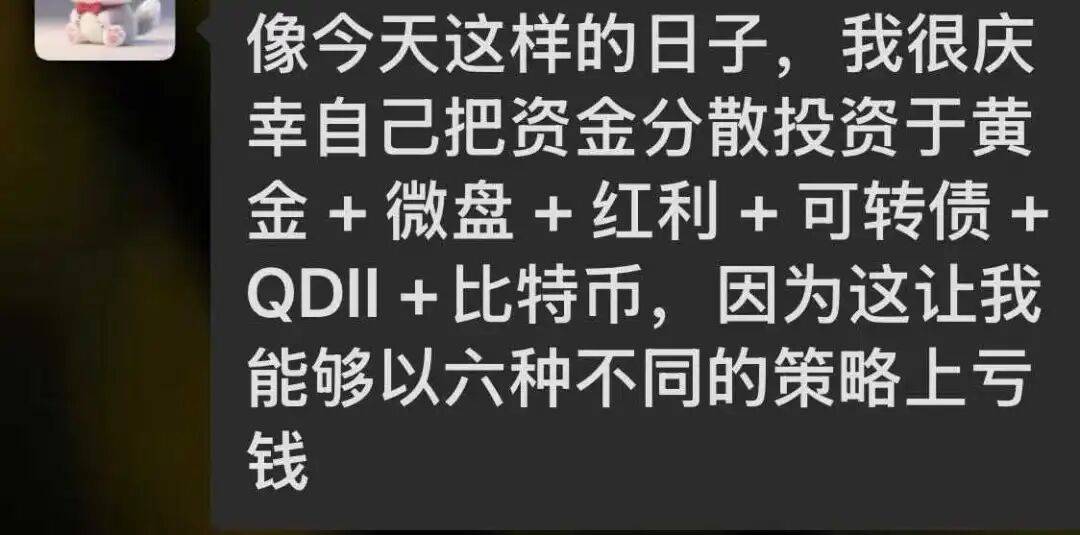
Market Overview - The gold and silver markets have recently experienced extreme volatility, with gold seeing a four-day rally followed by a sudden drop, while silver exhibited even more dramatic fluctuations [1][5] - On November 18, London gold prices briefly fell below the critical $4000 per ounce mark, while silver prices rose above $50 per ounce [1] Driving Factors - The rapid changes in market conditions are attributed to the Federal Reserve's hawkish stance and tightening dollar liquidity [4] - Market expectations suggest that the Fed may soon transition from balance sheet reduction to expansion, injecting liquidity into the market, which has led to buying at around $4000 per ounce [6] Recent Trends - Gold prices rebounded to over $4200 per ounce before declining, with a cumulative drop of over 3.6% over four trading days [5] - Silver experienced a significant single-day volatility of nearly 7% on November 14, retreating from its high [5] Economic Indicators - The upcoming U.S. core economic data, including the non-farm payroll report on November 20, is expected to impact gold pricing, as the market awaits further guidance [7] - The current market sentiment is influenced by rising dollar indices and real interest rates, which historically have an inverse relationship with gold prices [7] Federal Reserve Outlook - The probability of a 25 basis point rate cut by the Fed in December stands at 42.9%, while the likelihood of maintaining current rates is at 57.1% [8] - Disagreements within the Fed regarding inflation concerns have led to a cooling of rate cut expectations [8] Geopolitical Factors - Geopolitical instability, including ongoing negotiations in the Middle East and Ukraine, adds to the uncertainty in the market, potentially affecting gold prices [8] Investment Strategy - Analysts suggest that the recent price corrections in gold should be viewed as buying opportunities, given the tight supply and high demand for precious metals [11] - Despite the clear bullish logic for gold, current high valuations may increase volatility, prompting a strategy of buying on dips rather than chasing prices [11][12] Long-term Value - Gold's unique position as a non-credit asset and a hedge against credit risk and inflation continues to support its long-term investment value [11] - The structural elevation of gold's valuation is supported by the declining credibility of the dollar and the ongoing geopolitical risks [12]