美国缺电

Search documents
美国缺电研究-数据中心建设重塑电力格局
2026-03-01 17:23
Summary of Key Points from the Conference Call Industry Overview - The focus of the conference call is on the **U.S. electricity supply** and the impact of **data center investments** on the power grid, highlighting the ongoing **electricity shortage** in the U.S. [1][2] Core Insights and Arguments - The narrative around data center investments has evolved through three phases: 1. Initial consensus on a **$1 trillion investment** driven by major North American companies' capital expenditure guidance [2] 2. Validation through supply chain constraints and production tightness [2] 3. Concerns regarding **ROI** and application feasibility [1][3] - The essence of the U.S. electricity shortage is attributed to increased capital expenditure expectations for data centers, leading to a mismatch between power system load and supply. The peak load in the U.S. is projected to reach **829 GW** by 2025, with an expected increase of **166 GW** over the next five years [1][4]. - Current demand (registered capacity of **245 GW**) exceeds institutional forecasts, indicating a more severe pressure on the power system than anticipated [4]. - The market is currently focused on the **gas turbine supply chain**, **thermal power supply chain**, and **power equipment chain**. Some leading power equipment companies are reflecting valuations of approximately **30 times** earnings for 2027, with potential for further pricing based on 2028 earnings [1][6]. Important but Overlooked Content - The market's current focus has shifted from ROI concerns to observable metrics such as: 1. **Token call volume** on the AI application side, which has been increasing [6] 2. **NVIDIA's GPU shipments**, which have reached **200-300G** [3] 3. The **registered capacity** of data centers, currently at **245 GW** [6] - The U.S. electricity shortage is most concentrated in the **PJM** and **ERCOT** transmission regions, with measures including accelerating natural gas power and energy storage construction [2][11]. - The **PJM** region has seen a **9-fold increase** in capacity prices due to reliability issues, driven by surging demand from data centers and a decline in effective capacity from existing power sources [12]. - **ERCOT** is projected to face a negative safety factor by 2028, necessitating increased energy storage and natural gas generation projects [13]. - The potential for new **232 tariffs** on grid equipment could impact market sentiment and the valuation of transformer stocks, with uncertainty surrounding the implementation timeline [14][15]. - The electricity equipment shortage is not limited to the U.S.; other regions, including **India**, are also facing significant gaps, with a projected **40%** shortfall in power equipment over the next three years [15]. Conclusion - The U.S. electricity supply landscape is undergoing significant changes driven by data center investments, with a critical need for infrastructure development to meet rising demand. The market is navigating through various challenges, including supply chain constraints and regulatory uncertainties, while focusing on observable metrics to gauge future performance.
美国缺电
小熊跑的快· 2025-12-19 12:20
Core Insights - The article discusses the projected electricity shortfall in the United States, particularly focusing on the impact of GPU clusters from NVIDIA, which are expected to consume a significant amount of power by 2027 [1] - The estimated electricity generation capacity for the U.S. in 2024 is approximately 4,309 TWh, translating to an average generation capacity of around 492 GW [1] - By 2028, the projected electricity shortfall is estimated to be around 50 GW, which represents about 9% of the actual electricity generation [3] Group 1 - In 2027, NVIDIA's GPU clusters are expected to consume between 150-200 GW of electricity, while the total electricity consumption of data centers in 2023 was only 20 GW [1] - The net summer capacity for electricity generation in the U.S. in 2024 is projected to be around 1,230 GW, with a nameplate capacity of approximately 1,325 GW, indicating a significant difference between installed capacity and actual average generation [1] - A previous estimate in 2024 indicated that the electricity shortfall was about 1.1% of the actual generation, which has now increased to 9% by 2028 [2][3] Group 2 - There are issues with electricity transmission in the U.S., particularly highlighted by Texas, where a new 2 GW project has struggled to find more than 1 GW of new supply [4] - The quality of electricity supplied to mining operations is reportedly poor, leading to concerns about the viability of current locations for construction [4][5]


美国缺电研究系列之六问六答
Changjiang Securities· 2025-11-11 11:09
Investment Rating - The report does not explicitly provide an investment rating for the industry Core Insights - The report addresses the increasing concerns regarding electricity shortages in the U.S., focusing on the extent of shortages, the integration of data centers into the grid, and the economic viability of self-built power sources for data centers [3][6] Summary by Sections Objective Indicators of Electricity Shortages - In 2024, the average power outage duration for U.S. electricity users increased significantly to 662.6 minutes, approximately 11 hours, marking an 81% year-on-year increase and the highest level in nearly a decade, indicating a substantial worsening of electricity shortages [7][18] - The average retail electricity price in the U.S. reached 13.54 cents per kWh from January to August 2025, a 5.2% increase year-on-year, with the PJM region seeing an average price of 13.14 cents per kWh, up 9% [23][24] Impact of Power Plant Retirements and Load Transfers - From 2025 to 2030, approximately 54 GW of thermal power plants are expected to retire, and around 10.3 GW of cryptocurrency mining facilities may exit the market due to rising electricity prices. If these plants do not retire and the mining facilities exit, the total potential relief for electricity shortages could be about 53.49 GW, which is only 36.2% of the previously predicted 201 GW shortage [8][27] Policy Developments for Data Center Integration - The U.S. Department of Energy has initiated a rule-making process to ensure large electricity loads, such as AI data centers, can connect to interstate grid systems in a timely and non-discriminatory manner. This trend is supported by various state policies encouraging data centers to match local resources [9][31] Project Developments in Data Center Energy Storage - There is a growing number of projects where AI data centers are integrating energy storage solutions. For instance, the GW Ranch off-grid power park in Texas plans to pair 5 GW of gas power with 1.8 GW of storage, while the Masdar&EWEC project in Abu Dhabi will provide 5.2 GW of solar and 19 GWh of storage for a 1 GW data center [10][38] Economic Comparison of Power Sources - The estimated costs per kWh for various power generation technologies are as follows: natural gas combined cycle at $0.0468, distributed internal combustion engines at $0.0608, solid oxide fuel cells (SOFC) at $0.0717, and solar plus storage at $0.0815. Natural gas generation is deemed the most cost-effective option [11][42] Capital Expenditure Implications for Internet Giants - The initial investment increase for data centers due to self-built power sources is relatively modest, with combined cycle units increasing costs by about 6%, distributed engines by 9%, SOFC by 7%, and solar plus storage by 16%. The report suggests that electricity shortages will not hinder AI development but rather drive infrastructure investment [12][46]

电力出海持续升温
傅里叶的猫· 2025-11-05 04:02
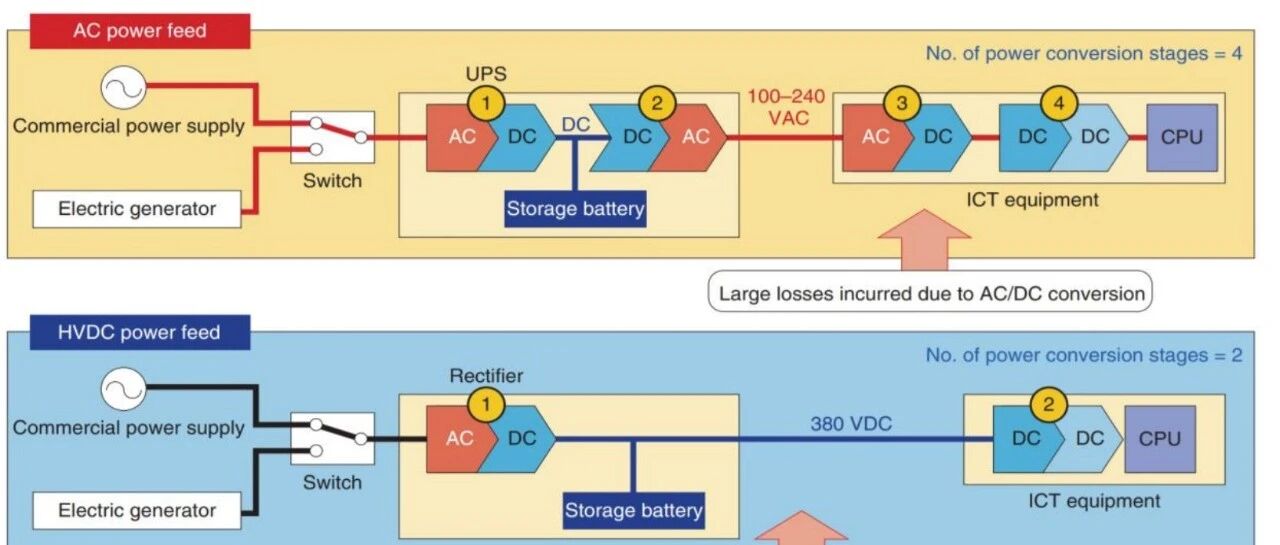
Group 1 - The core topic of the articles revolves around the increasing discussions on electricity shortages in the U.S. and the potential for power export, which is expected to create significant value for companies in the industry [1] - Companies mentioned, such as Jinpan and Igor, have recently performed well, indicating a positive market response to the electricity shortage narrative [1] - The article highlights that the electricity shortage in the U.S. is anticipated to be a main theme in the future, providing considerable value increments for companies within the supply chain [1] Group 2 - Delta's HVDC solutions and the related supply chain companies are discussed, emphasizing the exploration of value in power export and the U.S. electricity system [2] - The acquisition of Power Distribution by Eaton, which marks the arrival of the liquid cooling 2.0 era, is analyzed, suggesting a shift in technology and market dynamics [2] - The article mentions ongoing discussions and data regarding AI-related companies in the context of power export within a dedicated community platform [2]