
数据中心投资

Search documents
凯德腾飞房地产投资信托基金:首次进军日本数据中心
citic securities· 2026-03-25 07:24
Investment Rating - The report maintains a cautious outlook on the investment rating for CapitaLand Ascendas REIT (CLAR) due to geopolitical tensions affecting asset valuations [3]. Core Insights - CapitaLand Ascendas REIT announced three acquisition deals totaling SGD 1.4 billion, including its first entry into the Japanese data center market, which is expected to enhance DPU by 4.1% [3]. - The REIT plans to raise approximately SGD 1.8 billion for six confirmed acquisitions, with a debt-to-equity mix that keeps the leverage ratio below 40% [3]. - The acquisitions include a logistics asset in Singapore, a business space in Singapore, and a large-scale data center in Japan, with net property yields of 6.9%, 5.6%, and 4.3% respectively [3]. Summary by Relevant Sections Acquisitions - The three acquisitions include: 1. 100% interest in 25 Loyang for SGD 504.2 million, with a net property yield of 6.9% and a 12-year lease with a 2.5% annual rent increase [3]. 2. 50% interest in Ascent for SGD 245 million, with a net property yield of 5.6% and potential for rent adjustments [3]. 3. 49% interest in a Tier III data center in Osaka for SGD 620.7 million, with a net property yield of 4.3% [3]. Financial Overview - The REIT's portfolio has expanded from SGD 545 million at its IPO in 2002 to SGD 17 billion as of June 2023, with properties primarily located in Singapore (63%), the US (14%), Australia (14%), and Europe (9%) [6]. - The current DPU enhancement from the six confirmed acquisitions is projected at 4.1%, with potential for further increases from additional acquisitions in Singapore [10]. Market Position - The REIT is positioned as Singapore's first business space and industrial property trust, focusing on logistics and data centers while maintaining a "Singapore-first" strategy [10]. - The stock price as of March 23, 2026, was SGD 2.50, with a market consensus target price of SGD 3.22 [9].
美国缺电研究-数据中心建设重塑电力格局
2026-03-01 17:23
Summary of Key Points from the Conference Call Industry Overview - The focus of the conference call is on the **U.S. electricity supply** and the impact of **data center investments** on the power grid, highlighting the ongoing **electricity shortage** in the U.S. [1][2] Core Insights and Arguments - The narrative around data center investments has evolved through three phases: 1. Initial consensus on a **$1 trillion investment** driven by major North American companies' capital expenditure guidance [2] 2. Validation through supply chain constraints and production tightness [2] 3. Concerns regarding **ROI** and application feasibility [1][3] - The essence of the U.S. electricity shortage is attributed to increased capital expenditure expectations for data centers, leading to a mismatch between power system load and supply. The peak load in the U.S. is projected to reach **829 GW** by 2025, with an expected increase of **166 GW** over the next five years [1][4]. - Current demand (registered capacity of **245 GW**) exceeds institutional forecasts, indicating a more severe pressure on the power system than anticipated [4]. - The market is currently focused on the **gas turbine supply chain**, **thermal power supply chain**, and **power equipment chain**. Some leading power equipment companies are reflecting valuations of approximately **30 times** earnings for 2027, with potential for further pricing based on 2028 earnings [1][6]. Important but Overlooked Content - The market's current focus has shifted from ROI concerns to observable metrics such as: 1. **Token call volume** on the AI application side, which has been increasing [6] 2. **NVIDIA's GPU shipments**, which have reached **200-300G** [3] 3. The **registered capacity** of data centers, currently at **245 GW** [6] - The U.S. electricity shortage is most concentrated in the **PJM** and **ERCOT** transmission regions, with measures including accelerating natural gas power and energy storage construction [2][11]. - The **PJM** region has seen a **9-fold increase** in capacity prices due to reliability issues, driven by surging demand from data centers and a decline in effective capacity from existing power sources [12]. - **ERCOT** is projected to face a negative safety factor by 2028, necessitating increased energy storage and natural gas generation projects [13]. - The potential for new **232 tariffs** on grid equipment could impact market sentiment and the valuation of transformer stocks, with uncertainty surrounding the implementation timeline [14][15]. - The electricity equipment shortage is not limited to the U.S.; other regions, including **India**, are also facing significant gaps, with a projected **40%** shortfall in power equipment over the next three years [15]. Conclusion - The U.S. electricity supply landscape is undergoing significant changes driven by data center investments, with a critical need for infrastructure development to meet rising demand. The market is navigating through various challenges, including supply chain constraints and regulatory uncertainties, while focusing on observable metrics to gauge future performance.
爱尔兰数据中心供应商联盟协会成立
Shang Wu Bu Wang Zhan· 2026-02-26 16:44
Core Viewpoint - The establishment of the Irish Data Centre Suppliers Alliance (IDCSA) aims to represent companies benefiting from data centre investments in various sectors, highlighting the significant economic impact of the data centre industry in Ireland [1] Group 1: Industry Impact - The data centre industry has contributed over €20 billion to the Irish economy [1] - It directly employs 1,800 individuals, showcasing its role in job creation [1] - The growth of the data centre sector has been a cornerstone of Ireland's economic recovery since the financial crisis 15 years ago [1] Group 2: Leadership and Advocacy - Tom Parlon, former director general of the Construction Industry Federation and former Minister of State at the Department of Finance, has been appointed as the first chairman of the IDCSA [1] - The alliance will advocate for practical solutions to further promote data centre investments in Ireland [1]
美联储理事沃勒:希望看到数据中心以外的更多投资。
Sou Hu Cai Jing· 2026-02-23 14:03
Group 1 - The core viewpoint is that Federal Reserve Governor Waller expresses a desire to see more investments outside of data centers [1] Group 2 - The statement indicates a potential shift in focus for investment strategies, suggesting that diversification beyond data centers may be beneficial for economic growth [1] - This perspective may influence future investment trends and priorities within the technology and infrastructure sectors [1]
暴增134%!芯片,突传利好!
Xin Lang Cai Jing· 2026-02-23 04:27
Group 1: Chip Export Growth - South Korea's chip exports surged by 134% year-on-year in the first 20 days of February, driven by investments in artificial intelligence and data centers [1][6] - Overall exports for South Korea increased by 47.3% in February compared to January's revised growth of 34%, with a trade surplus of $495 million [6][7] - The strong export performance is attributed to robust demand for chips, despite ongoing trade uncertainties due to U.S. tariff policies [6][7] Group 2: Stock Market Performance - The KOSPI index rose over 2% on February 23, reaching a historical high, with a year-to-date increase of over 40% [2][8] - Chip stocks, including Samsung Electronics and SK Hynix, saw significant gains, with Samsung's stock rising over 3% and SK Hynix nearly 3% [9] - Other technology stocks also performed well, with LG Electronics and Samsung Electro-Mechanics rising over 10% [9] Group 3: Semiconductor Pricing and Production - Samsung Electronics is negotiating prices for its new AI storage chip HBM4, expected to be 20%-30% higher than the previous generation, around $700 [3][9] - Both Samsung and SK Hynix are accelerating the production of new wafer fabs to capitalize on the growing demand for memory chips driven by AI [10] - The global semiconductor sales are projected to exceed $1 trillion this year, supported by ongoing investments in AI data centers [10]
中芯国际CEO警告:世界并没有想清楚3万亿美元建设数据中心的用处
Sou Hu Cai Jing· 2026-02-14 09:23
Core Viewpoint - The global rush to invest $3 trillion in AI infrastructure raises questions about the necessity and effectiveness of such investments, as highlighted by Zhao Haijun, co-CEO of SMIC, during the company's 2025 annual financial report [1][3]. Investment Trends - Global AI infrastructure investment is projected to exceed $650 billion this year, with cumulative investments potentially surpassing $3 trillion by 2028, which is larger than Germany's GDP in 2025 [3]. - The urgency to invest stems from a fear of falling behind in the AI "second industrial revolution" [3]. Industry Concerns - Major tech companies like Alphabet, Meta, Microsoft, and Amazon are preparing for future competition using resources accumulated over the past decade, indicating a trend of blind expansion driven by collective panic [5]. - The rapid obsolescence of high-performance GPUs, which can cost tens of thousands of dollars, poses a significant economic challenge, as their effective lifespan is much shorter than anticipated [5][7]. Economic Misalignment - The economic lifespan of chips is often only half of their physical lifespan, leading to faster depreciation and longer payback periods for investments in data centers [10]. - This phenomenon of "rapid obsolescence" is becoming a norm in the industry, raising concerns about the sustainability of such investments [8][10]. Planning and Utilization Issues - There is a lack of strategic planning regarding the deployment of data centers, including site selection, chip deployment, energy consumption, and maintenance [12]. - The current investment climate is driven more by hot money, political performance, and industry trends rather than sound planning and rational decision-making [12]. Financial Risks - The largest tech companies have easier access to financing, which allows them to absorb risks that smaller investors cannot, potentially leading to a misalignment of financial burdens [13]. - Questions remain about who will ultimately bear the $3 trillion cost of these investments and whether they will yield the expected revenue growth [13][15]. Call for Rational Investment - Zhao Haijun emphasizes the need for rationality in technology investments, warning against the potential for future investments to become a financial joke if not approached thoughtfully [15][17]. - The industry must consider how much to invest and whether current projects will remain relevant in the future, as the current enthusiasm may lead to a bubble if not managed properly [15][17].


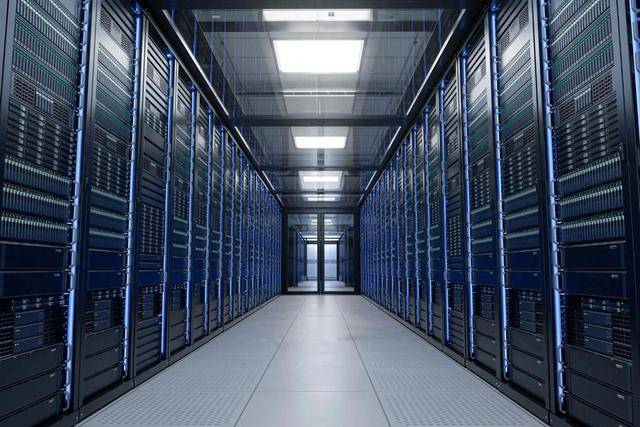
Meta Platforms将在美国印第安纳州数据中心投资超过100亿美元
Hua Er Jie Jian Wen· 2026-02-11 18:05
Core Viewpoint - Meta Platforms plans to invest over $10 billion in a data center located in Indiana, USA [1] Investment Details - The investment will significantly enhance Meta's infrastructure capabilities in the region [1] - This move is part of Meta's broader strategy to expand its data processing and storage capacity [1] Economic Impact - The investment is expected to create numerous job opportunities in Indiana, contributing to local economic growth [1] - The project aligns with the increasing demand for data services and cloud computing solutions [1]

韩国1月出口加速 汽车疲软与贸易逆差凸显结构性挑战
Xin Hua Cai Jing· 2026-01-21 07:47
Group 1 - The core viewpoint of the articles highlights that South Korea's exports have shown a significant increase driven primarily by the semiconductor industry, with a year-on-year growth of 14.9% in January 2026, surpassing the revised growth of 13.3% in December 2025 [1] - The semiconductor exports surged by 70.2%, fueled by global AI and data center investment trends, while wireless communication devices and petrochemical products also saw increases of 48% and 18% respectively [1] - However, there is a notable decline in the automotive sector, with exports dropping nearly 11%, and shipbuilding exports decreasing by 18%, indicating a divergence in industry performance [1] Group 2 - The weakening of the Korean won, which has depreciated over 8% against the US dollar since late June 2025, has provided support for exports by enhancing price competitiveness in international markets [2] - Despite the benefits of currency depreciation for exports, it has also raised import costs, contributing to inflationary pressures, with overall inflation and core inflation exceeding the Bank of Korea's target of 2% [2] - Exports to major trading partners have shown mixed results, with exports to China and the US increasing by 30.2% and 19.3% respectively, while exports to the EU and Japan have declined by approximately 15% and 13%, reflecting a growing divergence in regional demand [2]
韩国1月出口强势开局!半导体需求强劲抵消汽车关税冲击
智通财经网· 2026-01-21 02:09
Core Insights - South Korea's exports accelerated in the first 20 days of January, primarily driven by strong semiconductor demand, while automotive exports weakened due to increased tariffs in the U.S. [1] - The export growth rate reached 14.9% year-on-year, surpassing the revised 13.3% growth for the entire month of December [1] - Semiconductor exports surged by 70.2%, supported by global AI and data center investment trends, while automotive exports fell nearly 11% [1] Export Performance - The total export value for the first 20 days of January was 14.9% higher year-on-year, with imports increasing by 4.2%, resulting in a trade deficit of $626 million [1] - Wireless communication devices and petrochemical products also saw significant export growth, increasing by 48% and 18% respectively [1] - The decline in automotive exports reflects a slowdown in global demand and the impact of U.S. tariffs, with shipbuilding exports also down by 18% [1] Economic Context - The strong export growth is seen as a key driver for South Korea's economy in 2023, with semiconductor demand expected to offset declines in other sectors [1] - The recent trade agreement with the U.S. set a tariff cap of 15% on imported goods, including automobiles, which has raised concerns about long-term export challenges for the economy [2] - The depreciation of the Korean won against the U.S. dollar has improved price competitiveness for exports but has also increased inflationary pressures [2] Monetary Policy - The Bank of Korea maintained the benchmark interest rate at 2.5% for the fifth consecutive meeting, signaling a neutral stance amid mixed economic growth risks [2] - Core inflation and overall inflation have exceeded the central bank's target of 2%, raising concerns about rising import costs due to a weak won [2] Trade Partner Dynamics - Exports to China and the U.S. grew by 30.2% and 19.3% respectively, while exports to the EU and Japan declined by approximately 15% and 13% [2]
资深央行记者:为赢中选,特朗普“三大杠杆”刺激经济,今年“极有可能成功”,但是......
Hua Er Jie Jian Wen· 2026-01-15 00:16
Core Viewpoint - The article discusses unprecedented measures taken by Trump to accelerate the U.S. economy, with a focus on coordinated fiscal, monetary, and credit policies aimed at stimulating growth ahead of the midterm elections [1] Group 1: Fiscal Policy Shift - The fiscal policy has shifted from tightening to injecting nearly $200 billion into the economy through the tax reform signed by Trump in July [2][3] - The average tariff rate is not expected to rise, and there may even be a decrease if certain tariffs are deemed illegal by the Supreme Court [2] - Tax cuts introduced in the tax and spending bill will provide new or expanded deductions, leading to a dual stimulus effect with higher take-home pay for workers and tax refunds [2] Group 2: Credit Policy Relaxation - Regulatory changes have led to a loosening of credit restrictions, allowing banks to hold more U.S. Treasury securities and reducing barriers to mergers [3] - The government has ordered Fannie Mae and Freddie Mac to purchase $200 billion in mortgage-backed securities, which could lower mortgage rates by 0.1 to 0.25 percentage points, boosting housing demand [4][3] Group 3: Monetary Policy Changes - Trump is attempting to exert control over the Federal Reserve, advocating for lower interest rates to align with his economic policies [5] - The Federal Reserve is expected to lower interest rates from the current range of 3.5% to 3.75% by 0.25 percentage points, moving towards a more stimulative stance [5] Group 4: Long-term Consequences - The current policy approach may lead to a significant increase in debt-to-GDP ratio, potentially exceeding 100%, which could impoverish future generations and pose a risk of a debt crisis [6][8] - The relaxation of credit and regulatory measures in an already high-valuation environment could ultimately lead to a market crash [7][8]