
职业技能证书互通互认

Search documents
2025年我国超410万人次取得高级工以上证书
Xin Hua She· 2026-02-19 09:03
Core Viewpoint - The implementation of the "New Eight-Level Worker" vocational skill grading system in China will significantly enhance the construction of technical and skilled talent, with over 4.1 million individuals expected to obtain advanced worker certificates and more than 270,000 to achieve technician-level certifications by 2025 [1] Group 1: Vocational Skill Certification - The vocational skill certificate serves as proof of the knowledge, skills, and abilities required for workers to engage in specific occupations, playing a positive role in facilitating job seeking and promoting the rational allocation of human resources [1] - The Ministry of Human Resources and Social Security has issued a notice to promote the mutual recognition of vocational skill certificates, aiming to eliminate barriers to the mobility of skilled talent and enhance the effective allocation of these resources [1] Group 2: Policy Implementation and Future Plans - The Ministry will collaborate with relevant departments to ensure effective policy implementation, supporting local areas to gradually expand the coverage of mutual recognition of vocational skill certificates based on actual conditions [1] - Measures will be taken to improve the quality of vocational skill level evaluations, optimize evaluation information services, and enhance the authority, circulation, and market recognition of vocational skill certificates, thereby reducing the burden on workers regarding skill evaluation and certification [1]
打通“证书堵点”助力劳动者迈向更广阔舞台
Xin Lang Cai Jing· 2026-02-05 17:12
Core Viewpoint - The article emphasizes the importance of skill talent as a valuable asset for national development and highlights the initiative to promote mutual recognition of vocational skill certificates to facilitate smoother talent mobility [1][3]. Group 1: Policy Initiatives - Multiple departments are collaborating to advance the mutual recognition of vocational skill certificates, aiming to eliminate barriers to the flow of skilled labor [2]. - The initiative focuses on common occupations like electricians and welders, allowing workers with existing certificates from one department to bypass redundant training when applying for certificates from other departments [2]. Group 2: Benefits for Workers - The new system allows workers to obtain multiple certificates through a single comprehensive examination, reducing the time and resources spent on obtaining qualifications [2]. - This approach enhances the "circulation" of certificates, providing workers with more confidence and options in the job market [3]. Group 3: Implications for Employers - Employers will benefit from improved recognition and credibility of certificates, enabling them to more accurately identify suitable talent [3]. - The removal of barriers to skilled labor mobility will facilitate a more efficient and optimized allocation of human resources across the national market [3]. Group 4: Future Considerations - Successful implementation of these policies requires ongoing collaboration among departments to ensure standards are aligned and the quality of assessments supports the value of multiple certificates [3]. - There is a need to gradually expand pilot experiences to more occupations, allowing a broader range of workers to benefit from these initiatives [3].
事关职业技能证书互通互认,新规速看→
蓝色柳林财税室· 2026-02-05 11:35
Core Viewpoint - The article discusses the recent notification issued by multiple government departments aimed at promoting the mutual recognition of vocational skill certificates, thereby reducing the burden on workers for skill evaluation and certification, and facilitating the smooth flow of skilled labor [2]. Group 1: Promotion of Mutual Recognition of Certificates - The notification encourages the mutual recognition of vocational qualification certificates in key areas, specifically for electricians and welders [3][6]. - Individuals holding valid low-voltage and high-voltage operation certificates issued by emergency management departments can apply for the construction electrician special operation certificate without undergoing safety training [4][8]. Group 2: Certificate Correspondence Directory - A directory outlines the correspondence between held vocational qualification certificates and those that can be applied for, detailing the exemption from safety training for certain qualifications [5][9]. - For example, holders of the melting welding and thermal cutting operation certificate can apply for the construction welder special operation certificate without safety training [6][9]. Group 3: Skill Level Recognition - Workers with valid low-voltage and welding operation certificates are recognized as having reached the corresponding initial skill level (Level 5) and can register for skill level recognition [11]. - Those with high-voltage operation certificates and special equipment welding operation certificates are recognized as having reached the intermediate skill level (Level 4) and can apply for advanced skill level recognition [12]. Group 4: Joint Evaluation Support - The article supports the establishment of cross-departmental collaborative mechanisms to integrate vocational qualification evaluations and skill level recognition resources, promoting joint evaluation of skilled personnel [13].


考一次,认多处!人社部将逐步扩大职业技能证书互通互认覆盖范围
Xin Hua Wang· 2026-02-04 22:32
Core Viewpoint - The Ministry of Human Resources and Social Security is advancing the mutual recognition of vocational skill certificates to enhance labor mobility and employment opportunities for workers in various industries [1][2]. Group 1: Overview of Vocational Skill Certificates - Vocational skill certificates serve as proof of the knowledge, skills, and abilities required for specific occupations, playing a positive role in job seeking and human resource allocation [1]. - There are two main types of vocational skill certificates: entry-level certificates, which are mandatory for certain jobs related to public interest and safety, and level evaluation certificates, which assess professional skills and are issued by employers or evaluation agencies [1]. Group 2: Policy Implementation Measures - The Ministry will support local governments in gradually expanding the coverage of mutual recognition of vocational skill certificates based on local conditions [2]. - Three main initiatives will be implemented: 1. Promoting mutual recognition of vocational qualification certificates, allowing workers with certificates from one department to bypass certain training or exams when applying for certificates from other departments [2]. 2. Connecting qualification certificates with vocational skill level certificates, enabling workers with relevant qualifications to register for higher-level skill evaluations [2]. 3. Jointly conducting skill evaluations to meet the demand for skill enhancement among workers whose qualifications are not currently evaluated at the national level [3].
打通“证书堵点”为劳动者技能升级减负
Xin Lang Cai Jing· 2026-02-03 19:46
Core Viewpoint - The joint initiative by multiple government departments aims to enhance the mutual recognition of vocational skill certificates, primarily focusing on electricians and welders, to alleviate the burden on workers and improve talent mobility in the labor market [1][2]. Group 1: Policy Implementation - The new policy introduces measures such as certificate mutual recognition, alignment of qualification certificates with vocational skill level certificates, and the exploration of a "one test, multiple certificates" approach [1][2]. - Workers holding relevant certificates from any of the involved departments can bypass redundant safety training or theoretical exams when applying for additional certificates, streamlining the examination process [2]. Group 2: Benefits for Workers and Employers - The reforms are expected to reduce the certification burden on workers, allowing them to focus more on skill enhancement, while increasing the "circulation" of certificates, thereby providing more job opportunities [3]. - For employers, the improved recognition and credibility of certificates will facilitate more precise talent acquisition [3]. Group 3: Broader Implications - The removal of barriers to skilled labor mobility is anticipated to optimize human resource allocation, supporting industrial transformation and regional coordinated development [3]. - The successful implementation of these policies will require ongoing collaboration among departments to ensure standards are aligned and the quality of the "one test" approach is maintained [3].
一次考试,多证到手
Xin Lang Cai Jing· 2026-02-01 21:22
Core Viewpoint - The Ministry of Human Resources and Social Security (MoHRSS) is promoting the mutual recognition of vocational skill certificates to eliminate barriers for skilled labor mobility, allowing workers to obtain multiple qualifications through a single examination [1][2]. Group 1: Policy Initiatives - The MoHRSS, along with other departments, has issued a notice to advance the mutual recognition of vocational skill certificates, focusing initially on electricians and welders due to high demand and broad coverage [1][2]. - The policy allows workers with qualifications from any of the relevant departments to bypass certain training or theoretical exams when applying for additional certificates, streamlining the certification process [2]. - A new "one exam, multiple certificates" model is being explored, enabling workers to obtain both vocational qualifications and skill level certificates in a single examination, addressing the issue of redundant testing [2]. Group 2: Implementation and Future Steps - The MoHRSS plans to collaborate with relevant departments to implement these policies and gradually expand the coverage of mutual recognition of vocational skill certificates based on local conditions [3]. - Measures will be taken to enhance the quality of vocational skill level evaluations, improving the authority, circulation, and market recognition of these certificates [3]. - The initiative aims to reduce the burden of skill evaluation and certification on workers, thereby promoting employment and entrepreneurship [3].
2025年我国超410万人次取得高级工以上证书 今年聚焦技能证书互通互认
Yang Shi Xin Wen· 2026-01-27 18:12
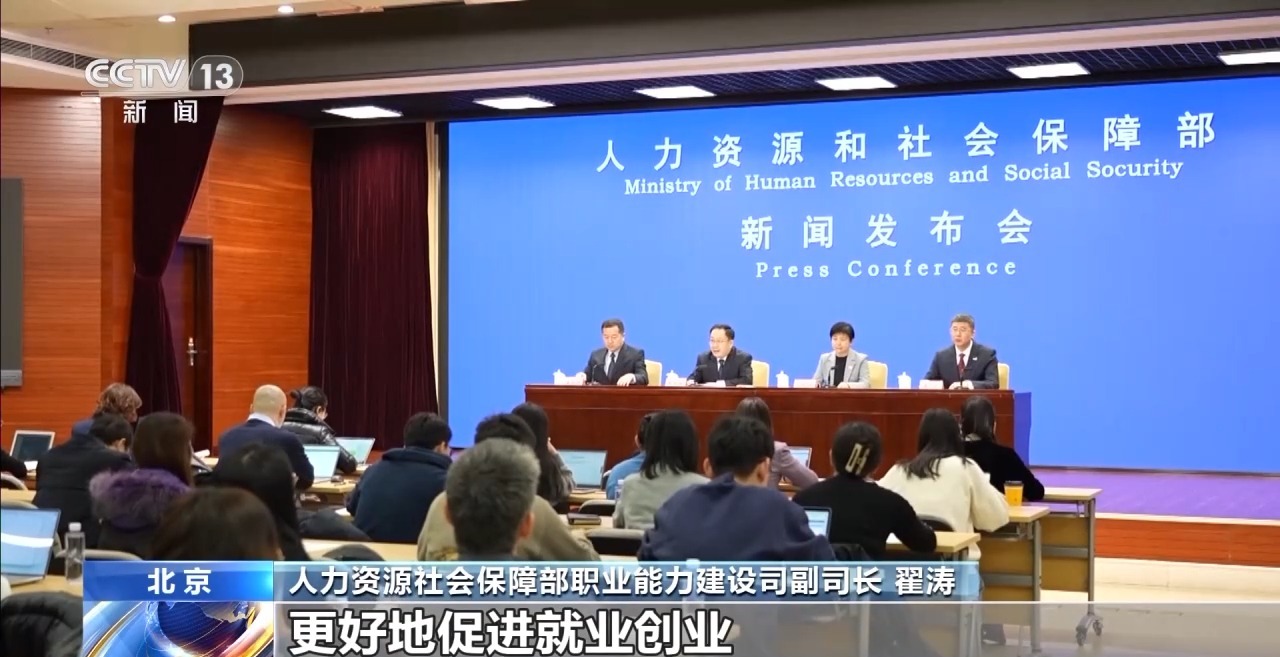
Core Viewpoint - The article highlights the significant advancements in vocational training and certification in China, with a focus on the increasing number of skilled workers and the introduction of new professions to meet the demands of the evolving job market [1] Group 1: Vocational Training and Certification - By 2025, over 4.1 million individuals are expected to obtain advanced vocational certificates, with more than 270,000 achieving technician-level certifications and nearly 3,000 being appointed as chief or special technicians [1] - The "博新计划" and other key projects have funded over 17,000 outstanding postdoctoral researchers, with a new intake of 48,000 postdoctoral positions planned for 2025 [1] - A total of 149,000 digital talents have participated in training programs as part of a three-year action plan for digital talent cultivation [1] Group 2: New Professions and Standards - The introduction of 17 new occupations, including drone swarm flight planners, and 42 new job roles such as generative AI system testers, reflects the adaptation to technological advancements [1] - The issuance of 73 national occupational standards aims to standardize and enhance the quality of vocational training [1] - The implementation of an integrated work-study model for skill training has seen participation from 1,000 institutions, the establishment of 101 specialized programs, and training for over 32,000 teachers [1] Group 3: Policy and Market Recognition - The government plans to continue promoting mutual recognition of vocational skill certificates to eliminate barriers in the circulation of skilled labor [1] - Efforts will be made to gradually expand the coverage of mutual recognition of vocational skill certificates, enhancing their authority, circulation, and market acceptance [1] - The initiative aims to reduce the burden of skill evaluation and certification on workers, thereby facilitating better employment and entrepreneurship opportunities [1]
2026年稳就业工作将有新动作!人社部详解
2 1 Shi Ji Jing Ji Bao Dao· 2026-01-27 09:58
Core Viewpoint - The employment situation in China is expected to remain stable in 2025, with a projected addition of 12.67 million urban jobs and an average urban survey unemployment rate of 5.2% for the year [1] Employment Policies and Measures - The Ministry of Human Resources and Social Security plans to implement various measures in 2026 to support employment, including accelerating the construction of an employment-friendly development model and enhancing employment policy support [1][2] - Specific initiatives for 2025 include reducing unemployment insurance fees by 187.2 billion yuan and providing 33.6 billion yuan in wage subsidies [1] - Over 11 million people are expected to receive subsidized training throughout the year, with a focus on key groups such as college graduates and the impoverished [1][6] Support for Key Employment Groups - The government will strengthen support for key employment groups, including college graduates and migrant workers, by launching targeted recruitment events and establishing a regular mechanism to prevent poverty [4][5] - A nationwide recruitment campaign for college graduates will be conducted, featuring both online and offline job fairs [4][5] Promotion of Entrepreneurship - The Ministry aims to enhance entrepreneurship as a means to drive employment, with initiatives including innovation-driven entrepreneurship and support for returnee entrepreneurs [2] - A series of entrepreneurial competitions and events will be organized to stimulate creativity and innovation among workers [2] Development of New Employment Forms - By the end of 2025, 25.1 million people are expected to be covered by occupational injury insurance, with plans to expand this coverage nationwide [3] - New measures will be introduced to support flexible and new employment forms, including the establishment of basic rights and protections for workers in these categories [3] Skills Training and Certification - The "Skills Illuminate the Future" training initiative aims to provide vocational training for over 11 million individuals, focusing on key sectors and groups [6] - Efforts will be made to simplify the process for obtaining vocational qualifications, particularly for electricians and welders, to enhance labor mobility [7] Enhancing Job Matching Efficiency - Employment public services will be improved to facilitate better job matching, with a focus on precise skill identification and timely job postings [8][9] - The Ministry will implement various recruitment initiatives, including live-streamed job fairs and targeted recruitment months, to better connect job seekers with employers [8][9]
促进技能人才资源合理流动有效配置
Xin Lang Cai Jing· 2026-01-25 18:15
Core Viewpoint - The article discusses the importance of vocational skill certificates in facilitating employment, ensuring safety in key positions, and promoting the rational allocation of human resources in the context of China's economic restructuring and industrial upgrading [1][2]. Group 1: Promotion of Certificate Recognition - The Ministry of Human Resources and Social Security has issued a notice to eliminate barriers to the mobility of skilled workers and promote mutual recognition of vocational skill certificates [1]. - The notice allows workers with electrical and welding qualifications from one department to apply for corresponding certificates from other departments with simplified examination processes, such as exemption from safety training and theoretical exams [1]. Group 2: Establishing Mechanisms for Certificate Integration - A mechanism will be established to connect vocational qualification certificates with vocational skill level certificates, allowing those with electrical and welding qualifications to be considered as having reached the corresponding junior or intermediate skill level [1]. - The notice supports the exploration of "one test, multiple certificates" approaches, enabling individuals to obtain both vocational qualification and skill level certificates through a single examination [1]. Group 3: Enhancing Certificate Market Recognition - The notice emphasizes the need for high-quality vocational skill level evaluations to ensure nationwide recognition of these certificates [2]. - Measures include unifying the qualifications of evaluation institutions across regions, conducting joint examinations, and establishing standardized examination procedures [2]. - The Ministry will also enhance real-time supervision of evaluation activities through information technology and create a comprehensive query system for vocational qualification certificates [2].
四部门推动职业技能证书互通互认
Ke Ji Ri Bao· 2026-01-19 08:31
Core Viewpoint - The recent notice issued by multiple government departments aims to promote the mutual recognition of vocational skill certificates, thereby reducing the burden on laborers and facilitating the smooth flow of skilled talent across regions and industries [1][2]. Group 1: Promotion of Mutual Recognition - The notice focuses on facilitating the mutual recognition of vocational skill certificates to enhance the effective allocation of skilled labor resources [2]. - It specifies that individuals who have obtained electrical or welding qualifications from one department can apply for corresponding certificates from other departments with simplified processes, such as exemption from safety training or theoretical exams [2][3]. Group 2: Integration of Certification Systems - The notice mandates the establishment of a mechanism to connect vocational qualification certificates with vocational skill level certificates, allowing those with electrical or welding qualifications to be regarded as having achieved corresponding junior or intermediate skill levels [2]. - It supports localities in pooling skill evaluation resources and exploring the "one test, multiple certificates" approach, enabling candidates to obtain both vocational qualification and skill level certificates through a single examination [3]. Group 3: Enhancing Certificate Recognition - The notice emphasizes the need to improve the circulation and market recognition of vocational skill level certificates, ensuring high-quality evaluations and promoting nationwide acceptance of these certificates [3].