职场心理健康

Search documents
2025女性领导力论坛在北京圆满举行
Zhong Guo Jing Ying Bao· 2025-12-05 00:20
Core Insights - The 2025 Women's Leadership Forum, hosted by Cheung Kong Graduate School of Business, aims to empower female leaders and promote gender equality in the workplace, attracting over 500 attendees [1] - The United Nations Women’s Agency emphasizes that promoting gender equality could lead to a GDP growth of $2.5 trillion to $4 trillion in China and create millions of job opportunities, highlighting the strategic value of women in economic development [1] - The forum featured discussions on the impact of artificial intelligence (AI) on workplace mental health, revealing that over two-thirds of respondents feel that AI diminishes the importance of their roles, with women more likely to embrace AI despite feeling a greater sense of value loss [2] Group 1 - The forum has been a platform for sharing success stories and driving positive change since its inception in 2013 [1] - The UN representative noted that increasing the proportion of women in senior management correlates with higher stock price growth and better risk management [1] - Women are responsible for 75% of household consumption, indicating their strategic value in driving economic trends [1] Group 2 - Research presented at the forum indicates that women are more willing to adopt AI technology, using generative AI more frequently than men, which correlates with reduced anxiety levels [2] - FedEx China President highlighted that women's flexibility is becoming a core strength in the AI era, emphasizing their empathy and long-term strategic vision [2] - The forum concluded with a call for collaboration to create a more inclusive and sustainable future, leveraging women's growth as a lever for societal progress [3]
趣图:“特别讨厌上司,几乎快抑郁了,但月收入有 4 万多,该不该辞职?”
程序员的那些事· 2025-09-11 00:19
Group 1 - The article discusses the mental health challenges faced by professionals in high-pressure jobs, emphasizing that a monthly salary of 40,000 may not significantly improve one's social status but can lead to increased stress and potential mental health issues [1][1][1] - It highlights the long-term consequences of untreated mental health conditions, suggesting that the cost of treatment may exceed several times the current income, urging individuals to consider their well-being [1][1][1] - The conversation includes strategies for coping with workplace stress, such as finding ways to manage or remove difficult supervisors, indicating a culture of high turnover among leadership positions [1][1][1] Group 2 - The dialogue reflects a broader concern about the impact of workplace dynamics on mental health, with participants sharing personal experiences and suggesting that financial compensation does not equate to job satisfaction or mental well-being [1][1][1] - There is a mention of the stigma surrounding mental health treatment, with individuals expressing concerns about the side effects of medication, which can further complicate the decision to seek help [1][1][1] - The discussion also touches on the competitive nature of the job market, where individuals feel pressured to perform despite their mental health struggles, leading to a cycle of stress and dissatisfaction [1][1][1]


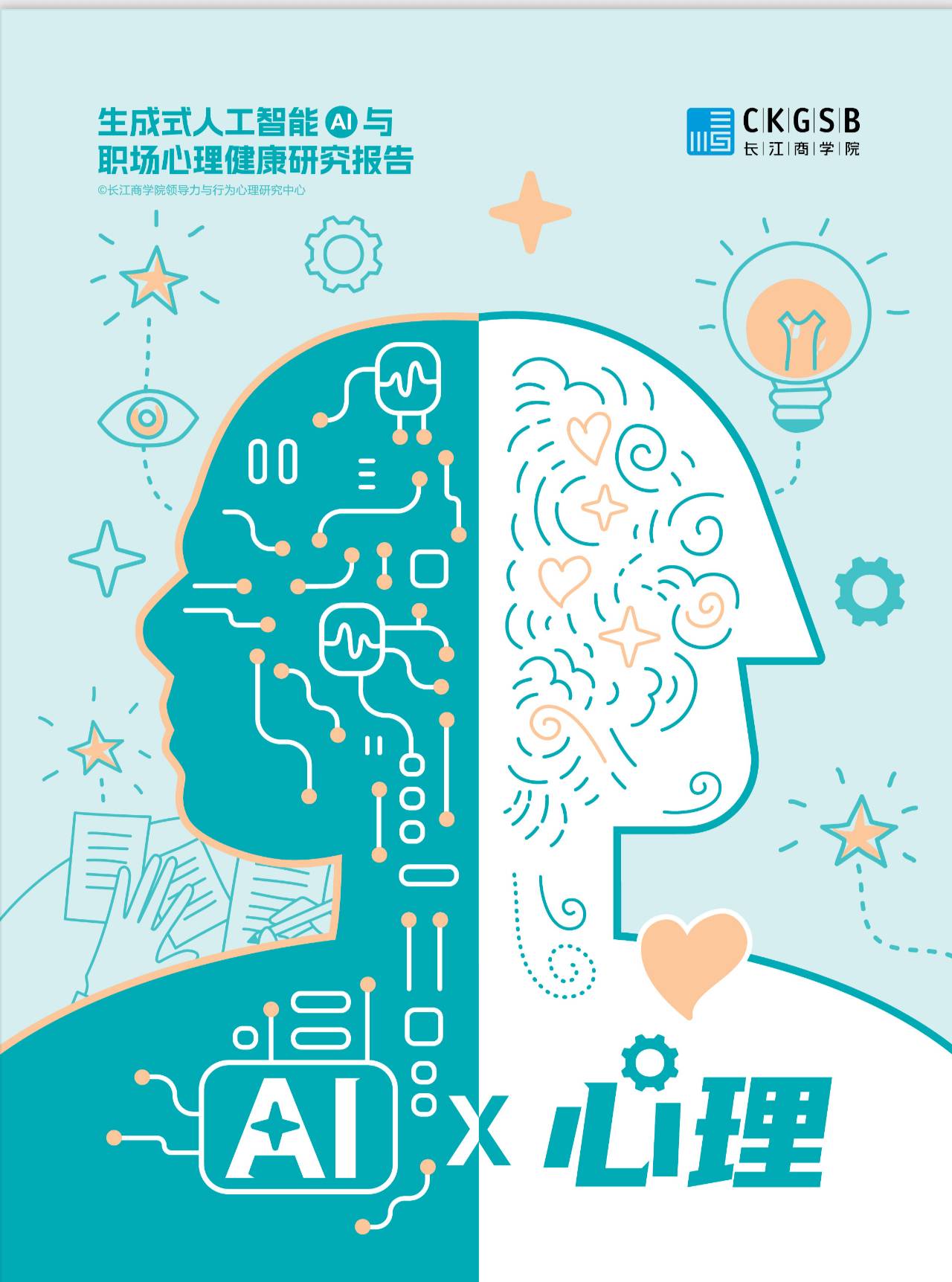
AI带来的焦虑,怎么治?
虎嗅APP· 2025-05-09 10:47
Core Viewpoint - The article discusses the duality of anxiety and optimism regarding AI's impact on employment and mental health, highlighting the need for better understanding and training to mitigate fears associated with AI replacement [3][4][7]. Group 1: AI's Impact on Employment and Mental Health - A survey covering 11,814 respondents revealed that 85.53% expressed concerns about AI's potential impact on their jobs, with 67.57% believing that replacement could occur within the next five years [3][7]. - The report indicates that the anxiety surrounding AI is more pronounced than that related to economic recession, with a significant portion of respondents experiencing depression linked to AI fears [3]. - The findings suggest that organizations that do not adopt AI may increase employee anxiety about job security, while those that provide AI training can reduce fears of replacement [7][14]. Group 2: Gender Differences in AI Usage - Contrary to common assumptions, the data shows that women have a slightly higher frequency of AI tool usage compared to men, particularly in technology sectors where they are often underrepresented [8]. - This finding challenges traditional views on gender and technology adoption, suggesting that women may leverage AI tools to gain competitive advantages in male-dominated fields [8]. Group 3: Recommendations for Organizations - Organizations are encouraged to implement AI training programs, as only 2.42% of companies currently provide such training, which contributes to employee anxiety about job security [13][14]. - The report emphasizes the importance of fostering a culture of learning and adaptation to AI technologies, suggesting that even preliminary engagement with AI can alleviate fears and enhance employee confidence [14][15]. Group 4: Future Workforce Considerations - Younger workers (ages 19-29) show lower levels of concern about AI replacement compared to older generations, indicating a potential gap in understanding the implications of AI in the workplace [18]. - The article suggests that young professionals should focus on identifying their passions and unique skills that are less likely to be replaced by AI, rather than solely pursuing traditional career paths [20][21]. Group 5: Emotional and Human Aspects of AI - The article highlights the importance of human emotional connections and creativity, which AI cannot replicate, suggesting that these traits will remain valuable in the workforce [23][24]. - It argues that while AI can provide certain efficiencies, the emotional and experiential aspects of human interaction are irreplaceable and essential for personal growth and resilience [24].

AI带来的焦虑,怎么治?
Hu Xiu· 2025-05-07 07:07
Core Insights - The report indicates that concerns about AI replacing jobs are significantly impacting the mental health of workers, with 34.13% of heavy AI replacement worry respondents showing signs of depression, which is higher than those anxious about economic recession [1][7] - A substantial 85.53% of respondents express worries about AI's potential impact on their employment, with 67.57% believing that the replacement process will occur within the next five years [1][7] - Despite these anxieties, there is a prevailing optimism regarding AI's long-term societal benefits, suggesting a complex relationship between fear and hope [1][7] Group 1: Survey Findings - The survey involved 11,814 respondents, revealing that a majority are concerned about AI's impact on their jobs [1][7] - The report highlights that companies not adopting AI may increase employee fears of job loss, thereby exacerbating anxiety [7][14] - The findings suggest that higher AI usage correlates with lower replacement worries and reduced negative emotions [7][14] Group 2: Gender Insights - Interestingly, the data shows that women use AI tools slightly more than men, challenging common assumptions about gender and technology adoption [8][19] - This trend may be attributed to women being a minority in tech fields, leading them to leverage AI tools more frequently to gain competitive advantages [8][19] Group 3: Recommendations for Organizations - Organizations are encouraged to provide systematic AI training to reduce employee anxiety about job replacement [7][14] - The report indicates that only 2.42% of companies have organized AI training, reflecting a lack of understanding among executives about AI's implications [14] - Companies should actively engage employees in learning AI tools, even if immediate business integration is not feasible [15][14] Group 4: Future of Work and AI - The report emphasizes the need for businesses to recognize and explore AI not just as a tool but as a means for business innovation [18] - It suggests that the impact of AI will vary significantly across different industries and company sizes, necessitating tailored approaches [18] - The balance between leveraging AI for efficiency and fostering employee development remains a critical challenge for management [16][17] Group 5: Young Professionals' Perspectives - Younger respondents show lower levels of concern about AI replacement, with older generations expressing more anxiety [19][20] - This may be due to younger workers still acclimating to their roles and not fully understanding how AI can integrate into their work [20] - The report advises young professionals to focus on finding their passions rather than solely pursuing job security in an uncertain job market [21][22]