
脱发经济

Search documents
蔓迪国际冲击“生发”第一股,80%毛利比肩茅台,单一品种贡献9成收入,上市前狂分14亿
Sou Hu Cai Jing· 2025-12-19 07:43
Core Viewpoint - The article discusses the financial performance and market position of Mandi International, a leading player in the hair loss treatment market, highlighting its high profit margins and concerns regarding its reliance on a single product and marketing expenses [2][11]. Group 1: Financial Performance - Mandi International has achieved an annual revenue of 1.4 billion RMB with a gross margin exceeding 80%, primarily driven by its flagship product, minoxidil [2][4]. - The company's gross margin has remained stable above 80% from 2022 to 2024, reaching 82.7% in 2024, indicating a strong profitability compared to other industries [3][4]. - Revenue has shown significant growth, increasing from 982 million RMB in 2022 to 1.455 billion RMB in 2024, with a notable revenue of 743 million RMB in the first half of 2024 [4]. Group 2: Marketing and R&D Concerns - Mandi International's growth is heavily dependent on high marketing expenditures, which rose from 476 million RMB in 2022 to 634 million RMB in 2024, with marketing costs exceeding 50% of revenue at times [5][11]. - The company's R&D spending has significantly decreased, with only 19.5 million RMB allocated in the first half of 2025, a 67% drop year-on-year, and R&D expenses accounting for less than 3% of revenue [6][11]. - The product portfolio is highly concentrated, with over 90% of revenue coming from minoxidil products, raising concerns about the sustainability of growth [6][11]. Group 3: IPO and Dividend Strategy - Mandi International is preparing for an IPO to become the first publicly listed company in the hair loss treatment sector, with significant pre-IPO dividend distributions totaling 1.42 billion RMB, exceeding its net profits during the same period [9][11]. - The company's strategy of distributing large dividends while seeking to raise funds through an IPO has led to skepticism regarding its financial needs and intentions in the capital market [11].

3.4亿脱发人,捧出一个东北富豪家族
创业邦· 2025-12-11 10:15
Core Viewpoint - Hair loss anxiety has become a significant concern for approximately 340 million people in China, leading to a burgeoning market for hair health management products, projected to reach 52.7 billion yuan by 2024, up from 19.8 billion yuan in 2018, marking a 2.6-fold increase [6][9]. Group 1: Market Dynamics - The topic of hair loss has garnered over 2.86 billion views on social media platforms, indicating a strong consumer interest and anxiety surrounding the issue [6]. - The number of hair loss patients in China has surged from 270 million in 2018 to 340 million in 2024, with a compound annual growth rate of 3.8%, and over 60% of this demographic is under 35 years old [9][10]. - The hair health management market is expected to expand to 171.4 billion yuan by 2035, with the hair loss treatment segment growing from 500 million yuan in 2018 to 3.5 billion yuan in 2024, a sevenfold increase over seven years [13]. Group 2: Company Overview - Mandi International, a leading player in the hair loss treatment sector, has submitted its IPO application to the Hong Kong Stock Exchange, aiming to become the first public company focused on hair loss prevention [6][8]. - The company has maintained a dominant market share, with its products accounting for approximately 92% of total revenue from 2022 to the first half of 2025 [22]. - Mandi's revenue has shown significant growth, with figures reaching 982 million yuan in 2022, 1.228 billion yuan in 2023, and 1.455 billion yuan in 2024, alongside a net profit of 202 million yuan, 341 million yuan, and 390 million yuan respectively [18][20]. Group 3: Financial Performance - Mandi International's gross margin has consistently remained above 80%, with net profit margins between 20% and 30%, comparable to high-margin industries like liquor [18]. - The company has engaged in a "clearance dividend" strategy, distributing 1.42 billion yuan in dividends from 2022 to the first half of 2025, which has significantly reduced its cash reserves from 1.127 billion yuan at the end of 2024 to 110 million yuan in the first half of 2025 [24][25]. - The company's financial ratios indicate potential liquidity issues, with the current ratio dropping from 4.3 in 2024 to 1.0 in the first half of 2025, and the quick ratio falling below 1.0 to 0.8 [26]. Group 4: Competitive Landscape - Mandi International faces increasing competition as several companies are entering the hair loss treatment market, leveraging lower prices and aggressive marketing strategies [26]. - The concentration of suppliers and customers poses risks, with the top five suppliers accounting for 75.6% of total purchases and the top five customers contributing 62.6% of revenue [24]. - The company’s reliance on a single product line, particularly the minoxidil series, raises concerns about revenue stability in the face of market competition and potential patent expirations [22][24]. Group 5: Future Outlook - Mandi International's journey from launching its first minoxidil product in 2001 to its upcoming IPO reflects the growth of the hair loss treatment market driven by consumer anxiety [27][29]. - The company must demonstrate its long-term value beyond just strong sales of its hair loss products to succeed in the capital market [29].

蔓迪国际IPO前夕突击分红7.7亿元超过前三年分红总额 “脱发经济”冠军面临可持续发展考验
Xin Lang Zheng Quan· 2025-11-28 08:34
Core Viewpoint - Mandis International, a subsidiary of Sanofi Pharmaceutical focusing on hair loss treatment, has submitted its IPO application to the Hong Kong Stock Exchange, but a significant pre-IPO dividend of 770 million yuan raises concerns about the company's future prospects [1][3][7] Financial Performance - Mandis International has maintained a leading position in China's hair loss medication market, with its main brand "Mandis" holding a 57% market share in 2024 [2] - The company's revenue grew from 982 million yuan in 2022 to 1.455 billion yuan in 2024, with a compound annual growth rate of 21.7%, while net profit increased from 202 million yuan to 390 million yuan during the same period [2] - The gross profit margin has consistently exceeded 80%, reaching 82.7% in 2024, significantly higher than the industry average [2] Dividend Strategy - The company declared a sudden dividend of 770 million yuan in the first half of 2025, which is 4.4 times its net profit of 174 million yuan for that period, surpassing the total dividends of the previous three years [3] - This dividend payout has drastically reduced the company's net current assets from 595 million yuan at the end of 2024 to just 400,000 yuan in the first half of 2025 [3] - The primary beneficiaries of this dividend are the controlling shareholders, who hold 87.16% of the company [3] Research and Development - Despite the high dividend, the company's R&D expenditure has decreased significantly, dropping to 19.5 million yuan in the first half of 2025, only one-third of the amount from the same period in 2024 [3] - The R&D team has also shrunk to 46 members, contrasting sharply with the high sales expenses, which reached 374 million yuan in the first half of 2025, accounting for 50.4% of revenue [3] Market Challenges - The company faces significant challenges as its core patent is set to expire in 2028, which may lead to an influx of generic drugs and potential price wars [4] - Competitive pressures are already evident, with a 52% drop in the bidding price for its core product in provincial drug procurement in 2024 [4] - Additionally, the company is contending with competition from consumer brands that have entered the hair loss treatment market [4] Future Strategy - The IPO proceeds are intended to enhance R&D capabilities, strategic business collaborations, digital operations, and brand building [6] - The company is expanding its product line with new treatments, including D2501 for vitiligo and WS2505 for obesity, with the latter expected to enter clinical trials soon [6] - However, these new products are unlikely to contribute significantly to revenue in the short term, leaving the company heavily reliant on its minoxidil product line during a critical period of patent expiration and increased competition [6] Conclusion - Mandis International has established a strong market position and profitability in the hair loss treatment sector, but faces challenges from its pre-IPO dividend strategy, high sales costs, declining R&D investment, and impending patent expiration [7] - Investors should consider both the short-term financial metrics and the long-term growth potential, as sustained innovation and product diversification will be crucial for maintaining long-term value [7]
靠米诺地尔撑起脱发生意!蔓迪国际冲刺港股“防脱第一股”
Nan Fang Du Shi Bao· 2025-11-27 12:41
Core Viewpoint - Mandi International has submitted its prospectus to the Hong Kong Stock Exchange, aiming to become the "first stock in anti-hair loss" amid a growing consumer healthcare market and increasing youth hair loss issues [1]. Company Overview - Mandi International, originally Zhejiang Wansheng Pharmaceutical Co., launched the first 5% minoxidil solution in China in 2001 and has maintained a leading position in the hair loss treatment market for the past decade [4]. - The company is planning to spin off and independently list on the Hong Kong Stock Exchange, with its parent company, 3SBio, holding an 87.16% stake prior to the split [4]. Financial Performance - Mandi International's revenue is projected to grow from RMB 981.54 million in 2022 to RMB 1.45 billion in 2024, reflecting a compound annual growth rate (CAGR) of 21.7% [5]. - Net profit is expected to increase from RMB 202 million in 2022 to RMB 390 million in 2024, with gross margins improving from 80.3% to 82.7% during the same period [5]. - The company's revenue from its main product line, the Mandi series, accounted for over 90% of total revenue, indicating a heavy reliance on this product line [6]. Market Dynamics - The hair health management market in China is projected to grow from RMB 19.8 billion in 2018 to RMB 52.7 billion by 2024, with an expected CAGR of 11.3% until 2035 [10]. - The competitive landscape is intensifying, with traditional pharmaceutical companies and international giants entering the market with new products [10]. Marketing and R&D Expenditure - Marketing expenses have been increasing, with sales and marketing costs rising from RMB 476.39 million in 2022 to RMB 633.80 million in 2024, representing a significant portion of revenue [8]. - In contrast, R&D spending is projected to decrease significantly in 2025, raising concerns about the company's long-term innovation capabilities [10]. Future Plans - The company plans to use the net proceeds from its IPO for enhancing R&D capabilities, digital operations, brand building, and working capital [11].
“头秃” 焦虑撑起一个IPO,沈阳“药二代”的第三家上市公司来了
Xin Lang Cai Jing· 2025-11-25 03:02
Core Insights - The article highlights the significant growth potential in the hair loss treatment market, particularly through the upcoming IPO of Mandi International, a subsidiary of Sangfor Pharmaceutical, which is set to capitalize on the booming demand for hair restoration products [1][20]. Market Overview - The hair loss market in China is experiencing explosive growth, with the number of affected individuals exceeding 339 million by 2024, translating to one in four people suffering from hair loss, predominantly among the younger demographic [4]. - The hair health management market is projected to grow from 52.7 billion RMB in 2024 to 171.4 billion RMB by 2035, with a compound annual growth rate (CAGR) of 11.3% [4]. Company Performance - Mandi International holds a 57% market share in the hair loss medication sector, with revenue expected to grow from 982 million RMB in 2022 to 1.455 billion RMB in 2024, reflecting a CAGR of 21.7% [1][12]. - The company's flagship product, Minoxidil, has seen a decline in sales, while the newly launched Minoxidil foam is driving growth, achieving sales of 283 million RMB in the first half of 2025, a 338% increase year-on-year [6][8]. Financial Metrics - Mandi's gross profit margin remains high, consistently above 80%, with net profits rising from 202 million RMB in 2022 to 390 million RMB in 2024 [9][12]. - The company has distributed 1.42 billion RMB in dividends to shareholders from 2022 to mid-2025, indicating strong cash flow management despite a decrease in asset value [20]. Competitive Landscape - Mandi International is facing increasing competition in the hair loss treatment market, with a need to diversify its product offerings beyond hair restoration to maintain growth [8][9]. - The company is also exploring new markets in skin health and weight management, although these segments are still in early development stages [9]. Family Business Background - The Lou family, founders of Sangfor Pharmaceutical, have established a significant presence in the capital markets with three listed companies, including Mandi International, which represents a strategic shift towards consumer healthcare [20][21]. - The family's wealth has been recognized, ranking them among the top in the biopharmaceutical sector, with a net worth of 15 billion RMB as of October 2025 [22][23].


脱发90后撑起一个IPO
3 6 Ke· 2025-11-23 08:19
Core Viewpoint - The hair loss treatment market in China is rapidly growing, with Mandis International preparing for an IPO, highlighting the increasing demand for hair loss solutions among the younger population [1][10]. Company Overview - Mandis International, originally founded as a pharmaceutical company in 2001, gained market traction with its minoxidil solution and has been a leader in the hair loss treatment sector for the past decade [2][4]. - The company was acquired by 3SBio in 2015, which has since expanded its portfolio and market presence [3][4]. Market Potential - Over 330 million people in China suffer from hair loss, with more than 60% of them being under 35 years old, indicating a significant market opportunity [1][10]. - The market for hair loss treatments is projected to be worth hundreds of billions, with major cities like Beijing, Shanghai, Guangzhou, and Shenzhen being the top markets [1][10]. Financial Performance - Mandis International reported revenues of 982 million RMB in 2022, with projections of 1.23 billion RMB in 2023 and 1.45 billion RMB in 2024, reflecting a compound annual growth rate (CAGR) of 21.7% [6][8]. - The gross profit margins have remained high, with figures of 80.3% in 2022, 82.0% in 2023, and 82.7% in 2024 [6]. Product Portfolio - The company's product lineup includes first-generation 5% minoxidil solution, second-generation minoxidil foam, and various anti-hair loss shampoos, holding a market share of 57% and 71% in the domestic hair loss and minoxidil markets, respectively [4][7]. - The revenue from the Mandis® series products accounts for over 90% of total income, with the minoxidil foam's revenue share increasing significantly from 10.6% in the first half of 2024 to 38.7% in the same period of 2025 [7][8]. Competitive Landscape - The hair loss treatment market is becoming increasingly competitive, with rising customer acquisition costs and price reductions impacting profit margins [9]. - The company faces risks from competitors who may develop or commercialize products more successfully, potentially hindering growth targets [9]. Distribution Channels - Mandis International primarily sells through third-party distributors to hospitals and pharmacies, although the number of distributors has decreased from 220 in 2022 to 106 recently, indicating potential customer attrition risks [9]. Industry Trends - The hair loss treatment industry is witnessing a surge in interest, with various brands entering the market and a growing ecosystem of products ranging from shampoos to hair transplants [10][11]. - The increasing prevalence of hair loss among younger demographics is driving demand for effective treatments, with social media playing a significant role in spreading awareness and sharing experiences [10][11].
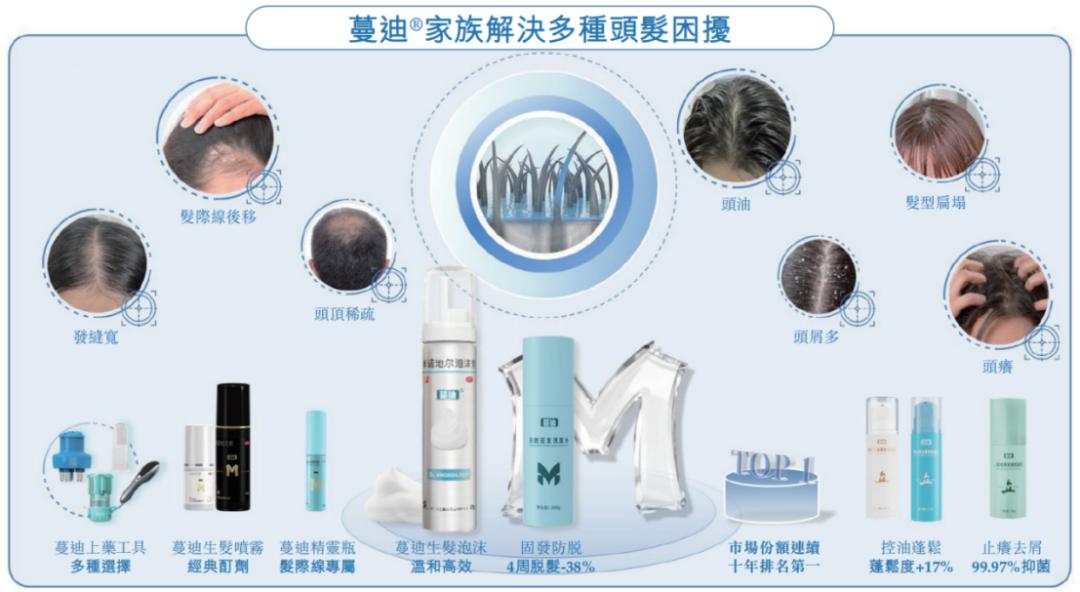
脱发90后撑起一个IPO
投资界· 2025-11-23 08:04
Core Viewpoint - The article discusses the growing market for hair loss treatments in China, highlighting the upcoming IPO of Mandi International and the significant market potential driven by a large population suffering from hair loss, particularly among younger individuals [2][11]. Company Overview - Mandi International, originally founded in 2001, has established itself in the hair loss treatment sector with its Minoxidil products, including a 5% Minoxidil solution and foam [3][6]. - The company was acquired by 3SBio in 2015, which has since expanded its market presence and product offerings [3][4]. Market Potential - Over 330 million people in China suffer from hair loss, with more than 60% of this demographic being under 35 years old, indicating a substantial market opportunity [2][11]. - Mandi's Minoxidil products hold a market share of 57% in the domestic hair loss medication sector and 71% in the Minoxidil category, maintaining a leading position for ten consecutive years [6]. Financial Performance - Mandi International's revenue has shown a compound annual growth rate (CAGR) of 21.7% from 2022 to 2024, with revenues of 982 million RMB, 1.228 billion RMB, and 1.455 billion RMB for those years respectively [8]. - The gross profit margins have remained high, with figures of 80.3%, 82.0%, and 82.7% for the same period [8]. Product Portfolio - The product lineup includes first-generation and second-generation Minoxidil products, as well as a range of shampoos with various benefits [6][8]. - The company is also developing additional products for acne treatment and weight management, with plans for regulatory submissions in the coming years [8]. Distribution Channels - Mandi International's online sales have increased significantly, with online sales accounting for 74% of total sales by mid-2025, up from 55.2% in 2022 [9]. - However, the number of offline distributors has decreased by 51.8% over three years, indicating potential risks in customer retention [10]. Competitive Landscape - The hair loss treatment market is becoming increasingly competitive, with rising customer acquisition costs and price reductions impacting profit margins [10]. - The article notes the emergence of various brands entering the market, including those from established companies like Proya and Vichy, which are launching their own anti-hair loss products [12].

掘金脱发经济,孩子王10.73亿收购星丝域投资65%股权
Guan Cha Zhe Wang· 2025-07-14 14:06
Core Viewpoint - The acquisition of Siyi Industrial by Kidswant marks a strategic move into the hair care sector, driven by the need to find new growth points amid a slowing maternal and infant market [1][2]. Group 1: Acquisition Details - Kidswant has completed the payment for the acquisition of 100% equity in Siyi Industrial, with the second phase payment amounting to 990 million RMB [1]. - The total transaction price for the acquisition was set at 1.65 billion RMB, with Kidswant investing 1.073 billion RMB [2]. - Following the acquisition, Siyi Industrial has become a subsidiary of Kidswant, holding a 65% stake through Jiangsu Xingsiyi [2]. Group 2: Company Performance - In 2024, Siyi Industrial reported a revenue of 723 million RMB, with sales from hair care products accounting for 417 million RMB, representing 57.76% of total revenue [1]. - Kidswant anticipates a significant increase in net profit for the first half of 2025, projecting a range of 119.64 million to 159.52 million RMB, which translates to a year-on-year growth of 50% to 100% [2]. Group 3: Market Insights - The hair care market in China has shown substantial growth, with the market size increasing from 43.23 billion RMB in 2020 to 57.09 billion RMB in 2023, reflecting a compound annual growth rate of 9.7% [1]. - The rising demand for scalp care and the increasing population experiencing hair loss are driving the expansion of the hair care market [1].
