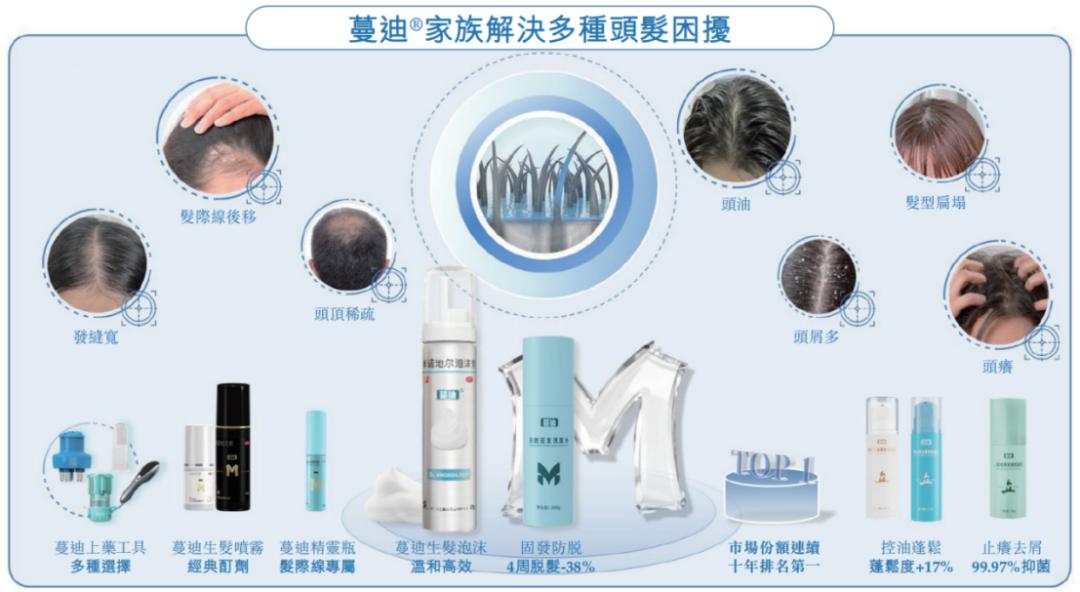
米诺地尔泡沫剂

Search documents
蔓迪国际离岸架构及控制权接受排队问询,累计分红14亿元
Sou Hu Cai Jing· 2026-01-14 12:46
Core Viewpoint - The China Securities Regulatory Commission (CSRC) has requested additional materials from Mandi International regarding its IPO application, focusing on the compliance of its offshore structure and reverse mergers, as well as the identification of controlling shareholders and trust arrangements [1][2][3] Group 1: Compliance and Regulatory Requirements - The CSRC requires Mandi International to clarify the compliance of its offshore structure and reverse investment, including details on foreign exchange management, overseas investment, foreign investment, and tax management [1] - The company must provide a conclusive opinion on the pricing basis, payment methods, and compliance of acquiring domestic operating entity shares, as well as tax declaration and payment status of transfer parties [1] - The CSRC is particularly interested in the trust arrangements involving the controlling shareholders, requiring detailed disclosure of trust agreements and the rights and obligations of all parties involved [2][3] Group 2: Business Overview and Market Position - Mandi International, formerly known as Zhejiang Wansheng Pharmaceutical, was acquired by 3SBio for 528 million yuan in 2015, subsequently establishing an offshore listing structure [3] - The company focuses on the hair health sector, with its flagship product, Mandi® minoxidil hair loss treatment, leading the Chinese market for ten consecutive years, holding approximately 57% and 71% market shares in the hair loss drug and minoxidil markets respectively by 2024 [3] Group 3: Financial Performance - Mandi International's revenue for the years 2022 to 2024 was 982 million yuan, 1.228 billion yuan, and 1.455 billion yuan, with a compound annual growth rate of 21.7% [4] - The net profit for the same period was 202 million yuan, 341 million yuan, and 390 million yuan, with a gross margin consistently above 80%, reaching 82.7% in 2024 [4] - Sales expenses have increased significantly, reaching 375 million yuan in the first half of 2025, accounting for over 50% of revenue, attributed to business expansion and marketing activities [5] Group 4: Revenue Dependency and Dividend Policy - Mandi International's revenue is heavily reliant on the Mandi® series, which accounted for over 90% of total revenue during the reporting period [5] - The company experienced a slowdown in revenue growth in the first half of 2025, with a significant increase in revenue contribution from minoxidil foam, rising from 10.6% in 2024 to 38.7% [5] - The company has distributed substantial dividends prior to its IPO, totaling 1.42 billion yuan from 2022 to 2024, exceeding total profits for the same period [5]
2025年中国毛发医疗行业竞争格局分析 雍禾植发、三生曼迪等企业在细分领域领先【组图】
Qian Zhan Wang· 2026-01-04 04:13
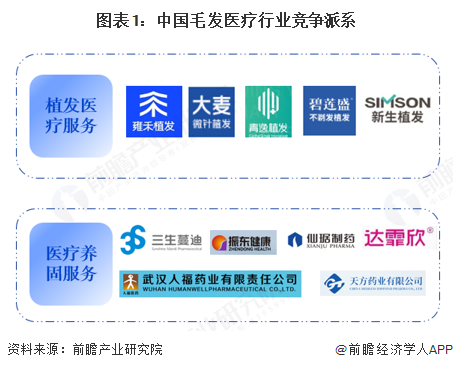
Core Insights - The article discusses the competitive landscape of the hair medical industry in China, highlighting key players and market dynamics [1][5]. Group 1: Competitive Landscape - The Chinese hair medical industry features various competitive factions, with companies like Yonghe Medical, Damaik, and Qingyi focusing on hair transplant medical services, while SanSheng Pharmaceutical, Zhendong Pharmaceutical, and Xianju Pharmaceutical are involved in medical nurturing services [1]. - In the hair transplant sector, the first tier consists of leading national chain brands such as Yonghe Medical, Bilian Sheng, and Damaik, which collectively hold a significant market share and possess nationwide direct chain layouts, mature technology systems, and strong brand recognition [1]. Group 2: Hair Growth Pharmaceuticals - In the hair growth pharmaceuticals market, the first tier includes SanSheng Pharmaceutical, Zhendong Pharmaceutical, and Merck, with the former two holding major shares in the minoxidil market, while Merck is recognized as the original manufacturer of finasteride [5]. - The second tier comprises Xianju Pharmaceutical, Kang En Bei, and Xiamen Meishang Pharmaceutical, which have accelerated the launch of minoxidil and finasteride products in recent years, gaining notable market recognition [5]. Group 3: Sales Performance - In the online pharmacy sector, Zhejiang SanSheng's minoxidil tincture product achieved sales exceeding 1 billion yuan, while Zhendong Anxin's minoxidil lotion surpassed 300 million yuan in sales, and SanSheng's minoxidil foam also exceeded 100 million yuan [9]. - In the offline market during the first quarter of 2025, Zhejiang SanSheng's minoxidil tincture and Zhendong Anxin's minoxidil lotion both recorded sales above 20 million yuan, with market shares of 50.61% and 38.82%, respectively [10]. - The sales ranking for minoxidil products shows Zhejiang SanSheng's minoxidil tincture leading with over 34 million yuan in sales (50.61% market share), followed by Zhendong Anxin's minoxidil lotion with over 26 million yuan (38.82% market share) [11].



3.4亿脱发人,养肥东北富豪家族
创业家· 2025-12-20 11:08
Core Insights - The article highlights the growing concern of hair loss among young people in China, with approximately 340 million individuals affected, leading to a burgeoning market for hair health management, projected to reach 52.7 billion yuan by 2024, up from 19.8 billion yuan in 2018 [4][9][12]. Group 1: Market Dynamics - The topic of hair loss has garnered over 2.86 billion views on Xiaohongshu, indicating significant consumer interest and anxiety [4]. - The hair health management market in China is expected to grow to 171.4 billion yuan by 2035, with the hair loss treatment market alone projected to increase from 500 million yuan in 2018 to 3.5 billion yuan in 2024, marking a sevenfold growth over seven years [12][18]. Group 2: Company Overview - Mandi International, a leading player in the hair loss treatment sector, has submitted its IPO application to the Hong Kong Stock Exchange, aiming to become the first public company focused on hair loss prevention [5][6]. - The company has a strong market presence, holding a 71% market share in the minoxidil segment, with a compound annual growth rate (CAGR) of 21.9% in revenue from 2022 to 2024 [18][20]. Group 3: Financial Performance - Mandi International's revenue reached 982 million yuan in 2022, 1.23 billion yuan in 2023, and is projected to be 1.46 billion yuan in 2024, with net profits of 202 million yuan, 341 million yuan, and 390 million yuan respectively during the same period [20]. - The company's gross margin has consistently remained above 80%, while net margins are between 20% and 30%, indicating strong profitability comparable to high-margin industries like liquor [21]. Group 4: Challenges and Risks - Mandi International faces significant risks, including a heavy reliance on its main product line, which accounted for approximately 92% of total revenue from 2022 to mid-2025 [23][24]. - The company has experienced a decline in research and development spending, which fell to 2.62% of revenue in the first half of 2025, down from 8.15% in 2022, raising concerns about its long-term innovation capabilities [25]. - The concentration of suppliers and customers poses additional risks, with the top five suppliers accounting for 75.6% of total purchases and the top five customers contributing 62.6% of revenue [26].

蔓迪国际:诺地尔酊剂销售额下滑、大砍研发开支、过半收入营销 上市前突击分红7.7亿致流动资产净...
Xin Lang Cai Jing· 2025-12-12 09:05
Core Viewpoint - Mandi International has submitted an application for a main board listing on the Hong Kong Stock Exchange, but faces significant operational challenges despite recent revenue growth. The company's reliance on its Mandi® product line, particularly the declining sales of its core product Minoxidil solution, raises concerns about its sustainability and future growth prospects [1][4][5]. Financial Performance - Mandi International's revenue and net profit have shown growth, with revenues projected at 9.8 billion, 12.3 billion, and 14.5 billion for 2022, 2023, and 2024 respectively, reflecting year-on-year growth rates of 25.08% and 18.49% for 2023 and 2024 [4]. - The net profit for the same years is expected to be 2.0 billion, 3.4 billion, and 3.9 billion, with growth rates of 68.96% and 14.54% for 2023 and 2024 [4]. Revenue Structure - Over 90% of Mandi International's revenue is derived from the Mandi® product series, indicating a heavy reliance on a single brand. The sales figures for the Mandi® product series were 91.7%, 92.3%, 92.1%, and 92.4% from 2022 to mid-2025 [7]. - The core product, Minoxidil solution, experienced a significant sales decline, with a 25.41% drop in sales to approximately 3.58 billion in the first half of 2025 [5]. Marketing and R&D Expenditure - The company has adopted a "heavy marketing, light R&D" approach, with sales expenses reaching 3.75 billion in the first half of 2025, resulting in a sales expense ratio of 50.4% [9]. - In contrast, R&D spending has decreased significantly, with a 67.41% year-on-year decline to 0.195 billion in the first half of 2025, raising concerns about the company's commitment to innovation [9]. Dividend Policy - Mandi International has distributed over 14 billion in dividends from 2022 to mid-2025, including a substantial 7.7 billion in the first half of 2025, which exceeds the company's net profit for that period [12][13]. - This high dividend payout has led to a drastic reduction in liquid assets, from 5.95 billion at the end of 2024 to just 0.04 billion, questioning the appropriateness of its fundraising strategy [13].
3.4亿脱发人,捧出一个东北富豪家族
创业邦· 2025-12-11 10:15
Core Viewpoint - Hair loss anxiety has become a significant concern for approximately 340 million people in China, leading to a burgeoning market for hair health management products, projected to reach 52.7 billion yuan by 2024, up from 19.8 billion yuan in 2018, marking a 2.6-fold increase [6][9]. Group 1: Market Dynamics - The topic of hair loss has garnered over 2.86 billion views on social media platforms, indicating a strong consumer interest and anxiety surrounding the issue [6]. - The number of hair loss patients in China has surged from 270 million in 2018 to 340 million in 2024, with a compound annual growth rate of 3.8%, and over 60% of this demographic is under 35 years old [9][10]. - The hair health management market is expected to expand to 171.4 billion yuan by 2035, with the hair loss treatment segment growing from 500 million yuan in 2018 to 3.5 billion yuan in 2024, a sevenfold increase over seven years [13]. Group 2: Company Overview - Mandi International, a leading player in the hair loss treatment sector, has submitted its IPO application to the Hong Kong Stock Exchange, aiming to become the first public company focused on hair loss prevention [6][8]. - The company has maintained a dominant market share, with its products accounting for approximately 92% of total revenue from 2022 to the first half of 2025 [22]. - Mandi's revenue has shown significant growth, with figures reaching 982 million yuan in 2022, 1.228 billion yuan in 2023, and 1.455 billion yuan in 2024, alongside a net profit of 202 million yuan, 341 million yuan, and 390 million yuan respectively [18][20]. Group 3: Financial Performance - Mandi International's gross margin has consistently remained above 80%, with net profit margins between 20% and 30%, comparable to high-margin industries like liquor [18]. - The company has engaged in a "clearance dividend" strategy, distributing 1.42 billion yuan in dividends from 2022 to the first half of 2025, which has significantly reduced its cash reserves from 1.127 billion yuan at the end of 2024 to 110 million yuan in the first half of 2025 [24][25]. - The company's financial ratios indicate potential liquidity issues, with the current ratio dropping from 4.3 in 2024 to 1.0 in the first half of 2025, and the quick ratio falling below 1.0 to 0.8 [26]. Group 4: Competitive Landscape - Mandi International faces increasing competition as several companies are entering the hair loss treatment market, leveraging lower prices and aggressive marketing strategies [26]. - The concentration of suppliers and customers poses risks, with the top five suppliers accounting for 75.6% of total purchases and the top five customers contributing 62.6% of revenue [24]. - The company’s reliance on a single product line, particularly the minoxidil series, raises concerns about revenue stability in the face of market competition and potential patent expirations [22][24]. Group 5: Future Outlook - Mandi International's journey from launching its first minoxidil product in 2001 to its upcoming IPO reflects the growth of the hair loss treatment market driven by consumer anxiety [27][29]. - The company must demonstrate its long-term value beyond just strong sales of its hair loss products to succeed in the capital market [29].

3.4亿脱发人,养肥东北富豪家族
盐财经· 2025-12-04 11:02
Core Insights - The article highlights the growing concern of hair loss among young people in China, with approximately 340 million individuals affected by hair loss anxiety, leading to a burgeoning market for hair health management products [3][7][8]. - The company Mandi International, which produces Minoxidil solutions, is positioned to benefit from this trend and has filed for an IPO to become the "first stock in anti-hair loss" [5][6]. Market Overview - The hair health management market in China is projected to reach 52.7 billion yuan by 2024, a 2.6-fold increase from 19.8 billion yuan in 2018 [4]. - The number of individuals suffering from hair loss in China has increased from 270 million in 2018 to 340 million in 2024, with a compound annual growth rate of 3.8% [7]. Consumer Behavior - Over 60% of the hair loss population is under 35 years old, indicating a shift in demographics where hair loss is no longer just a middle-aged concern [8]. - Young consumers are increasingly investing in hair care products, with significant discussions on platforms like Xiaohongshu, where topics related to hair care have garnered billions of views [12]. Company Profile: Mandi International - Mandi International has maintained a leading market share in the anti-hair loss sector for ten consecutive years, with a systematic approach to product and channel development [22]. - The company has achieved a revenue compound annual growth rate of 21.9% from 2022 to 2024, with revenues of 982 million yuan, 1.228 billion yuan, and 1.455 billion yuan respectively [26][25]. Financial Performance - Mandi's gross margin has consistently remained above 80%, with net profit margins between 20% and 30%, comparable to high-margin industries like liquor [26]. - The company has declared a total dividend of 1.42 billion yuan from 2022 to mid-2025, which has significantly reduced its cash reserves from 1.127 billion yuan at the end of 2024 to 110 million yuan by mid-2025 [33][34]. Risks and Challenges - Mandi International faces a "single product dependency" issue, with approximately 92% of its revenue coming from Minoxidil products, raising concerns about future revenue stability amid increasing competition [29]. - The company has seen a decline in research and development spending, which fell to 2.62% of revenue in mid-2025, down from 8.15% in 2022, indicating a potential risk in maintaining competitive advantage through innovation [31]. Competitive Landscape - The market for Minoxidil is becoming increasingly competitive, with several companies entering the space, potentially eroding Mandi's market share as patents expire [36]. - Mandi's distribution network has shrunk, with the number of distributors decreasing from 173 in 2022 to 106 in mid-2025, which could impact its market reach and stability [32]. Future Outlook - The article concludes that while Mandi International has capitalized on the market for hair loss solutions, it must address its reliance on a single product and improve its R&D efforts to sustain long-term growth and market relevance [39][40].

“防脱第一股”核心产品收入缩水过亿,蔓迪到顶了?
阿尔法工场研究院· 2025-11-26 02:55
Core Insights - The article highlights that Mandi International is the leading player in the domestic hair loss treatment market, maintaining a dominant market share in minoxidil products for ten consecutive years, with a significant growth expected in the foam formulation by mid-2025 [1][2][5] - The company's revenue structure is heavily reliant on a single product, with over 90% of its income derived from the minoxidil series, raising concerns about long-term sustainability [5][11] - Recent financial maneuvers, including substantial dividends paid before the IPO, have led to a significant reduction in cash reserves, which may impact investor confidence and operational stability [9][23] Industry Leadership - Mandi International has established itself as a key brand in the hair loss treatment sector, with minoxidil products accounting for a substantial market share [5][6] - The company faces increasing competition as the minoxidil market is open to multiple players, which could threaten its pricing power and market position [6][11] Financial Performance - Revenue decreased from 9.82 billion to 7.43 billion from 2022 to the first half of 2025, with net profit also declining during the same period [5][11] - The sales of the core product, minoxidil solution, dropped significantly, while the foam variant saw a remarkable increase in sales, indicating a shift in consumer preference [11][12] Distribution and Supply Chain - Mandi's revenue is primarily generated through distributors, which accounted for over 90% of sales, but the number of distributors has decreased by approximately 39% [2][12] - The company relies heavily on a limited number of suppliers, with a single supplier providing the raw material for minoxidil, raising concerns about supply chain stability [13][14] Research and Development - The company's R&D expenditures have fluctuated significantly, raising questions about its ability to innovate and compete effectively in the market [15][16] - Mandi is attempting to diversify its product offerings by introducing new products, but faces stiff competition from established players in the market [15][16] Management and Governance - The ownership structure is highly concentrated, with significant control held by the founder and major shareholder, which may pose risks if the IPO does not succeed [20][23] - The recent stock incentive plan is closely tied to the success of the IPO, creating potential instability in management if the listing is delayed or fails [21][22] Conclusion - Mandi International's strong market position is counterbalanced by its reliance on a single product, high dividend payouts, and concentrated supply and distribution channels, which could pose risks to its future growth and stability [24][25]

“头秃” 焦虑撑起一个IPO,沈阳“药二代”的第三家上市公司来了
Xin Lang Cai Jing· 2025-11-25 03:02
Core Insights - The article highlights the significant growth potential in the hair loss treatment market, particularly through the upcoming IPO of Mandi International, a subsidiary of Sangfor Pharmaceutical, which is set to capitalize on the booming demand for hair restoration products [1][20]. Market Overview - The hair loss market in China is experiencing explosive growth, with the number of affected individuals exceeding 339 million by 2024, translating to one in four people suffering from hair loss, predominantly among the younger demographic [4]. - The hair health management market is projected to grow from 52.7 billion RMB in 2024 to 171.4 billion RMB by 2035, with a compound annual growth rate (CAGR) of 11.3% [4]. Company Performance - Mandi International holds a 57% market share in the hair loss medication sector, with revenue expected to grow from 982 million RMB in 2022 to 1.455 billion RMB in 2024, reflecting a CAGR of 21.7% [1][12]. - The company's flagship product, Minoxidil, has seen a decline in sales, while the newly launched Minoxidil foam is driving growth, achieving sales of 283 million RMB in the first half of 2025, a 338% increase year-on-year [6][8]. Financial Metrics - Mandi's gross profit margin remains high, consistently above 80%, with net profits rising from 202 million RMB in 2022 to 390 million RMB in 2024 [9][12]. - The company has distributed 1.42 billion RMB in dividends to shareholders from 2022 to mid-2025, indicating strong cash flow management despite a decrease in asset value [20]. Competitive Landscape - Mandi International is facing increasing competition in the hair loss treatment market, with a need to diversify its product offerings beyond hair restoration to maintain growth [8][9]. - The company is also exploring new markets in skin health and weight management, although these segments are still in early development stages [9]. Family Business Background - The Lou family, founders of Sangfor Pharmaceutical, have established a significant presence in the capital markets with three listed companies, including Mandi International, which represents a strategic shift towards consumer healthcare [20][21]. - The family's wealth has been recognized, ranking them among the top in the biopharmaceutical sector, with a net worth of 15 billion RMB as of October 2025 [22][23].


脱发90后撑起一个IPO
3 6 Ke· 2025-11-23 08:19
Core Viewpoint - The hair loss treatment market in China is rapidly growing, with Mandis International preparing for an IPO, highlighting the increasing demand for hair loss solutions among the younger population [1][10]. Company Overview - Mandis International, originally founded as a pharmaceutical company in 2001, gained market traction with its minoxidil solution and has been a leader in the hair loss treatment sector for the past decade [2][4]. - The company was acquired by 3SBio in 2015, which has since expanded its portfolio and market presence [3][4]. Market Potential - Over 330 million people in China suffer from hair loss, with more than 60% of them being under 35 years old, indicating a significant market opportunity [1][10]. - The market for hair loss treatments is projected to be worth hundreds of billions, with major cities like Beijing, Shanghai, Guangzhou, and Shenzhen being the top markets [1][10]. Financial Performance - Mandis International reported revenues of 982 million RMB in 2022, with projections of 1.23 billion RMB in 2023 and 1.45 billion RMB in 2024, reflecting a compound annual growth rate (CAGR) of 21.7% [6][8]. - The gross profit margins have remained high, with figures of 80.3% in 2022, 82.0% in 2023, and 82.7% in 2024 [6]. Product Portfolio - The company's product lineup includes first-generation 5% minoxidil solution, second-generation minoxidil foam, and various anti-hair loss shampoos, holding a market share of 57% and 71% in the domestic hair loss and minoxidil markets, respectively [4][7]. - The revenue from the Mandis® series products accounts for over 90% of total income, with the minoxidil foam's revenue share increasing significantly from 10.6% in the first half of 2024 to 38.7% in the same period of 2025 [7][8]. Competitive Landscape - The hair loss treatment market is becoming increasingly competitive, with rising customer acquisition costs and price reductions impacting profit margins [9]. - The company faces risks from competitors who may develop or commercialize products more successfully, potentially hindering growth targets [9]. Distribution Channels - Mandis International primarily sells through third-party distributors to hospitals and pharmacies, although the number of distributors has decreased from 220 in 2022 to 106 recently, indicating potential customer attrition risks [9]. Industry Trends - The hair loss treatment industry is witnessing a surge in interest, with various brands entering the market and a growing ecosystem of products ranging from shampoos to hair transplants [10][11]. - The increasing prevalence of hair loss among younger demographics is driving demand for effective treatments, with social media playing a significant role in spreading awareness and sharing experiences [10][11].