
自然资源

Search documents
华创证券张瑜:委内瑞拉有什么、卖什么?
Xin Lang Cai Jing· 2026-01-05 03:46
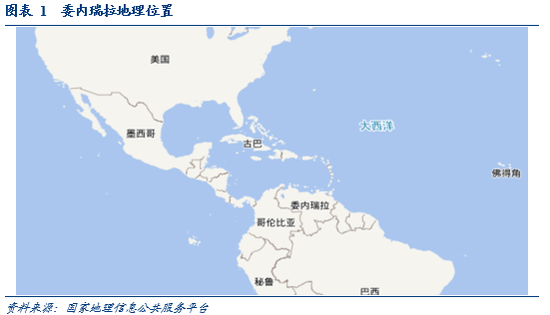
Core Viewpoint - The report outlines the escalating conflict between the United States and Venezuela, focusing on Venezuela's basic national conditions, particularly its natural resources and export situation [1][30]. Group 1: Population and Geography - Venezuela is located in the northern part of South America, covering an area of 916,400 square kilometers, with an estimated population of approximately 28.4 million in 2024 [2][31]. - The country shares borders with Guyana to the east, Brazil to the south, and Colombia to the west, with the Caribbean Sea to the north. Major ports include Cabello, La Guaira, and Maracaibo, with José and Maracaibo being the main oil export ports [2][31]. Group 2: Political and Military Overview - Venezuela operates under a presidential system, with the president serving as the head of state, government, and armed forces for a term of six years without term limits. The country has approximately 200,000 active military personnel and around 8 million militia reserves [2][32][42]. Group 3: Major Natural Resources - Venezuela holds the world's largest proven oil reserves, estimated at about 300 billion barrels, accounting for approximately 17% of global reserves, with a potential extraction period of nearly 900 years [3][34][43]. - The country ranks eighth globally in proven natural gas reserves, with approximately 201 trillion cubic feet, representing about 2.9% of the world's total [4][15][43]. - The official gold reserves are around 53 tons, with an additional 31 tons held in the Bank of England since 2018. However, estimates of untapped gold reserves vary significantly, with claims of over 8,000 tons from the government [4][18][47]. - Iron ore reserves are reported to be between 2.2 billion to 4 billion tons, with estimates suggesting they account for 1-2% of global reserves [4][20][48]. - Other mineral resources include bauxite (34.8 billion tons), titanium (39 million tons), diamonds (41 million carats), coal (730 million tons), and nickel (490,000 tons), with respective global shares of approximately 4.4%, 7%, 0.1%, 0.4% [5][23][50]. - Venezuela has abundant water and forest resources, with a forest coverage rate of about 52%, compared to the global average of 32% [6][24][51]. Group 4: Major Export Situation - The main export destinations for Venezuela are the United States, China, and Spain, with total exports in 2023 amounting to approximately $7.63 billion. Exports to the U.S., China, and Spain were about $3.81 billion, $740 million, and $670 million, respectively, accounting for approximately 50%, 10%, and 9% of total exports [7][25][52]. - Key export products include oil and its derivatives (60% of total exports), basic metals (iron and aluminum), nitrogen fertilizers, and others [7][25][52]. - As of November 2025, Venezuela's oil production is estimated at approximately 934,000 barrels per day, with an expected export volume of about 656,000 barrels per day in 2024 [7][27][55].

委内瑞拉有什么、卖什么?
一瑜中的· 2026-01-05 03:40
Core Viewpoint - The report highlights the escalating conflict between the United States and Venezuela, focusing on Venezuela's natural resources and export situation [2]. Group 1: Population and Geography - Venezuela is located in the northern part of South America, covering an area of 916,400 square kilometers, with an estimated population of approximately 28.4 million in 2024 [3][10]. - The country shares borders with Guyana to the east, Brazil to the south, Colombia to the west, and has a northern coastline along the Caribbean Sea. Major ports include Cabello Port, La Guaira Port, and Maracaibo Port, with José Port and Maracaibo Port being the main oil export ports [3][10]. Group 2: Political and Military Overview - Venezuela operates under a presidential system, with the president serving as the head of state, government, and armed forces for a term of six years without term limits [4][13]. - The country has approximately 200,000 active military personnel and around 8 million militia reservists [4][14]. Group 3: Major Natural Resources - Venezuela holds the world's largest proven oil reserves, estimated at about 300 billion barrels, accounting for approximately 17% of global reserves [5][14]. - The country ranks eighth globally in proven natural gas reserves, with about 201 trillion cubic feet, representing around 2.9% of the world's total [5][17]. - The official gold reserves are approximately 53 tons, with an additional 31 tons held in the Bank of England since 2018. However, estimates of untapped gold reserves vary significantly [5][21]. - Iron ore reserves are reported to be between 2.2 billion to 4 billion tons, constituting about 1-2% of global reserves, though the U.S. Geological Survey does not include Venezuela's iron ore data [6][24]. - Other mineral resources include bauxite (34.8 billion tons), titanium (39 million tons), diamonds (4.1 billion carats), coal (730 million tons), and nickel (490,000 tons), with respective global shares of approximately 4.4%, 7%, 0.1%, 0.4% [6][26]. - Venezuela has abundant hydropower and forest resources, with a forest coverage rate of about 52%, significantly higher than the global average of 32% [7][27]. Group 4: Major Export Situation - The primary export destinations for Venezuela are the United States, China, and Spain, with total exports in 2023 amounting to approximately $7.63 billion. Exports to the U.S., China, and Spain were about $3.81 billion, $740 million, and $670 million, respectively [8][28]. - Key export products include oil and its derivatives (60% of total exports), basic metals (iron and aluminum), and nitrogen fertilizers [8][28]. - As of November 2025, Venezuela's oil production is projected to be around 934,000 barrels per day, with an estimated export volume of 656,000 barrels per day in 2024 [8][31].


宏观快评:委内瑞拉有什么、卖什么?
Huachuang Securities· 2026-01-04 23:30
Group 1: Demographics and Geography - Venezuela has a land area of 916,400 square kilometers and an estimated population of approximately 28.4 million in 2024[2] - It shares borders with Guyana to the east, Brazil to the south, and Colombia to the west, with the Caribbean Sea to the north[2] - Major ports include Cabello, La Guaira, and Maracaibo, with José and Maracaibo being key for oil exports[2] Group 2: Political and Military Overview - Venezuela operates under a presidential system with a six-year term for the president, who is also the commander-in-chief of the armed forces[3] - The country has approximately 200,000 active military personnel and around 8 million militia reserves[3] Group 3: Natural Resources - Venezuela holds the world's largest proven oil reserves at about 300 billion barrels, accounting for approximately 17% of global reserves[4] - The country ranks eighth globally in proven natural gas reserves, with about 201 trillion cubic feet, representing around 2.9% of the world's total[4] - Gold reserves are reported to be around 53 tons, with an additional 31 tons frozen in the Bank of England since 2018[4] - Iron ore resources are estimated at 1.468 billion tons, with proven reserves of 363 million tons, constituting about 1-2% of global reserves[5] Group 4: Export Overview - In 2023, Venezuela's total export value was approximately $7.63 billion, with the U.S., China, and Spain being the primary destinations, accounting for about 50%, 10%, and 9% of exports respectively[6] - Oil and its products constitute about 60% of total exports, followed by basic metals (8%), and nitrogen fertilizers (3.7%)[6] - Venezuela's oil production is projected to be around 934,000 barrels per day by November 2025, with an estimated export volume of 656,000 barrels per day in 2024[6]
多名国际组织代表出席科特迪瓦企业总联合会召开的科2025年私营领域经济论坛
Shang Wu Bu Wang Zhan· 2025-09-30 17:00
Core Insights - The 2025 Private Sector Economic Forum in Côte d'Ivoire focuses on "Economic Sovereignty, Action Time" and is organized by the General Confederation of Enterprises of Côte d'Ivoire (CGECI) [1] - The event is attended by over 2,000 participants, including government officials and representatives from international organizations, highlighting its significance in the region [1] Group 1: Event Overview - The forum is held in Abidjan on September 29 and lasts for two days, featuring discussions on various topics such as financing, industrialization, innovation, energy, agricultural processing, health, natural resources, and human resources [1] - Key attendees include the Prime Minister, Minister of Finance, Minister of Trade and Industry, and notable figures from international financial institutions [1] Group 2: Themes and Topics - The forum aims to address critical issues related to economic sovereignty and the role of the private sector in driving growth and development in Côte d'Ivoire [1] - Sub-forums will focus on specific sectors, indicating a comprehensive approach to tackling economic challenges and opportunities in the region [1]