
自由裁量权

Search documents
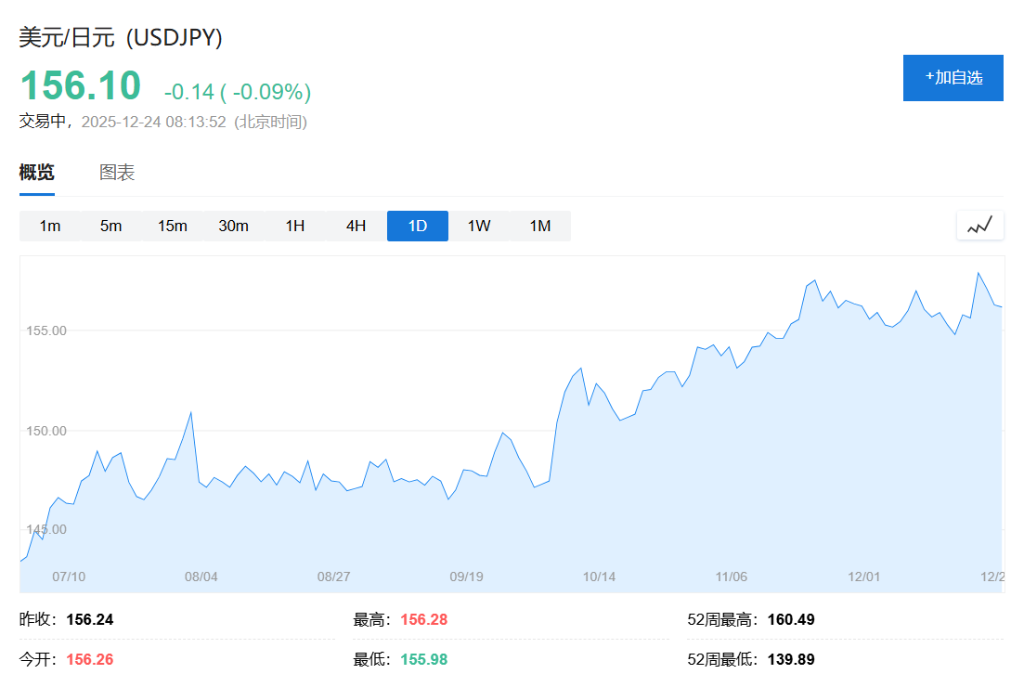
日本财长反复强调“自由裁量权”,暗示美国支持干预日元,不想看到日债崩盘?
Hua Er Jie Jian Wen· 2025-12-24 00:35
Core Viewpoint - Japanese authorities are intensifying verbal warnings regarding the depreciation of the yen, indicating a strong possibility of market intervention, potentially with U.S. approval [1][2][3]. Group 1: Government Statements and Market Reactions - Finance Minister Katayama emphasized Japan's "free hand" to take "bold actions" against currency fluctuations, signaling a commitment to intervene in the foreign exchange market [1][3]. - Following these statements, the yen showed signs of recovery, trading around the 156 level after previously hovering near 157.49 [1]. - Analysts from Nomura Securities noted that the dollar-yen exchange rate of 160 could be a critical threshold for actual intervention [1][7]. Group 2: Economic Context and Financial Stability - The yen's depreciation and expectations of significant fiscal stimulus have pushed the 10-year Japanese government bond yield to a 27-year high of 2.1%, raising concerns about financial stability [1][8]. - The Bank of Japan's recent interest rate hike to 0.75% has not strengthened the yen, as the market remains skeptical about future tightening measures [8]. - The Japanese government's aggressive fiscal policies, including a potential record budget of 120 trillion yen, necessitate more bond issuance, impacting the bond market negatively [8]. Group 3: Inflation and Monetary Policy Outlook - Mixed inflation data complicates the Bank of Japan's future actions, with core inflation indicators showing both stability and signs of slowing [9]. - The trimmed mean inflation rate for November was 2.24%, remaining above the Bank's 2% target, while other measures showed a decline [9]. - Analysts suggest that if core inflation trends stabilize, the likelihood of further interest rate hikes by the Bank of Japan could increase, potentially supporting the yen [9].

美联储迎来黄金契机:“规则化”能否驯服通胀、抵挡特朗普干预?
Jin Shi Shu Ju· 2025-07-14 15:00
Core Viewpoint - The recent criticism of the Federal Reserve (Fed) has escalated beyond normal levels, potentially damaging its credibility, with political figures like Trump and his administration openly attacking Fed Chairman Powell and questioning the Fed's monetary policy decisions [1]. Group 1: Criticism of the Federal Reserve - Political pressure on the Fed reveals deeper issues regarding the lack of clear standards in monetary policy decision-making, making it difficult for the public to objectively assess the validity of these criticisms [1]. - The Fed's characterization of post-COVID inflation as a "transitory phenomenon" and its delayed interest rate hikes contributed to entrenched inflation, despite the economic consensus at the time not predicting such a significant deviation from trends [1]. Group 2: Monetary Policy Rules - Kedia argues that formalizing monetary policy could enhance economic stability and protect against political interference, suggesting that the Fed should publicly disclose its decision-making formula for the federal funds rate based on key indicators like inflation and unemployment [2]. - Historical data indicates that macroeconomic stability is generally better under rule-based approaches compared to discretionary policies, and debates over specific rules should not hinder the push for reform [2]. Group 3: Political Implications and Future Recommendations - Establishing clear rules could bolster market confidence in the non-political nature of Fed decisions and reduce speculation about interest rate movements [3]. - The current period is seen as a critical opportunity for the Fed to implement rule-based frameworks, and if it resists change, Congress may need to consider legislation to enforce such rules to curb the abuse of discretionary power and protect the Fed from political attacks [3].
反不正当竞争法完成修订,大型企业等经营者不得拖欠中小企业账款
Xin Jing Bao· 2025-06-27 10:46
Core Points - The newly revised Anti-Unfair Competition Law will take effect on October 15, 2025, prohibiting large enterprises from delaying payments to small and medium-sized enterprises (SMEs) for goods, projects, and services [1] - The law aims to enhance the regulatory framework for unfair competition, strengthen enforcement, and maintain market order [1] Summary by Sections General Principles - The law includes five chapters: general principles, unfair competition behaviors, investigations of suspected unfair competition, legal responsibilities, and supplementary provisions [1] - It emphasizes the establishment of a unified, open, competitive, and orderly market system [1] Unfair Competition Behaviors - Large enterprises are prohibited from abusing their advantages to disrupt fair competition, including imposing unreasonable payment terms on SMEs [2] - The law addresses malicious trading and data rights violations, stating that operators cannot use fraudulent or coercive methods to obtain or use data from other operators [2] False Advertising Regulations - The law includes provisions against false advertising, requiring operators to avoid misleading claims about their products [3] - Suggestions were made to further clarify the definition of unfair competition in the digital environment, particularly regarding AI-generated content [3] Platform Competition Regulations - There is a focus on regulating platform operators' unfair competition behaviors, including the prohibition of forced low pricing and other unreasonable pricing practices [7][8] - The law aims to address issues like "malicious returns" and the misuse of platform rules that harm other operators [7] Enforcement and Penalties - The law seeks to refine the discretionary power of enforcement agencies to ensure fair and consistent application of penalties for violations [3][4] - Recommendations were made to establish joint liability for those who knowingly assist in unfair competition practices [4] Importance of the Law - The revised law is seen as crucial for promoting fair competition and protecting the rights of both operators and consumers [6][4]