苦练内功

Search documents
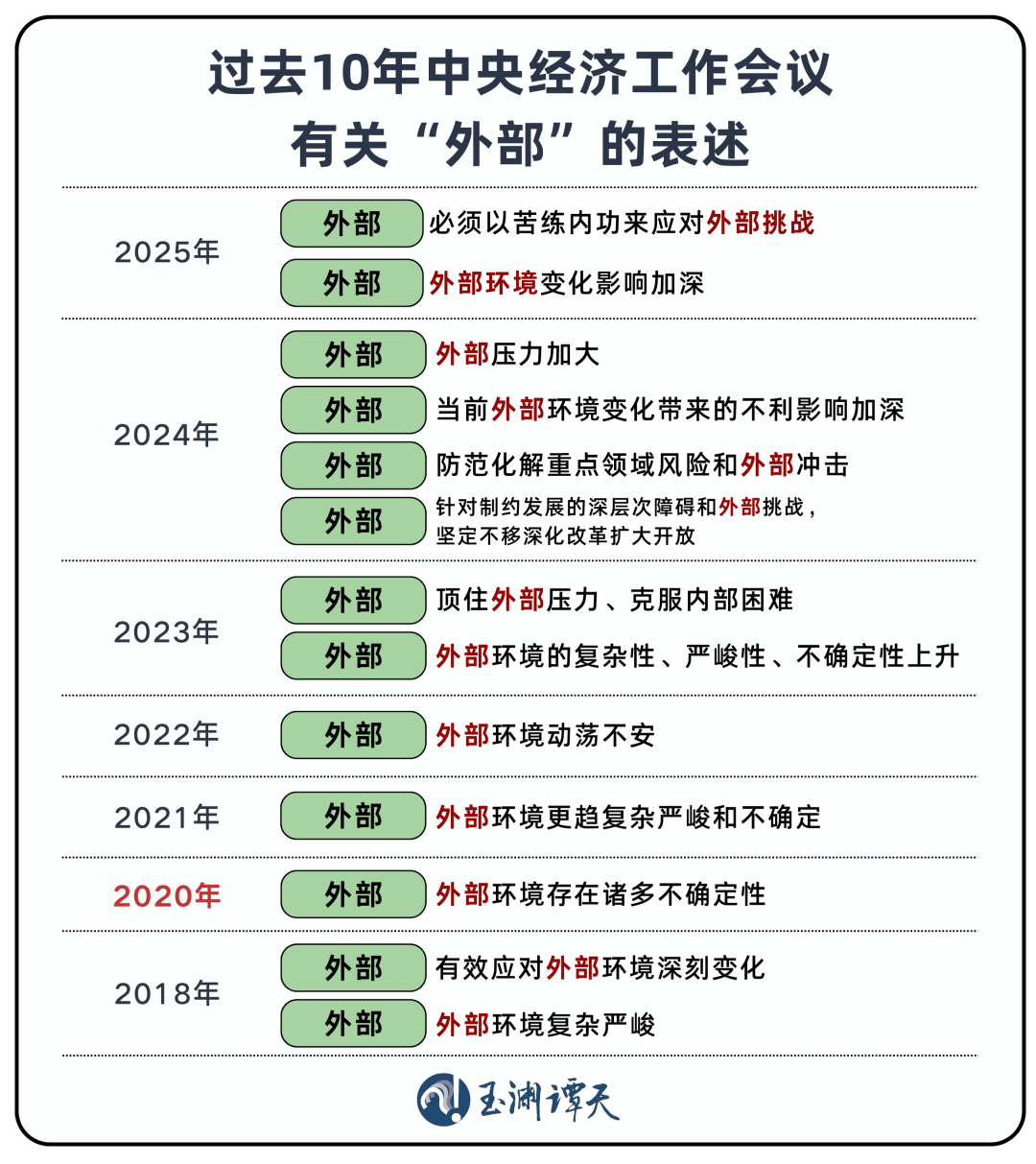
周俊杰:必须以苦练内功来应对外部挑战
Xin Lang Cai Jing· 2026-02-27 17:29
Core Viewpoint - The central economic work conference of 2025 emphasizes the importance of "practicing internal skills to respond to external challenges," which reflects the wisdom of the Party's governance and aims to guide the nation through complex global changes [1] Group 1: Philosophical and Strategic Considerations - Practicing internal skills is a significant strategic choice rooted in deep philosophical thinking and historical experience, reflecting the Party's understanding of development laws and precise judgment of the times [1][2] - The internal factors such as strength, system, culture, and governance capabilities are fundamental to a country's development, while external opportunities or challenges serve as conditions [2] Group 2: Response to External Challenges - The current international environment is increasingly complex, with Western countries attempting to contain and suppress China, making it essential to focus on internal strengths to address these challenges [2][3] - The Party has implemented various strategies, including innovation-driven development and supply-side structural reforms, to enhance economic resilience and maintain strategic autonomy [3][4] Group 3: Economic Development - Emphasizing the expansion of domestic demand and the construction of a strong domestic market is crucial for economic growth, especially in the face of external uncertainties [7] - The focus should be on upgrading traditional industries and developing new strategic industries to enhance overall competitiveness [7] Group 4: Technological Self-Reliance - The importance of mastering key core technologies through self-reliance and innovation is highlighted, especially in response to technological blockades from Western countries [8] - The government aims to implement major strategic technology projects and enhance the role of enterprises in innovation [8] Group 5: Military Strength - Building a strong military capable of winning battles is essential for national security and development, with a focus on training and modernizing the armed forces [9] Group 6: High-Quality Development - Practicing internal skills is not about blind competition but involves enhancing the capabilities of party members and officials to drive high-quality development and address risks [5][13] - Reform and innovation are necessary to transition to a more sustainable and equitable development model, with a focus on breaking down barriers to market mechanisms [13]
练好内功把握主动(思想纵横)
Ren Min Ri Bao· 2026-02-08 23:16
Core Viewpoint - The emphasis on "internal practice" is crucial for addressing external challenges, as highlighted in the Central Economic Work Conference, which underscores the importance of focusing on internal capabilities to navigate complex situations and seize opportunities [1][2]. Group 1: Internal Practice and Economic Strategy - The concept of "internal practice" is essential for enhancing self-potential and internal motivation, allowing for better control over development and the ability to adapt to external changes [1][3]. - The current global economic environment necessitates a focus on quality improvement and efficiency enhancement as fundamental strategies for sustainable development [3][4]. - The need for strategic determination among party members is critical, as many face challenges that require confidence and action to overcome [2][4]. Group 2: Challenges and Solutions - The ongoing transition in development methods and economic structure presents numerous challenges that require a persistent and adaptable approach to problem-solving [2][3]. - The importance of understanding the main contradictions and focusing resources on key areas is emphasized to avoid ineffective efforts and ensure targeted actions [3][4]. - The distinction between productive work and "busy work" is crucial, as true progress comes from meaningful engagement rather than mere activity [4].
中央经济工作会议精神解读:以“投资于人”和“苦练内功”稳预期、强动能
Capital Securities· 2025-12-29 10:51
Group 1: Economic Policy Adjustments - The 2025 Central Economic Work Conference has shifted its focus from "nine tasks" in 2024 to "eight tasks," emphasizing the importance of domestic demand as the primary driver of economic growth[9] - The task of expanding domestic demand has been elevated to the top priority, with a focus on "building a strong domestic market" and implementing specific actions to boost consumption and income[10] - The urgency of risk prevention has decreased, with the task of "preventing and resolving key area risks" moving from fifth to eighth place, indicating progress in areas like debt replacement and real estate[9] Group 2: Investment and Consumption Strategies - The conference emphasizes the integration of investment in both physical assets and human capital, with a focus on enhancing income for all urban and rural residents through specific plans[10] - Service consumption is highlighted as a key area for expanding domestic demand, with the service sector showing higher multiplier effects and lower risks compared to traditional goods consumption[25] - The government aims to stabilize the real estate market by encouraging the purchase of existing homes for affordable housing, which is expected to alleviate liquidity pressures on real estate companies[38] Group 3: Financial and Monetary Policies - The fiscal policy will maintain necessary levels of fiscal deficit, total debt, and expenditure, focusing on optimizing the expenditure structure for greater policy effectiveness[15] - Monetary policy will continue to be moderately accommodative, with an emphasis on promoting stable economic growth and reasonable price recovery, while ensuring liquidity remains ample[21] - The total social financing (TSF) increased by 33.4 trillion yuan in the first eleven months of the year, reflecting a 13.6% year-on-year increase, indicating strong financial support for the real economy[27] Group 4: Long-term Economic Outlook and Risks - The macroeconomic outlook remains positive, with structural reforms expected to deepen, focusing on quality improvement and effective growth[60] - Risks include potential delays in policy implementation and effectiveness, external economic pressures, and market and credit risks that could impact domestic asset prices[61]
在苦练内功中应对挑战
Liao Ning Ri Bao· 2025-12-24 01:25
Core Viewpoint - The recent provincial economic work conference emphasized the need for a comprehensive approach to address both opportunities and challenges in the economy, advocating for a focus on internal capabilities to ensure high-quality development [1]. Group 1: Economic Strategy - The conference highlighted the importance of solidifying foundations and addressing weaknesses to enhance advantages and eliminate bottlenecks, which is crucial for sustainable growth [1]. - It was noted that internal capabilities are essential for navigating challenges and seizing opportunities, with a historical perspective showing that resilient economies rely on strong internal foundations rather than external benefits [1]. Group 2: Focus Areas for Improvement - The conference outlined specific areas for improvement, including promoting consumption and investment, enhancing technological innovation, and optimizing the business environment to foster internal growth dynamics [2]. - A clear path was established to address the shortcomings in the revitalization of Liaoning, emphasizing the need for targeted efforts in key areas during the strategic period of the "15th Five-Year Plan" [2]. Group 3: Long-term Commitment - The cultivation of internal capabilities requires sustained effort and patience, as advancements in technology, industry, and regional competitiveness cannot be achieved overnight [3]. - A commitment to facing challenges head-on and maintaining a focus on long-term goals is essential, with an emphasis on practical achievements that benefit the public [3].
苦练内功,做更好的自己
Sou Hu Cai Jing· 2025-12-15 08:38
Core Viewpoint - The article emphasizes the importance of "internal cultivation" as a strategy for China to face external challenges and enhance its economic resilience and quality of growth [2][5][18]. Group 1: Economic Performance - China's major economic indicators have performed better than expected, with the country remaining the largest engine of global economic growth [6]. - Exports from January to November increased by 6.2% year-on-year despite high tariffs and external pressures [7]. - China's manufacturing value added accounts for nearly 30% of the global total, surpassing the combined total of the G7 countries [8]. Group 2: Innovation and Quality Improvement - The Central Economic Work Conference highlighted the need for "quality improvement and efficiency enhancement" as a key focus for economic development [18]. - New quality productive forces have become a prominent highlight of China's economic growth, with significant increases in the production of 3D printing equipment, new energy vehicles, and industrial robots, all exceeding 29% year-on-year [21]. - The conference emphasized the importance of strengthening the innovation capabilities of enterprises and expanding initiatives like "Artificial Intelligence+" [22]. Group 3: Domestic Demand and Consumption - Expanding domestic demand has been identified as a top priority, with plans to increase urban and rural residents' income [30][34]. - The article notes the shift in consumption patterns towards services as GDP per capita rises, highlighting the need to enhance service consumption to unlock potential [36]. - The government plans to promote investment growth through various measures, including increasing central budget investments and leveraging new policy financial tools [38].

“五个必须”彰显战略定力与转型决心
Jin Rong Shi Bao· 2025-12-15 02:52
Group 1 - The core viewpoint emphasizes the "Five Musts" proposed by General Secretary Xi Jinping during the Central Economic Work Conference, which serve as a guiding framework for economic work in the new era [1] - The first must is to fully tap into economic potential, recognizing that while China has a vast market advantage, there are still untapped potentials that need to be addressed, particularly in expanding consumption and investment [2] - The second must is to combine policy support with reform and innovation, highlighting the importance of macro policies and structural reforms to ensure stable economic development [2] Group 2 - The third must focuses on balancing the roles of the market and government, advocating for a collaborative approach that avoids both excessive regulation and complete laissez-faire [3] - The fourth must stresses the importance of combining investments in physical assets with investments in human capital, indicating a shift towards prioritizing education, employment, and social welfare in policy decisions [3] - The fifth must is about strengthening internal capabilities to face external challenges, emphasizing the need for sustained domestic demand and risk management in key sectors [4] Group 3 - The conference also conveyed a clear message regarding macroeconomic policy stability, indicating that there will be no abrupt changes or reductions in policy support as the country embarks on the new "15th Five-Year Plan" [4] - The emphasis on "long-termism" reflects a commitment to maintaining resilience in economic development despite external uncertainties, reinforcing the strategic determination to continue with established plans [5]
玉渊谭天|苦练内功,做更好的自己
Sou Hu Cai Jing· 2025-12-14 16:30
Core Viewpoint - The article emphasizes the importance of "internal cultivation" as a strategy for China to face external challenges, highlighting the need for both quality and direction in economic development [1][2]. Economic Performance - China's major economic indicators have performed better than expected, with the country remaining the largest engine of global economic growth [2]. - From January to November, China's exports increased by 6.2% year-on-year despite high tariffs and external pressures, showcasing resilience through diversified market layouts and industrial upgrades [3]. Manufacturing Sector - The manufacturing sector is identified as a key area for innovation and a reflection of the country's shift towards higher quality development [4]. - China's manufacturing value added accounts for nearly 30% of the global total, surpassing the combined total of the G7 countries [3]. Technological Innovation - The recent Central Economic Work Conference noted that external pressures cannot stifle China's technological advancements, with a focus on three international technology innovation centers [5][6]. - The shift in language regarding these centers indicates significant achievements over the past five years, enhancing their capacity for influence [7]. Economic Growth Projections - The International Monetary Fund has raised its forecast for China's economic growth to 5% by 2025, reflecting a positive outlook [11]. - The emphasis on "quality improvement and efficiency enhancement" marks a new direction in macroeconomic policy [12]. New Quality Productivity - The concept of "new quality productivity" is highlighted as a key driver of economic growth, with significant increases in the production of 3D printing equipment, new energy vehicles, and industrial robots [15]. - The focus on emerging and future industries, such as quantum technology and hydrogen energy, is seen as crucial for long-term competitive advantage [16]. Internal Demand Expansion - Expanding domestic demand is prioritized, with plans to increase urban and rural residents' income as a key task for the coming years [20][23]. - The article notes the importance of enhancing the supply of quality goods and services to unlock consumption potential [25]. Investment Strategies - The government plans to stabilize investment growth through various measures, including increasing central budget investments and leveraging new policy financial tools [26]. - The long-term resilience of China's economy is emphasized as a critical factor in navigating risks and challenges [26].
玉渊谭天|苦练内功,做更好的自己
Xin Lang Cai Jing· 2025-12-14 15:47
Core Viewpoint - The central economic work conference emphasizes the necessity of "practicing internal skills" to respond to external challenges, highlighting the importance of resilience and quality development in China's economy [1][24][25]. Group 1: Economic Performance - China's major economic indicators have performed better than expected, with the country remaining the largest engine of global economic growth [2][27]. - From January to November, China's exports increased by 6.2% year-on-year despite high tariffs and external pressures, showcasing the resilience derived from diversified market layouts and upgraded industrial structures [2][28]. - China's manufacturing value added accounts for nearly 30% of the global total, surpassing the combined total of the G7 countries, with the gap widening [2][28]. Group 2: Innovation and Development - The manufacturing sector is identified as the main arena for activating innovation and reflects the country's shift towards higher quality development [3][29]. - The central economic work conference noted a significant change in the approach to international technology innovation centers, indicating solid achievements over the past five years [4][30][32]. - The focus on developing new quality productive forces is reiterated, with specific actions to enhance enterprise innovation and expand "Artificial Intelligence+" initiatives [14][40]. Group 3: Internal Demand and Consumption - Expanding domestic demand is prioritized as a key task, with plans to increase urban and rural residents' income and enhance the supply of quality goods and services [18][48]. - New consumption models and trends are emerging, such as the "national style economy" and attention economy, indicating a shift in consumer behavior [18][48]. - The importance of service consumption is highlighted, as it is expected to drive employment and optimize industrial structure [21][49]. Group 4: Investment and Economic Strategy - The government plans to stabilize investment growth through various measures, including increasing central budget investments and utilizing new policy financial tools to stimulate private investment [22][50]. - The establishment of 500 billion yuan in new policy financial tools is expected to drive 7 trillion yuan in investments [22][50]. - The long-term resilience of China's economy is emphasized, with a focus on internal capacity building as a foundation for addressing risks and challenges [22][50].