行政干预

Search documents
特朗普的“新三支箭”(国金宏观钟天)
Xin Lang Cai Jing· 2026-01-26 15:09
Core Viewpoint - The article discusses Trump's expansion of executive power in 2026, focusing on domestic policies aimed at improving affordability and external policies that seek to align personal political interests with national interests, particularly in the context of a K-shaped economy and the role of AI [3][38]. Group 1: Domestic Policies - Trump aims to control living costs through administrative measures rather than relying on the Federal Reserve's monetary policy, recognizing the limitations of traditional monetary policy [3][39]. - The K-shaped economy shows a disparity where one part is "overheated" and another is "cooled," with Trump's policies targeting the "cold" end, which includes low-income groups and suppressed employment [4][40]. - The labor income share for the American working class fell to 53.8% in Q3 2025, marking a historical low and continuing a downward trend since 2000, which may increase government transfer payments and fiscal deficit pressure [6][42]. - Key policies include capping credit card interest rates at 10% and introducing 50-year mortgages, along with requiring Fannie Mae and Freddie Mac to purchase $200 billion in mortgage-backed securities to lower mortgage costs [7][44]. - The controversial 10% credit card interest rate cap is projected to save households $100 billion in interest payments, but the calculation may overestimate the actual savings [10][44]. - Potential negative effects of the interest rate cap include reduced credit supply, as banks may stop lending to high-risk individuals due to insufficient profit margins [10][47]. Group 2: External Policies - Trump's foreign policy actions, such as the arrest of Maduro and interest in Greenland, aim to capture the "greatest common divisor" of U.S. national interests, voter concerns, and personal political ambitions [16][53]. - The actions are part of a broader strategy to establish a U.S.-led "energy fortress" in the Western Hemisphere, reflecting a return to Monroe Doctrine principles [16][53]. - The pursuit of Greenland is driven by political aspirations and strategic goals, including access to rare earth minerals and new trade routes [17][54]. - Trump's approach emphasizes "peace through strength," suggesting that the U.S. will continue to break global rules, with tariffs and military interventions as options [18][55]. Group 3: AI and Economic Strategy - Trump emphasizes the need to maintain AI leadership, advocating for a new spirit of patriotism and national loyalty among tech companies [19][56]. - The internal policies aimed at supporting the K-shaped economy and external strategies for resource acquisition are designed to create a favorable environment for AI sustainability [19][56]. - The rapid growth of private credit investments in AI companies raises concerns about credit risk, as these firms' ability to meet high profit growth expectations is crucial for economic stability [22][59]. - The article warns that the costs of Trump's policies will ultimately be borne by U.S. dollar credit, highlighting the complexities of maintaining economic stability amid rising fiscal pressures [24][61].

中金 | 选举的另一面:行政干预、资本让利与政策风险
Sou Hu Cai Jing· 2026-01-20 23:57
Core Insights - The 2026 midterm elections are crucial for Trump and the Republican Party, with a focus on affordability issues due to high prices, interest rates, and housing costs [1][3][5] - Voter sentiment is shifting towards immediate economic pressures rather than traditional growth metrics, indicating a need for policy responses that address affordability [2][5] Economic Context - High inflation has persistently affected low- and middle-income households, particularly in housing, where affordability has significantly declined since 2022 [1][10] - The rising mortgage rates, which increased from approximately 3% in 2021 to around 6% currently, have exacerbated housing affordability issues [10][14] - Consumer debt pressures are also rising, with significant increases in overdue payments on credit cards, auto loans, and student loans [11][15] Policy Implications - As affordability becomes a central policy goal, there is a shift towards more direct interventions in pricing, interest rates, and corporate behavior [20][21] - Recent actions by Trump include proposals to limit credit card interest rates to 10% and push for legislative measures to prevent large institutional investors from buying single-family homes [21][22] - The administration's focus on affordability may lead to more aggressive policies that could disrupt markets, as seen in historical precedents [29][27] Market Reactions - The market's perception of election-year policies is cautious, with concerns that aggressive affordability measures could lead to volatility in asset prices [2][29] - Sectors with strong pricing power and high profit margins may face increased policy risks as the narrative shifts towards wealth redistribution [29][30] - Conversely, cost-benefit industries may become more favorable for investment as they align with the affordability focus [30]
中金 | 选举的另一面:行政干预、资本让利与政策风险
中金点睛· 2026-01-20 23:37
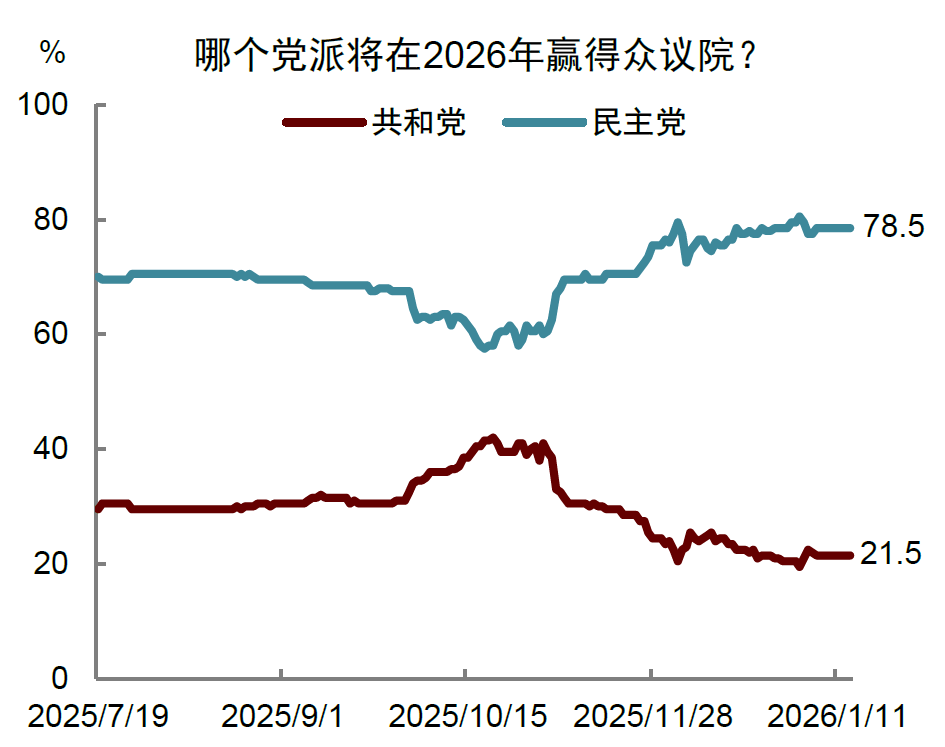
Core Viewpoint - The 2026 midterm elections are crucial for Trump and the Republican Party, with affordability becoming the central issue for voters, overshadowing traditional economic growth metrics [2][5][7]. Group 1: Political Context - The Republican Party holds a slim majority in the House of Representatives, and losing it could lead to a divided government, limiting Trump's ability to implement policies [5][6]. - Historical trends indicate that the party of the sitting president often loses seats in midterm elections, increasing the risk of impeachment for Trump if the Republicans fail [6][7]. Group 2: Affordability Crisis - High inflation has significantly impacted middle and low-income households, particularly in housing, where affordability has sharply declined since 2022 [2][12]. - The median income required to afford a typical home has increased by 43% compared to the median household income, exacerbated by rising mortgage rates [12][14]. - The burden of debt repayment is rising, with delinquency rates on credit cards and loans nearing previous highs, indicating increased financial stress among households [13][18]. Group 3: Policy Implications - As affordability becomes a primary goal, policy measures may shift towards more direct interventions in pricing and corporate behavior, moving away from traditional macroeconomic policies [3][22]. - Recent actions by Trump include proposals to limit credit card interest rates and push for legislative changes in housing, reflecting a focus on alleviating cost pressures for voters [24][25]. Group 4: Market Impact - The focus on affordability may limit the expansion of index valuations and increase market volatility, as the government prioritizes voter concerns over asset price growth [32]. - Sectors with strong pricing power and high profit margins may face increased policy risks, while cost-benefit industries could become more favorable for investment [32][33]. - Historical examples suggest that aggressive policy interventions can lead to market disruptions, as seen in the 1970s, raising caution among investors regarding potential policy risks [30][31].