
可穿戴技术

Search documents
为什么值得亲临现场?可穿戴技术大会价值观察 | 免费门票仍可换领
思宇MedTech· 2026-02-12 01:04
Core Viewpoint - The article emphasizes the significance of the Wearable Technologies Conference (WT) in Hong Kong, focusing on why attending the event in person is essential for industry professionals to engage in meaningful discussions and interactions [3][10]. Group 1: Evolution of Wearable Technology - Over the past decade, wearable technology has primarily been viewed as consumer electronics or health management tools. Recently, due to aging populations and rising chronic disease management needs, these devices are increasingly penetrating medical applications [5]. - The shift in wearable technology is not only in product form but also in its application for long-term health and disease management, moving beyond mere monitoring tools [5]. - There is a growing demand for data collected by wearable devices to be integrated with clinical diagnosis and treatment, highlighting the importance of regulatory compliance and long-term operational stability [5][6]. Group 2: Key Issues Addressed at the Conference - The WT conference focuses on six critical topics that have been repeatedly validated, aiming to explore how wearable technology can be effectively utilized rather than merely presented as concepts [8][9]. - The conference aims to address systemic challenges that span across corporate boundaries and academic disciplines, making it a vital platform for high-quality offline exchanges [6]. Group 3: Importance of Attending in Person - While obtaining insights can be done remotely, experiencing the formation and evolution of ideas through live discussions and interactions at the conference is irreplaceable [11]. - The first "Hong Kong Medical Technology Innovation World Cup" will showcase shortlisted projects, providing attendees with a direct view of early-stage project statuses, which is a compelling reason to attend [12]. Group 4: Conference Agenda Highlights - The first day (March 4) will focus on AI, interconnected health, deep medical technology, and engineering implementation, helping attendees understand how wearable technology integrates into medical systems and industry processes [16]. - The second day (March 5) will extend discussions to manufacturing, smart patches, rehabilitation, and longevity, featuring the Innovation World Cup project presentations and finals, emphasizing practical applications [16].

为什么这场可穿戴技术科技大会,值得医疗产业关注?免费门票限量换领!
思宇MedTech· 2026-01-30 01:32
Core Insights - The WT | Wearable Technologies Conference will return to Hong Kong on March 4-5, 2026, focusing on the integration of wearable technology into the medical field, emphasizing practical applications and industry challenges [1][2] - The conference aims to create a platform for dialogue among government, industry, academia, and investment sectors to foster collaboration and innovation in wearable medical technology [1][2] Group 1: Conference Overview - The WT conference will serve as an international B2B platform, emphasizing the industrialization of wearable medical technology from concept validation to large-scale application [1] - The event will feature a diverse lineup of speakers, including leaders in research, engineering, regulation, and industry, highlighting the international and industry-oriented nature of the conference [6][7] Group 2: Agenda and Topics - The two-day agenda will cover interconnected health management, disease prevention, and the role of artificial intelligence in wearable ecosystems [10][12] - Specific topics include continuous monitoring of vital signs, rehabilitation applications, and the engineering challenges in medical device manufacturing [12][14] Group 3: Innovation World Cup - The Innovation World Cup has attracted over 200 medical technology projects, providing a platform for teams to showcase their innovations and connect with industry experts [16][17] - Award-winning projects will have opportunities to access resources from the Hong Kong Science Park and advance commercialization efforts [16][17]
全球与中国消费电子用热塑性聚氨酯(TPU)市场现状及未来发展趋势
QYResearch· 2025-12-23 07:04
Core Viewpoint - The thermoplastic polyurethane (TPU) industry for consumer electronics is at a critical turning point, facing short-term price pressures but long-term opportunities driven by trends towards green, high-performance, and intelligent materials [7]. Group 1: Current Industry Status - TPU is a high-performance polymer material used in consumer electronics for protective cases, functional components, and structural parts, with specific mechanical and environmental properties [2][5]. - The global TPU market for consumer electronics is projected to grow from $547.50 million in 2024 to $1,025.35 million by 2031, with a compound annual growth rate (CAGR) of 9.60% [16]. - The Chinese market is rapidly evolving, expected to account for approximately 49.87% of the global market by 2031, growing from $252.96 million in 2024 [16]. Group 2: Market Growth Drivers - The demand for TPU in consumer electronics is driven by the need for lightweight, durable materials in smartphones, wearables, and flexible displays, with increasing penetration in protective cases and smart device applications [20][22]. - Innovations in TPU manufacturing are leading to customized products with unique properties such as flame retardancy, UV resistance, and antibacterial features, expanding applications across various industries [9][10]. Group 3: Technological and Environmental Trends - The industry is witnessing a shift towards bio-based and biodegradable TPU products, with companies like BASF and Wanhua Chemical introducing bio-based TPU with 30%-70% bio-content [11]. - The development of recycling technologies is expected to enhance TPU waste recycling rates, aligning with global carbon neutrality goals [11]. Group 4: Competitive Landscape - The top three global manufacturers, BASF, Covestro, and Huntsman, hold over 41% market share, indicating a highly competitive environment, particularly in China [17][19]. - The market is characterized by a "two super, many strong" structure, with leading companies like Huafeng Group and Wanhua Chemical dominating the high-end market, while smaller firms operate in the low-end market [19]. Group 5: Policy and Regulatory Environment - Government policies such as "Made in China 2025" and the "Internet Plus" initiative are promoting high-end and intelligent development in the TPU sector, encouraging its application in electronic products [24]. - Environmental regulations are driving the development of green TPU materials, reducing reliance on traditional petroleum-based materials [24].
中国学者一作Nature论文:超声波驱动的人工肌肉,能够抓握、弯曲和游动
生物世界· 2025-10-30 04:21
Core Insights - The article discusses the emergence of flexible robotics, which aims to utilize soft materials and flexible actuators to replicate human-like tactile sensations, potentially transforming prosthetics, minimally invasive surgical robots, and wearable devices [2] Group 1: Research Development - A study published in Nature introduces ultrasound-driven artificial muscles made from flexible materials filled with microbubbles that bend when exposed to ultrasound, enabling wireless control for various movements [3] - The design utilizes over 10,000 microbubbles, each precisely sized to resonate at different frequencies, allowing for selective oscillation and distributed thrust, resulting in programmable deformation with high compactness (approximately 3000 microbubbles/mm²), lightweight (0.047 mg/mm²), high strength (about 7.6 µN/mm²), and rapid response (grasping in less than 100 milliseconds) [6][7] Group 2: Applications and Implications - The artificial muscles exhibit excellent scalability from micrometer to centimeter scales, flexibility, and multiple degrees of freedom, with potential applications in flexible robotics, wearable technology, haptic technology, and biomedical instruments [9]

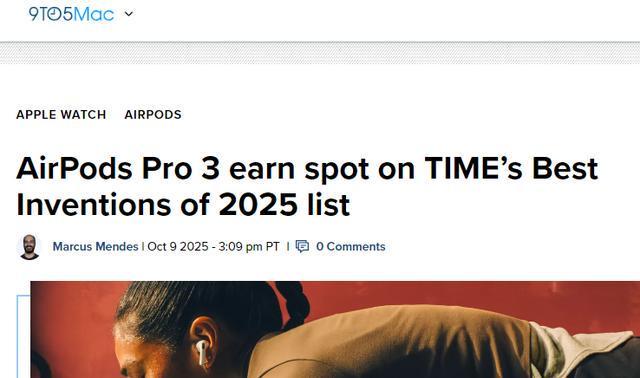
《时代》杂志年度最佳发明:苹果AirPods Pro 3与Watch Series 11入选
Huan Qiu Wang Zi Xun· 2025-10-10 03:50
Core Insights - Time magazine has released its list of the 300 best inventions of the year, featuring Apple's AirPods Pro 3 and Apple Watch Series 11 [1][3] Group 1: AirPods Pro 3 - Apple's Senior Vice President of Hardware Engineering, John Ternus, described AirPods Pro 3 as a "huge leap" in technology [3] - The new earbuds offer noise cancellation that is twice as effective as the previous generation [3] - AirPods Pro 3 includes a photoplethysmography sensor to track the wearer's heart rate and can function as a hearing aid when needed [3] - A standout feature is the real-time translation capability, allowing conversations between users speaking different languages, including French, German, Portuguese, Spanish, and English [3] Group 2: Apple Watch Series 11 - Apple Watch Series 11 has been recognized in the wearable technology category for its new blood pressure monitoring feature [3] - The watch utilizes FDA-approved high blood pressure detection technology, analyzing data from the optical heart sensor to monitor vascular responses to each heartbeat [3] - It provides timely alerts to users regarding signs of chronic hypertension [3]

Meta三大产品背后:获数模龙头艾为电子助力
Zheng Quan Shi Bao Wang· 2025-09-19 11:00
Group 1 - Meta showcased its latest advancements in wearable technology at the 2025 Connect conference, introducing three major product lines including the flagship Meta Ray-Ban Display, which signifies the transition of "AI on the face" from concept to reality [1] - The second-generation Ray-Ban Meta smart glasses aim to create a mass-market AI eyewear, featuring an 8-hour battery life, support for 3K ultra HD video recording, and a new "conversation focus" function [1] - The Oakley Meta Vanguard, designed for sports enthusiasts, introduces a new category of "smart sports" products with an IP67 waterproof and dustproof design, deeply integrated with Garmin and Strava ecosystems [1] Group 2 - Aiwai Electronics, a leading Chinese chip provider, offers comprehensive chip solutions that support Meta's innovative products, serving as a long-term core partner [1] - Aiwai's 3-channel RGB LED driver chip provides precise light control for the Ray-Ban series, supporting 256 levels of current adjustment per LED and ensuring smooth dimming effects even at low brightness [2] - The chip's ultra-low power design significantly extends device battery life, with shutdown mode consuming less than 1μA and standby mode less than 10μA [2] Group 3 - Aiwai's Hall switch series addresses the challenge of detecting the opening and closing of charging cases in wearable devices, featuring a compact 0.8mm×0.8mm package for high reliability in space-constrained applications [2] - The LCD bias driver chip from Aiwai provides an efficient power solution for the Quest series TFT-LCD panels, achieving over 85% efficiency at output currents greater than 40mA [2] - Aiwai's tactile feedback chip delivers a noise-free, strong vibration experience for VR controllers, supporting rapid activation at 1ms [2] Group 4 - The AI glasses market is accelerating towards mass consumer adoption, with companies like Samsung and Apple planning to launch similar products by 2026 [3] - Global shipments of AI/AR glasses are expected to exceed 70 million units by 2030, creating a hardware market worth hundreds of billions [3] - Aiwai Electronics has developed a comprehensive chip solution covering perception, computation, connectivity, and energy management, achieving international advanced performance levels [3]


马斯克正式起诉OpenAI和苹果,电商成为小红书一级入口 | 蓝媒GPT
Sou Hu Cai Jing· 2025-08-26 10:48
Group 1: Legal Actions and Allegations - Musk's company xAI has filed a lawsuit against OpenAI and Apple, accusing them of illegal collusion to hinder competition in the AI sector [1] - Musk claims that Apple is violating antitrust laws by favoring OpenAI in its app store rankings, making it difficult for other AI companies to compete [1] - Musk has threatened immediate legal action against Apple and questioned why Apple has not included xAI's applications in its recommended section [1] Group 2: E-commerce Developments - Xiaohongshu has launched a new version of its app, making e-commerce a primary entry point, indicating a significant investment in its e-commerce business [1] - The new version features a "Market" page in the bottom navigation bar, positioned near the main "Home" page, showcasing Xiaohongshu's lifestyle e-commerce offerings [1] Group 3: Technology and Product Innovations - Zhixiang Future has introduced a new self-regressive image editing framework called VAREdit, which executes user commands accurately and improves editing speed to 0.7 seconds [1] - Multiple smartphone manufacturers, including Vivo, Honor, Xiaomi, Huawei, and OPPO, are entering the mixed reality (MR) and augmented reality (AR) markets, reflecting a strategic shift towards new human-computer interaction opportunities [2] - Meta Platforms plans to unveil a new type of smart glasses with a display at the upcoming Connect conference, priced around $800, indicating ongoing expansion in augmented reality and wearable technology [3]
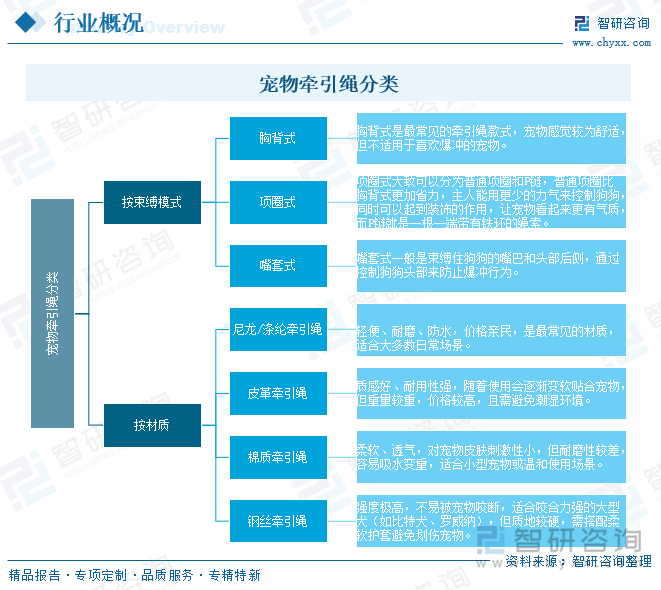
2025年中国宠物牵引绳行业发展背景、产业链图谱、市场规模、竞争格局及发展趋势研判:宠物主人更加关注产品的材质、功能和规格[图]
Chan Ye Xin Xi Wang· 2025-08-22 01:35
Overview - The pet leash market in China is rapidly growing, with a projected market size of 5.614 billion yuan in 2024, representing a year-on-year growth of 15.64%, with dog leashes accounting for over 90% of the market share [1][11] - Increased attention to pet safety and comfort is driving demand for higher quality leashes, leading companies to develop more personalized and user-friendly products [1][11] - The rise in regulations promoting responsible pet ownership is expected to further boost the demand for pet leashes [1][11] Development Background - The aging population in China is contributing to the rise in pet ownership, with the population aged 65 and above expected to reach 219.69 million in 2024, a year-on-year increase of 1.35% [4] - The increasing divorce rate and declining birth rate are leading to a rise in solitary individuals who seek companionship from pets, further fueling the pet economy [4] - Over 90% of pet owners consider their pets as family or friends, indicating a strong willingness to spend on pet-related products [4] Industry Chain - The upstream of the pet leash industry includes suppliers of raw materials such as nylon, silicone, and metal, as well as suppliers of plastic components and packaging materials [6] - The midstream involves the manufacturing of pet leashes, while the downstream consists of sales channels including pet specialty stores, veterinary clinics, supermarkets, and e-commerce platforms [6] Current Market Status - The pet leash market is experiencing robust growth driven by a large pet-owning population, with a market size of 5.614 billion yuan projected for 2024, reflecting a 15.64% increase [11] - The demand for leashes is expected to grow as pet owners become more attentive to their pets' safety and comfort [11] Competitive Landscape - The pet leash market in China is highly competitive, with numerous participants. The top 10 brands by usage rate include hipidog (20.5%), flexi (11.9%), and Hoopet (11.3%) [13] - Companies like Wenzhou Yuanfei Pet Toys Co., Ltd. and Nanjing hipidog Pet Products Co., Ltd. are key players in the industry, with Yuanfei's revenue from pet leashes reaching 456 million yuan in 2024 [15][17] Development Trends - Future trends in the pet leash market include the integration of wearable technology, such as GPS tracking and health monitoring sensors, into leashes [19] - There will be a focus on ergonomic designs to reduce hand fatigue for pet owners, as well as an increase in customized products tailored to different pet sizes and behaviors [19]

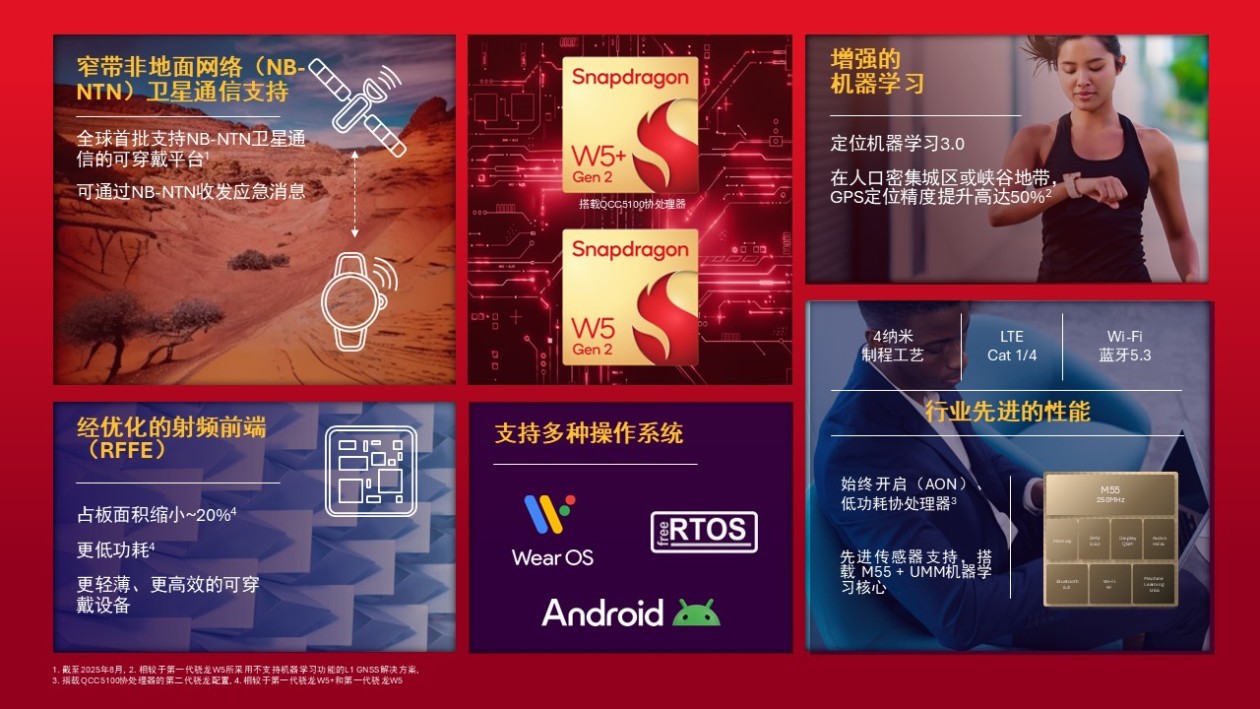
高通发布第二代骁龙W5+与W5平台 率先支持NB-NTN卫星通信
Huan Qiu Wang· 2025-08-21 03:38
Core Insights - Qualcomm has launched the second-generation Snapdragon W5+ and W5 wearable platforms, enhancing connectivity, energy efficiency, product design, and positioning capabilities [1][3] - The platform utilizes Skylo's Narrowband Non-Terrestrial Network (NB-NTN) technology, enabling satellite communication for wearable devices, allowing for two-way emergency message transmission in remote areas without cellular coverage [1][3] Group 1: Product Features - The second-generation Snapdragon W5+ and W5 platforms are built on a 4nm system-on-chip (SoC) architecture, offering two versions: W5+ with a low-power co-processor and W5 without [1] - Key enhancements include a 50% improvement in GPS positioning accuracy and a 20% reduction in the size of the optimized radio frequency front-end (RFFE), contributing to lighter devices and extended battery life [1][3] Group 2: Industry Impact - The new platform positions Wear OS as the first operating system integrated with NB-NTN, enhancing communication reliability and user safety through satellite technology [3] - The Pixel Watch 4, as the first smartwatch supporting emergency satellite communication, leverages the second-generation Snapdragon W5 platform and Wear OS 6 for improved performance, energy efficiency, and connectivity [3] Group 3: Strategic Partnerships - The collaboration with Skylo expands satellite connectivity technology from smartphones, vehicles, and IoT to wearable devices, promoting functional upgrades in wearables while ensuring device miniaturization and battery life [3] - The SOS feature of the Pixel Watch is subject to regional limitations and offers two years of free usage upon activation, with potential data sharing with Google, emergency services, and satellite service providers [3]

AI 眼镜“秒变”直男程序员“脱单神器”,首次亮相被抢购一空!CEO 坦言:好产品要么能帮用户赚钱,要么能解决实际痛点
Sou Hu Cai Jing· 2025-08-19 03:18
Industry Overview - AI glasses are positioned as the next generation of interactive terminals that integrate artificial intelligence and wearable technology, currently undergoing a critical phase of technological breakthroughs and industrial ecosystem restructuring [1] - By 2025, the industry is expected to exhibit three major trends: multimodal large models enabling natural interaction and proactive service capabilities, a mature supply chain driving market demand, and deepened collaboration across the industrial chain [1] - The AI glasses market is projected to reach sales of 96 million units by 2030, with a rapid growth phase anticipated between 2025 and 2030, particularly around 2027 when sales could reach 10 million to 30 million units [18] Company Profile - Fuxi Technology, founded by a 90s tech entrepreneur, is emerging as a leading supplier in the AI glasses sector, having served multiple listed companies and actively collaborating with major players like Meta and Huawei [2] - The company has successfully transitioned from a B2B focus to targeting the consumer market, aiming to create its own AI glasses brand [5][12] - The first product, designed for social scenarios, particularly targeting young males to enhance their social skills, has already garnered significant interest, with prototype units sold out after a showcase [12][14] Product Development - The initial product is a "dating glasses" aimed at helping users improve their social interactions, with plans for promotion through platforms like Xiaohongshu to generate buzz and market education [13][15] - The product leverages AI to provide real-time assistance in social situations, utilizing data from publicly available datasets and reinforcement learning to enhance user experience [16] - The company emphasizes the importance of addressing user pain points, focusing on economic benefits and emotional value to drive sales [26] Market Challenges - The AI glasses market faces challenges such as hardware weight, battery life, and the need for effective cloud-edge collaboration for data processing [1] - The integration of hardware and software presents significant complexity, with the need for careful selection of components to optimize user experience [10] - The current market is still in its infancy, with a limited number of players possessing core technologies, leading to a potential talent shortage in the industry as demand for skilled professionals is expected to surge [20]