
财富管理生态

Search documents
交通银行回应拟申请撤销私人银行专营机构牌照
Zheng Quan Ri Bao· 2026-03-26 11:38
Group 1 - The core point of the news is that Bank of Communications plans to apply for the cancellation of its private banking specialized institution license, aiming to enhance its wealth management features and customer service capabilities through organizational restructuring [1][2] - The bank's existing private banking services, rights, and processes will remain unaffected, and it will continue to prioritize customer-centric services [1][2] - The recent board approval for the reform of the retail sector is a significant organizational adjustment in the wealth management area, following the establishment of a Wealth Management Department at the head office [1][2] Group 2 - The private banking sector is considered one of the most valuable segments in retail finance, serving as a key anchor for wealth management operations and reflecting the bank's wealth management strength [2] - As of June 2025, the number of private banking clients at Bank of Communications is expected to grow by 8.94% to 102,600, with assets under management (AUM) reaching 1.39 trillion yuan, a 7.20% increase [2] - The transition from a "fund intermediary" to a "service intermediary" is crucial for banks, as high-net-worth clients demand comprehensive and complex services, necessitating the integration of resources across investment banking, asset management, and trust services [2][3] Group 3 - The previous model of managing private banking as an independent licensed institution has led to structural issues such as resource fragmentation and service gaps, which have become increasingly apparent [3] - The competition in private banking is shifting from scale-based expansion to a focus on integration, collaboration, and specialized services, with future competitiveness relying on the ability to create a seamless wealth management ecosystem covering the entire client lifecycle [3]

指南针:业绩符合预期,证券业务高增体现协同效应-20260201
KAIYUAN SECURITIES· 2026-02-01 04:20
Investment Rating - The investment rating for the company is "Buy" (maintained) [1] Core Insights - The company reported total revenue and net profit of 2.15 billion and 230 million respectively for 2025, representing a year-on-year increase of 40% and 119% [6] - The Q4 revenue and net profit were 740 million and 110 million respectively, showing a year-on-year decrease of 1% and 48%, but a quarter-on-quarter increase of 60% and a return to profitability [6] - The company benefits from a favorable stock market, leading to steady growth in financial information service revenue and strong cash flow performance [6] - The company has revised down its market trading volume assumptions and adjusted its net profit forecasts for 2026 and 2027 to 360 million and 480 million respectively, with a year-on-year growth of 57% and 34% [6] - The company completed the acquisition and capital increase of Pioneer Fund, holding a 90% stake, enhancing its wealth management ecosystem [6] Financial Performance Summary - In 2025, financial information service revenue was 1.51 billion, up 28% year-on-year, with sales cash inflow of 1.81 billion, up 17% year-on-year [7] - Sales expenses for 2025 were 1.11 billion, up 38% year-on-year, with advertising and online promotion expenses increasing by 67% [7] - The net income from the securities business was 610 million, up 91% year-on-year, with commission income and interest income increasing by 110% and 33% respectively [8] - The company's investment income was 220 million, up 49% year-on-year, with an investment yield of 10%, down from 21.5% in 2024 [8] Financial Projections - Revenue projections for 2026, 2027, and 2028 are 2.74 billion, 3.34 billion, and 3.86 billion respectively, with year-on-year growth rates of 27.7%, 21.8%, and 15.7% [10] - Net profit projections for the same years are 359 million, 481 million, and 580 million, with year-on-year growth rates of 57.4%, 34.0%, and 20.8% [10] - The company maintains a high gross margin, projected to be 92.2% in 2026 and 93.6% in 2028 [10]
“薅羊毛”激战正酣 基金销售逐步进入“精耕细作”阶段
Zhong Guo Zheng Quan Bao· 2026-01-18 21:40
Core Insights - The competition among leading internet fund sales platforms for high-net-worth clients has intensified since the beginning of 2026, with platforms offering various incentives such as consumption coupons and app memberships to attract customers [1][2][3] - New regulations emphasize the need for fund sales institutions to guide investors towards long-term investments and to provide benefits to investors, pushing platforms to leverage their unique advantages to build a more stable and quality user base [1][5][7] Group 1: Competition for High-Net-Worth Clients - Major platforms like Ant Wealth, Tencent Licai Tong, and JD Finance are actively competing for high-net-worth clients by introducing tiered membership systems and exclusive benefits [2][3] - Ant Wealth has launched higher-tier cards targeting ultra-high-net-worth clients, while also facing criticism for reducing the benefits associated with existing membership tiers [2][3] - Other platforms are also rolling out similar packages to attract high-net-worth users, leading to increased discussions on social media about the comparative benefits of these offerings [3][4] Group 2: Transfer Custody Services - To facilitate the movement of funds, several platforms have introduced detailed "transfer custody" guides, helping investors switch their assets from one platform to another [4][6] - The popularity of these guides reflects the intense competition for high-net-worth clients and the evolving demands of investors for better service experiences [6][7] Group 3: Shift in Business Strategy - The fund sales industry is transitioning from a focus on rapid growth through traffic and scale to a more refined approach that emphasizes customer value and long-term relationships [5][6] - New regulations require fund sales institutions to prioritize investor interests, shifting the focus from merely selling products to retaining clients and ensuring their profitability [7][9] - Platforms are increasingly recognizing the need to provide comprehensive wealth management services rather than just transactional capabilities, as high-net-worth clients seek more integrated and professional solutions [6][10] Group 4: Building Trust and Long-Term Relationships - The new regulatory environment is pressuring fund sales institutions to enhance their service offerings and build trust with clients, moving from a "traffic operation" model to a "trust management" approach [7][9] - Platforms are implementing various strategies to improve customer engagement and retention, including personalized services and educational resources [8][10] - The competitive advantage of these platforms will depend on their ability to provide professional advisory services and maintain long-term client relationships in a low-fee environment [9][10]

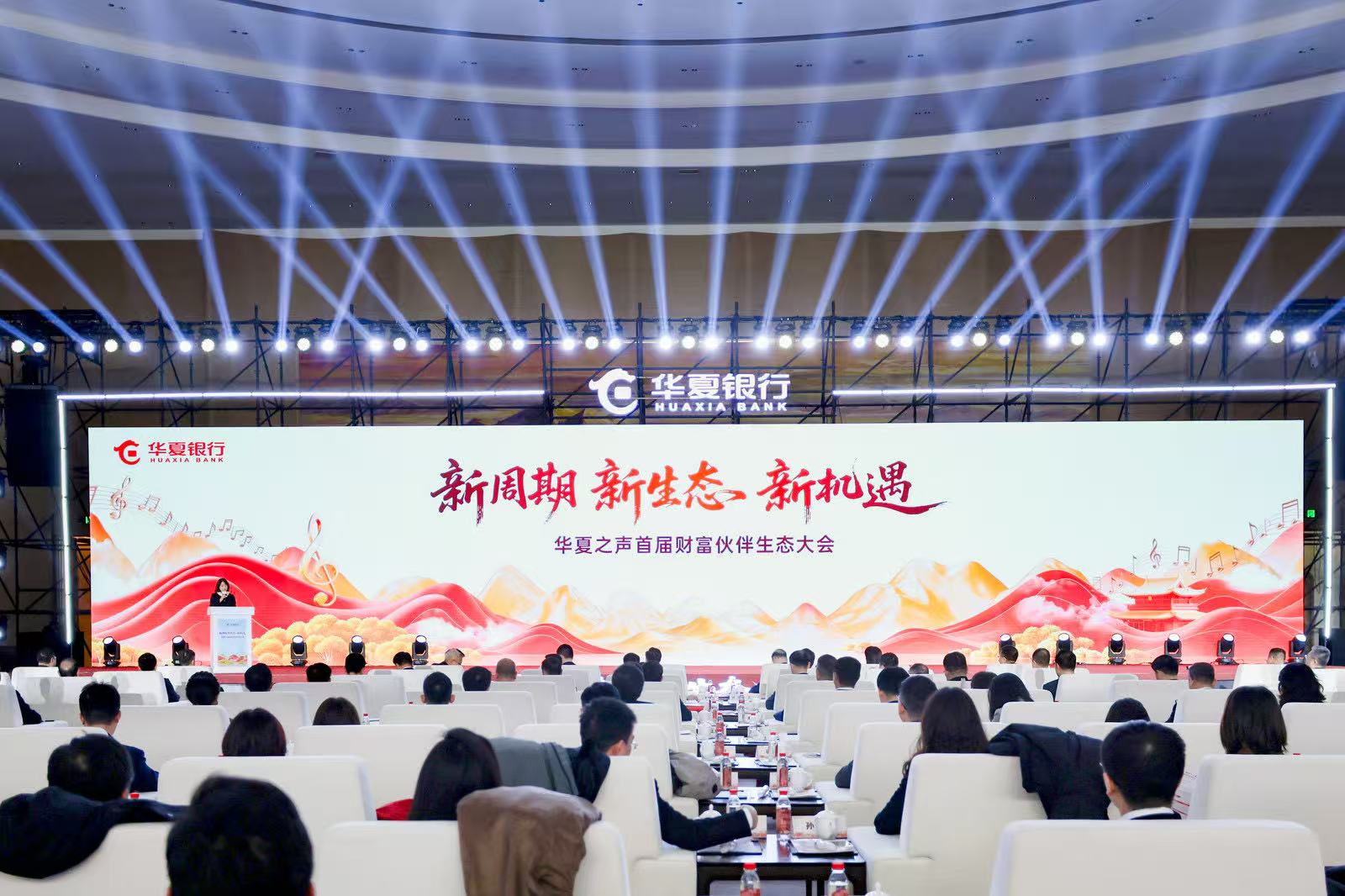
“新周期 新生态 新机遇” 华夏银行首届财富伙伴生态大会成功举办
Jin Rong Jie Zi Xun· 2025-12-30 03:56
Core Insights - The conference titled "New Cycle, New Ecology, New Opportunities" was successfully held by Huaxia Bank, gathering over 50 representatives from various asset management institutions to discuss the future of wealth management [2][3] - The wealth management industry is currently experiencing a golden opportunity for cyclical iteration and ecological reconstruction, emphasizing collaboration and value co-creation [3] Group 1: Conference Objectives and Themes - The purpose of the conference is to build a high-quality cooperation platform and to explore collaborative service strategies in wealth management under the new cycle [3][5] - Huaxia Bank aims to establish itself as an "ecological bank," focusing on a wealth management ecosystem that is customer-centric, scenario-based, and data-driven [5][10] Group 2: Keynote Speeches and Insights - Keynote speakers from leading institutions shared insights on industry trends, emphasizing the shift from traditional cooperation to strategic collaboration in the insurance and finance sectors [6][7] - The conference highlighted the importance of integrating various financial services to meet the comprehensive wealth management needs of clients and support the high-quality development of the real economy [5][6] Group 3: Brand and Service Innovations - Huaxia Bank launched a new core brand system for wealth management and private banking, including several sub-brands aimed at enhancing service offerings [8][9] - The new brand system represents a strategic shift from being a "product supplier" to an "ecological integrator" and "value co-creator" in wealth management [10] Group 4: Recognition and Future Directions - The conference included an award ceremony recognizing partner institutions for their contributions to the wealth management value chain, reinforcing the importance of collaboration [11][13] - Moving forward, Huaxia Bank plans to leverage this conference as a starting point to enhance resource sharing, empower partners, and drive sustainable growth in the wealth management industry [14]


构建财富管理新生态 机构共议多方协同路径
Xin Hua Cai Jing· 2025-11-27 08:58
Core Insights - The "2025 Guangzhou Investment Advisory Conference and Wealth Management Transformation Development Meeting" was held in Guangzhou, focusing on wealth management and investment advisory practices [1] - Thomas Pickles, General Manager of Charles Schwab (Shanghai), emphasized the importance of a client-centered approach in investment advisory, highlighting that clients with advisors have significantly better satisfaction and financial goal achievement [1][2] - The conference discussed the need for comprehensive wealth management services beyond just investment selection, including retirement planning, credit management, estate planning, and risk management [2] Group 1: Investment Advisory Practices - Investment advisors should focus on understanding client needs and goals, using open-ended questions to uncover deeper requirements before providing tailored advice [2][3] - Yang Jun from Century Insurance Asset Management stressed the importance of life planning as the first step in advisory services, advocating for a four-step approach: life planning, financial planning, asset allocation, and product selection [2][3] Group 2: Institutional Investment Advisory - Chen Bingyang from Jiyu Fund highlighted the necessity for collaboration among various types of institutions in providing advisory services, emphasizing the importance of understanding client needs and maintaining a professional approach [3] - The institutional investment process requires a clear division of roles and adherence to strict internal procedures, necessitating specialized teams for different aspects of investment management [3] Group 3: Training and Development - The Guangzhou Investment Advisory Academy aims to empower both investors and advisors, focusing on helping investors clarify their financial goals and equipping advisors with the necessary skills and knowledge [4] - The industry needs to establish a robust ecosystem for training and development, ensuring that advisors are well-versed in professional knowledge and can effectively communicate with clients [4] Group 4: Information and Resource Integration - Xinhua Finance is positioning itself as a key player in the investment advisory field by creating a platform for information resources and services, aiming to integrate data and tools to support investment research and advisory scenarios [5][6] - The organization plans to enhance investor education and promote long-term and value investment philosophies through expert insights and market outreach [6]
华源证券陈洁:构建完善的财富管理生态需坚持长期主义,避免零和博弈
Zheng Quan Shi Bao Wang· 2025-09-24 09:42
Core Viewpoint - The core viewpoint emphasizes the need for wealth management channels to create professional value rather than merely serving as sales conduits, focusing on the role of buy-side advisory to achieve excess returns for clients [1] Group 1: Wealth Management Ecosystem - The construction of a comprehensive wealth management ecosystem should adhere to long-termism and avoid zero-sum games [1] - Clients are open to accepting fees, contingent on whether institutions can create value and generate excess returns for them [1]
南方基金何典鸿:用好ETF工具,不断完善财富管理生态
Zheng Quan Shi Bao Wang· 2025-09-24 09:37
Core Viewpoint - The enhancement of the wealth management ecosystem requires a dual approach: strengthening investment research capabilities and upgrading the investment experience [1] Group 1: Strengthening Investment Research Capabilities - Investment managers should leverage their professional research capabilities to build trust with clients through educational initiatives [1] - ETFs are highlighted as ideal tools for reaching clients due to their transparency and convenience, allowing for deep integration with new business models such as principal managers and studios [1] Group 2: Upgrading Investment Experience - The current costs for investors to access financial data and systems are relatively high, necessitating a collaborative effort across the industry to create a convenient and universal entry point [1] - Industry institutions are encouraged to establish comprehensive knowledge bases and utilize AI tools to provide clients with intelligent support in selecting, comparing, and strategizing across the entire market of funds [1]