
资本武器化

Search documents
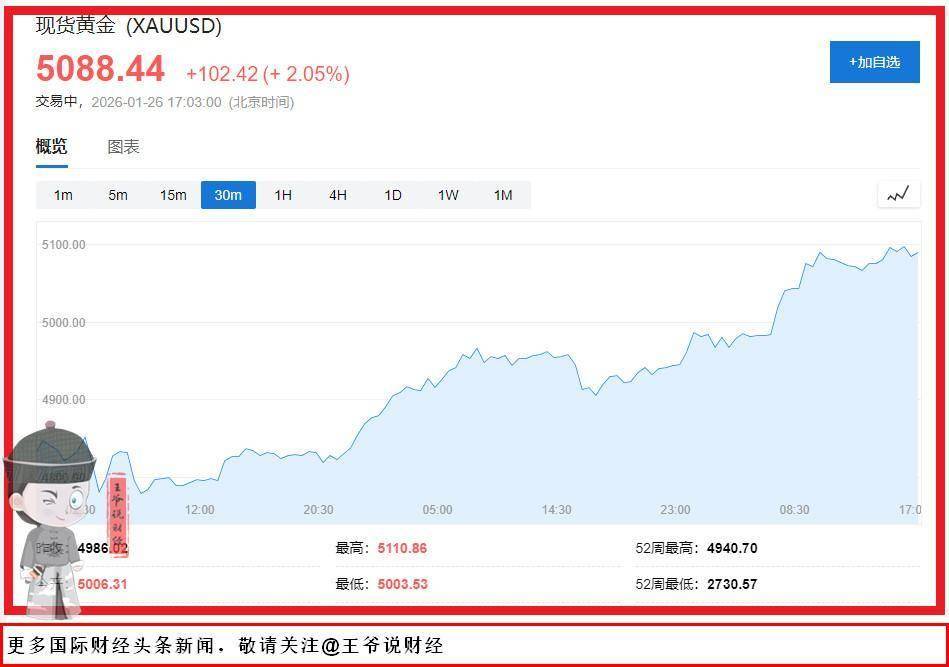
金价疯涨首破5100美元,德国彻底急了:要把存在美国的1236吨黄金运回家!美元霸权要凉?
Sou Hu Cai Jing· 2026-01-26 10:34
Core Viewpoint - The surge in gold prices, reaching over $5,100 per ounce, is driven by a growing distrust in the U.S. dollar, highlighted by Germany's call to repatriate 1,236 tons of gold stored in the U.S., valued at nearly $200 billion [1][2][4]. Group 1: Gold Price Surge - Gold prices have increased by over 17% since the beginning of the year, reaching a historic high of $5,110 per ounce [1]. - The demand for gold is being fueled by geopolitical tensions and a lack of confidence in the U.S. dollar as a stable asset [4]. Group 2: Germany's Gold Repatriation - Germany holds approximately €450 billion in gold, with 37% (1,236 tons) stored in the U.S. due to Cold War-era agreements [2]. - German officials are expressing concerns about the safety of their gold in the U.S., citing risks associated with U.S. foreign policy and potential asset seizure [2][4]. Group 3: Implications for the Dollar - The situation reflects a broader crisis of confidence in the U.S. dollar, with many countries reconsidering their reliance on it as a reserve currency [4]. - The concept of "de-dollarization" is gaining traction, with central banks globally increasing their gold reserves as a hedge against currency risk [6]. Group 4: Future Predictions - The trend of repatriating gold is expected to accelerate, with Germany's actions potentially leading other nations to follow suit [6]. - Short-term fluctuations in gold prices are anticipated, but long-term projections suggest continued increases due to ongoing geopolitical instability [7]. - Individuals are advised to diversify their assets, including a small allocation to gold, to mitigate risks associated with dollar-denominated assets [8].

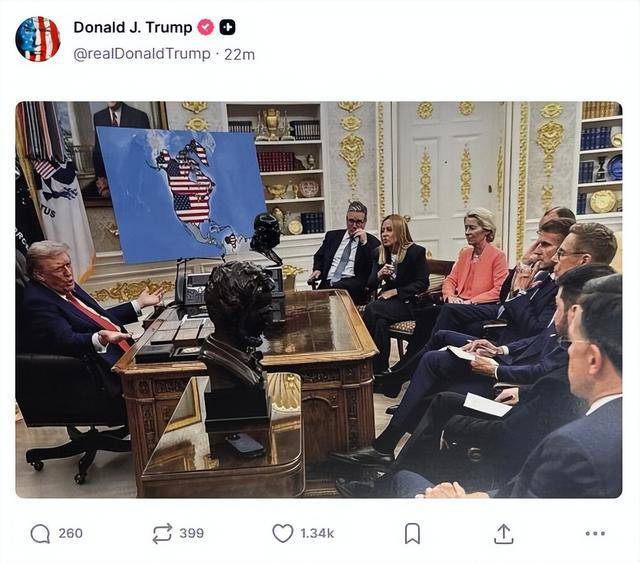
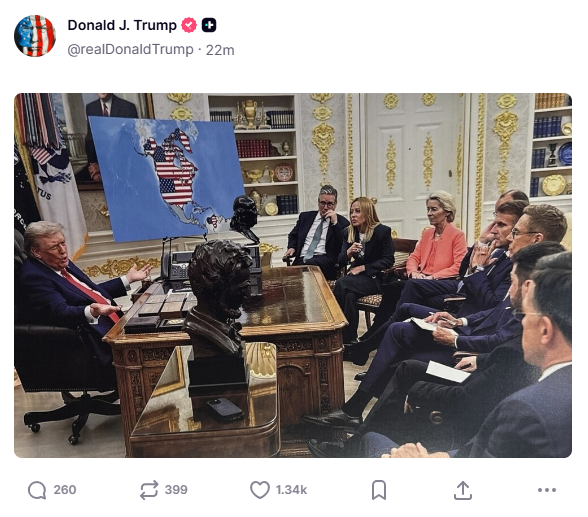
特朗普发了张图,加拿大、格陵兰和委内瑞拉都被涂上星条旗
Sou Hu Cai Jing· 2026-01-23 07:40
Core Viewpoint - The ongoing tensions between the United States and European countries regarding Greenland's sovereignty have escalated, with threats of tariffs and potential military simulations being discussed, highlighting geopolitical risks and economic implications for both sides [1][3][4]. Group 1: U.S. Actions and Statements - President Trump has threatened to impose tariffs on European countries opposing U.S. control over Greenland, prompting strong responses from European leaders who refuse to accept such threats [1]. - Trump has indicated that Greenland is a strategic asset for the U.S. and has suggested various proposals for its future, including a long-term lease or granting citizenship rights to its residents [11][12]. - U.S. Treasury Secretary Steven Mnuchin warned European nations against retaliatory tariffs, labeling such actions as unwise [6][7]. Group 2: European Responses and Strategies - The European Union convened an emergency meeting to discuss potential countermeasures against U.S. tariffs, including the activation of a coercive trade tool that could restrict U.S. market access [4]. - One proposed measure involves reintroducing a tariff list targeting $930 billion worth of U.S. goods, which had been previously shelved after a trade agreement [4]. - European financial experts have discussed the possibility of selling U.S. assets as a form of retaliation, which could pose risks to the financial markets [5]. Group 3: Military and Security Concerns - Canadian military officials have simulated a response to a hypothetical U.S. military invasion, marking a significant shift in defense strategy given Canada's historical alliance with the U.S. [3]. - Reports indicate that the U.S. military has been collecting intelligence on Greenland's military facilities, raising concerns about violations of existing agreements with Denmark [10].
日债“崩盘”与地缘“变数”——黄金再创新高白银后市存忧
Sou Hu Cai Jing· 2026-01-21 15:44
Group 1 - The geopolitical crisis in Greenland and the collapse of the Japanese government bond market have significantly increased demand for safe-haven assets, leading to gold prices reaching an all-time high of $4,819.75 per ounce [2][3] - The crisis has exacerbated the divide between the US and Europe, with European leaders expressing strong opposition to US President Trump's intentions regarding Greenland, raising concerns about potential trade wars [3] - The collapse of the Japanese bond market, triggered by Prime Minister Kishi's tax cut promises, has led to a surge in bond yields and heightened volatility, prompting investors to avoid currencies and government bonds [5][6] Group 2 - The US and Japanese finance ministers are working together to stabilize the market amid rising volatility, with reassurances that the recent bond market fluctuations are not directly linked to geopolitical tensions [9] - There are concerns that European investors may sell US bonds in response to the Greenland situation, but US Treasury Secretary has dismissed these claims as unfounded [9][10] - Experts have differing views on the future of precious metals, with some believing that gold still has significant upside potential, while cautioning against investing in silver at current levels due to its recent price surge [12][13]

丹麦打响第一枪!250亿美元养老基金“清仓美债”,手握83万亿元美元资产的欧洲,会用资本“保卫”格陵兰岛?
Sou Hu Cai Jing· 2026-01-21 08:27
Core Viewpoint - The Danish pension fund AkademikerPension has decided to divest approximately $100 million in U.S. Treasury bonds in response to the U.S. government's ultimatum regarding Greenland, signaling a potential shift of European capital away from the dollar and a move towards risk reduction against U.S. policies [1][5][9]. Group 1: Fund Actions and Implications - AkademikerPension, managing around $25 billion, is known for its high ethical investment standards and serves 170,000 Danish academic elites [3]. - The fund's Chief Investment Officer, Anders Schelde, cited the poor fiscal condition of the U.S. government as a primary reason for the divestment decision [3][5]. - The divestment is limited to U.S. government bonds, while investments in the U.S. private sector remain intact, indicating a targeted approach to risk management [5][9]. Group 2: Market Reactions - Following the announcement, the yield on 10-year U.S. Treasury bonds rose by 8.1 basis points, reaching a high of 4.31%, and closing at 4.29%, marking a five-month high [1][6]. - The 30-year Treasury bonds also saw a significant yield increase, reaching 4.95%, the highest in over four months, with the largest single-day drop since July [6][10]. Group 3: Broader Economic Context - The U.S. is facing increasing debt pressure, with a budget deficit of $1.78 trillion last year, and the situation is exacerbated by aggressive tariff policies under President Trump [5][9]. - European leaders are considering retaliatory economic measures, including the potential sale of dollar assets, in response to U.S. tariffs [5][15]. - The European nations hold approximately $12 trillion in dollar assets, with significant stakes in U.S. Treasury bonds, indicating their critical role as creditors to the U.S. [9][11]. Group 4: Expert Opinions - Ray Dalio, founder of Bridgewater Associates, warned of a potential new phase in global financial conflict, emphasizing the risks of capital wars and the need for countries to reassess their dollar asset allocations [1][14]. - Analysts suggest that the actions of AkademikerPension may trigger a "herd effect" among other European nations, reflecting a broader trend of risk aversion towards U.S. policies [9][16]. - The interdependence between the U.S. and Europe complicates the situation, as significant divestment from dollar assets could lead to adverse economic consequences for Europe itself [11][12].
为格陵兰岛,欧洲探讨抛售美国资产
Xin Lang Cai Jing· 2026-01-20 14:20
Core Viewpoint - The article discusses the potential geopolitical and market risks arising from U.S. President Trump's aggressive stance on Greenland, including the possibility of "military acquisition" and European countermeasures such as selling U.S. assets [1] Group 1: Geopolitical Context - President Trump has repeatedly expressed a desire to acquire Greenland, stating that he does not rule out the use of force [1] - Europe is considering various countermeasures in response to this aggressive rhetoric, including the potential sale of U.S. assets [1] Group 2: Market Implications - Deutsche Bank's Chief Global Currency Strategist has previously discussed the concept of "capital weaponization," indicating that retaliatory actions against the U.S. could pose market risks [1] - Société Générale's Chief Currency Strategist, Kit Juckes, noted that the U.S. has significantly more foreign liabilities than assets, which could threaten the dollar, contingent on foreign holders of U.S. assets being willing to incur financial losses [1] - Juckes mentioned that European public sector investors in dollar assets might halt their accumulation or begin selling, but they may only be willing to accept losses if the situation deteriorates significantly [1]
欧洲的“10万亿美元武器”:用美债美股反制特朗普,说起来容易做起来难
Jin Shi Shu Ju· 2026-01-20 14:01
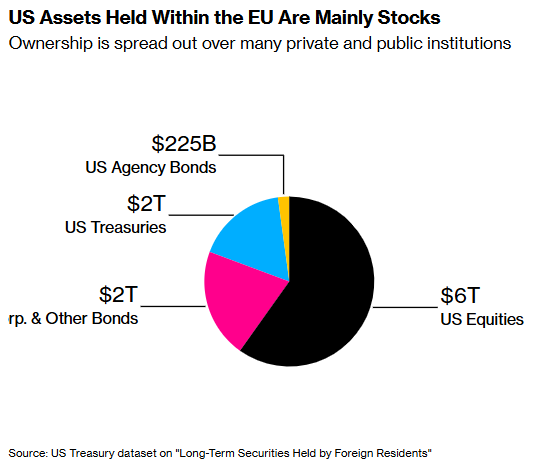
Core Viewpoint - The article discusses the potential for European countries to respond to U.S. President Trump's threats regarding Greenland by selling U.S. assets, which could impact U.S. borrowing costs and stock markets, although such actions are deemed unlikely due to the complexities involved [1][5]. Group 1: European Holdings of U.S. Assets - European countries hold trillions of dollars in U.S. debt and equities, with a significant portion owned by public sector funds [1]. - The total value of U.S. assets held within the EU exceeds $10 trillion, with additional holdings from the UK and Norway [1]. - The potential for European public sector investors to halt or reduce their U.S. asset holdings is contingent on significant escalation of tensions [2]. Group 2: Market Reactions and Economic Implications - The escalation of tensions has negatively affected U.S. stock index futures, European markets, and the dollar, while benefiting safe-haven assets like gold and the Swiss franc [5]. - The EU's most concrete response so far includes a proposal to halt the approval of a trade agreement with the U.S. and discussions on imposing tariffs on $108 billion worth of U.S. goods [5]. - Any move to weaponize European holdings of U.S. assets would signify a serious escalation, transforming a largely ignored trade war into a direct financial conflict [5]. Group 3: Investor Behavior and Market Stability - Investors concerned about overexposure to U.S. assets may have already reduced their holdings following Trump's previous tariff actions, leading to a rebalancing of dollar positions [6]. - Despite the pressure on the dollar, U.S. Treasury bonds have had their best year since 2020, and U.S. stock markets continue to reach record highs [6]. - The EU lacks the ability to force private sector investors to sell dollar assets but can encourage investment in euro-denominated assets [6].
特朗普发了张图,加拿大、格陵兰和委内瑞拉都被涂上星条旗!加拿大:已模拟美军事入侵;美财长警告欧洲:不许关税报复
Mei Ri Jing Ji Xin Wen· 2026-01-20 12:50
Core Viewpoint - The ongoing tensions between the United States and European countries regarding Greenland's sovereignty and potential tariffs have escalated, with European leaders rejecting U.S. threats and considering countermeasures [1][7][14]. Group 1: U.S. Actions and Statements - President Trump has threatened to impose tariffs on European countries opposing U.S. claims over Greenland, prompting a strong response from European leaders [1][7]. - U.S. Treasury Secretary Scott Bessenet warned European nations against retaliatory tariffs, labeling such actions as unwise [2][14]. - Trump has indicated that Greenland is a strategic asset for the U.S. and has suggested various proposals for its future, including a long-term lease or granting citizenship rights to its residents [17][18]. Group 2: European Response - The European Union convened an emergency meeting to discuss potential countermeasures, including activating a coercive trade tool and reintroducing tariffs on U.S. goods valued at €93 billion [7][8]. - European leaders, including EU Commission President Ursula von der Leyen, have firmly stated that Denmark's sovereignty over Greenland is non-negotiable [1][14]. - There are discussions within Europe about selling U.S. assets as a form of retaliation, which could escalate tensions into a financial conflict [9][10]. Group 3: Military and Security Concerns - Canadian military officials have simulated a response to a hypothetical U.S. invasion, marking a significant shift in defense strategy [5]. - Reports indicate that the U.S. military has been secretly gathering intelligence on Greenland's military facilities, raising concerns about security and sovereignty violations [15][16].
为格陵兰岛 欧洲探讨抛售美国资产
Xin Hua She· 2026-01-20 12:11
Group 1 - The article discusses the potential financial repercussions of the escalating tensions between the US and Europe, particularly regarding the US's interest in Greenland and the possibility of retaliatory measures from Europe [1][2] - Deutsche Bank's chief global currency strategist mentioned the concept of "weaponizing capital," indicating that any retaliatory actions by Europe could pose market risks [1] - European public sector investors may consider halting or selling their US dollar asset investments, especially if the situation deteriorates significantly [1] Group 2 - The eurozone is contemplating imposing tariffs on 93 billion euros worth of US goods as a countermeasure to President Trump's threats regarding Greenland [2] - The US dollar index fell, while the Swiss franc and euro appreciated, indicating a shift in market sentiment amid rising tensions [2] - The article highlights that the European Union holds over 10 trillion dollars in US assets, with significant portions held by public sector funds, which could be affected by any financial conflict [1][2]
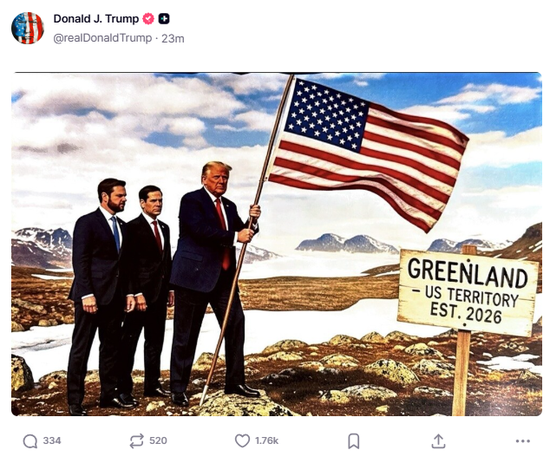
“格陵兰2026年成为美国领土”!特朗普”深夜“P图:加拿大、委内瑞拉都被划入美国版图
Xin Lang Cai Jing· 2026-01-20 08:11
Core Viewpoint - The article discusses President Trump's strong assertion of the United States' claim over Greenland, emphasizing its importance for national and global security, and the potential economic repercussions of his proposed tariffs on European nations [5][14]. Group 1: Trump's Claims and Actions - Trump reiterated the necessity for the U.S. to gain control over Greenland, stating that there is "no turning back" on this issue [5][14]. - He announced plans to hold discussions on the Greenland issue during the upcoming World Economic Forum in Davos, indicating its significance on the global stage [5][14]. - Trump has threatened to impose a 10% tariff on all goods exported to the U.S. from Denmark, Norway, Sweden, France, Germany, the UK, the Netherlands, and Finland starting February 1, until a deal for the "complete and total purchase of Greenland" is reached [5][16]. Group 2: European Response - The European Union is considering retaliatory measures, including imposing tariffs on U.S. goods valued at €93 billion, or restricting U.S. companies' access to the EU market [7][16]. - If no agreement is reached, these retaliatory tariffs are set to automatically take effect on February 6 [7][16]. - French President Macron has called for the strongest possible retaliatory tools in response to Trump's threats [5][14]. Group 3: Market Concerns - There are growing concerns in the market regarding the "weaponization of capital," as Europe holds over $10 trillion in U.S. assets, which could be leveraged in response to U.S. tariffs [9][18]. - Deutsche Bank has warned that the situation could escalate into a financial conflict, impacting capital markets directly [9][18].
特朗普重申:“必须得到格陵兰”,不信欧盟会为丹麦“死磕”,将在达沃斯与“各方”会面
Hua Er Jie Jian Wen· 2026-01-20 06:30
Core Viewpoint - The article discusses President Trump's insistence on acquiring control over Greenland, escalating tensions with the EU and prompting potential retaliatory measures from European nations [1][2]. Group 1: Trump's Position on Greenland - Trump emphasized the necessity for the U.S. to gain control over Greenland, stating that it is crucial for national and global security, and indicated that there is "no turning back" [1][2]. - He plans to hold discussions regarding Greenland at the upcoming World Economic Forum in Davos, mentioning multiple meetings scheduled on the topic [1][2]. - Trump threatened to impose tariffs on several European NATO allies, including Denmark, to compel them to relinquish control over Greenland [1][3]. Group 2: EU's Response and Potential Retaliation - The EU is considering imposing retaliatory tariffs on U.S. goods valued at €93 billion if an agreement is not reached, with these tariffs set to automatically take effect on February 6 [3]. - Trump's announcement of a 10% tariff on all goods exported to the U.S. from Denmark, Norway, Sweden, France, Germany, the UK, the Netherlands, and Finland starting February 1 is viewed as a form of "purchase ransom" for Greenland [3]. - French President Macron's refusal to join Trump's proposed peace council has led to Trump's dissatisfaction, hinting at a potential 200% tariff on French champagne and wine [3][4]. Group 3: Market Concerns - There are growing concerns in the market regarding the "weaponization of capital," as Trump's tariff threats raise questions about how Europe might leverage its over $10 trillion in U.S. assets [5]. - Deutsche Bank warned that the situation could escalate into a financial conflict that directly impacts capital markets if Europe decides to weaponize its U.S. assets [5][6].