
跨区域协同创新

Search documents
郑州产业技术创新研究院第一届理事会第一次会议召开
Zheng Zhou Ri Bao· 2026-02-12 00:46
Core Viewpoint - The establishment of the Zhengzhou Industrial Technology Innovation Research Institute aims to enhance regional collaboration and drive high-quality development through technological and industrial innovation [1][2]. Group 1: Meeting Highlights - The first meeting of the first council of the Zhengzhou Industrial Technology Innovation Research Institute was held on February 11, attended by key city leaders and the director of the Yangtze River Delta National Technology Innovation Center [1]. - Mayor Zhuang Jianqiu emphasized the importance of technology as the primary productive force, talent as the primary resource, and innovation as the primary driving force for development [1]. Group 2: Strategic Goals - The meeting is seen as a significant step in fostering cross-regional cooperation with the Yangtze River Delta National Technology Innovation Center, aiming to reform the technological system and mechanism by learning from advanced regions [2]. - The city aims to enhance its role as a "testbed" for institutional reform, a "source" for cultivating new productive forces, and a "bridge" for cross-regional collaborative innovation [2]. Group 3: Collaborative Framework - The focus is on deep integration and efficient collaboration, with an emphasis on integrated project evaluation, team management, global resource allocation, and collaborative technological breakthroughs [2]. - The goal is to create a strong innovation community that serves as a "demonstration body" for institutional innovation, an "accelerator" for technological leaps, a "strong magnet" for talent, and a "new benchmark" for regional collaboration [2].
为何要扩围国际科创中心
Jing Ji Ri Bao· 2026-01-27 22:15
Core Viewpoint - The 2025 Central Economic Work Conference emphasizes the construction of international technology innovation centers in Beijing (Jing-Jin-Ji), Shanghai (Yangtze River Delta), and the Guangdong-Hong Kong-Macau Greater Bay Area, aiming to enhance China's innovation system and international competitiveness through regional collaboration and integration [1][2][3]. Spatial Integration - The expansion of the three international technology innovation centers from a "single point" to "city cluster collaboration" is essential to break administrative barriers and create complementary innovation spaces, enhancing competitiveness against global innovation clusters [1][2]. - The 2025 Global Innovation Index Report indicates that Shenzhen-Hong Kong-Guangzhou, Beijing, and Shanghai-Suzhou rank among the top ten global innovation clusters, with Shenzhen-Hong Kong-Guangzhou leading the list, showcasing the growing influence of these centers [1]. Element Integration - The three international technology innovation centers are home to the country's best innovation resources, including a significant proportion of key laboratories and high-tech enterprises, facilitating the efficient flow and allocation of innovation elements [2]. - Beijing has maintained a research and development investment intensity of over 6% for six consecutive years, while the Yangtze River Delta accounts for about one-third of national indicators in various technology spending and patent ownership [2]. Industry Integration - The centers gather top universities, research institutions, and enterprises, forming a complete chain from basic research to technology application, which accelerates the application of innovative results [2]. - The key to expanding these centers is to optimize the collaborative innovation model that integrates industry needs, technological solutions, and market validation [2]. Institutional Integration - The three regions have unique advantages in exploring innovation systems, with efforts to establish mechanisms for cross-regional planning, benefit sharing, and risk sharing, promoting a collaborative innovation environment [3]. - The expansion aims to integrate local institutional advantages to break down administrative divisions and foster a cooperative innovation landscape [3]. National Impact - The expanded centers will serve as a "power source" for national integration of production, education, and research, enhancing the diffusion of core technological achievements and supporting industrial upgrades across regions [4]. - The centers will focus on improving the efficiency of innovation chains, enhancing industrial chain levels, and constructing a nationwide network for the flow of innovation elements [4]. Strategic Development - To transform the centers into world-class sources of technological innovation, a systematic approach is needed to enhance integration efficiency, address element flow barriers, and strengthen industry-research collaboration [5][6]. - Establishing cross-regional innovation joint ventures and governance mechanisms will promote an open and inclusive innovation environment [6].
打造全球科创集群“样板间”
Ke Ji Ri Bao· 2026-01-05 10:12
Core Insights - The construction of international technology innovation centers in Beijing, Shanghai, and the Guangdong-Hong Kong-Macao Greater Bay Area has entered a new phase of expansion and upgrade, as highlighted by the Central Economic Work Conference [1] - The strategic vision and guidance from General Secretary Xi Jinping have been pivotal in the development of these centers, marking significant milestones since 2013 [2] - The construction of these centers reflects a shift from isolated breakthroughs to a new stage of regional collaborative development, enhancing their global influence and competitiveness [3] Group 1: Development and Achievements - The three international technology innovation centers have shown remarkable progress over the past 12 years, with Beijing's original innovation capacity continuously strengthening, maintaining annual R&D expenditure intensity above 6% during the 14th Five-Year Plan [4] - Shanghai's global influence has rapidly increased, with R&D expenditure accounting for approximately 4.4% of the city's GDP during the same period, and the scale of leading industries like integrated circuits and biomedicine surpassing 1.8 trillion yuan [5] - The Guangdong-Hong Kong-Macao Greater Bay Area has seen significant industrial and technological collaboration, with over 250 companies listed in Hong Kong and a total market value exceeding 11 trillion yuan [5] Group 2: Collaborative Framework - The success of these centers is attributed to high-level cooperation between central and local governments, facilitating cross-regional collaboration and resource sharing [6] - Initiatives such as the "One Network for All" service in the Yangtze River Delta have streamlined processes for projects and enterprises, enhancing the efficiency of innovation [6] - The Ministry of Science and Technology is actively promoting regional innovation linkages, focusing on collaborative research and technology resource sharing among key city clusters [6][8] Group 3: Future Directions - The Ministry of Science and Technology is developing plans for the construction of international technology innovation centers in Beijing and Shanghai, aiming to optimize regional innovation layouts and strengthen cross-regional collaboration [8] - The expansion of these centers is expected to include practical support measures related to strategic technology deployment and industrial cluster cultivation [8][10] - The emphasis on creating a favorable social environment and cultural soil for sustainable development of these centers is crucial for their integration with modern industrial systems [10][11]
“这是一个重大任务”,如何落实推进(创新谈)
Ren Min Ri Bao· 2025-12-28 22:17
Core Viewpoint - The construction of three major international technology innovation centers in Beijing (Jing-Jin-Ji), Shanghai (Yangtze River Delta), and the Guangdong-Hong Kong-Macao Greater Bay Area is a significant strategic task aimed at enhancing the overall efficiency of the national innovation system and facilitating the flow of innovative resources [1][2]. Group 1: Strategic Importance - The establishment of these centers is a major task personally planned and promoted by General Secretary Xi Jinping, emphasizing its large scale and profound impact on international competition [1]. - The centers are expected to serve as critical points for innovation-driven development strategies, concentrating advantageous resources and enhancing the flow of innovative elements across a broader area [2]. Group 2: Regional Advantages and Collaboration - The expansion of the Beijing international innovation center to the Jing-Jin-Ji region and the Shanghai center to the Yangtze River Delta will accelerate the formation of China's primary sources of original innovation, with Beijing's research resources, Tianjin's manufacturing base, and Hebei's land and cost advantages playing key roles [2]. - Each region has distinct advantages: Jing-Jin-Ji focuses on original innovation breakthroughs, the Yangtze River Delta aims to enhance technology transfer and high-end industrial clusters, and the Greater Bay Area emphasizes cross-border collaborative innovation [2]. Group 3: Methodology and Implementation - The construction of the three centers requires adherence to the inherent laws of technological innovation, emphasizing patience and long-term investment rather than short-term metrics [3]. - There is a need for practical actions, including reforms in research management, talent evaluation, and the transformation of results, to promote a virtuous cycle among technology, industry, and finance [3]. - Maintaining strategic determination is crucial for the successful completion of this significant task, which will enhance the momentum for high-quality development and solidify the technological support for China's modernization [3].
协同创新促科研开花结果
Xin Lang Cai Jing· 2025-12-26 23:07
Core Insights - The article highlights the establishment of the Pingxiang (Changsha) Innovation Center, which aims to bridge the gap in technology transfer and innovation between Pingxiang and Changsha, leveraging Changsha's strong research capabilities and Pingxiang's industrial base [1][2]. Group 1: Innovation and Collaboration - The Pingxiang (Changsha) Innovation Center has successfully gathered 25 technology-based enterprises and established six specialized industrial research institutes, focusing on key areas such as new energy, new materials, and equipment manufacturing [2]. - The center has developed a long-term mechanism for "industry-research interaction," resulting in the resolution of three critical technologies and the development of six import substitution products, facilitating the transition of scientific achievements from laboratories to production lines [2]. Group 2: Talent Development and Mechanisms - To ensure efficient collaboration between the two cities, Pingxiang has set up a talent work station at the Innovation Center, organizing special recruitment events to attract high-level innovative talent [2]. - The research team at Xintong Machinery has expanded from 3 to over 30 members in five years, establishing a comprehensive research and development system covering mechanical, electrical, hydraulic, software, and algorithmic disciplines [2]. Group 3: Future Development Plans - Pingxiang plans to deepen the construction of the innovation center, further improve cross-regional collaborative innovation mechanisms, and enhance policy support and service guarantees to foster high-quality regional development [3].
沪苏同城化提速,一个“超级城市”呼之欲出
Mei Ri Jing Ji Xin Wen· 2025-12-18 15:23
Core Viewpoint - The integration of Suzhou and Shanghai is a strategic focus for the development of the Yangtze River Delta, aiming to enhance regional collaboration and innovation capabilities [1][4][6]. Group 1: Economic Integration - Shanghai and Suzhou, as the leading cities in the Yangtze River Delta, have a combined GDP exceeding 8 trillion yuan, accounting for nearly 25% of the region's economy [1]. - The recent central economic work conference emphasized the need for stronger coordination among key urban clusters, with a focus on deepening cross-administrative cooperation [1][12]. - The Jiangsu "14th Five-Year" plan supports the co-development of Suzhou and Shanghai, indicating a commitment to urban integration [5]. Group 2: Innovation and Technology - The collaboration between Shanghai and Suzhou is seen as a critical point for advancing China's innovation capabilities, with both cities ranked among the top six in the global innovation index [3]. - The shift from "Shanghai R&D + Suzhou manufacturing" to a model of joint innovation efforts highlights the evolving nature of their industrial collaboration [7]. - The establishment of the Wusong River Innovation Belt is intended to connect various high-end industrial parks, enhancing Suzhou's role as a technology hub [8]. Group 3: Infrastructure and Connectivity - The development of transportation infrastructure, such as the upcoming intercity railway, is expected to further integrate Shanghai and Suzhou, enhancing economic interactions [10]. - The ecological integration initiative in the Yangtze River Delta aims to balance industrial growth with environmental sustainability, creating a favorable environment for attracting talent and investment [9][10]. Group 4: Challenges and Opportunities - Administrative barriers remain a significant challenge for the integration process, as local governments prioritize local economic indicators [14][15]. - The need for a restructured collaborative ecosystem that includes market mechanisms and social forces is essential for overcoming these challenges [15].
北京怀柔科学城科学设施区域协同中心揭牌仪式暨科学设施推介会在苏州举办
Zhong Zheng Wang· 2025-12-05 12:00
Group 1 - The Beijing Huairou Science City Science Facility Regional Coordination Center was inaugurated, aiming to promote collaborative development in high-tech industries between Huairou and Suzhou [1][2] - Huairou Science City is one of the four comprehensive national science centers in China, tasked with leading global scientific development and technological breakthroughs [2] - The center will facilitate the sharing of major scientific infrastructure resources and promote cross-regional collaborative innovation, effectively integrating innovation chains, industrial chains, and talent chains [2][3] Group 2 - The event featured a promotional video showcasing Huairou Science City's development vision and major scientific infrastructure, highlighting key enterprises and research platforms [3] - The center aims to provide direct access for enterprises to utilize national strategic scientific resources to overcome key technological challenges and foster new productive forces [2][3] - The Huairou district government expressed its commitment to enhancing the openness and sharing of major scientific infrastructure, inviting collaboration to explore paths for technology transfer [3]
打造科技和产业跨域协同引力场
Ren Min Ri Bao· 2025-10-28 22:56
Core Viewpoint - The article highlights the development and collaboration efforts in the Putuo District of Shanghai, focusing on the establishment of the Yangtze River Delta Innovation Corridor and the integration of various innovation resources to enhance technological advancements and industrial growth in the region [6][11]. Group 1: Innovation and Collaboration - Putuo District has signed cooperation memorandums with eight cities in Jiangsu to promote the Yangtze River Delta Innovation Corridor, emphasizing its role as a key transportation hub and innovation node [6][8]. - The establishment of the East China Normal University Integrated Circuit Industry College in Putuo signifies the district's commitment to enhancing collaborative research and innovation capabilities [7]. - The district aims to integrate nearly a thousand innovation entities, including universities and research institutes, to foster cooperation in research, technology development, and international market expansion [7][9]. Group 2: Technology Transfer and Market Development - The "Yangtze River Delta Technology Manager Alliance" was formed to facilitate technology transfer and collaboration among enterprises, with a total of 2.3 billion yuan in technology demand identified [10]. - A platform has been created to aggregate technology resources and enterprise needs, resulting in 553 technology demand listings, with 30 successfully matched, generating over 16 million yuan in technology transactions [10]. - The district's advertising industry has seen significant growth, with revenues reaching 15 billion yuan last year and a year-on-year increase of approximately 14% in the first nine months of this year [12]. Group 3: Future Development Plans - Looking ahead, Putuo District plans to deepen collaboration in technology and industry innovation, focusing on creating "chain alliances" around key industries and enhancing the integration of government and capital resources [12]. - The district aims to establish a one-stop service platform for technology innovation and industry cooperation, facilitating smoother interactions between different regions and sectors [12]. - The goal is to position Putuo as a central hub for innovation and service within the Yangtze River Delta, enhancing its role in the broader economic landscape [12].

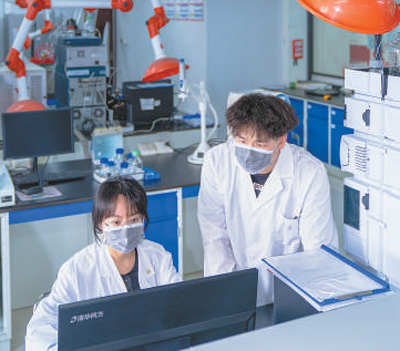
引领推动长三角一体化向更深层次拓展
Ren Min Ri Bao· 2025-10-28 22:33
Core Points - The article discusses the development of the Yangtze River Delta Innovation Corridor, which connects major economic hubs like Shanghai, Nanjing, and Suzhou, aiming to create a globally competitive innovation industry cluster [1][2] - Shanghai's Putuo District has signed cooperation memorandums with eight cities to promote the construction of the innovation corridor [1] - The national "14th Five-Year Plan" emphasizes accelerating the construction of the G60 Science and Technology Innovation Corridor and the Yangtze River Delta Innovation Corridor [1] Group 1 - The innovation corridor is expected to break regional barriers and enhance inter-city collaboration, fostering a deeper integration of the Yangtze River Delta [1][2] - There is a focus on establishing a cross-regional collaborative mechanism that integrates technological and industrial innovation [1] - The initiative aims to create high-level innovation service platforms and enhance the participation of various innovation entities along the corridor [1] Group 2 - The strategy includes leveraging the strengths of both central and small cities to improve industrial innovation capabilities [2] - Measures such as creating manufacturing innovation centers and providing innovation vouchers are proposed to facilitate resource sharing among cities [2] - The goal is to build a world-class industrial cluster and foster a first-class innovation ecosystem through enhanced regional cooperation [2]
中部地区科技创新服务平台地图正式发布
Zhong Guo Xin Wen Wang· 2025-10-14 18:28
Core Viewpoint - The G100 Alliance Forum for High-Quality Development in Central China aims to enhance regional collaboration and innovation through the establishment of a technology innovation service platform map, integrating resources from 22 national high-tech zones across five provinces [1][2] Group 1: Forum Highlights - The forum featured the launch of the "High-Tech Quality Products" brand plan, which will establish a selection mechanism for high-quality products in key sectors such as new-generation information technology and high-end equipment manufacturing [2] - An "Intelligent Evaluation Tool for Hard Technology Attributes" was also introduced, combining AI algorithms with expert evaluations to provide technical support for precise policy backing in technology finance [2] Group 2: Regional Development Strategy - The central region's national high-tech zones accounted for 20% of the revenue from large-scale industrial enterprises among the 178 national high-tech zones in the first half of the year [1] - The forum emphasized the need for a unified strategy to enhance strategic planning, deepen technological innovation cooperation, and improve the industrial collaboration system to boost regional industrial chain competitiveness [1]