
软件服务

Search documents
日企想在消费电子赛道继续挣扎,但意义不大了
3 6 Ke· 2026-01-28 09:06
Group 1 - Sony's collaboration with TCL has sparked discussions, marking a shift as the company plans to establish a joint venture while divesting its television business [2] - Sony has a history of divesting consumer electronics, having sold its VAIO business in 2014 and subsequently exiting the computer market, with its mobile division also facing layoffs [2][3] - By FY2024, Sony's entertainment segments—film, music, and gaming—account for over 60% of the group's revenue, indicating a strategic shift away from its identity as a consumer electronics giant [3] Group 2 - The global television market is projected to see a slight decline in shipments, with Sony's television sales significantly lagging behind competitors like TCL, which shipped 20.8 million units compared to Sony's 2.6 million in the first three quarters of 2025 [5][6] - Sony's display business revenue, including TVs and projectors, is expected to decline by approximately 10% year-on-year, reflecting ongoing challenges in profitability within the television sector [5][6] - The company aims to focus on high-value areas such as gaming, music, and film, which have proven to be more profitable, as evidenced by an increase in profit margins from 2.78% in FY2010 to 10.9% in FY2024 [6] Group 3 - Sony's partnership with TCL may leverage the latter's supply chain and cost efficiency to enhance global competitiveness in the consumer electronics market, with projections suggesting a combined market share of 16.7% by 2027 [7] - The global consumer electronics market is expected to grow, with a projected sales figure of $1.3 trillion in 2025, indicating a potential opportunity for companies like Sony to adapt and thrive [6][7] - Sony's venture into the electric vehicle market, with plans to launch its Afeela brand, reflects its ambition to diversify beyond traditional consumer electronics [8][9] Group 4 - The Japanese consumer electronics industry, including Sony, faces challenges as it struggles to maintain its position in a rapidly evolving global market, with many companies experiencing declines in market share [11][12] - The shift in focus from hardware to software and services is becoming increasingly important, with predictions that over 65% of future value in consumer electronics will come from software and subscription services [20][21] - Japanese companies, including Sony, are recognizing the need for innovation and adaptation in response to competitive pressures from global players, particularly in the areas of AI and smart technology [21][25]



鑫汇能(上海)科技有限公司成立,注册资本1000万人民币
Sou Hu Cai Jing· 2026-01-19 16:48
Core Viewpoint - Recently, Xinhuin (Shanghai) Technology Co., Ltd. was established with a registered capital of 10 million RMB, fully owned by Tianjin Xinhai Energy Technology Development Co., Ltd. [1] Company Information - Company Name: Xinhuin (Shanghai) Technology Co., Ltd. [1] - Legal Representative: Liu Meiyang [1] - Registered Capital: 10 million RMB [1] - Business Scope: Includes technology services, development, consulting, energy management, and various renewable energy technologies [1] - Company Type: Limited liability company (wholly owned by a legal entity) [1] - Business Duration: Until January 19, 2026, with no fixed term [1] - Registration Authority: Jiading Branch [1] Shareholding Structure - Shareholder: Tianjin Xinhai Energy Technology Development Co., Ltd. holds 100% of the shares [1] Industry Focus - Industry Standard: Power, heat, gas, and water production and supply [1] - Specific Areas: Power production, energy-saving technology research, renewable energy services including wind and solar power, and electric vehicle charging infrastructure [1]
开评:三大指数集体低开 AI营销概念跌幅居前
Zheng Quan Shi Bao Wang· 2026-01-19 01:33
Market Performance - The three major indices opened lower on January 19, with the Shanghai Composite Index down by 0.27%, the Shenzhen Component Index down by 0.41%, and the ChiNext Index down by 0.60% [1] Sector Performance - The sectors that saw the highest gains included trade agency, storage chips, and semiconductors [1] - The sectors that experienced the largest declines included AI marketing, internet, software services, communication equipment, and media entertainment [1]
苹果税再下一城,库克继续用服务换增长
3 6 Ke· 2025-11-19 00:31
Core Viewpoint - Apple and Tencent have reached an agreement regarding the fees for WeChat mini-programs, allowing developers to integrate into Apple's payment system, thus becoming part of the "Apple tax" framework. This compromise results in Apple reducing its commission from 30% to 15% for mini-programs, while Tencent agrees to pay the Apple tax, enhancing Apple's revenue from services amidst stagnant hardware profits [1][6][17]. Group 1: Apple Tax and Revenue - The "Apple tax" refers to the commission Apple charges developers for in-app purchases, typically ranging from 15% to 30% [2][4]. - In 2023, Apple's global revenue from the Apple tax was approximately $22.34 billion, equivalent to about 158.8 billion RMB [4]. - The report titled "Apple Ecosystem in China" indicated that Apple's App Store ecosystem generated sales of 3.763 trillion RMB in China in 2023, with digital goods and services accounting for less than 4% of this total [4][21]. Group 2: WeChat Mini-Programs - WeChat mini-programs, launched in January 2017, have been a significant source of contention between Apple and Tencent, with Apple previously threatening to remove WeChat from the App Store [5][6]. - The agreement allows mini-program developers to access Apple's payment interface with a reduced commission rate of 15%, marking a significant shift in their relationship [6][16]. Group 3: Industry Context and Trends - Apple's hardware revenue has stagnated, prompting a strategic shift towards enhancing software services as a primary profit driver [17][27]. - The gross margin for software services has increased from 55% to 75% since 2016, highlighting the growing importance of this segment to Apple's overall profitability [27][30]. - As of the fiscal year ending September 2023, service revenue accounted for 42% of Apple's net profit, surpassing the iPhone's contribution of 41% for the first time [31].

突发利好,这个板块集体异动拉升
Zheng Quan Shi Bao· 2025-08-01 03:11
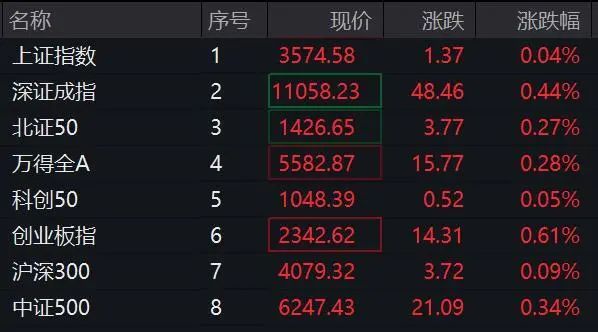
Group 1: Market Overview - The A-share market opened lower but saw a recovery, with all three major indices turning positive during the session [1] - The Shanghai Composite Index rose by 1.37 points, or 0.04%, closing at 3574.58 [2] - The Shenzhen Component Index increased by 48.46 points, or 0.44%, closing at 11058.23 [2] - The Northbound 50 Index rose by 3.77 points, or 0.27%, closing at 1426.65 [2] Group 2: Sector Movements - The polysilicon and silicon wafer sectors experienced significant upward movement, with Shuangliang Energy hitting the daily limit [5][6] - Other companies in the polysilicon sector, such as Daqo New Energy, Huamin Co., Tongwei Co., TCL Zhonghuan, and Hongyuan Green Energy, also saw notable gains [6] - The futures contract for polysilicon rose after previously declining over 4%, following the Ministry of Industry and Information Technology's release of a special energy-saving inspection task list for the polysilicon industry [7] Group 3: Innovation Drug Sector - The innovative drug sector continued to rise, with companies like Shuyou Shen, Rejing Bio, Kangchen Pharmaceutical, and Fuyuan Pharmaceutical reaching historical highs [8] - The FDA accepted the listing application for HSK3486 (环泊酚注射液) from Haishi Ke, and Huahai Pharmaceutical received approval for a dual-target drug [8] - Analysts noted that the innovative drug sector remains a core direction for the pharmaceutical industry, supported by policies and increasing global competitiveness [8] Group 4: Real Estate Sector - Dalian City Real Estate surged over 40% after announcing plans for privatization and delisting from the Hong Kong Stock Exchange [14][15] - The company proposed a buyback of shares at HKD 0.62 per share, totaling approximately HKD 29.32 billion [17] - NIO's stock rose over 9% following the launch of its new L90 model, which offers various seating configurations and competitive pricing [17] Group 5: Logistics Sector - The logistics sector saw significant gains, with companies like Shentong Express and Yunda Holdings hitting the daily limit [9][13] - The National Postal Administration held a meeting to address issues in the industry and promote high-quality development [13]


午评:创业板指涨0.43% 辅助生殖概念、医药板块走强
Zheng Quan Shi Bao Wang· 2025-07-31 03:45
Core Viewpoint - The market showed mixed performance on July 31, with the Shanghai Composite Index declining by 0.68% and the Shenzhen Component Index down by 0.45%, while the ChiNext Index increased by 0.43. [1] Market Performance - The overall market saw a trading volume exceeding 1.1 trillion yuan, with over 3,400 stocks declining. [1] - The assisted reproductive concept stocks surged, with companies like Gongtong Pharmaceutical and Lide Man hitting the daily limit. [1] - The pharmaceutical sector strengthened, with stocks such as Aoxiang Pharmaceutical and Kangyuan Pharmaceutical also reaching the daily limit. [1] - The liquid cooling server concept gained traction, with Yingweike achieving consecutive gains. [1] Sector Analysis - Innovative drug concepts, CPO concepts, and software service sectors showed significant gains. [1] - Conversely, cyclical stocks weakened, with coal, steel, oil, and non-ferrous metals sectors experiencing the largest declines. [1] - Other sectors such as aquatic products, real estate, electricity, and insurance also faced downturns. [1]

Down 87%, Is It Time to Buy This Super Software Stock?
The Motley Fool· 2025-06-05 08:26
Core Viewpoint - Bill Holdings has experienced significant stock decline despite consistent revenue growth, presenting a potential investment opportunity given its low price-to-sales ratio and large addressable market [1][12][16] Company Overview - Bill Holdings offers a suite of software products aimed at streamlining accounts payable, accounts receivable, and expense management for small and mid-sized businesses (SMBs) [1][4] - The company serves nearly 488,600 business customers and has a network of over 9,000 accounting firms that utilize and recommend its software [7][8] Product Offerings - Bill's flagship product is a cloud-based inbox for managing invoices, which automates routing for approvals and integrates with third-party accounting software [5] - The company also provides an accounts receivable platform for creating and tracking invoices, as well as an expense management tool for budgeting and spending oversight [6] Financial Performance - In the fiscal 2025 third quarter, Bill generated $358.2 million in revenue, marking an 11% year-over-year increase and exceeding management's forecast [9] - Despite this positive performance, management lowered its full-year revenue guidance for fiscal 2025 by $6.5 million to $1.455 billion [9] Market Potential - Bill estimates an addressable market of over 72 million SMBs globally, with these businesses executing $135 trillion in payments annually, indicating substantial growth potential for the company [15] - The current processing volume of $318 billion represents only a small fraction of the total market opportunity [15] Economic Context - Macroeconomic uncertainties, including tariffs and global trade tensions, may impact consumer spending and SMBs' financial activities, posing risks to Bill's revenue [10][11] - The company's revenue is primarily derived from transaction fees, making it sensitive to broader economic conditions [11] Investment Consideration - The stock's price-to-sales ratio has decreased to 3.2 from a peak of around 100 in 2021, suggesting it may be undervalued at present [12] - While short-term recovery may be challenging due to economic uncertainty, the long-term potential remains compelling for investors willing to adopt a multi-year perspective [14][16]


航天宏图: 国信证券股份有限公司关于航天宏图信息技术股份有限公司2024年年报问询函回复的核查意见
Zheng Quan Zhi Xing· 2025-06-03 09:23
Core Viewpoint - The company, Aerospace Hongtu Information Technology Co., Ltd., has faced significant operational challenges due to the suspension of its military procurement qualifications, leading to a substantial decline in revenue and net profit for the fiscal year 2024 [1][2][5]. Financial Performance - In 2024, the company reported a total revenue of 1.575 billion yuan, a year-on-year decrease of 13.39% [1][2]. - The net profit attributable to the parent company was -1.393 billion yuan, representing a year-on-year decline of 277.94% [1][2]. - The second quarter saw a revenue drop of 16.99%, while the fourth quarter experienced a slight decrease of 0.81% [3]. Revenue Breakdown - Revenue from the special field was 668.30 million yuan, accounting for 42.42% of total revenue, with a year-on-year decrease of 14.24% [1][2]. - Revenue from the civilian sector was 906.97 million yuan, making up 57.58% of total revenue, with a year-on-year decrease of 12.75% [1][2]. - The overall gross margin decreased by 13.44 percentage points to 22.48% [1][2]. Impact of Military Procurement Suspension - The suspension of military procurement qualifications since July 6, 2024, has severely impacted the company's ability to participate in tenders for special projects, leading to a decline in orders and revenue recognition [1][2][5]. - The company submitted a defense document to relevant authorities in August 2024, but as of the date of the report, the qualification had not been restored [2][5]. Cost and Profitability Analysis - The increase in operating costs was noted, with the second quarter's operating costs rising by 25.30% year-on-year [3]. - Significant asset impairment losses of 922.18 million yuan were recorded, primarily due to the inability to recover costs from projects that were budgeted but later canceled or reduced [4][6]. - Credit impairment losses also increased by 67.95 million yuan due to delayed payments from clients [4][6]. Client and Project Dynamics - The company’s major clients include government departments, special units, state-owned enterprises, and educational institutions, which account for over 90% of its revenue [8][9]. - The company has been focusing on high-margin data asset businesses, signing contracts worth 300 million yuan with eight ministries for satellite data asset sales [8]. Market Comparison - The company's gross margin of 22.48% is significantly lower than that of comparable companies in the industry, which averaged around 37.33% [7][8]. - The gross margin for system design and development dropped to 9.22%, a decrease of 25.63% year-on-year, while data analysis application services saw a gross margin of 30.76%, down 4.90% [6][7].
