量化基本面

Search documents
量化基本面系列之四:如何识别宏观触底与微观领涨
GF SECURITIES· 2026-03-31 13:49
- The report constructs a quantitative model to identify bottoming and leading signals in the market[7][18] - The model uses historical data up to the date of the signal to predict future trends[7][18] - The model triggered 118 rebound signals for the CSI All Share Index from 2006 to 2025, averaging about 6 times per year[18] - After the rebound signal, the average returns for the CSI All Share Index over the next 20, 60, 120, and 240 trading days were 1.09%, 2.89%, 6.08%, and 15.88%, respectively, with win rates of 57%, 58%, 56%, and 54%[18][22][27] - The model's application to industry indices also showed effective results, with the highest potential rebound industries achieving average returns of 2.16%, 3.68%, 6.89%, and 17.91% over the next 20, 60, 120, and 240 trading days, respectively[34][35] - The strategy of holding the top-performing industries for 20 days and then switching to the CSI All Share Index achieved a cumulative return of 1605.55% and an annualized return of 15.85% from 2006 to 2025, outperforming the CSI All Share Index's cumulative return of 565.01% and annualized return of 10.33%[39][40] - The model was further refined to select top-performing stocks within the top-performing industries, achieving a cumulative return of 11753.66% and an annualized return of 28.11% from 2006 to 2025[49][57][59] - Direct application of the model to large-cap stocks also showed significant outperformance, with the best strategy achieving a cumulative return of 8979.24% and an annualized return of 26.35% from 2006 to 2025[67][70][75] - The model was also applied to individual industry indices, showing that it could accurately predict the bottoming of specific industry indices and construct stock portfolios that significantly outperformed the corresponding industry indices[81][82] - The model's application to broad-based indices like the CSI 300, CSI 500, and CSI 800 also demonstrated its ability to accurately predict the bottoming of these indices and construct stock portfolios that significantly outperformed the corresponding indices[210][213][216][219]

量化基本面系列之二:交易热度监控体系探讨
GF SECURITIES· 2026-01-20 05:27
Quantitative Models and Construction Methods 1. **Model Name**: Amihud Illiquidity Indicator - **Model Construction Idea**: Measures the price impact of trading volume to assess the liquidity level of an asset. A higher value indicates lower liquidity. [11][12][13] - **Model Construction Process**: The formula is: $$ Amihud = \frac{1}{D} \sum_{d=1}^{D} \frac{\left| R_{i,d} \right|}{Vol_{i,d}} $$ Where: - \( D \): Number of trading days in the window - \( R_{i,d} \): Absolute return of security \( i \) on day \( d \) - \( Vol_{i,d} \): Trading volume of security \( i \) on day \( d \) This indicator reflects the sensitivity of price to trading volume. A higher value indicates that smaller trading volumes cause larger price changes, implying lower liquidity. [12][13] 2. **Model Name**: Pastor-Stambaugh Liquidity Indicator - **Model Construction Idea**: Based on the reversal of asset returns to measure liquidity. Assets with lower liquidity tend to exhibit higher return reversals. [14] - **Model Construction Process**: The formula is: $$ r_{i,d+1}^{e} = \alpha + \beta_{i} r_{i,d} + \gamma_{i} sign(r_{i,d}^{e}) \cdot v_{i,d} + \epsilon_{i,d+1} $$ Where: - \( r_{i,d+1}^{e} \): Excess return of security \( i \) on day \( d+1 \) - \( r_{i,d} \): Return of security \( i \) on day \( d \) - \( v_{i,d} \): Trading volume of security \( i \) on day \( d \) - \( \gamma_{i} \): Liquidity indicator, with a significantly negative value indicating poor liquidity. [14] 3. **Model Name**: Turnover Rate Indicator - **Model Construction Idea**: Reflects the trading activity of an asset by measuring the frequency of its turnover. Higher values indicate higher market liquidity. [15] - **Model Construction Process**: The turnover rate is calculated as: $$ Turnover\ Rate = \frac{Trading\ Volume}{Market\ Capitalization} $$ Where: - \( Trading\ Volume \): Total trading volume of the asset - \( Market\ Capitalization \): Total market value of the asset. [15] 4. **Model Name**: Component Stock Diffusion Indicator - **Model Construction Idea**: Measures the consistency of trends among individual stocks within an industry to assess crowding. Higher values indicate a more crowded market. [16] - **Model Construction Process**: The indicator is calculated as the proportion of stocks in an industry that exhibit a bullish trend, defined as the closing price being above the short-term, medium-term, and long-term moving averages. [16] 5. **Model Name**: Component Stock Pairwise Correlation Indicator - **Model Construction Idea**: Quantifies the homogeneity of stock movements within an industry to evaluate crowding. Higher values indicate stronger synchronization and higher crowding. [17] - **Model Construction Process**: The indicator is the average of pairwise correlation coefficients of returns among all component stocks in an industry over a given window. [17] 6. **Model Name**: Component Stock Return Kurtosis Indicator - **Model Construction Idea**: Captures the extremity of trading by analyzing the tail characteristics of return distributions. Higher kurtosis indicates more extreme returns, suggesting heightened market crowding. [18] - **Model Construction Process**: The indicator is the average kurtosis of daily cross-sectional returns within a window. Kurtosis measures the "peakedness" or "flatness" of a distribution, with higher values indicating fatter tails. [18] 7. **Model Name**: Heat Indicator - **Model Construction Idea**: Uses principal component analysis (PCA) to measure the contribution of a single industry to systemic market risk, reflecting its trading heat. [21][22] - **Model Construction Process**: The formula is: $$ AR_{m} = \frac{\sigma_{m}^{2}}{\sum_{j=1}^{N} \sigma_{j}^{2}} $$ $$ C_{i} = \frac{\sum_{j=1}^{n} AR_{j} \cdot \frac{\left| EV_{i}^{j} \right|}{\sum_{k=1}^{N} \left| EV_{k}^{i} \right|}}{\sum_{j=1}^{n} AR_{j}} $$ Where: - \( N \): Total number of industries - \( n \): Number of principal components - \( \sigma_{m}^{2} \): Variance of the \( m \)-th principal component - \( \sigma_{j}^{2} \): Variance of the \( j \)-th industry return - \( EV_{i}^{j} \): Exposure of the \( j \)-th principal component to the \( i \)-th industry. A higher value indicates that the industry contributes more to systemic market risk, suggesting higher trading heat. [21][22] 8. **Model Name**: Herding Effect Indicator - **Model Construction Idea**: Captures the consistency of market participants' behavior. A significant negative value indicates strong herding behavior, often signaling extreme market sentiment and crowded trading. [23][24] - **Model Construction Process**: The formula is: $$ CSAD_{t} = \gamma_{0} + \gamma_{1} \left| R_{m,t} \right| + \gamma_{2} R_{m,t}^{2} + \mathcal{E}_{t} $$ Where: - \( CSAD_{t} \): Cross-sectional absolute deviation of returns on day \( t \) - \( R_{m,t} \): Market return on day \( t \) - \( \gamma_{2} \): Herding effect indicator. [23][24] 9. **Model Name**: Closing Price-Trading Volume Correlation Indicator - **Model Construction Idea**: Analyzes the stability of the relationship between price and trading volume to predict potential trend reversals. Persistent negative correlation often signals overtrading and potential reversals. [25] - **Model Construction Process**: The indicator is the correlation coefficient between the series of closing prices and trading volumes of an index. [25] 10. **Model Name**: Trading Volume Share Indicator - **Model Construction Idea**: Reflects the concentration of trading in a specific sector or industry. Higher values indicate higher trading concentration and potential overheating. [26] - **Model Construction Process**: The indicator is calculated as the daily trading volume of a sector or industry divided by the total market trading volume. [26] Model Backtesting Results 1. **Amihud Illiquidity Indicator**: No specific backtesting results provided 2. **Pastor-Stambaugh Liquidity Indicator**: No specific backtesting results provided 3. **Turnover Rate Indicator**: No specific backtesting results provided 4. **Component Stock Diffusion Indicator**: No specific backtesting results provided 5. **Component Stock Pairwise Correlation Indicator**: No specific backtesting results provided 6. **Component Stock Return Kurtosis Indicator**: No specific backtesting results provided 7. **Heat Indicator**: No specific backtesting results provided 8. **Herding Effect Indicator**: No specific backtesting results provided 9. **Closing Price-Trading Volume Correlation Indicator**: No specific backtesting results provided 10. **Trading Volume Share Indicator**: No specific backtesting results provided Historical Similarity Analysis Results - Using the Wind Satellite Index (866125.WI) as an example, historical similar segments were identified based on metrics such as component stock count, trading volume share, and market capitalization. - For the next 60 trading days: - **Average maximum return**: 12.79% - **Average time to peak**: 33 days - **Average peak trading volume share**: 4.48% [42][46][49]
“汇同道 谋远略 启新章”——永安期货2026年度策略会成功举办!
Qi Huo Ri Bao· 2025-12-19 10:28
Core Insights - The 2026 strategy conference held by Yong'an Futures in Hangzhou focused on exploring wealth management strategies amid complex macroeconomic changes, emphasizing the importance of collaboration and innovation in the financial sector [1] - Yong'an Futures aims to become a leading derivatives investment bank, focusing on six key areas: deepening industry services, enhancing wealth management, accelerating internationalization, strengthening research capabilities, promoting digital transformation, and adhering to long-term investment principles [1] Macroeconomic Environment and Asset Allocation - The chief economist of Caitong Securities highlighted the divergence between nominal and real economic indicators, suggesting reliance on fiscal and monetary policies to navigate the complexities of the macroeconomic landscape [2] - A multi-asset allocation strategy was proposed, emphasizing the importance of balancing risk and return while adapting to changing economic conditions and enhancing residents' risk appetite [2] Commodity Market Outlook - The head of Yong'an Futures Research Center projected a recovery in commodity prices driven by proactive domestic policies and external demand, particularly in the non-ferrous metals sector, which is supported by AI and new energy demands [3] - Structural opportunities in the market were identified, with a focus on sectors experiencing supply disruptions and increased demand [3] Investment Philosophy and Strategies - Investment strategies discussed included a focus on "probability thinking" and "low correlation" to create resilient portfolios capable of withstanding economic cycles [2][3] - The importance of a balanced investment approach was emphasized, with a focus on redemptive assets as a foundation for navigating market fluctuations [3] Discussions on Asset Management and Technology - Roundtable discussions addressed the transition from product-centric to client-centric investment approaches, highlighting the need for collaboration and innovation in asset management [5] - The role of AI in enhancing quantitative investment processes and risk management was a key topic, with insights into how AI can redefine investment strategies [5] Future Directions - Yong'an Futures plans to reshape its research ecosystem with a focus on customer-centric services and data-driven decision-making, aiming to set a benchmark in the commodity research field [6]

博格偶然发现!海外资管巨鳄的中国身影
Sou Hu Cai Jing· 2025-12-01 10:23
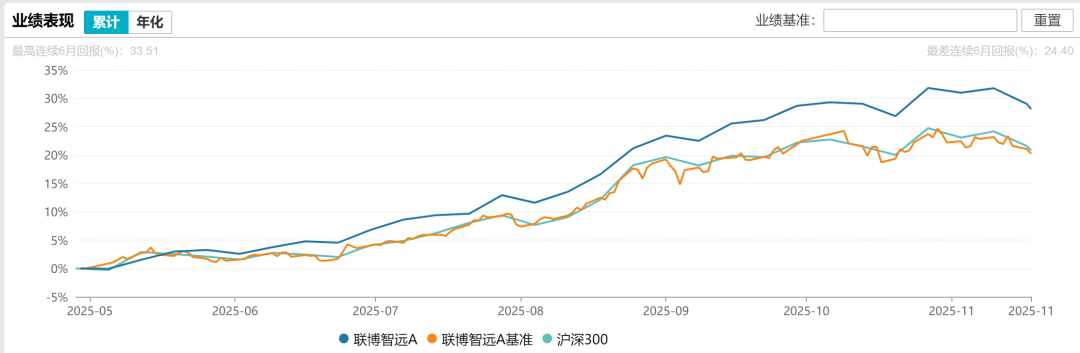
Group 1 - AllianceBernstein, known as 联博 in Chinese, is a major asset management firm formed from the merger of Alliance Capital and Bernstein in 2000, with a current asset management total of $860 billion (over 6 trillion RMB) as of September 30, 2025 [4][5][6] - The firm has recently established 联博基金管理有限公司 and started issuing public products, indicating a strategic entry into the Chinese market [6][7] - The firm has developed a unique investment strategy called "quantitative fundamentals," which combines quantitative data processing with in-depth fundamental research for stock selection [10][11] Group 2 - The performance of their funds, such as "联博智远," shows a year-to-date return of 28.32% with a maximum drawdown of only 3.82%, demonstrating effective risk control and validating their investment strategy [17][20] - 联博 has launched its first index-enhanced product, the 联博中证500指数增强基金, targeting the 中证500 index, which includes high-tech sectors like chips and pharmaceuticals, aligning with national development goals [23][25] - The firm aims to leverage its global technology platform and multi-asset quantitative models to enhance investment efficiency and identify opportunities while controlling risks [26][29] Group 3 - The firm emphasizes the importance of steady performance and risk management, which is crucial for investor confidence and long-term investment success [31][34] - The new index-enhanced fund is seen as a suitable core investment for ordinary investors, particularly due to its focus on high-tech sectors and alignment with national policies [34][35] - The fund managers have extensive experience, with one being a veteran in quantitative research and the other specializing in machine learning strategies, which adds credibility to the new product [35]

中信建投十年“研究老将”丁鲁明正式官宣离职,转投私募创业
Nan Fang Du Shi Bao· 2025-07-17 09:04
Core Viewpoint - Ding Luming, a prominent analyst at CITIC Securities, announced his departure from the sell-side research role after 16 years to enter the private equity industry, marking a significant career transition [2][4]. Group 1: Career Background - Ding Luming has been with CITIC Securities since 2014, holding various key positions including Executive General Manager of the Research Development Department and Chief Analyst for the Financial Engineering Team [4]. - He is well-known in the industry for creating the "quantitative fundamental" research system and has accurately predicted major market trends and turning points [4]. - Ding has received multiple accolades, including being ranked 1st in the New Fortune Best Analyst awards in 2013 and 1st in the Crystal Ball Best Analyst awards in 2009 and 2013 [4]. Group 2: New Venture - After leaving CITIC Securities, Ding Luming founded Shanghai Ruicheng Private Fund Management Co., Ltd., which was officially registered on July 14, 2025, with a registered capital of 10 million yuan [4][5]. - Ding holds a 51% stake in Shanghai Ruicheng, while the second-largest shareholder is Hainan Ruicheng Enterprise Management Center (Limited Partnership) with a 49% stake [5][6]. - The company is classified as a private securities investment fund manager and is located in Hongkou District, Shanghai [5]. Group 3: Industry Trends - The private equity sector has seen a trend of seasoned analysts transitioning from brokerage firms, with several notable departures from CITIC Securities in 2025 [6]. - Notably, former Chief Strategist Chen Guo also left CITIC Securities earlier in the year to join Dongfang Wealth, highlighting a shift in talent within the industry [6].

16年卖方老兵转身量化实战,中信建投前金工首席丁鲁明“奔私”,量化人才需要具备哪些能力?
Mei Ri Jing Ji Xin Wen· 2025-07-17 06:40
Core Insights - Ding Luming, former Chief Analyst of Financial Engineering at CITIC Securities, announced his departure from a 16-year sell-side career to establish Shanghai Ruicheng Private Fund Management Co., aiming to create a Chinese version of "Bridgewater Fund" [1][2][3] Company Overview - Shanghai Ruicheng Private Fund Management Co. was established in April 2025 and completed registration on July 14, 2025 [3] - Ding Luming has a strong academic background with a Master's in Financial Mathematics from Tongji University and has been recognized multiple times as a top analyst [3] Investment Strategy - Ding Luming has developed an innovative "quantitative fundamental" research system, focusing on the Kondratiev wave theory within economic cycles, which he applies to asset allocation and market trend predictions [3] - The strategy emphasizes absolute returns through large asset allocation and timing, fostering long-term investment habits among investors [3] Industry Trends - The private equity sector is experiencing a resurgence, with a significant number of top managers being quantitative private equity firms [4] - As of Q1 2025, the scale of public quantitative equity funds reached 302.588 billion, while by June 2025, there were 39 private quantitative fund managers managing over 10 billion, accounting for nearly half of the total [4] Talent Acquisition - The definition of talent in the quantitative finance sector is evolving, with a shift towards valuing mathematical and computational skills over traditional finance backgrounds [4][5] - A notable trend is the preference for candidates with strong quantitative analysis and programming skills, as opposed to those with purely financial education [5][6]
知名券商金工首席,官宣“奔私”!
中国基金报· 2025-07-16 15:14
Core Viewpoint - The article discusses the transition of Ding Luming, a prominent quantitative analyst from CITIC Securities, to the private equity sector by founding Shanghai Ruicheng Private Fund Management Co., Ltd. [2][11] Company Information - Shanghai Ruicheng Private Fund Management Co., Ltd. was established on April 21, 2025, and completed its registration as a private securities investment fund manager on July 14, 2025. The registered capital is 10 million yuan, and the company is located in Hongkou District, Shanghai [4][6]. - The company currently has 5 full-time employees, all of whom hold fund industry qualifications [5][6]. Ownership Structure - Ding Luming is the major shareholder, holding 51% of the shares, while the second-largest shareholder is Hainan Ruicheng Enterprise Management Center (Limited Partnership), which holds 49% [7][8]. Background of Ding Luming - Ding Luming holds a master's degree in financial mathematics from Tongji University and has 17 years of experience in the securities industry. He previously worked at Haitong Securities and CITIC Securities, where he served as the chief analyst in financial engineering and later as the executive general manager of the research and development department [8][10]. - During his career, he developed a "quantitative fundamental" research system and has been recognized for accurately predicting major trends and turning points in the capital market [10]. Strategic Vision - Ding Luming aims to create a professional team and establish a private fund management company that focuses on absolute returns through large asset allocation and timing strategies, utilizing economic cycle theories such as the Kondratiev wave [12][13]. - He expresses confidence in building a Chinese version of the "Bridgewater Fund" and plans to invest all his energy into this new venture [13].

全天候配置,穿越周期:联博朱良的“反脆弱”投资之道
聪明投资者· 2025-04-22 03:26
2025 年春节过后 , D eep S eek的横空出世引领出了 A 股市场的科技主线 , 而后被特朗普来回横跳的 关税政策猝不及防地打乱了节奏 。 关税博弈下 , 市场到底走到哪一步了 ? 对此 , 联博基金副总经理 、 投资总监朱良用 "市场湿度" 这一概念进行了回答 : "4 月 7 日 , 我们的 湿度计指标达到了 81%, 是一个阶段性的高点 ; 在此之后 , 则表现出向均值回归的状态 。 " 经常看到有人用 "温度"来描述市场 , 而鲜少有人使用 "湿度"来注解投资情绪 。 朱良表示 , "湿度计"指标源于联博集团的 "量化基本面"研究框架 , 衡量的是 市场波动中有多大的比例 是由贝塔来解释的 。 可以理解为投资者群体性行为给市场带来了多大的影响 , 是投资者能够直接体感到 的市场情绪 。 朱良补充道 , "当贝塔解释市场波动的比例很高时 , 市场情绪大概率是极悲或极乐 。 2018 年 10 月 , 贸易战 1 . 0 时期 , 湿度计指标达到了 83%; 去年 ' 9 . 24 行情 '中 , 10 月 8 日的湿度指标达到了 87%, 都是阶段性的情绪峰值 —— 对比下来 , 我们认为 ...
全天候配置,穿越周期:联博朱良的“反脆弱”投资之道
聪明投资者· 2025-04-22 03:26
Core Viewpoint - The article discusses the impact of tariff policies on the A-share market and highlights the investment opportunities arising from the current market conditions, particularly through the lens of the "humidity" concept introduced by Zhu Liang, the Deputy General Manager and Investment Director of Lianbo Fund [2][3]. Market Conditions - The "humidity" indicator reached a peak of 81% on April 7, indicating a high level of market sentiment, which has since shown signs of mean reversion [2]. - Historical comparisons show that during previous market turmoil, such as the trade war in October 2018 and the market fluctuations in September 2022, the humidity indicators reached even higher levels, suggesting that the negative impacts of the current tariff events may have largely been priced in [3]. Investment Strategy - Lianbo Fund's new public offering, Lianbo Zhiyuan Mixed Fund, aims to provide an "all-weather" investment solution through a balanced allocation strategy that combines both growth and value stocks [4]. - The fund seeks to minimize volatility by finding a "greatest common divisor" in style switching, ensuring a reasonable allocation between growth and value stocks [6][8]. Stock Selection - The fund emphasizes selecting stocks with "anti-fragile" characteristics, focusing on companies with predictable earnings models and stable cash flows, which are more likely to thrive across different economic cycles [10]. - Zhu Liang stresses the importance of buying high-quality companies during market lows, as valuation is seen as a dynamic expectation rather than a static number [11]. Historical Context - Lianbo's long-term commitment to the Chinese market is highlighted, with a history of over 30 years of investment and research in the region, demonstrating a deep understanding of local market dynamics [12][13]. - The article draws parallels between past market recoveries and the current situation, suggesting that sectors like consumer goods may emerge as leaders once the current turmoil subsides [15][16].