康波周期理论

Search documents
52页二次元游戏研报:米哈游原神余响仍在,鹰角完美网易引领二游新一轮主升浪
3 6 Ke· 2026-01-23 04:33
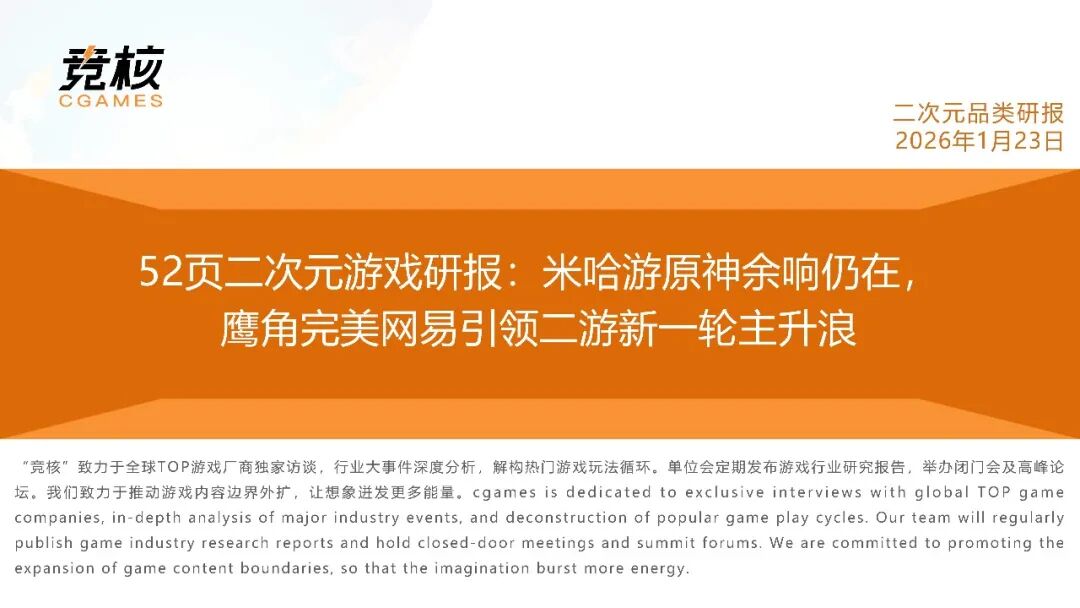
Group 1 - Core viewpoint: The second dimension game category is transitioning from the cycle dominated by miHoYo's "Genshin Impact" to a new prosperity cycle led by companies like NetEase and Eagle Horn [2][3] - The game industry exhibits cyclical properties, with each cycle lasting approximately 6 years, influenced by factors such as technology, population, and policy [2] - By 2026, the second dimension game sector is expected to shift towards gameplay, narrative, and character-driven models, with a focus on expanding user demographics beyond traditional fans [3] Group 2 - The future of second dimension games will revolve around three main directions: innovative gameplay, social design, and expanded nurturing cycles [4][12] - Current leading second dimension games have largely followed the gameplay design framework established by "Genshin Impact," resulting in low innovation and a tendency towards homogenization [4][11] - The introduction of social gameplay is seen as essential to address commercialization and long-term engagement challenges within the second dimension gaming sector [6][13] Group 3 - The pricing of second dimension games has reached a near-bottom level, with an increasing emphasis on cosmetic purchases to decouple gameplay from monetization [6][13] - The shift towards cosmetic monetization is expected to enhance gameplay enjoyment and allow for more creative freedom in game design [6][13] - The current social design in second dimension games faces challenges, with a need to create engaging social experiences that resonate with users [6][80] Group 4 - Player preferences are evolving, with a growing interest in content that abstracts and deconstructs reality, leading to polarized content trends [7][14] - Economic conditions influence player emotions, which in turn affect the themes and tones of second dimension game content [8][14] - To maintain long-term engagement, companies must enhance their IP ecosystems and community interactions both online and offline [8][14]


2026年中国股市如何“稳稳地幸福”?这场大会给出关键答案
新浪财经· 2026-01-15 09:32
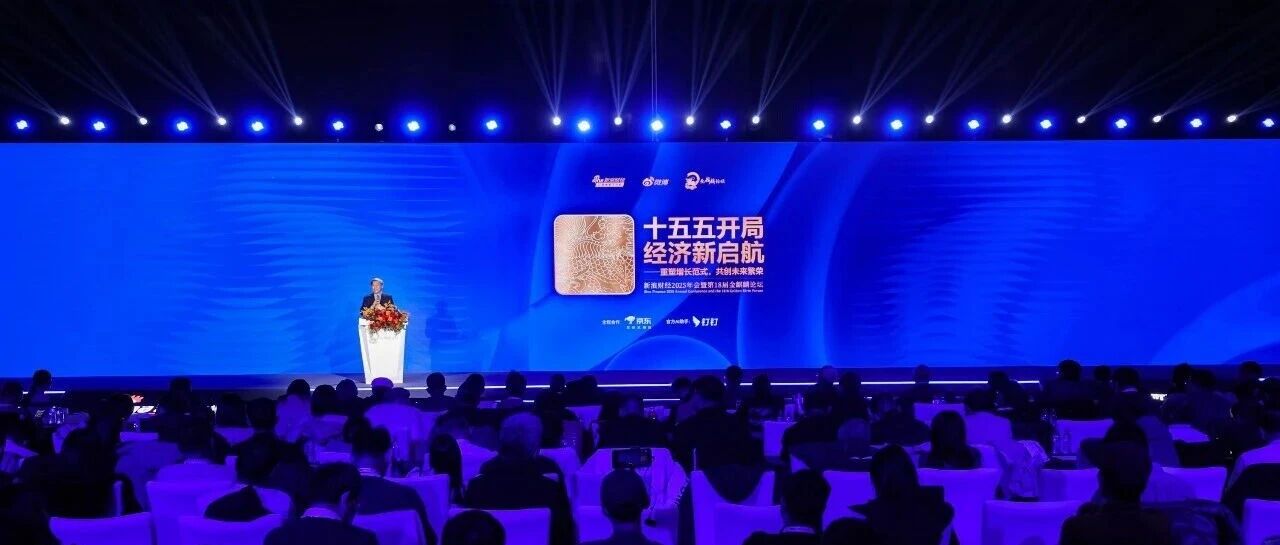
Group 1 - The core theme of the forum is "Fifteen Five Start, Economic New Voyage - Reshaping Growth Paradigms, Co-creating Future Prosperity" [2] - Key speakers include prominent figures such as Sina Finance CEO Deng Qingxu and various economists and researchers discussing the development of the capital market [2][5] - The forum emphasizes the importance of collaboration among government, enterprises, capital markets, and media to activate new growth drivers through technological, institutional, and model innovations [5] Group 2 - Deng Qingxu highlights that 2025 was a year of steady progress for China's economy amidst global challenges, showcasing resilience and vitality [5] - The "Zhima AI" system developed by Sina Finance is positioned as an essential tool for investors, providing comprehensive monitoring and analysis of financial events [5] - Liu Shijin discusses the need for a balanced import-export strategy to sustain domestic consumption and suggests that the appreciation of the RMB will have long-term benefits for productivity and competitive advantage [9][7] Group 3 - Liu Shangxi emphasizes that addressing the issues faced by farmers is crucial for achieving common prosperity in China, highlighting the need for reforms to improve their social status and opportunities [12][15] - Li Daokui expresses optimism about the stock market, suggesting that the transition to a modern development-oriented government is essential for high-quality economic growth [16][18] - Li Ling discusses the importance of a health-centered development paradigm, advocating for a new health industry that could surpass the real estate sector in scale [20][22] Group 4 - Wu Xiaoqiu predicts a positive growth trend for China's capital market in 2026, attributing recent market improvements to systematic reforms and increased transparency [23][25] - He advises investors to view market downturns as opportunities for entry, emphasizing the importance of long-term trends over short-term volatility [26] - He also notes that the current influx of funds into the market must be balanced with the quality and performance of listed companies to ensure sustainable growth [30] Group 5 - He Qiang highlights the successful efforts of the China Securities Regulatory Commission in attracting long-term funds to the market, which has contributed to recent market rallies [28][29] - Liu Shuwei attributes the stock market's rise to economic cycles and improved business environments due to anti-corruption measures [31][34] - Xia Chun predicts that Hong Kong may become the second-largest international financial center, driven by the gradual appreciation of the RMB and the awakening of global investors to China's industrial achievements [36][38] Group 6 - Shen Junfeng discusses the transformation of household asset allocation, noting a shift from savings to stock investments as real estate's dominance wanes [40] - He emphasizes the importance of ETFs in long-term asset management and encourages investors to adopt a rational approach to market participation [40]
康波的凝视-油价一触即发
2026-01-13 01:10
Summary of Conference Call Records Industry Overview - The current analysis focuses on the commodities market, particularly oil, and its cyclical behavior driven by the Kondratiev wave theory, indicating a supercycle lasting approximately four years due to the expansion of dollar credit cracks [1][3][6]. Key Points and Arguments - **Commodity Supercycle**: The current supercycle is characterized by a rotation in commodity prices: gold, industrial metals, oil, and finally agricultural products. This cycle is expected to continue until around 2026, particularly influenced by geopolitical factors such as the Russia-Ukraine conflict [1][3][6]. - **Oil Price Signals**: The reversal of oil prices is anticipated to be signaled by three core indicators: 1. Major oil-producing countries expressing willingness to negotiate production cuts. 2. Effective execution of joint production cuts by these countries. 3. Continuous strengthening of the production cut agreements in terms of extent and duration. The emergence of the third signal is expected to lead to a rapid increase in oil prices [4][10]. - **Strategic Oil Reserves**: Global strategic oil inventories have reached historical lows, which, combined with a decade-long contraction in oil capital expenditures, supports the potential for future oil price increases [4][7]. - **Investment Opportunities**: The current international oil price has fallen below $60, nearing the breakeven point for the U.S. shale gas industry, suggesting limited downside risk and significant upside potential for investments in the petrochemical sector [2][11]. Additional Important Insights - **Kondratiev Wave Characteristics**: The supercycle during the Kondratiev depression phase is primarily driven by currency credit issues rather than demand. Since 2016, the global demand for the dollar has decreased, enhancing the reserve value of commodities, especially gold [6]. - **Historical Context**: Historical geopolitical events have shown that actions against Russia often lead to significant drops in oil prices, as seen in 1986 and 2014. The current situation reflects similar dynamics following the 2022 Russia-Ukraine conflict [9]. - **Future Economic Predictions**: For 2026, it is predicted that China's economy will enter a phase of prosperity, with the A-share market likely to reach new highs. Key sectors to watch include non-ferrous metals, new consumption, high-end manufacturing, and domestic computing chains with competitive advantages [12]. Conclusion - The analysis indicates a complex interplay of geopolitical factors, market dynamics, and historical patterns that shape the commodities market, particularly oil. Investors are advised to consider these elements when making strategic decisions in the coming years.
洞察经济周期,谋划出海蓝图!财富盛典解码投资机遇与风险管理
Da Zhong Ri Bao· 2025-12-05 01:51
Group 1 - The event "2025 Qingdao Wealth Festival" focused on the theme of "Cross-border, Integration, and Win-win," discussing the impact of global economic changes on investment and wealth management [1][16] - The discussions highlighted the importance of cross-border investment and international trade as globalization progresses, with a focus on new perspectives in wealth management and investment strategies [1][16] Group 2 - Liu Xiaoshu, Chief Economist of Qingdao Bank, emphasized the relevance of the Kondratiev wave theory in understanding current economic conditions, suggesting that the global economy is in the ascending phase of the sixth Kondratiev wave characterized by the digital economy [17][18] - Liu stated that true wealth arises from a deep understanding of economic structures and cyclical patterns, which is crucial for investors to navigate the evolving landscape of the digital economy [3][17] Group 3 - Qu Xia, a senior partner at Dacheng Law Firm, noted that Chinese companies are shifting from viewing overseas expansion as an option to a necessity, focusing on wealth creation and accumulation on a global scale [3][18] - Qu emphasized the need for companies to set clear strategic goals, choose markets and entry modes carefully, and prioritize localized operations and compliance systems to transition from "going out" to "integrating in" [5][18] Group 4 - Qingdao Yingpais Health Technology Co., Ltd. shared its journey from a manufacturing company to a global brand, achieving nearly 80% of its sales from international markets [6][19] - The company adopted an ODM model and launched its own brand IMPULSE in 1995, successfully entering over 100 countries and regions, thus establishing itself as a leader in the fitness equipment sector [6][19] Group 5 - Qingdao Taike Ying Special Tire Co., Ltd. discussed the challenges and strategies in their overseas expansion, highlighting the importance of organizational capability and adaptability to external environments [9][10] - The company underwent significant organizational changes to enhance localization and manage external complexities effectively [9][10] Group 6 - A roundtable discussion addressed the challenges of asset management in a global context, with participants emphasizing the need for localized operations and strategic partnerships to enhance competitiveness in overseas markets [10][12] - The discussion also highlighted the importance of compliance awareness in international operations, with examples illustrating the risks of applying domestic business practices in foreign legal environments [13][12]

再议:大宗商品会有新一轮牛市吗?
对冲研投· 2025-10-03 10:04
Group 1: Core Views - The article emphasizes the need to accept a new geopolitical and macroeconomic paradigm centered around modern mercantilism, which is seen as a defensive reaction to the hollowing out of manufacturing in developed countries [1] - The Trump administration's agenda is characterized as embodying modern mercantilism, with significant administrative power expansion to dominate the economy, where national security drives industrial policy [1][2] Group 2: Policy Aspects - The article discusses the Trump administration's re-industrialization strategy and modern mercantilism, highlighting recent aggressive policies such as tariffs and investments in key industries like chips and resources [5] - It notes that the U.S. government is leveraging investments to stimulate key industries and promote small businesses, while trade barriers and a weaker dollar are used to boost exports [5] - The projected acceleration of AI investment to $255 billion by Q2 2025 is expected to drive growth across various sectors, aligning with the investment cycle theory [5] Group 3: Economic Aspects - The article outlines expectations for economic growth in the U.S. starting in Q4 this year, with a resurgence in inflation and a strong job market [14] - It highlights that despite concerns about AI leading to job losses, the employment market remains tight, with companies continuing to hire across all sizes [14][16] - Inflation is anticipated to rise, with many businesses still experiencing upward price movements, suggesting that core PCE inflation may see a slight increase by early next year [18] Group 4: Commodity Market Outlook - The article suggests that the market's expectations regarding U.S. policies and the economic environment over the next six months will support commodity prices [19] - It points out that hedge funds and asset managers currently hold net long positions in crude oil that are near historical lows, primarily due to OPEC+ strategies and fears of a U.S. economic slowdown [19][20]

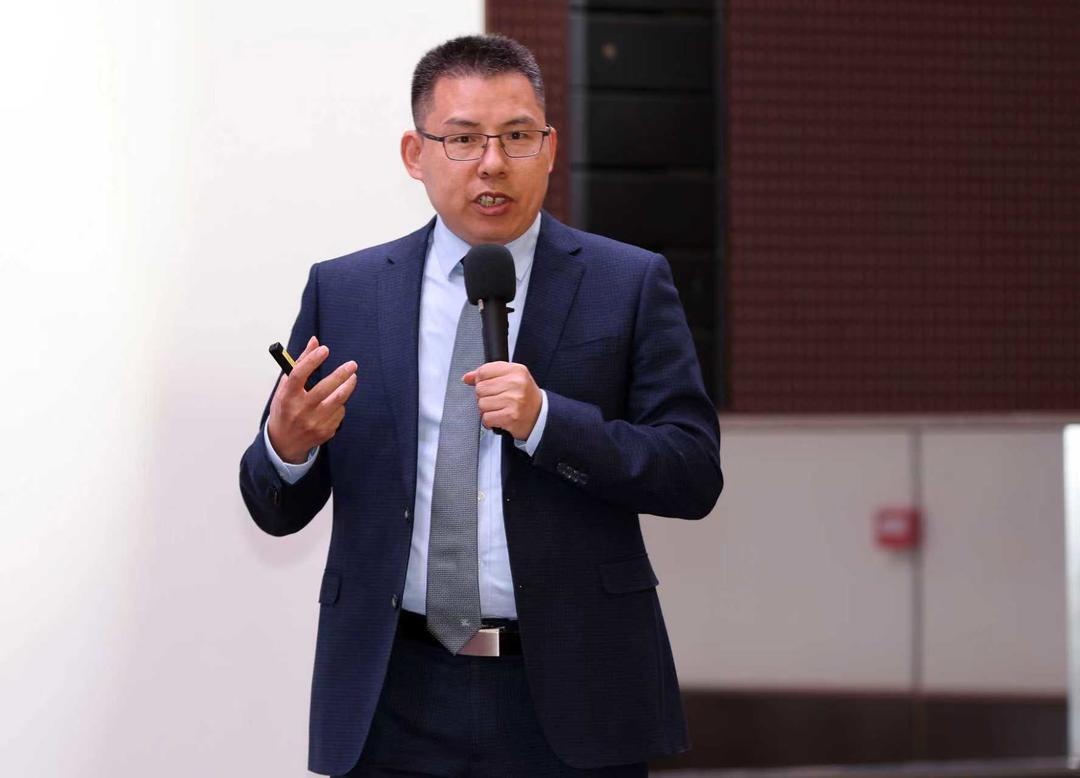
中信建投十年“研究老将”丁鲁明正式官宣离职,转投私募创业
Nan Fang Du Shi Bao· 2025-07-17 09:04
Core Viewpoint - Ding Luming, a prominent analyst at CITIC Securities, announced his departure from the sell-side research role after 16 years to enter the private equity industry, marking a significant career transition [2][4]. Group 1: Career Background - Ding Luming has been with CITIC Securities since 2014, holding various key positions including Executive General Manager of the Research Development Department and Chief Analyst for the Financial Engineering Team [4]. - He is well-known in the industry for creating the "quantitative fundamental" research system and has accurately predicted major market trends and turning points [4]. - Ding has received multiple accolades, including being ranked 1st in the New Fortune Best Analyst awards in 2013 and 1st in the Crystal Ball Best Analyst awards in 2009 and 2013 [4]. Group 2: New Venture - After leaving CITIC Securities, Ding Luming founded Shanghai Ruicheng Private Fund Management Co., Ltd., which was officially registered on July 14, 2025, with a registered capital of 10 million yuan [4][5]. - Ding holds a 51% stake in Shanghai Ruicheng, while the second-largest shareholder is Hainan Ruicheng Enterprise Management Center (Limited Partnership) with a 49% stake [5][6]. - The company is classified as a private securities investment fund manager and is located in Hongkou District, Shanghai [5]. Group 3: Industry Trends - The private equity sector has seen a trend of seasoned analysts transitioning from brokerage firms, with several notable departures from CITIC Securities in 2025 [6]. - Notably, former Chief Strategist Chen Guo also left CITIC Securities earlier in the year to join Dongfang Wealth, highlighting a shift in talent within the industry [6].

16年卖方老兵转身量化实战,中信建投前金工首席丁鲁明“奔私”,量化人才需要具备哪些能力?
Mei Ri Jing Ji Xin Wen· 2025-07-17 06:40
Core Insights - Ding Luming, former Chief Analyst of Financial Engineering at CITIC Securities, announced his departure from a 16-year sell-side career to establish Shanghai Ruicheng Private Fund Management Co., aiming to create a Chinese version of "Bridgewater Fund" [1][2][3] Company Overview - Shanghai Ruicheng Private Fund Management Co. was established in April 2025 and completed registration on July 14, 2025 [3] - Ding Luming has a strong academic background with a Master's in Financial Mathematics from Tongji University and has been recognized multiple times as a top analyst [3] Investment Strategy - Ding Luming has developed an innovative "quantitative fundamental" research system, focusing on the Kondratiev wave theory within economic cycles, which he applies to asset allocation and market trend predictions [3] - The strategy emphasizes absolute returns through large asset allocation and timing, fostering long-term investment habits among investors [3] Industry Trends - The private equity sector is experiencing a resurgence, with a significant number of top managers being quantitative private equity firms [4] - As of Q1 2025, the scale of public quantitative equity funds reached 302.588 billion, while by June 2025, there were 39 private quantitative fund managers managing over 10 billion, accounting for nearly half of the total [4] Talent Acquisition - The definition of talent in the quantitative finance sector is evolving, with a shift towards valuing mathematical and computational skills over traditional finance backgrounds [4][5] - A notable trend is the preference for candidates with strong quantitative analysis and programming skills, as opposed to those with purely financial education [5][6]
知名券商金工首席 官宣“奔私”!
Zhong Guo Ji Jin Bao· 2025-07-16 15:51
Core Viewpoint - Ding Luming, the former chief quantitative analyst at CITIC Securities, has transitioned from a sell-side career to establish a private equity fund management company named Shanghai Ruicheng Private Fund Management Co., Ltd. [1][2][8] Company Information - Shanghai Ruicheng Private Fund was established on April 21, 2025, and completed its registration as a private securities investment fund manager on July 14, 2025. The registered capital is 10 million yuan, and the company is located in Hongkou District, Shanghai, with its office in Pudong New District. It currently employs five full-time staff, all of whom hold fund industry qualifications [4][5]. - The major shareholder of Ruicheng Private Fund is Ding Luming, who holds 51% of the shares, while the second shareholder, Hainan Ruicheng Enterprise Management Center (Limited Partnership), holds 49% [6]. Leadership Background - Ding Luming has a master's degree in financial mathematics from Tongji University and is a qualified actuary with 17 years of experience in the securities industry. He previously worked at Haitong Securities and CITIC Securities, where he held various senior positions, including chief analyst and executive general manager [6][7]. - Ding Luming has developed a "quantitative fundamental" research system and has been recognized for his accurate predictions of major market trends and turning points [7]. Strategic Vision - Ding Luming aims to create a professional team to manage the private fund, focusing on absolute returns through large asset allocation and timing strategies. He plans to incorporate mature quantitative strategies into product management [8][9]. - The company aspires to become a Chinese equivalent of Bridgewater Associates, indicating a strong ambition for growth and influence in the private equity sector [9].
知名券商金工首席,官宣“奔私”!
中国基金报· 2025-07-16 15:14
Core Viewpoint - The article discusses the transition of Ding Luming, a prominent quantitative analyst from CITIC Securities, to the private equity sector by founding Shanghai Ruicheng Private Fund Management Co., Ltd. [2][11] Company Information - Shanghai Ruicheng Private Fund Management Co., Ltd. was established on April 21, 2025, and completed its registration as a private securities investment fund manager on July 14, 2025. The registered capital is 10 million yuan, and the company is located in Hongkou District, Shanghai [4][6]. - The company currently has 5 full-time employees, all of whom hold fund industry qualifications [5][6]. Ownership Structure - Ding Luming is the major shareholder, holding 51% of the shares, while the second-largest shareholder is Hainan Ruicheng Enterprise Management Center (Limited Partnership), which holds 49% [7][8]. Background of Ding Luming - Ding Luming holds a master's degree in financial mathematics from Tongji University and has 17 years of experience in the securities industry. He previously worked at Haitong Securities and CITIC Securities, where he served as the chief analyst in financial engineering and later as the executive general manager of the research and development department [8][10]. - During his career, he developed a "quantitative fundamental" research system and has been recognized for accurately predicting major trends and turning points in the capital market [10]. Strategic Vision - Ding Luming aims to create a professional team and establish a private fund management company that focuses on absolute returns through large asset allocation and timing strategies, utilizing economic cycle theories such as the Kondratiev wave [12][13]. - He expresses confidence in building a Chinese version of the "Bridgewater Fund" and plans to invest all his energy into this new venture [13].