
钠锂双星

Search documents
耐寒特性 成本优势 资源可控 钠电池规模化商用提速
Bei Jing Ri Bao Ke Hu Duan· 2026-02-26 22:57
Core Insights - Sodium-ion batteries are gaining traction in the market, particularly due to their cold resistance, which is seen as a key advantage for commercial applications in extreme environments [1][2][3] - The year 2026 is anticipated to be a pivotal year for the commercialization of sodium-ion batteries, with significant developments already occurring in both the automotive and energy storage sectors [1][2] Group 1: Market Developments - The first mass-produced sodium-ion battery for light commercial vehicles was launched by CATL in January 2026, followed by the unveiling of the world's first sodium-ion passenger vehicle, which is set to be released this year [1] - The performance of sodium-ion batteries in extreme cold has been validated, with tests showing over 92% energy retention at -20°C and over 90% at -40°C, significantly outperforming traditional lithium batteries [2][3] Group 2: Technical Advantages - The unique chemical properties of sodium-ion batteries contribute to their superior cold resistance, with sodium ions being less affected by low temperatures compared to lithium ions [3] - Sodium-ion batteries utilize hard carbon materials for their anodes, which provide a more stable crystal structure, enhancing performance in cold conditions [3] Group 3: Economic Factors - The rising prices of lithium battery raw materials, including a 5.9% increase in the price of lithium iron phosphate in late January 2026, are creating new opportunities for sodium-ion batteries [5] - Sodium is significantly more abundant than lithium, with a geological concentration 400 times greater, which allows for a more stable supply chain and reduced geopolitical risks [5] Group 4: Industry Outlook - Despite the advantages, sodium-ion batteries face challenges such as lower energy density compared to lithium batteries, which limits their application in high-end vehicles [6] - The industry consensus is shifting towards a complementary relationship between sodium-ion and lithium batteries, with expectations that sodium technology will improve significantly in the next 3 to 5 years [7]

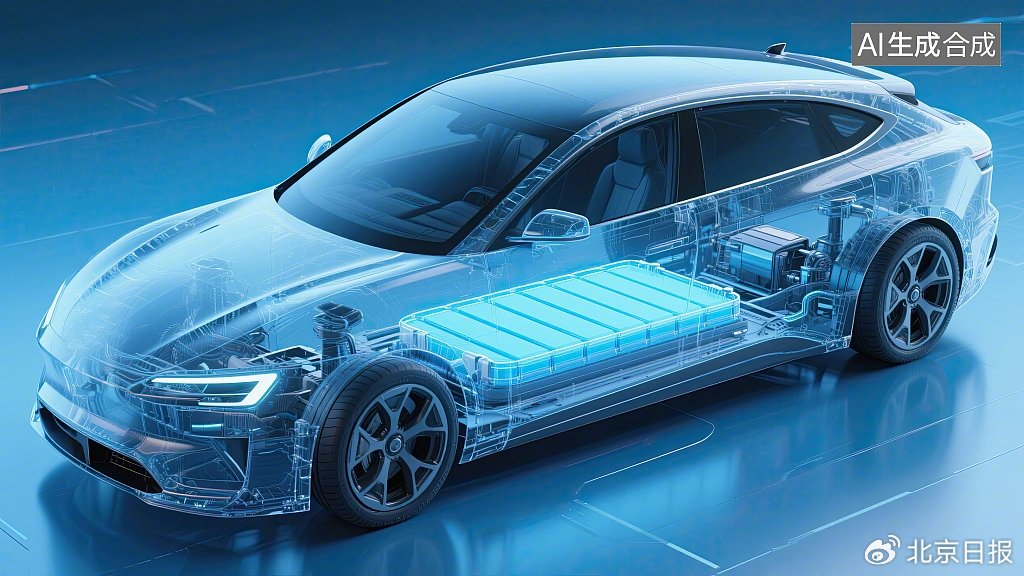
钠锂双星时代,来了!
中国能源报· 2026-02-06 13:58
Core Viewpoint - The article highlights the launch of Changan Automobile's global sodium battery strategy in collaboration with CATL, marking a significant step towards the commercialization of sodium-ion battery technology in the automotive sector [2][4]. Group 1: Sodium Battery Launch and Features - Changan Automobile unveiled its first mass-produced sodium battery vehicle, which has successfully completed winter testing in extreme cold conditions, meeting key performance indicators for daily use [2]. - The sodium battery, branded as "Sodium New" by CATL, aims for large-scale application in various sectors by 2026, including battery swapping, passenger vehicles, commercial vehicles, and energy storage [2][4]. - The sodium battery vehicle boasts a range of over 400 kilometers, with an energy density of up to 175 Wh/kg, positioning it competitively within the industry [10]. Group 2: Policy Support and Industry Trends - Sodium-ion technology has been integrated into national strategic planning since 2022, with increasing policy support aimed at accelerating its development [4][5]. - The Ministry of Industry and Information Technology and other departments have emphasized the need for rapid advancements in sodium-ion battery technology as part of broader energy electronic industry development [4]. - By 2025, several national guidelines will focus on the integration of sodium-ion batteries in energy storage systems, highlighting their potential as a key component of new power systems [4]. Group 3: Technological Breakthroughs and Safety - CATL's sodium battery has achieved significant breakthroughs in low-temperature performance, demonstrating nearly three times the discharge power compared to lithium iron phosphate batteries at -30°C [10]. - The battery has passed rigorous safety tests under extreme conditions, showcasing its resilience and safety, which exceeds national standards [10][11]. - The company plans to establish over 3,000 battery swapping stations across more than 140 cities by 2026 to support the widespread adoption of sodium batteries [10]. Group 4: Resource Independence and Market Potential - The large-scale application of sodium batteries is expected to alleviate China's reliance on lithium resources, which are limited and heavily imported [12]. - Sodium resources are abundant and widely distributed, making sodium-ion technology a viable alternative to mitigate supply risks associated with lithium [12]. - The global market for sodium battery storage is projected to reach 580 GWh by 2030, with the potential for power sodium batteries to exceed 410 GWh, indicating a shift towards a dual technology landscape of sodium and lithium [12][14]. Group 5: Strategic Importance of Dual Technology - The parallel development of sodium and lithium technologies enhances the resilience of the energy system, ensuring stability in the face of potential disruptions in resource supply or technological bottlenecks [14]. - The article emphasizes the importance of diversifying energy storage technologies to safeguard national energy security and promote sustainable development in the automotive and energy sectors [14].


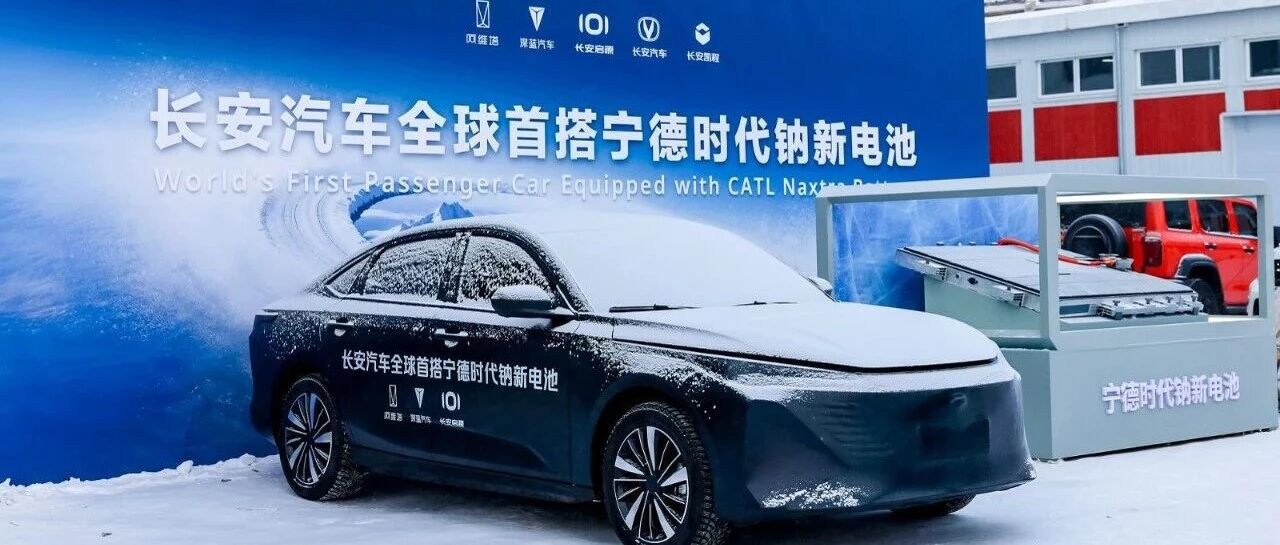
纯电续航超400公里、-50℃稳定放电,宁德时代钠电池量产应用乘用车
Zhong Guo Jing Ji Wang· 2026-02-06 01:16
Core Viewpoint - CATL is advancing its sodium-ion battery technology, which is expected to complement lithium-ion batteries and expand the application scenarios for electric vehicles, marking the beginning of a "sodium-lithium dual-star era" [15] Group 1: Sodium-Ion Battery Development - CATL's sodium-ion battery research began in 2016, with an investment of nearly 10 billion yuan expected by 2025, involving the testing of nearly 300,000 battery cells and over 30,000 material-level analyses [1] - The sodium-ion battery technology has achieved key breakthroughs, including multi-ion extraction, composite antifreeze electrolytes, and high-safety electrolytes [1] Group 2: Strategic Partnerships and Product Launches - Changan Automobile, in collaboration with CATL, launched its global sodium battery strategy and unveiled the world's first mass-produced sodium-ion passenger vehicle, which is expected to be available by mid-year [3] - Multiple brands under Changan, including Avita, Deep Blue, and Qiyuan, will adopt CATL's new sodium battery technology in their future models [3] Group 3: Market Position and Competitive Landscape - The competition between lithium-ion and sodium-ion technologies continues, with lithium-ion batteries having advantages in energy density and cycle life, while sodium-ion batteries excel in safety, low-temperature adaptability, and fast charging [5] - Despite the dominance of lithium-ion batteries, there is a growing demand for sodium-ion batteries to address specific user needs, such as winter performance and safety concerns [5] Group 4: Performance Metrics and Future Projections - CATL's sodium battery, when paired with its third-generation CTP system, can achieve a pure electric range of over 400 km, with potential upgrades to 500 km or even 600 km in the future [8] - The sodium battery demonstrates exceptional low-temperature performance, maintaining over 90% capacity at -40°C and stable discharge at -50°C [10] - The sodium battery also exhibits superior safety features, remaining functional under extreme abuse conditions without catching fire or exploding [11] Group 5: Ecosystem and Infrastructure Development - CATL is committed to supporting Changan's sodium battery strategy through a comprehensive ecosystem approach, enabling rapid deployment of multiple sodium battery models by 2026 [13] - The company plans to establish over 3,000 battery swap stations across more than 140 cities by 2026, enhancing the charging infrastructure for sodium battery vehicles [13]
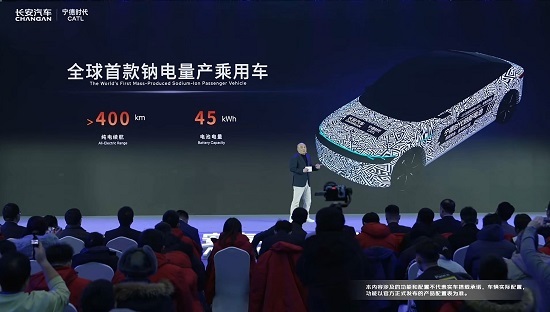
全球首款钠电池正式“上车”长安,引领开启“钠锂双星”新时代
Zhong Guo Qi Che Bao Wang· 2026-02-05 07:49
Core Viewpoint - Changan Automobile has launched the world's first sodium battery mass-produced passenger vehicle, marking a dual breakthrough in intelligent safety technology and new energy battery fields, providing a "Chinese solution" for the global electric vehicle industry [1][3][18] Group 1: Industry Context - The global electric vehicle market is accelerating towards high-quality development, with challenges such as winter range reduction, loss of control on icy roads, and battery safety risks needing urgent solutions [3] - Changan Automobile, as a leading player in the Chinese automotive industry, has focused on technological innovation for over 20 years, showcasing its confidence in technology and pushing the global electric vehicle industry towards safer, more reliable, and more inclusive directions [3][18] Group 2: Technological Advancements - The Tian Shu Intelligent system has been upgraded, emphasizing safety as a core value and strategic foundation for Changan Automobile, which has developed a comprehensive safety technology system covering multiple scenarios [4][18] - The sodium battery developed in collaboration with CATL has a maximum energy density of 175Wh/kg, significantly improving performance in extreme cold conditions, with a discharge power increase of nearly three times compared to conventional lithium iron phosphate models at -30℃ [8][18] - The sodium battery's capacity retention rate exceeds 90% at -40℃, addressing winter range challenges effectively [8] Group 3: Testing and Validation - Changan Automobile has conducted extensive winter testing for 28 years, accumulating over 58 million kilometers of extreme cold testing mileage, validating the performance of its vehicles in harsh conditions [9][18] - The Tian Shu Intelligent technology has successfully completed six extreme scenario tests in the harsh environment of Yakeshi, demonstrating industry-leading capabilities [6][11] Group 4: Future Directions - Changan Automobile aims to extend its "refining car" journey globally, adapting to various climate conditions to ensure products meet global market needs and provide consistent safety and reliability for users [13][18] - The company plans to continue focusing on user-centered development, increasing R&D investment, and enhancing open cooperation to promote high-quality development in the electric vehicle industry [18]
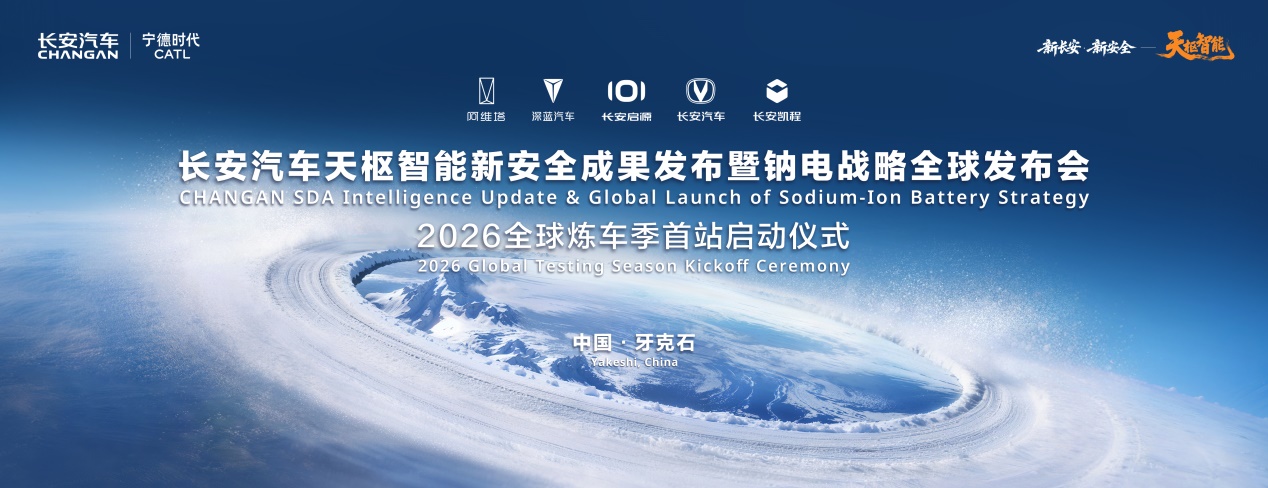
钠电周报 | 锂电原料价格飞涨,“钠锂双星”格局利好凸显(1.5-9)
鑫椤锂电· 2026-01-09 07:49
Core Insights - The article highlights the significant surge in lithium battery material prices, with lithium carbonate futures exceeding 140,000 yuan/ton and copper prices surpassing 100,000 yuan/ton, which is expected to benefit the sodium battery industry [1] - The "sodium-lithium dual-star" pattern is emerging, with major players like CATL planning large-scale applications of sodium batteries in various sectors by 2026 [2] - The sodium battery industry is projected to see substantial growth, with an expected shipment of approximately 3.5 GWh in 2025, nearly doubling year-on-year [3] Price Trends - The current price for battery-grade lithium carbonate is around 142,000 yuan/ton, while copper foil costs are also rising due to increased copper prices [1] - Sodium battery prices are detailed, with various types of sodium battery cells priced between 0.38-0.6 yuan/Wh, indicating a competitive pricing landscape [5] Industry Developments - CATL's supplier conference announced plans for sodium battery applications in multiple sectors, indicating a strategic shift towards sodium technology [2] - Qingna Technology has begun shipping its first batch of sodium-ion batteries to Europe, with a projected procurement of 5 million units by 2026 [2] - Haishida Sodium Star has secured over 100 million yuan in strategic financing, showcasing strong investor interest in sodium battery technology [2] Future Outlook - The sodium battery production in China is expected to reach 11.7 GWh by 2026, with a significant portion coming from polyanionic products [4] - The industry is entering a phase of accelerated capacity deployment, technological breakthroughs, and expanded applications, with major companies like EVE Energy and CATL leading the charge [6]
碳酸锂价格大涨 促钠离子电池迎来机遇(附概念股)
Zhi Tong Cai Jing· 2025-12-29 00:30
Group 1: Lithium Price Trends - Lithium prices continue to rise, with carbonate lithium futures on the Shanghai Futures Exchange surpassing 130,000 yuan/ton, reaching a new high of 130,800 yuan/ton since November 2023 [1] - The latest closing price is 130,500 yuan/ton, reflecting a year-to-date increase of 68.72% [1] - The rise in lithium prices is expected to positively impact the profitability of carbonate lithium producers, driven by ongoing demand from the global electric vehicle and energy storage sectors [1] Group 2: Market Forecasts and Analyst Ratings - Morgan Stanley analysts have significantly raised the target price for carbonate lithium to $18,000/ton for Q4 2026, well above the current spot price of approximately $13,500/ton [1] - The target price for spodumene, a lithium ore, has also been increased to $2,000/ton, nearly doubling from the current spot price of about $1,100/ton [1] - Following these developments, Morgan Stanley upgraded all pure lithium mining stocks to "Overweight," indicating substantial upside potential in the context of strong commodity prices [1] Group 3: Sodium-Ion Battery Developments - Sodium-ion battery costs have rapidly decreased, and energy density has significantly improved, expanding its application scenarios [2] - Sodium-ion batteries are being adopted in A0/A00 vehicle models and are expected to replace some lead-acid batteries in the two-wheeler market in 2024 [2] - CATL plans to apply sodium-ion batteries on a large scale in various sectors, including battery swapping, passenger vehicles, commercial vehicles, and energy storage by 2026, indicating a trend of "sodium-lithium dual stars" [2][3] Group 4: Industry Growth and Projections - CATL is projected to ship 2 GWh of sodium-ion batteries in 2025, with expectations to increase shipments by at least five times in 2026 [3] - The cost of sodium-ion batteries is becoming comparable to lithium-ion batteries, with a longer cycle life of 1.5 times that of lithium-ion batteries, potentially leading to lower storage costs [3] Group 5: Related Companies in the Sodium-Ion Battery Supply Chain - Key companies in the sodium-ion battery supply chain include CATL (03750), Zhongwei New Materials (02579), and BYD (002594) [4]