
天枢智能

Search documents
长安汽车发布首款钠电量产车,冬测验证智能安全与电池低温性能
Jing Ji Guan Cha Wang· 2026-02-07 12:51
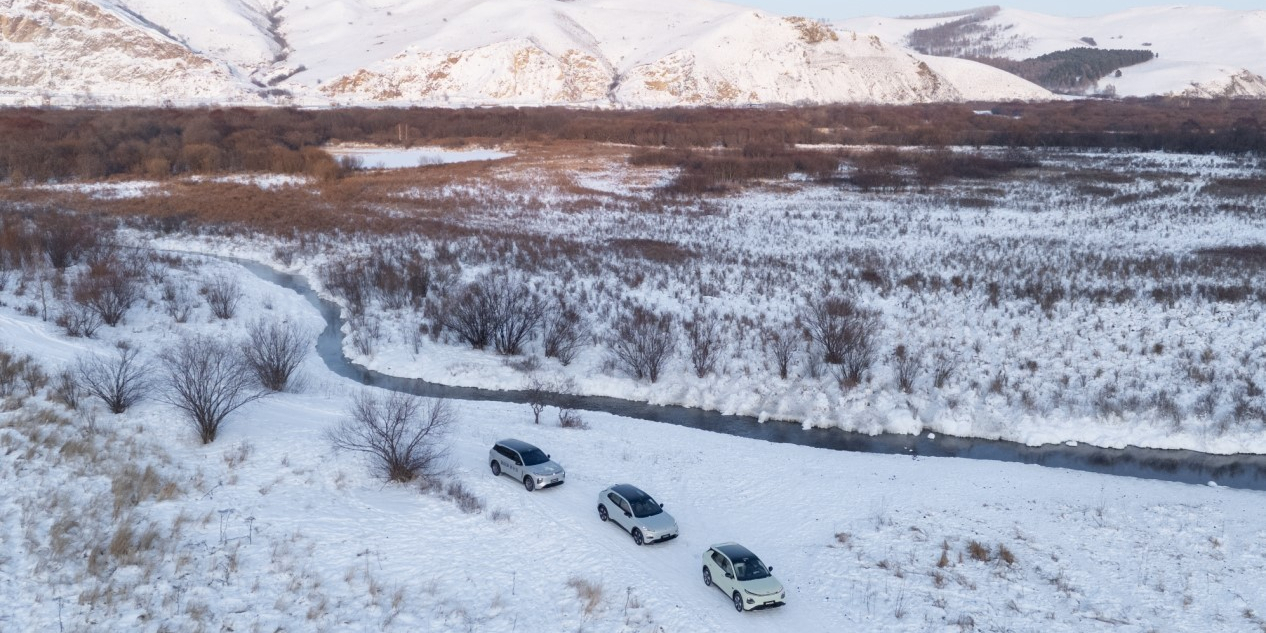
Core Insights - Changan Automobile is conducting winter extreme testing in Inner Mongolia, showcasing multiple models from its brands, including Avita, Deep Blue, and Qiyuan, under extreme conditions [2] - The company has a long history of winter testing since 1998, accumulating over 58 million kilometers of testing mileage and over 4,000 vehicles [2] - Several models achieved industry records during the tests, including Avita 12 with a stable lane change speed of 92.3 km/h and Qiyuan A06 maintaining stability at 95 km/h during high-speed tire blowout tests [2] - Changan's "Tianshu Intelligent" technology system is central to these achievements, supported by significant investments in testing facilities [2] Technology and Safety Innovations - The world's first mass-produced passenger vehicle equipped with sodium-ion batteries has been developed in collaboration with CATL, featuring an energy density of 175 Wh/kg [3] - The sodium battery demonstrates superior performance in extreme cold, with discharge power nearly three times that of lithium iron phosphate batteries at -30°C and over 90% capacity retention at -40°C [3] - Changan's "New Safety" strategy is being implemented, transitioning safety from passive protection to active intelligent management [3] - The Tianshu Intelligent system aims to ensure comprehensive safety verification across all lifecycle and regional scenarios [3] Future Plans - Changan plans to launch over 50 new energy models by 2030, all equipped with the Tianshu Intelligent system [3] - The Avita 12 is set to participate in an 18-month polar verification mission in Antarctica, with further testing planned in various climates globally [3]


全球首款钠电池正式“上车”长安,引领开启“钠锂双星”新时代
Zhong Guo Qi Che Bao Wang· 2026-02-05 07:49
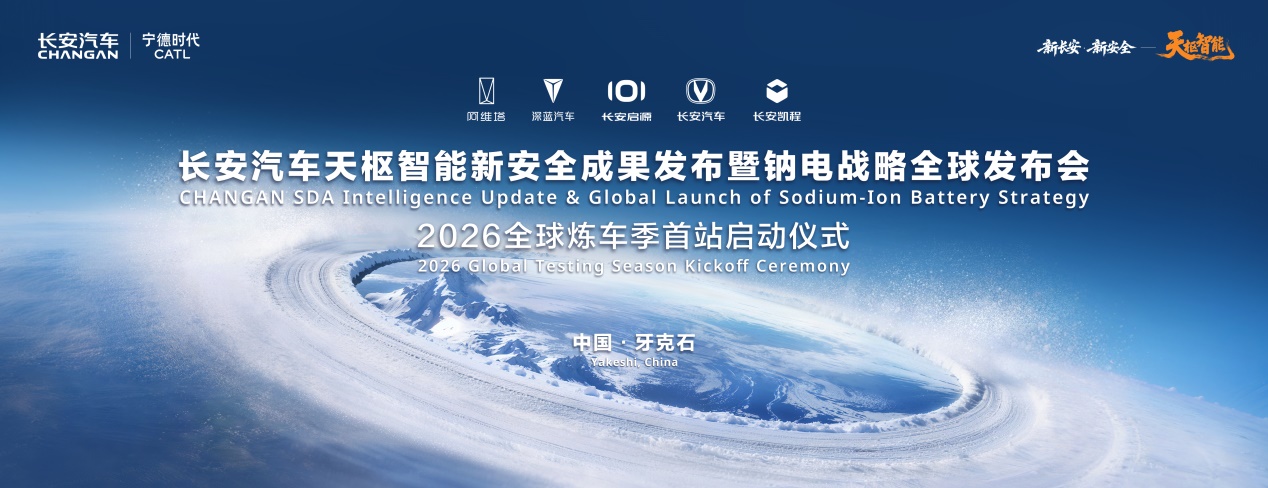
Core Viewpoint - Changan Automobile has launched the world's first sodium battery mass-produced passenger vehicle, marking a dual breakthrough in intelligent safety technology and new energy battery fields, providing a "Chinese solution" for the global electric vehicle industry [1][3][18] Group 1: Industry Context - The global electric vehicle market is accelerating towards high-quality development, with challenges such as winter range reduction, loss of control on icy roads, and battery safety risks needing urgent solutions [3] - Changan Automobile, as a leading player in the Chinese automotive industry, has focused on technological innovation for over 20 years, showcasing its confidence in technology and pushing the global electric vehicle industry towards safer, more reliable, and more inclusive directions [3][18] Group 2: Technological Advancements - The Tian Shu Intelligent system has been upgraded, emphasizing safety as a core value and strategic foundation for Changan Automobile, which has developed a comprehensive safety technology system covering multiple scenarios [4][18] - The sodium battery developed in collaboration with CATL has a maximum energy density of 175Wh/kg, significantly improving performance in extreme cold conditions, with a discharge power increase of nearly three times compared to conventional lithium iron phosphate models at -30℃ [8][18] - The sodium battery's capacity retention rate exceeds 90% at -40℃, addressing winter range challenges effectively [8] Group 3: Testing and Validation - Changan Automobile has conducted extensive winter testing for 28 years, accumulating over 58 million kilometers of extreme cold testing mileage, validating the performance of its vehicles in harsh conditions [9][18] - The Tian Shu Intelligent technology has successfully completed six extreme scenario tests in the harsh environment of Yakeshi, demonstrating industry-leading capabilities [6][11] Group 4: Future Directions - Changan Automobile aims to extend its "refining car" journey globally, adapting to various climate conditions to ensure products meet global market needs and provide consistent safety and reliability for users [13][18] - The company plans to continue focusing on user-centered development, increasing R&D investment, and enhancing open cooperation to promote high-quality development in the electric vehicle industry [18]
新职业新风向|智能网联汽车测试员见证“未来已来”
Zhong Guo Qing Nian Bao· 2026-01-26 03:25
Core Insights - The article discusses the introduction of L3 conditional autonomous driving vehicles in China, highlighting the advancements in technology and the regulatory framework that supports their testing and potential commercialization [1][2]. Group 1: L3 Autonomous Driving Technology - The L3 conditional autonomous driving system, known as TJP, allows vehicles to operate autonomously in traffic congestion, with a maximum speed of 50 km/h, and is currently being tested in designated areas of Chongqing and Beijing [1][2]. - The vehicles equipped with L3 systems, such as those from Changan Automobile and BAIC BluePark Magna, have not yet been commercially launched but are part of a critical transition from technology validation to mass production [2]. Group 2: Market Growth and Industry Trends - According to the China Association of Automobile Manufacturers, the production and sales of new energy vehicles in China are projected to reach 16.626 million and 16.49 million units respectively in 2025, marking a year-on-year growth of 29% and 28.2%, with new energy vehicles accounting for 47.9% of total new car sales [2]. - The development of smart connected new energy vehicles is seen as a significant opportunity, with the emergence of new job roles such as smart connected vehicle testers, which are essential for ensuring the safety and functionality of these vehicles [2]. Group 3: Safety and Testing Protocols - The L3 system features enhanced software architecture and safety measures, including redundancy designs to ensure vehicle safety even in the event of component failure [4]. - During the testing phase, Changan Automobile's TJP system has accumulated over 150,000 kilometers of activation without any accidents or violations, demonstrating the system's reliability [5]. Group 4: Future of Autonomous Driving - The article notes that L4 and L5 levels of autonomous driving are on the horizon, with L4 applications focusing on unmanned taxis and logistics vehicles [5]. - The penetration rate of L2 and above autonomous driving in passenger vehicles is expected to reach 55.7% by 2024, indicating a growing demand for skilled personnel in the automotive industry [5].
智能网联汽车测试员见证“未来已来”
Zhong Guo Qing Nian Bao· 2026-01-24 23:07
Core Insights - The article discusses the advancements in Level 3 (L3) conditional autonomous driving in China, highlighting the introduction of L3 vehicles and their testing in designated areas [2][3][4]. Group 1: L3 Conditional Autonomous Driving - The first L3 conditional autonomous driving vehicles in China have received approval for testing, including models from Changan Automobile and BAIC BluePark Magna [2][3]. - The L3 system allows for automated driving in specific conditions, such as traffic congestion, with a maximum speed of 50 km/h [2][3]. - The transition from L2 to L3 involves significant changes, including the ability for drivers to disengage from active control under certain conditions, shifting responsibility from the driver to the vehicle manufacturer during automated operation [4][5]. Group 2: Industry Growth and Employment - In 2025, China's new energy vehicle production and sales are projected to reach 16.626 million and 16.49 million units, respectively, marking a year-on-year growth of 29% and 28.2% [3]. - The rise of smart connected vehicles is creating new job opportunities, with the role of autonomous vehicle testers being recognized as a new profession [3][6]. - The demand for skilled personnel in the smart connected vehicle sector is expected to exceed 100,000 positions as the industry evolves [5]. Group 3: Safety and Testing - The L3 vehicles are designed with enhanced safety features, including redundancy measures to ensure safety even in case of component failure [5]. - Extensive virtual testing has been conducted, simulating complex driving scenarios to optimize software and algorithms for L3 systems [5]. - As of January 3, the L3 testing by Changan has accumulated over 150,000 kilometers without any significant accidents or violations [5].

中国L3级自动驾驶技术落地!深蓝汽车开启智能驾驶新纪元
经济观察报· 2026-01-05 09:36
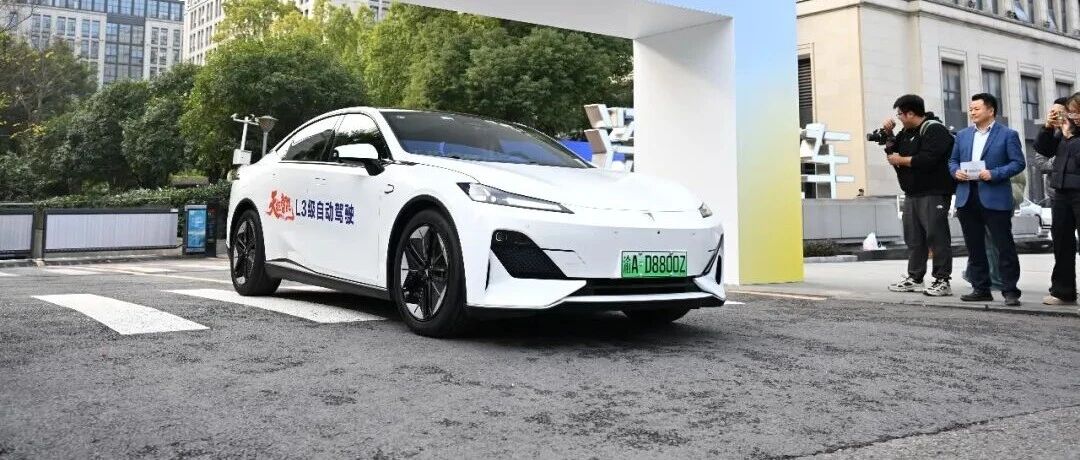
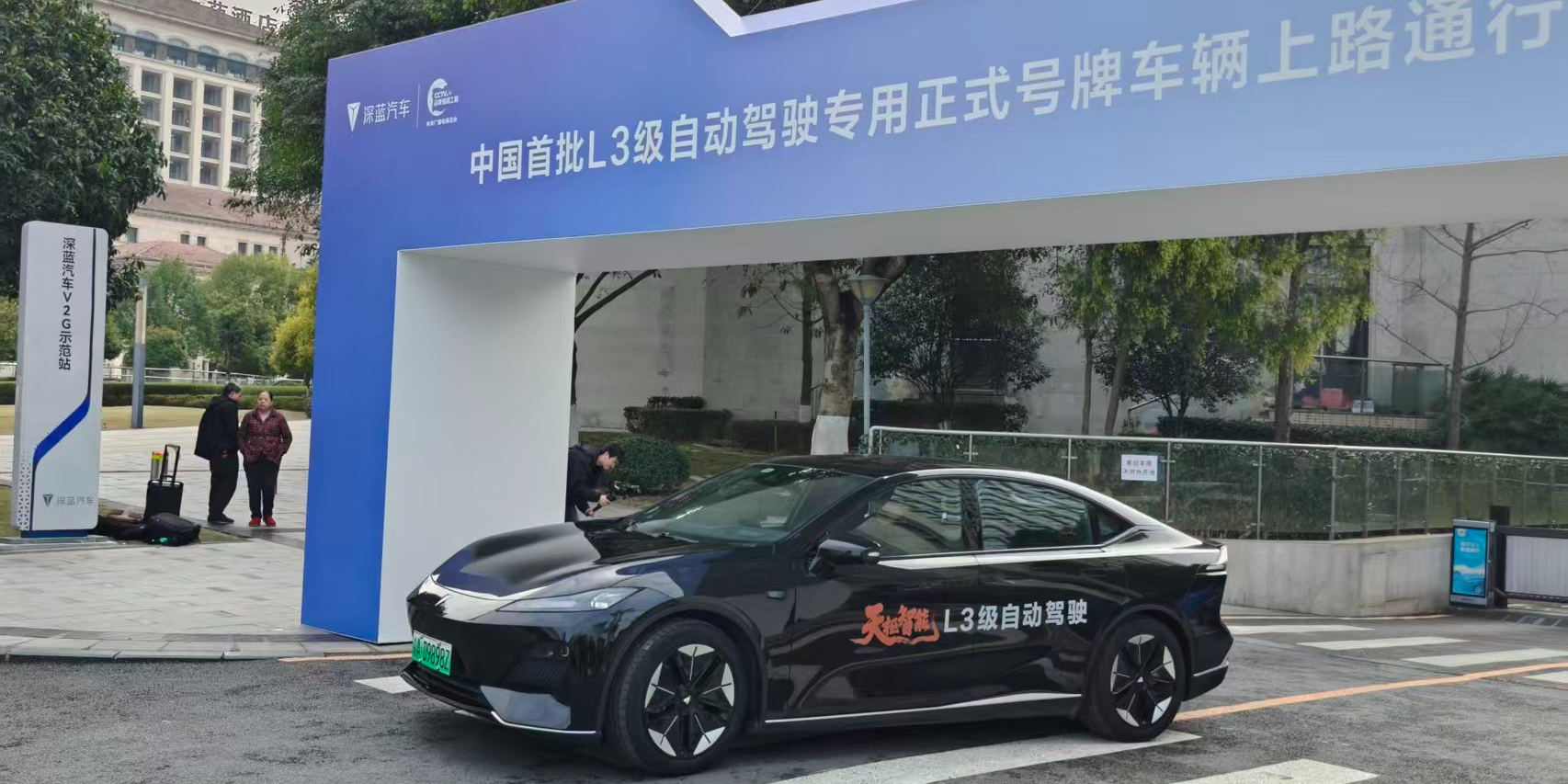
Core Viewpoint - The successful launch of L3-level autonomous driving vehicles by Deep Blue Automotive marks a significant milestone for the entire Chinese automotive industry in its journey towards intelligent transformation [2][5][18]. Group 1: Milestones and Achievements - On December 26, 2025, 46 vehicles from Deep Blue Automotive, equipped with China's first L3-level autonomous driving special license plates, officially entered urban traffic, signifying the practical application of L3-level autonomous driving technology [2][4]. - The rapid progression from regulatory approval to vehicle licensing and large-scale road operation within a short span of ten days demonstrates a mature balance between technological innovation and safety compliance by national authorities [5][9]. - Deep Blue Automotive is positioned as a core player in Changan Automobile's "Beidou Tianshu 2.0" intelligent strategy, with its L3-level technology driven by the "Tianshu Intelligent" system, which encompasses a comprehensive lifecycle management approach [7][13]. Group 2: Technological Framework and Capabilities - The "Tianshu Intelligent" system employs a seven-layer redundancy architecture and has established a scenario pool with over one million kilometers to define safety boundaries, ensuring robust safety performance [7][9]. - Deep Blue Automotive has completed over 5 million kilometers of road testing, with extreme scenarios accounting for 36%, showcasing its rigorous validation process [7][9]. - The company’s identity as a "new central enterprise" provides it with unique advantages in resource integration and policy support, enhancing its confidence and capabilities in the market [7][9]. Group 3: Financial Backing and Market Confidence - In December 2025, Deep Blue Automotive successfully raised 6.122 billion yuan, with investments from Chongqing Yufu Holdings, Changan Automobile, and China Merchants Bank Financial Asset Investment, indicating strong market confidence in its business model and long-term strategy [9][18]. - The funding is earmarked for new vehicle development and core technological innovations in intelligence and electrification, reflecting the capital market's recognition of Deep Blue's achievements [9][18]. Group 4: Industry Implications and Future Outlook - The large-scale deployment of L3-level autonomous driving vehicles is compared to the early promotion of electric vehicles, marking a transition from concept to practical application in the automotive industry [18]. - This development emphasizes the importance of safety over mere technological showcase, pushing the industry towards healthier and more responsible growth [18]. - Deep Blue Automotive's leadership in this sector not only sets a new standard for intelligent automotive experiences but also represents a significant step in China's ambition to lead in the intelligent mobility era [18].
中国L3级自动驾驶技术落地!深蓝汽车开启智能驾驶新纪元
Jing Ji Guan Cha Wang· 2026-01-05 08:04
Core Viewpoint - The successful launch of China's first batch of L3-level autonomous driving vehicles marks a significant milestone in the country's automotive industry, showcasing the culmination of years of technological accumulation and regulatory validation [1][2]. Group 1: Regulatory and Technological Milestones - On December 15, 2025, the Ministry of Industry and Information Technology granted approval for the first batch of L3-level conditional autonomous driving models, with Changan Automobile being one of the first approved manufacturers [2]. - The first L3-level autonomous driving license plate "渝AD0001Z" was issued in Chongqing on December 20, 2025, and deep blue vehicles began operating on city roads on December 26, 2025, completing a rapid transition from regulatory approval to large-scale deployment [2][5]. - The "Tianshu Intelligent" technology, which underpins deep blue vehicles, is a comprehensive system that ensures safety through a closed-loop management process, including extensive road testing exceeding 5 million kilometers [3][9]. Group 2: Financial and Strategic Developments - Deep Blue Automotive successfully completed a financing round, raising 6.122 billion yuan, with investments from Chongqing Yufu Holdings, Changan Automobile, and other financial entities, indicating strong market confidence in its business model and long-term strategy [5][6]. - The company is positioned as a core pillar of high-quality development and technological breakthroughs within the new state-owned enterprise framework, enhancing its ability to attract top-tier resources and capital [3][9]. Group 3: Industry Implications and Future Outlook - The large-scale deployment of L3-level autonomous vehicles is seen as a transformative moment for the automotive industry, shifting the focus from mere technological novelty to practical applications and responsibilities [14]. - This development is expected to redefine the value metrics of vehicles, emphasizing their intelligence and adaptability, while also pushing the industry towards a more responsible and safety-oriented trajectory [14]. - The successful integration of L3 technology into consumer products, such as the upcoming Deep Blue L06 model, demonstrates the potential for advanced driving features to enhance mainstream vehicle standards [10][14].

深蓝汽车邓承浩:下一代车型全部都有L3级自动驾驶功能
Jing Ji Guan Cha Wang· 2025-12-28 13:24
Core Viewpoint - The successful launch of L3 autonomous driving vehicles by Deep Blue Automotive marks a significant milestone in China's autonomous driving technology, indicating a transition to large-scale road operation [2][3]. Group 1: L3 Autonomous Driving Milestone - Deep Blue Automotive's vehicles with "L3 Autonomous Driving" labels have begun operating on urban roads in Chongqing, following the acquisition of the first official L3 autonomous driving license in China [2]. - The company has a long history of research in L3 technology, with nearly 10 years of development leading to this achievement [2][3]. - The SL03 model, which received the L3 product approval, was developed five years ago, showcasing the company's early commitment to L3 technology [3]. Group 2: Financing and Future Plans - Deep Blue Automotive completed a C-round financing of 6.122 billion yuan, with investments from Changan Automobile, Chongqing Yufu Holdings, and other entities, aimed at supporting the next phase of development and commercialization of advanced autonomous driving [11][12]. - The financing will be directed towards new vehicle development, core technology innovation, and enhancing global brand presence [11][12]. - The company aims to achieve a balance between profitability and self-sustaining growth within the next 2 to 3 years, with a target of selling 2 million vehicles globally by 2030 [12]. Group 3: Technical and Operational Aspects - The L3 vehicles are currently limited to a maximum speed of 50 km/h to gather data in congested driving scenarios, emphasizing a cautious approach during the exploratory phase [7]. - Deep Blue Automotive's strategy includes both independent research and collaboration with partners like Huawei to enhance its autonomous driving capabilities [4]. - The company is preparing to develop L3 and L4 functionalities for its next generation of vehicles, indicating a commitment to advancing its technology offerings [10].
智通决策参考︱热点呈现多元化 情绪正在回暖
智通财经网· 2025-12-22 00:07
Market Overview - The Hong Kong stock market is currently digesting negative factors, including the U.S. non-farm payroll data and Japan's central bank raising its benchmark interest rate from 0.50% to 0.75%, the highest in 30 years, leading to a rebound in the market [1] - The upcoming Western Christmas holiday is expected to limit negative market disturbances, while the selection of the Federal Reserve Chairman may provide a positive boost to the market [1] Investment Opportunities - China Shenhua is planning to acquire assets from the State Energy Group and its wholly-owned subsidiary, Western Energy, for a transaction price of 133.598 billion [1] - The acquisition will involve issuing shares to raise funds, which may exert pressure on market liquidity and dilute equity [1] Industry Trends - The market is witnessing a diversification of hot topics, indicating a warming sentiment [2] - The Ministry of Commerce is focusing on boosting consumption and encouraging cultural enterprises to expand globally, particularly in sectors like animation and online gaming [2] - SpaceX is in talks with banks regarding an IPO, with Morgan Stanley as a leading candidate, highlighting the growing interest in commercial space travel [2] - The introduction of L3-level autonomous driving in China is marked by the issuance of the first dedicated license plate for such vehicles, indicating a significant advancement in the automotive industry [5] Company Developments - Minhua Holdings announced the acquisition of the U.S. brand and manufacturer Gainline for $32 million, which is expected to enhance its global supply chain and competitiveness [3] - The acquired company has a projected revenue of $188 million for FY25, despite a net loss of $9.6867 million, indicating potential for future profitability through cost synergies [3] - Minhua's dividend payout ratio remains at 50%, with a dividend yield of 6.2%, providing a solid margin of safety [4] Autonomous Driving and Technology - The automotive industry is set to grow significantly, with a target of 32.3 million vehicle sales in 2025, including 15.5 million electric vehicles, reflecting a 20% year-on-year increase [6] - The penetration rate of L2-level and above autonomous driving features in passenger vehicles is expected to rise from 51% at the end of 2024 to 59% in the first half of 2025 [6] - Companies involved in autonomous driving technology, such as Horizon Robotics and Black Sesame Intelligence, are expected to benefit from the increasing demand for smart driving solutions [7] Market Sentiment - The Hang Seng Index is currently positioned at 25,691 points, with a bullish sentiment expected despite concerns over potential financial crises due to rising interest rates in Japan and the U.S. [8] - Historical data shows an 80% probability of the Hang Seng Index rising during the Christmas to Spring Festival period, with a median increase of 4.7% [9]
无人驾驶板块强势活跃!L3级自动驾驶正式上路意味着什么?
Jin Rong Shi Bao· 2025-12-19 13:40
Core Viewpoint - The Ministry of Industry and Information Technology of China has officially announced the first batch of L3 autonomous driving vehicle permits, marking a significant step towards the commercialization of L3 autonomous driving in the country [1] Group 1: Industry Developments - The first two models to receive permits are Changan Automobile's Deep Blue SL03 and BAIC's Arcfox Alpha S6, which will conduct pilot tests in designated areas of Beijing and Chongqing [1] - This approval follows the framework established in November 2023, which outlined the pilot program for L3/L4 vehicles, with 29 consortiums participating in the application process [2] - The selection of Changan and BAIC was based on comprehensive assessments of their R&D, testing, and emergency response capabilities, as well as third-party evaluations of safety and network security risks [2] Group 2: Vehicle Specifications - The Deep Blue SL03 utilizes Changan's self-developed "Tianshu Intelligent" technology, while the Arcfox Alpha S6 is equipped with Huawei's Qiankun driving system [3] - Both models have undergone extensive real-world testing and are classified as sedans, which offer better stability and precision in maneuvering compared to SUVs [3] - The permitted models can only operate under specific conditions: the Deep Blue SL03 is limited to a maximum speed of 50 km/h in congested traffic environments, while the Arcfox Alpha S6 can reach up to 80 km/h on highways and urban expressways [3] Group 3: Future Outlook - The approval of these two vehicles is expected to lead to a gradual expansion of L3 vehicle permits, rather than a blanket release, with further approvals anticipated as the regulatory framework develops [3] - Currently, the permitted vehicles are restricted to operation by ride-hailing service companies, indicating a focus on professional operation and strong monitoring rather than immediate consumer access [3]

L3商用加速落地,有望推动智能底盘批量应用 | 投研报告
Zhong Guo Neng Yuan Wang· 2025-12-17 02:04
Core Viewpoint - The recent approval of L3-level conditional autonomous driving vehicles by the Ministry of Industry and Information Technology (MIIT) marks a significant step towards the commercialization of advanced autonomous driving technology in China [2][5]. Group 1: L3 Autonomous Driving Approval - Changan Automobile and BAIC BluePark Magna Automotive have submitted applications for L3-level conditional autonomous driving vehicles, which have been approved by MIIT in the 401st batch of announcements [2][3]. - L3 autonomous driving allows for conditional self-driving within a limited operational range, differing fundamentally from L2 assistance systems [2][3]. Group 2: Impact on Intelligent Chassis - The approved vehicles include Changan's Deep Blue product and BAIC's Arcfox Alpha S (L3 version), which features a high-performance redundant sensor system with 34 sensors, including three LiDARs [3][4]. - The commercialization of L3 is expected to accelerate the application of intelligent chassis technologies, such as active suspension, electronic brake-by-wire (EMB), and steer-by-wire (SBW) systems [3][4]. Group 3: Investment Strategy - The approval of L3 vehicles provides policy support for the popularization of high-level autonomous driving, benefiting companies actively engaged in this sector [5]. - Key investment areas include vehicle application, where leading companies are establishing advantages in training data and smart driving ecosystems, and the intelligent chassis sector, which is expected to see rapid mass application by 2026 [5].



