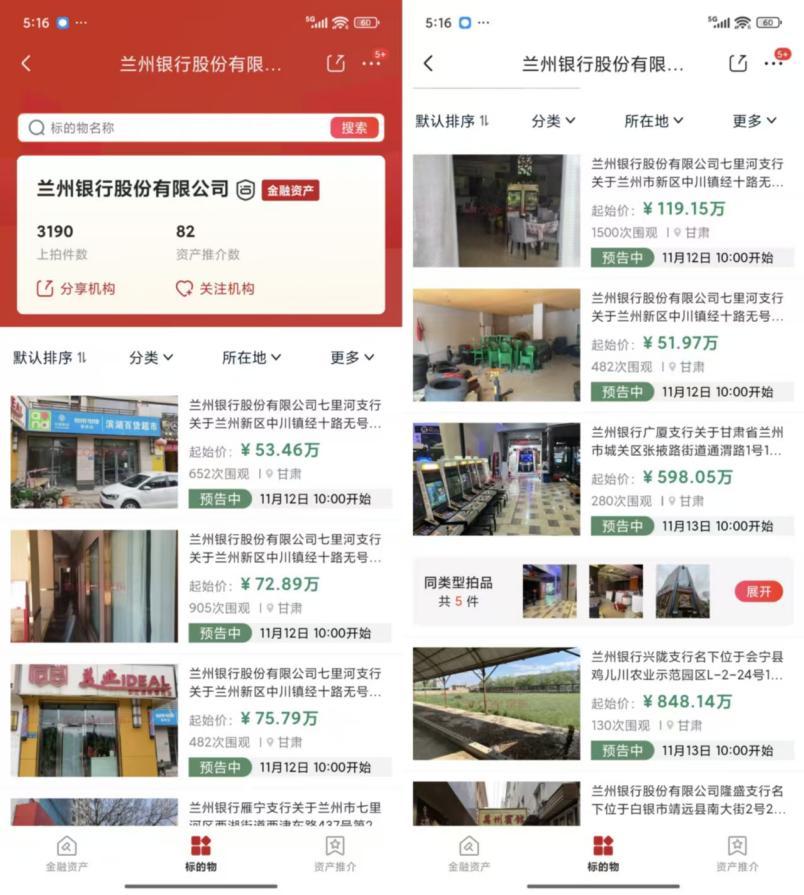
银行处置不良资产

Search documents
银行直供房热度背后的真相
Hua Er Jie Jian Wen· 2025-12-06 03:02
Core Viewpoint - The recent attention on bank-supplied housing in China is primarily a routine operation for banks to dispose of non-performing assets at year-end, aimed at cash recovery, with limited impact on the overall real estate market [1] Group 1: Market Context - The increase in focus on bank-supplied housing is attributed to three factors: the ongoing sluggish real estate market, rising pressure from non-performing assets, and seasonal demand for asset disposal at year-end [1] - Bank-supplied housing has minimal impact on first and second-tier cities, but may exert some price pressure in specific areas of third and fourth-tier cities [1][20] Group 2: Characteristics of Bank-Supplied Housing - Bank-supplied housing is obtained through the disposal of non-performing loans, with properties sold directly by banks after debt separation and full ownership acquisition, differing from traditional judicial auctions [2] - The majority of bank-supplied housing comes from three sources: properties acquired from borrowers unable to repay loans, properties reclaimed from personal mortgage defaults, and unsold properties from bankrupt or restructured developers [2] - As of January to October 2025, 83% of bank-supplied housing listings were second-hand homes, while new homes accounted for 17% [2] Group 3: Market Supply and Demand - The supply of bank-supplied housing is limited, with a significant concentration in third and fourth-tier cities, and a low proportion of well-furnished properties [4] - From 2019 to October 2025, a total of 52,000 bank-supplied residential units were listed, compared to 980,000 judicial auction properties, indicating that bank-supplied housing is less than one-eighteenth of judicial auction properties [4] - The highest concentration of bank-supplied housing is in the Northeast region, accounting for 42.4%, with Liaoning at 22.5% and Heilongjiang at 16.5% [6] Group 4: Transaction Dynamics - The transaction process for bank-supplied housing resembles that of second-hand homes, allowing for property viewing, and the average transaction price is significantly lower than that of judicial auction properties [3] - The average transaction price for bank-supplied housing is 3,754 yuan per square meter, compared to 8,319 yuan per square meter for judicial auction properties [3] - The transaction rate for bank-supplied housing is low, with only 920 out of 14,000 listed units sold this year, resulting in a transaction rate of just 7% [13] Group 5: Market Impact and Sentiment - The overall market impact of bank-supplied housing is limited, with cumulative sales this year being less than 1,000 units, which is negligible in the national market context [19] - In third and fourth-tier cities, the introduction of bank-supplied housing at prices 5%-25% below market value could create new price anchors, potentially leading to a decline in surrounding second-hand home prices [20] - The perception of banks selling properties in bulk may be misinterpreted as a bearish signal, but the primary source of negative sentiment remains the macroeconomic environment and the fundamentals of the real estate market [20]


四大行出手!所有房子5折出售,里面暗藏猫腻,房价或将要大跌?
Sou Hu Cai Jing· 2025-11-19 13:35
Core Viewpoint - Banks are increasingly engaging in real estate sales, acting as intermediaries to liquidate properties acquired through loan defaults, driven by economic transformation and rising non-performing loans [4][6][10]. Group 1: Reasons for Banks Selling Properties - Economic transformation has led to many enterprises and individuals facing operational difficulties, resulting in loan defaults and properties being returned to banks as collateral [6]. - Banks are required by law to dispose of these properties within a specific timeframe (two to three years), necessitating quick sales [6][10]. - Traditional auction markets have seen low demand for these properties, prompting banks to establish direct sales channels [8][10]. Group 2: Advantages of Bank-Sold Properties - Properties sold directly by banks often come with clear titles and completed ownership transfers, reducing risks for buyers [10]. - Banks typically price these properties significantly lower than market rates, with discounts starting at 20% and sometimes reaching 50% [10][12]. - In major cities, bank-listed properties are generally priced about 15% below market value, while in lower-tier cities, discounts can reach 30% [12][19]. Group 3: Market Impact and Consumer Considerations - The aggressive pricing strategies of banks may lead to a downward spiral in property values, particularly in weaker markets [21][23]. - Consumers are advised to conduct thorough inspections and verify property conditions and outstanding fees before purchasing [14][16]. - The phenomenon of banks selling properties is not expected to trigger a significant overall decline in housing prices, but localized impacts may occur [16][19]. Group 4: Broader Implications for the Real Estate Market - The current situation reflects a shift in the perception of real estate as an investment, emphasizing the need for rational decision-making among potential buyers [23][24]. - The ongoing sales by banks may serve as a lesson in economic realities, highlighting that properties are primarily for living rather than solely for investment [24].

注意!银行开始亲自下场卖房了!背后玄机何在?这些便宜房,能抄底吗?
Sou Hu Cai Jing· 2025-11-18 09:53
Core Insights - The article discusses the growing trend of "bank direct supply" properties, where banks sell real estate directly through auction platforms, often at significant discounts compared to market prices [1][3][5]. Group 1: Market Dynamics - Several banks, including Agricultural Bank, Construction Bank, and Transportation Bank, are accelerating their direct property sales, with listings marked as "bank direct supply" increasing by 24.7% year-over-year on Alibaba's asset platform [1][5]. - The market for bank direct supply properties is expanding, with local city commercial banks and rural credit cooperatives dominating the supply [5][7]. Group 2: Property Characteristics - Bank direct supply properties are obtained through judicial processes or debt-for-property exchanges, ensuring clear ownership before sale, which is a significant advantage over traditional auction properties [3][9]. - These properties are typically listed at 70% to 90% of their market valuation, making them attractive to buyers. For instance, a property with an assessed value of approximately 26.18 million yuan was auctioned starting at about 18.92 million yuan, reflecting a 72% discount [5][7]. Group 3: Banking Strategy - Banks are motivated to expedite the sale of distressed properties due to multiple factors, including capital pressure, profitability concerns, and market risks. This shift is also influenced by regulatory changes aimed at improving asset management [7][13]. - The transition to direct sales is seen as a response to the cooling traditional auction market, where the clearance rate for auctioned properties was only 28.5% in the third quarter of this year [7][13]. Group 4: Buyer Considerations - For buyers, the main appeal of bank direct supply properties lies in the clarity of ownership, as banks have already secured full ownership before sale, reducing the risk of disputes [9][11]. - Buyers are advised to conduct thorough due diligence, including verifying property titles and understanding any potential restrictions or conditions attached to the sale [11][15]. Group 5: Future Outlook - As banks increase their asset disposal efforts, particularly in the current real estate market adjustment phase, direct sales to consumers may become a significant channel for property supply [13][15]. - Regulatory bodies are encouraged to oversee the pricing strategies of banks to prevent disorderly price declines in the real estate market [13][14].

银行试水处置不良新路径
Zhong Guo Jing Ying Bao· 2025-11-13 08:36
Core Insights - Recent initiatives by state-owned and local commercial banks to sell real estate directly, referred to as "bank direct sales," are gaining market attention as a new method for banks to manage non-performing assets amid ongoing adjustments in the real estate market [1][2] - The properties are being offered at 70-80% of their assessed value, making them attractive to potential buyers [1] - The trend indicates a diversification in asset disposal methods, with banks increasingly utilizing direct sales to enhance liquidity and manage non-performing loans effectively [2][3] Group 1: Market Dynamics - The direct sale of properties by banks is seen as a response to the increasing pressure from non-performing assets, with banks aiming to liquidate these assets more efficiently [1][2] - The current market conditions, characterized by a decline in new non-performing loans in the real estate sector, suggest a potential stabilization in the market [3][4] - The introduction of policies to support the real estate market, such as lowering down payment ratios and mortgage rates, is expected to further alleviate the debt pressures faced by real estate companies [4] Group 2: Operational Insights - Many banks are now actively promoting their real estate assets through auction platforms, with a wide range of properties available across various regions, including residential and commercial real estate [2] - The direct sale model allows banks to convert non-performing assets into cash, thereby improving their liquidity and overall financial health [2][3] - Legal considerations remain important for buyers, who are advised to verify property status and ownership before purchase, despite banks having obtained clear titles through judicial processes [2][3]
银行下场卖房,7折狂甩
3 6 Ke· 2025-11-13 07:52
Core Viewpoint - The article highlights the unexpected role of banks in actively selling properties, including residential and commercial real estate, as a response to the deepening pain in the real estate market and the need to manage non-performing loans [1][21]. Group 1: Bank Property Sales - Major banks, including Agricultural Bank, Construction Bank, and Transportation Bank, are listing properties on platforms like JD.com and Alibaba, indicating a shift in their role from lenders to property sellers [1][2]. - Banks are selling a variety of properties, including residential buildings, offices, shops, apartments, and factories, primarily as a means to dispose of non-performing assets [4][5]. - The number of properties listed for sale by local rural credit systems is substantial, with some provinces having thousands of properties available [5]. Group 2: Pricing and Market Dynamics - Properties sold by banks are generally priced 20%-30% lower than market rates, making them attractive to buyers [8][12]. - For example, a property listed by Jilin Bank has a starting price significantly lower than the average market price in the same area, demonstrating the banks' willingness to sell at a discount [8][12]. - The article notes that the real estate market is experiencing a downturn, leading to increased non-performing loans and a backlog of properties that banks are eager to sell [12][16]. Group 3: Challenges and Market Response - Despite the proactive approach of banks in selling properties, the effectiveness of these sales is uncertain, as many properties are experiencing low interest and repeated failures to sell [19][21]. - The article mentions that the traditional auction process for foreclosed properties is lengthy and complicated, prompting banks to seek faster methods for asset liquidation [16][17]. - The overall market sentiment remains cautious, with many properties failing to attract bidders, indicating a challenging environment for banks trying to offload these assets [19][21].