
卫星通信系统

Search documents
智能制造行业周报:看好多层板放量下PCB设备升级机遇-20260316
Shanghai Aijian Securities· 2026-03-16 10:20
Investment Rating - The report gives a "Buy" rating for companies such as ShenKai Co., Ltd. (002278), Dongwei Technology (688700), and Yanmai Technology (688312) [40][41][44] Core Insights - The mechanical equipment sector has shown a decline of 2.44% in the recent week, ranking 26 out of 31 in the Shenwan industry classification [2][8] - The PCB equipment market is expected to see significant growth driven by AI servers and data centers, with a projected demand of $25.7 billion by 2029, accounting for 22% of the overall PCB market [27][30] - The oil service sector is anticipated to benefit from rising oil prices, which have increased by 47% month-on-month, leading to higher capital expenditures by oil companies [2][38] - The semiconductor equipment sector is experiencing upward pricing pressure, with companies like Crystal Integrated announcing a 10% increase in wafer foundry prices [2][37] Summary by Sections Mechanical Equipment Sector - The mechanical equipment PE-TTM is at 42.6x, within the 55th percentile over the last three months, with the highest PE-TTM in other automation (211.8x) and robotics (178.2x) [2][13] - The best-performing sub-sector this week was rail transit equipment III, which increased by 0.35% [11][12] PCB Equipment - The global PCB market is projected to reach $84.9 billion in 2025, with a year-on-year growth of 15.4%, driven by high-density interconnect (HDI) boards and high-layer boards [27][30] - The demand for HDI boards is expected to double by 2025, with a compound annual growth rate (CAGR) of 29.6% from 2024 to 2029 [30][31] Oil Service Sector - The Brent crude oil price reached $103.68 per barrel, significantly improving the profitability of upstream oil companies and increasing their capital expenditure budgets [2][38] - The domestic oil and gas production is shifting towards offshore and unconventional fields, which is expected to drive demand for related equipment [38][39] Semiconductor Equipment - The semiconductor equipment sector is seeing a recovery in pricing, with major players adjusting their pricing strategies due to rising raw material costs [2][37] - The expansion of production capacity in semiconductor foundries is expected to boost demand for equipment such as etching and deposition tools [2][37] Company-Specific Insights - ShenKai Co., Ltd. is positioned to benefit from the domestic oil and gas equipment localization process and the expansion of digital oil service business in the Middle East [40][39] - Dongwei Technology is expected to see revenue growth driven by high-end PCB equipment demand, with projected revenues of $10.64 billion in 2025 [41][42] - Yanmai Technology is focusing on flexible circuit board testing equipment, with anticipated revenue growth due to the increasing complexity of consumer electronics [44][45]
妖股直击:海格通信自11月24日以来最大涨幅达135.16%,卫星通信全产业链布局
Sou Hu Cai Jing· 2026-01-14 04:43
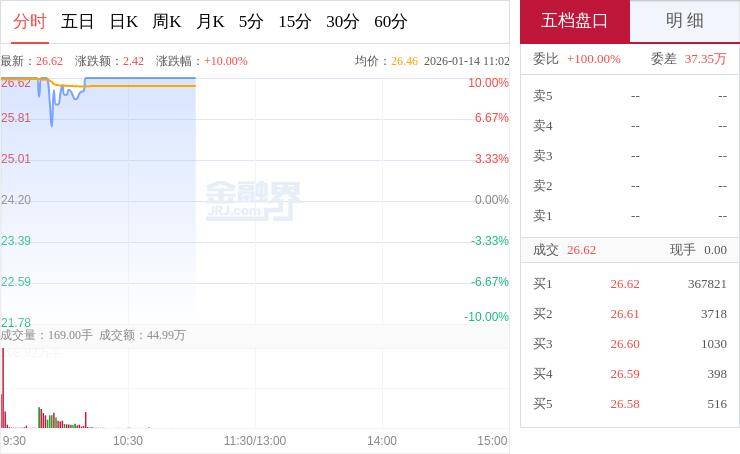
Core Viewpoint - The stock price of Haige Communication experienced fluctuations on January 14, initially dropping to a low before rebounding to maintain a relatively high position [1]. Group 1: Stock Performance - As of January 14, the stock price reached 26.62, with an increase of 2.42, representing a rise of 10.00% [2]. - The stock has seen a maximum increase of 135.16% since its upward trend began on November 24 [2]. Group 2: Company Developments - Market focus is on the company's core positioning in the satellite communication sector, with Dongwu Securities highlighting the rapid development in this field and recommending attention to Haige Communication as a key player [3]. - The company confirmed that there are no necessary corrections or supplements to previously disclosed information, and its production and operational conditions remain normal [3].


太空经济爆发前夜:挖掘10元以下参股龙头,跟紧社保外资布局节奏
Sou Hu Cai Jing· 2026-01-13 06:58
Group 1 - The average price-to-earnings ratio of the commercial aerospace sector has reached 186.94 times, indicating that investors are willing to pay 186 yuan for every 1 yuan of profit, which is more exaggerated than many tech stocks [1] - The commercial aerospace sector has become a hot topic in the capital market as of early 2026, driven by policy, technology, and capital [3][4] - The market is increasingly focusing on A-share listed companies that have indirect stakes in core commercial aerospace companies, especially those with stock prices below 10 yuan [4] Group 2 - Nanjing Steel, with a stock price of 5.5 yuan, has invested 50 million yuan for a 2.64% stake in Beijing Xingji Glory, a leading company in the small smart launch vehicle sector [4] - Chengjian Development, a real estate company with a stock price of 6.8 yuan, holds an 8.61% stake in 21st Century Space Technology Application Co., which specializes in commercial satellite remote sensing [5] - Suzhou High-tech, priced at 7.5 yuan, operates in a critical testing segment for rockets and satellites, with significant institutional backing [7] Group 3 - Daming City, currently the lowest-priced stock at 4.57 yuan, holds a 20.45% stake in Baicai Bang Technology, which focuses on 6G and satellite internet [7] - Shenghui Technology, priced at 9.2 yuan, has a stake in Henan Zhongke Qingneng Technology, which contributed to the successful launch of the Long March 8 using domestically produced hydrogen liquefaction equipment [7] - Jinming Precision Machinery, with a stock price of 8.58 yuan, is involved in the upstream satellite industry through joint ventures, although it has shown a long-term consolidation pattern [9] Group 4 - There is a divergence in institutional actions, with some funds increasing their positions in certain companies while reducing in others, indicating the complexity and volatility of the commercial aerospace sector [9] - The commercial aerospace narrative is significant, relating to national strategy and resource competition, but the actual benefits to individual listed companies depend on the performance of their core partners and the success of their projects [9]
视频丨日本计划加速向他国供武 专家:欲隐蔽推动军事扩张
Yang Shi Xin Wen Ke Hu Duan· 2025-12-25 02:48
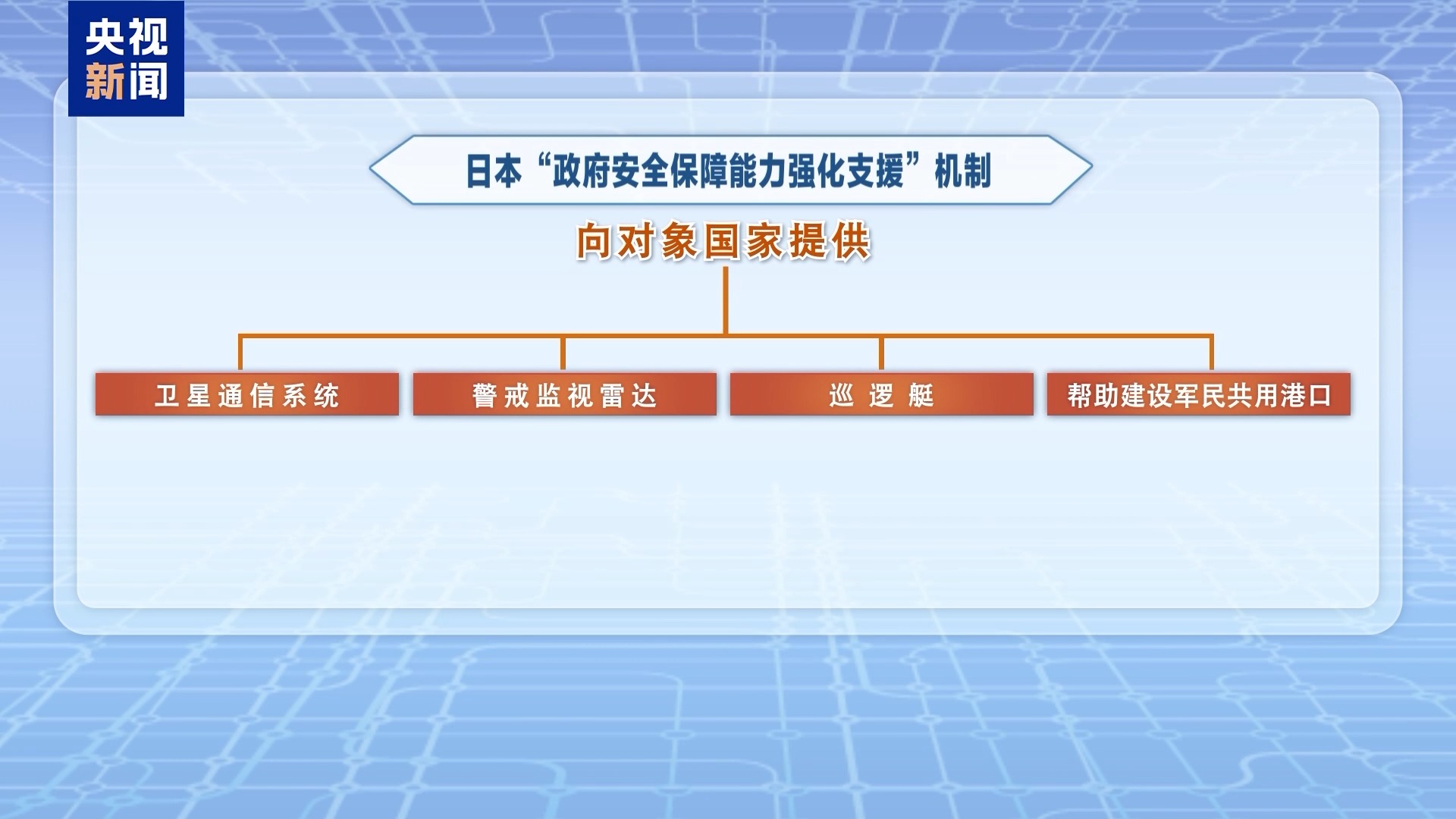
Core Viewpoint - Japan is significantly expanding its "Government Security Capability Enhancement Support" mechanism, with a budget increase to 18.1 billion yen (approximately 815 million RMB) for the fiscal year 2025, up from 8.1 billion yen in the previous year [2]. Group 1: Budget and Mechanism Expansion - The budget for the "Government Security Capability Enhancement Support" mechanism will reach 18.1 billion yen in fiscal year 2025, a substantial increase from 8.1 billion yen in fiscal year 2024 [2]. - The mechanism was established in April 2023 to support developing countries by providing non-lethal military equipment such as satellite communication systems, surveillance radars, and patrol boats [4]. - By the end of 2023, Japan has already provided significant support, including five coastal surveillance radars to the Philippines and four patrol boats to Bangladesh, totaling approximately 2 billion yen [6]. Group 2: Policy and Strategic Implications - Japan's government is pushing to relax restrictions on arms exports, which were previously limited to non-lethal equipment, indicating a shift towards broader military capabilities [11]. - The expansion of the support mechanism is seen as a strategic move to create a security cooperation network led by Japan, while also preparing the groundwork for potential future arms exports [13]. - This strategy allows Japan to enhance its military presence without directly violating its pacifist constitution, thereby increasing its intervention capabilities in potential conflicts [17].
日本计划加速向他国供武 专家:欲隐蔽推动军事扩张
Yang Shi Xin Wen Ke Hu Duan· 2025-12-25 02:26
Core Viewpoint - Japan is significantly increasing its defense budget for the fiscal year 2026, focusing on enhancing its capability to provide military equipment to other countries, particularly in the context of regional security [1][3]. Group 1: Budget and Mechanism Expansion - The budget for the "Government Security Capability Enhancement Support" mechanism (OSA) will rise to 18.1 billion yen (approximately 815 million RMB) in fiscal year 2026, a substantial increase from 8.1 billion yen in fiscal year 2025 [1]. - The OSA mechanism was established in April 2023 to support developing countries by providing non-lethal military equipment such as satellite communication systems, surveillance radars, and patrol boats [3]. - The budget for the OSA mechanism was increased to 5 billion yen in fiscal year 2024 and further to 8.1 billion yen in fiscal year 2025, expanding the list of supported countries from 4 to 8 [7]. Group 2: Strategic Implications - Experts suggest that Japan's expansion of the OSA mechanism is a strategic move to gradually build a security cooperation network led by Japan, despite the nominal focus on non-lethal equipment [9]. - The expansion of the OSA mechanism aligns with Japan's efforts to modify the "Three Principles on Transfer of Defense Equipment," indicating a potential shift towards broader military exports [10]. - This strategy allows Japan to circumvent direct violations of its pacifist constitution while enhancing its intervention capabilities in potential conflicts, signaling a transformation from a peace-oriented nation to a military exporter [11].
德国防长:未来5年斥资350亿欧元加强太空安全
Xin Hua Wang· 2025-09-26 08:37
Core Viewpoint - Germany plans to invest €35 billion to enhance its space security capabilities by 2030, recognizing the increasing importance of space in economic and social development, as well as the complex security threats it faces [1][1][1] Investment and Strategy - The investment will focus on developing early warning and monitoring systems, building a multi-layered satellite network, and strengthening anti-jamming capabilities [1][1][1] - A national coordinated strategy will be implemented to accelerate innovation and deepen international cooperation in the space sector [1][1][1] Security Concerns - The German Defense Minister emphasized that future conflicts will not only occur on Earth but also in orbital space, highlighting the need for a collaborative approach involving politics, industry, research, and military [1][1][1] - The integration of satellite communication and navigation systems into modern society makes them critical infrastructure, and attacks on these systems could lead to significant disruptions [1][1][1] International Cooperation - There is a call to enhance cooperation within the frameworks of the European Union and NATO to build a reliable security architecture in space [1][1][1] - The German industrial sector is encouraged to actively participate in related projects to bolster the country's space security initiatives [1][1][1]
无人系统业务提振经营 星网宇达25H1营收同比增长6.41%至1.48亿元
Quan Jing Wang· 2025-09-01 06:56
Core Viewpoint - The company, Xingwang Yuda, is transitioning its focus from traditional military sectors to civilian applications, emphasizing low-altitude economy, low-orbit connectivity, autonomous driving, AI, and robotics, which has led to a revenue increase in various business segments [1][2][3] Group 1: Financial Performance - In the first half of 2025, the company achieved operating revenue of 148.14 million yuan, representing a year-on-year growth of 6.41% [1] - The unmanned systems business became a significant growth driver, generating revenue of 67.27 million yuan, a year-on-year increase of 52.71% [1] - The information perception business reported revenue of 52.12 million yuan, up 14.32% year-on-year, while the satellite communication business generated 25.06 million yuan [1] Group 2: Research and Development - The company invested a total of 27.45 million yuan in R&D during the reporting period, resulting in over 20 authorized patents, including innovations in aircraft folding wings and drone symmetry inspection systems [1] - New products developed include a next-generation tactical-grade inertial measurement unit and a calibration robot, which effectively reduced product costs while maintaining precision [1] Group 3: Business Operations and Strategic Initiatives - The company successfully completed test flights for various models, including subsonic cruise target missiles and emergency rescue drones, showcasing their performance in disaster relief operations [2] - A low-altitude economy task force was established to integrate technical resources and deepen application scenarios in the low-altitude economy [2] - The company completed a share buyback of 1.22 million shares and acquired 30% equity of its subsidiary, Xingwang Zhikong, for 7.25 million yuan, enhancing business synergy [2] Group 4: Future Outlook - The company is committed to an innovation-driven development strategy, focusing on continuous business transformation and upgrading to enhance core market competitiveness [3]

GDP同比增长5.3%,南京上半年经济运行总体平稳
Nan Jing Ri Bao· 2025-07-30 02:37
Economic Overview - Nanjing's GDP for the first half of the year reached 917.18 billion yuan, with a year-on-year growth of 5.3% [1] - The industrial added value above designated size grew by 6.2% year-on-year, with 30 out of 37 major industrial sectors showing growth, resulting in a growth coverage of 81.1% [2] Industrial Growth - The production of green and smart products saw significant increases, with new energy vehicles, integrated circuits, and industrial robots growing by 45.0%, 22.1%, and 44.2% respectively [2] - The industrial robot market in China experienced an overall sales growth of 11.6% year-on-year, with domestic robots' market penetration increasing by 2 percentage points [3] Service Sector Performance - The revenue of service enterprises above designated size reached 351.22 billion yuan from January to May, marking a year-on-year increase of 3.1% [4] - The information transmission, software, and IT service sectors saw a revenue growth of 10.3%, with emerging industries like internet information services growing by 17.4% [4] High-tech Industry Development - High-tech industries accounted for 55.8% of the total industrial output value, with high-tech manufacturing increasing by 6.8% year-on-year [8] - Specific sectors such as pharmaceutical manufacturing and aerospace equipment manufacturing reported growth rates of 11.6% and 18.5% respectively [8] International Expansion - Nanjing's biopharmaceutical companies are increasingly focusing on international markets, with significant orders and collaborations established globally [10][11] - Companies like Tuokang Robotics reported a 40% revenue growth in the first half of the year, driven by logistics and overseas market expansion [12] Innovation and Technology - Nanjing's innovation landscape is highlighted by advancements in satellite communication systems and autonomous robots, contributing to the region's technological prowess [13] - The collaboration between local companies and international partners is enhancing the competitiveness and brand influence of Nanjing's products [10][11]


护航天舟九号发射 中国电科编织飞天“测控通信网”打造“能源矩阵”
Huan Qiu Wang Zi Xun· 2025-07-15 08:21
Group 1 - China successfully launched the Tianzhou-9 cargo spacecraft on July 15, 2023, from the Wenchang Space Launch Site in Hainan [1] - China Electronics Technology Group Corporation (CETC) developed a highly autonomous and stable measurement and control communication network to ensure the successful delivery of cargo to space [1] - The new generation of land-sea-air measurement and control communication system developed by CETC is crucial for tracking the spacecraft's trajectory and providing real-time data [1][2] Group 2 - CETC's radar measurement system enhances safety and reliability by providing accurate tracking of the rocket's ascent, regardless of weather conditions [2] - The semi-rigid solar cell array developed by CETC's Blue Sky division is a high-voltage, megawatt-level product that reduces operational temperature, enabling efficient cargo transport to space [2] - The satellite communication system created by CETC ensures seamless data transfer between Tianzhou-9 and ground control, facilitating real-time command and data transmission [2] Group 3 - CETC's 23rd Institute developed lightweight, compact, and highly reliable aerospace cables that can withstand extreme conditions in space, ensuring effective signal transmission [3] - The 55th Institute of CETC produced various core chips and power amplifier modules to establish a reliable information transmission link between the spacecraft and ground terminals [3]