顶豪市场

Search documents
最高38万元/㎡!深圳新房备案单价破纪录
Sou Hu Cai Jing· 2025-12-25 00:41
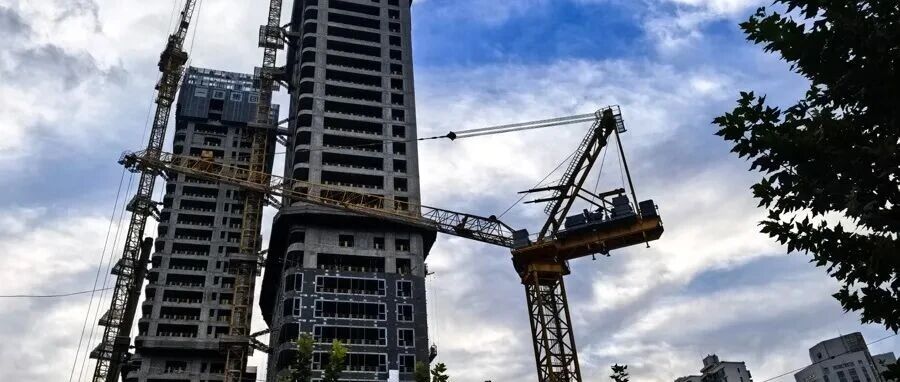
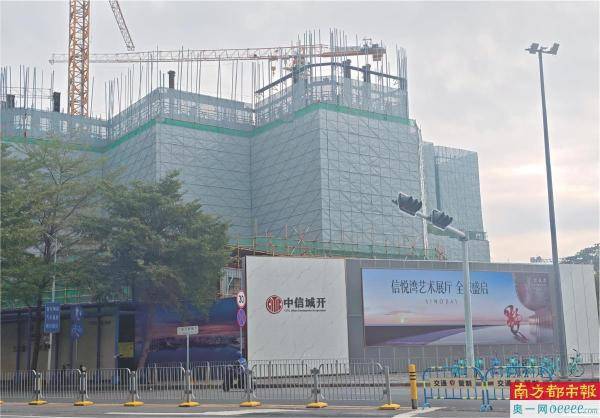
Core Viewpoint - The launch of the project "Xinyue Bay" in Shenzhen has set a new record for housing prices in the city, with an average price of approximately 24.4 million yuan per square meter and a peak price reaching 38 million yuan per square meter, marking a significant moment in the luxury real estate market [2][5][6]. Pricing and Market Dynamics - The price range for the first batch of 156 units at Xinyue Bay is between 17.6 million yuan and 38 million yuan per square meter, with total prices ranging from 53.27 million yuan to 250 million yuan [5]. - The project is positioned to cater to high-end improvement needs, primarily offering large flat units of approximately 302 square meters and 370 square meters, with some units as large as 658 square meters [5]. - The pricing of Xinyue Bay significantly exceeds that of surrounding second-hand luxury properties, which are generally priced between 11 million and 20 million yuan per square meter, creating a notable price premium [6]. Historical Context and Development Challenges - The development of the land for Xinyue Bay has faced a tumultuous history, dating back to the 1980s, with multiple delays and legal disputes hindering progress until the project was revitalized by CITIC Group in 2022 [7][9][10]. - The project has a total value exceeding 70 billion yuan, and its successful launch is attributed to a collaboration between state-owned and private enterprises [10]. Market Competition and Challenges - The timing of Xinyue Bay's market entry coincides with a peak supply period for luxury properties in Shenzhen, leading to heightened competition and potential oversaturation of buyer demand [10][11]. - Despite the high pricing, the project does not offer significant price advantages compared to competitors, and its high construction density and layout may affect living quality [11]. Positive Market Signals - There are signs of increased demand for second-hand improvement properties, which may support the luxury market, as transactions for properties priced over 10 million yuan have risen [12]. - The ultimate market performance of Xinyue Bay will depend on the decisions made by high-net-worth buyers in the context of the competitive luxury market landscape [12].

34.9万元/平方米!瑞慈医疗刷新年内上海顶豪成交单价纪录
2 1 Shi Ji Jing Ji Bao Dao· 2025-11-12 10:52
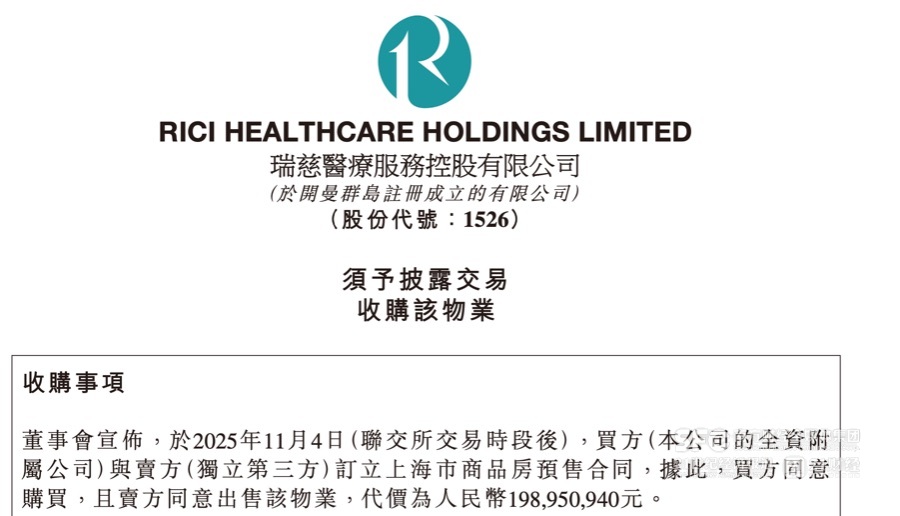
Core Viewpoint - 瑞慈医疗 has made a significant investment by purchasing a luxury villa in Shanghai for approximately 199 million RMB, which is a strategic move to enhance its asset portfolio amidst challenges in its core medical business [1][4]. Group 1: Investment Details - The property acquired is a villa located at Longqi Road, covering an area of approximately 570.06 square meters, with a transaction price of about 34.9 million RMB per square meter, surpassing the average recorded price of 29.8 million RMB per square meter [3][12]. - 瑞慈医疗 has paid an initial deposit of 30 million RMB, with the remaining 169 million RMB due by November 30 [3]. - This investment represents over 13.67% of 瑞慈医疗's market capitalization, which is approximately 1.56 billion RMB [4]. Group 2: Financial Context - As of June 30, 2025, 瑞慈医疗 reported cash and cash equivalents of about 1.03 billion RMB, indicating that the villa purchase significantly impacts its cash reserves [3]. - The company’s asset-liability ratio stands at 46.2%, slightly down from 46.4% at the end of 2024, while the scale of mortgaged assets has nearly doubled within six months [8][9]. - The acquisition is seen as a long-term investment opportunity, potentially providing reasonable returns due to the property's location in a core commercial area of Shanghai [4]. Group 3: Market Position and Challenges - 瑞慈医疗 is currently experiencing a revenue decline, with a 7% year-on-year decrease in revenue to 1.145 billion RMB in the first half of 2025, attributed to external competitive pressures [8]. - The company’s net profit for the same period fell by 34.18% to 55.94 million RMB, despite an increase in gross margin from 32.2% to 35.6% [8]. - The decision to invest in prime real estate reflects a strategy to diversify and maintain cash flow amid pressures from medical insurance cost control and market competition [9].
马来西亚首富之子1.17亿元自购上海豪宅,20%利润率生意曝光
2 1 Shi Ji Jing Ji Bao Dao· 2025-11-04 05:54
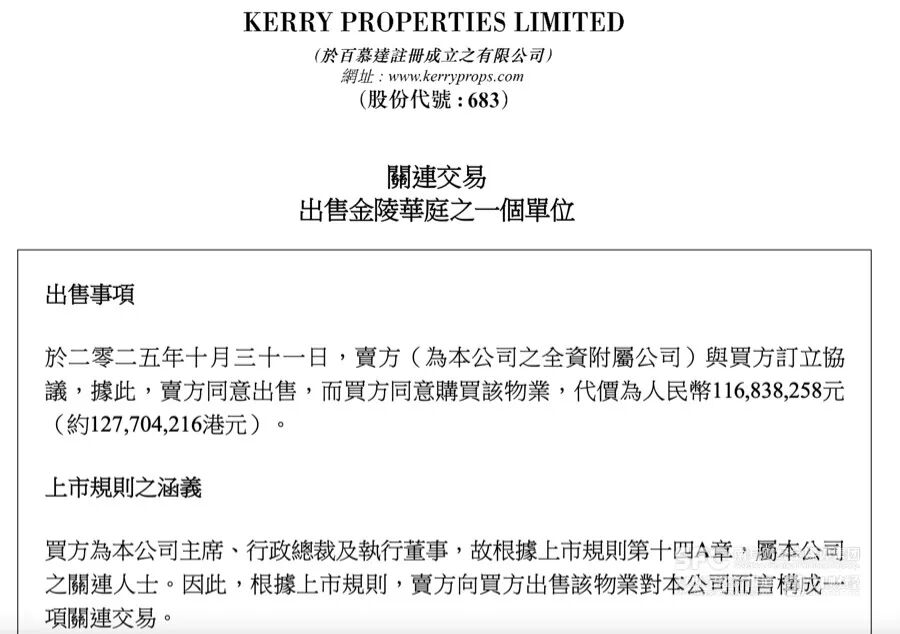
Core Viewpoint - The recent purchase by Guo Konghua, the chairman of Kerry Properties, of a luxury apartment in Shanghai has stirred significant interest in the high-end real estate market, highlighting both personal investment strategies and broader market dynamics [2][11]. Group 1: Transaction Details - Guo Konghua acquired a four-bedroom unit in the Shanghai Jinling Huating project for RMB 117 million (approximately HKD 127.7 million), with a construction area of about 449 square meters [2]. - The transaction price per square meter was approximately RMB 260,300, surpassing the registered price of RMB 206,000 per square meter for other units in the same project [4]. - The sale is expected to generate a net profit of around RMB 23 million for the company, indicating a profit margin of approximately 19.66% for this transaction [6]. Group 2: Market Context - The Jinling Huating project has received a pre-sale permit for 40 units, with an average price of RMB 206,000 per square meter, while some units are priced significantly higher, reaching RMB 326,800 per square meter [5]. - The overall sales performance of Jinling Huating has been strong, with a total sale of approximately HKD 9.922 billion (around RMB 90.1 billion) for 147,700 square meters of saleable area in the first half of the year [10]. - The high-end real estate market in Shanghai is experiencing a supply shortage, with a reported decline of over 50% in the supply of luxury homes priced above RMB 30 million from January to October [14]. Group 3: Strategic Implications - Guo Konghua's personal investment in the luxury property serves as a strong endorsement for the project, effectively acting as a marketing strategy that enhances visibility and credibility in the high-end market [11]. - The trend of developers purchasing their own luxury properties is becoming more common, reflecting a strategic move to secure high-quality assets amid a tightening supply environment [13]. - The luxury market is entering a phase of "stock game," where competition for existing high-quality assets intensifies, potentially leading to new strategies for asset securitization and liquidity management among developers [16].

马来西亚首富之子1.17亿元自购豪宅,20%利润率生意曝光
2 1 Shi Ji Jing Ji Bao Dao· 2025-11-04 05:52
Core Viewpoint - The recent purchase of a luxury apartment by Guo Konghua, son of Malaysia's richest man, has stirred significant interest in Shanghai's high-end real estate market, revealing a potential strategy of asset retention and market positioning by the company [1][2]. Company Summary - Guo Konghua acquired a four-bedroom unit in the Shanghai Jinling Huating project for RMB 1.17 billion (approximately HKD 1.277 billion), with a construction area of about 449 square meters, while the unit is still under construction [2][3]. - The transaction is expected to generate a profit of approximately RMB 23 million for the company, indicating a profit margin of about 19.66% for the sale of this property [5][6]. - The Jinling Huating project has a sales average of around RMB 19,000 per square meter, with the highest unit price reaching RMB 32,680 per square meter, setting a new record for new home prices in Shanghai [6][7]. Industry Summary - The luxury real estate market in Shanghai is experiencing a significant supply reduction, with a reported 50% decrease in the availability of properties priced over RMB 30 million from January to October this year [14]. - The market is shifting towards a "stock game" phase, where high-end properties are becoming increasingly scarce, leading to intensified competition among developers for quality assets [16]. - The recent easing of purchase restrictions in Shanghai has led to a resurgence in high-end property transactions, with a 184% year-on-year increase in sales for properties priced over RMB 30 million in the first half of 2025 [16].
马来西亚首富之子1.17亿元自购上海豪宅,20%利润率生意曝光
21世纪经济报道· 2025-11-04 05:42
Core Viewpoint - The recent purchase by Guo Konghua, the chairman of Kerry Properties, of a luxury apartment in Shanghai has stirred significant interest in the high-end real estate market, highlighting the strategic moves of developers in a tightening market [1][3][12]. Summary by Sections Transaction Details - Guo Konghua acquired a four-bedroom unit in the Shanghai Jinling Huating project for RMB 117 million (approximately HKD 127.7 million), with a construction area of about 449 square meters [1][3]. - The transaction price per square meter was approximately RMB 260,300, surpassing the registered price of RMB 206,000 for other units in the same project [3][4]. Project Insights - The Jinling Huating project has recently received pre-sale permits for 40 units, with an average price of RMB 206,000 per square meter [3][5]. - The project is expected to generate a net profit of approximately RMB 23 million for Kerry Properties, indicating a profit margin of about 19.66% [7][8]. Market Context - The luxury real estate market in Shanghai is experiencing a supply contraction, with a reported 2,624 units priced above RMB 30 million available from January to October 2023, a decrease of over 50% year-on-year [19][20]. - The high-end market is entering a "stock game" phase due to the anticipated continued reduction in land supply within the inner ring of Shanghai [21]. Strategic Implications - Guo Konghua's purchase is seen as a signal of confidence in the future development of Kerry Properties' projects, serving as a form of "free publicity" for the Jinling Huating project [12][13]. - The trend of developers purchasing their own luxury units is becoming more common, reflecting a strategic approach to managing inventory and capitalizing on asset appreciation [19][22].