AI产业结构转变

Search documents
百度重押AI应用,海外成下一代流量战场
Hua Xia Shi Bao· 2025-11-14 10:25
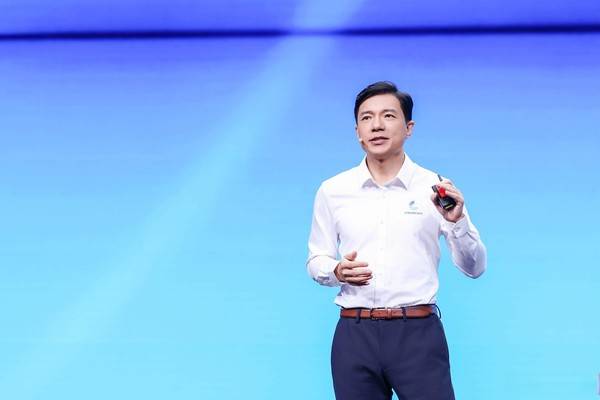
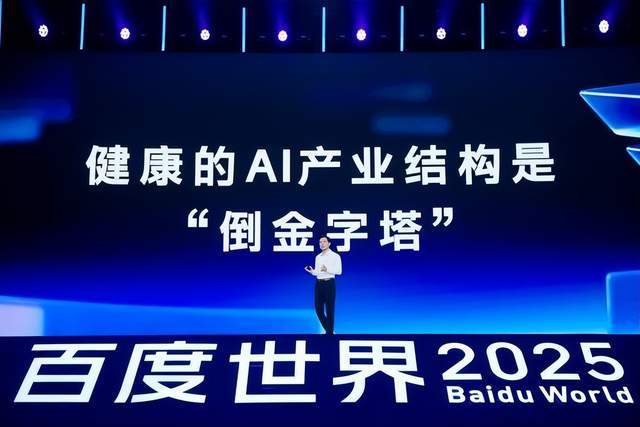
Core Insights - The competition for AI super applications is intensifying as companies aim to capture the next wave of traffic dominance [2][3] - Baidu's founder, Li Yanhong, highlighted a shift in the AI industry structure from an unhealthy "pyramid" to an inverted "pyramid," where AI applications can generate 100 times the value of chips [2][4] AI Model and Applications - Baidu released its Wenxin large model 5.0, featuring 2.4 trillion parameters and supporting multimodal understanding and generation capabilities [4] - The company is transitioning from "intelligent emergence" to "effect emergence," emphasizing the effectiveness of AI applications over mere model development [4][5] - Baidu's search engine has achieved a 70% coverage rate of rich media in search results, indicating a significant shift towards multimedia content [4] Market Competition and Challenges - Major players like Alibaba, Tencent, and ByteDance are also focusing on AI applications, leading to a highly competitive environment [6][7] - The AI application market is experiencing severe internal competition due to a lack of differentiation and reliance on generic large model APIs [7] - Many AI applications struggle to convert free users into paying customers, leading to unsustainable business models [7] User Trends and Market Dynamics - As of June, the mobile user base for AI applications reached 680 million, with AI search engines and comprehensive assistants leading the market [6] - The user base for mobile plugins grew to 630 million, while native app users declined, indicating a shift in user preferences [7] International Expansion - Chinese AI companies are increasingly targeting overseas markets, with Baidu's applications like "Luo Bo Kua Pao" and "Hui Bo Xing" expanding into regions like Southeast Asia and the U.S. [8][9] - The overseas market presents opportunities due to a more mature payment environment, allowing for quicker profitability [9] - Successful international expansion will depend on understanding local needs and regulatory compliance [10]


百度李彦宏:AI能力被内化后,将创造100倍于芯片的价值
Sou Hu Cai Jing· 2025-11-13 13:06
Core Insights - Baidu's AI achievements signify a transition from "intelligent emergence" to "effect emergence," indicating a new phase in AI development [1][12] - The company emphasizes the importance of integrating AI into tasks to enhance productivity and drive growth [1] Group 1: Industry Structural Changes - Baidu's founder, Li Yanhong, highlighted a fundamental shift in the AI industry structure from an unhealthy "pyramid" to a healthier "inverted pyramid," where models will generate ten times the value of chips and applications will create one hundred times the value [3][4] - This shift addresses concerns about an AI bubble, moving from a demonstration phase to a practical solution phase [3] Group 2: Key AI Developments - Baidu introduced significant upgrades to its three major AI products: Wenxin Model 5.0, Kunlun Chip, and Luobo Kuaipao [4] - Wenxin Model 5.0 is a unified native multimodal model that integrates understanding and generation [4] - The new generation of Kunlun Chips and the Tianchi supernodes will support trillion-parameter model training, with the Tianchi 512 supernode set to launch next year [4] Group 3: Business Transformation through AI - Baidu is aggressively transforming its core business through AI, achieving a 70% coverage rate of rich media in search results [4][5] - The company has opened its search capabilities via AI APIs, with 625 companies integrating Baidu's search API into their services [4] - GenFlow, an AI-driven product, has upgraded to version 3.0, boasting over 20 million users, making it the largest general-purpose agent globally [4] Group 4: Global Expansion of AI Applications - Baidu's AI services, including Luobo Kuaipao and Huibo Star digital humans, are rapidly expanding globally, with Luobo Kuaipao operating in 22 cities [12] - The Huibo Star digital human technology has been successfully launched in Brazil, with plans to expand into Southeast Asia and the U.S. [9][12] - The collective international push of Baidu's AI products reflects the maturity and confidence of Chinese AI technology in the global market [12] Group 5: Breakthroughs in Digital Humans and Intelligent Agents - Baidu unveiled next-generation "real-time interactive digital humans" capable of deep understanding and natural emotional expression [6] - During the Double 11 shopping festival, 83% of live stream hosts utilized Huibo Star digital humans, resulting in a 91% year-on-year increase in GMV [8][12] - The self-evolving intelligent agent "Famu" was introduced, capable of simulating top algorithm experts and providing optimal dynamic solutions [11]
百度CEO李彦宏:当AI能力被内化,智能不再是成本而是生产力
Sou Hu Cai Jing· 2025-11-13 08:09
Core Insights - The core message of the article emphasizes the transformation of the AI industry structure from an unhealthy "pyramid" to a healthy "inverted pyramid," where applications generate significantly more value than underlying technologies like chips [4][14]. - The focus is on internalizing AI capabilities within enterprises and individuals, making AI a native driver of productivity and creativity [5][15]. Group 1: AI Industry Structure - The AI industry is shifting from a "pyramid" structure, where chip manufacturers capture most value, to an "inverted pyramid" where applications can create 100 times the value of the models built on chips [4][14]. - This new structure promotes a healthier ecosystem where the value generated by AI applications far exceeds that of the underlying technologies [4][14]. Group 2: Internalizing AI Capabilities - Companies are encouraged to internalize AI capabilities, focusing on three main application areas: replacing repetitive tasks, providing unlimited productivity through AI-generated content, and surpassing human cognitive abilities [5][6]. - The internalization of AI is seen as essential for enhancing decision-making, discovering new growth points, and improving overall efficiency and creativity [15][31]. Group 3: Digital Humans and AI Applications - Digital humans are identified as a new universal interface for human-computer interaction, applicable across various sectors such as e-commerce, education, and customer service [8][18]. - The integration of AI into search engines has been highlighted, with a significant portion of search results now being AI-generated, enhancing user experience through rich media content [20][19]. Group 4: Autonomous Driving and New Mobility - Autonomous driving is projected to revolutionize urban living, with significant cost reductions in ride-hailing services expected by 2030, leading to increased demand [9][20]. - Baidu's autonomous driving service, "萝卜快跑," has achieved substantial operational milestones, including over 25 million fully autonomous orders per week [20][21]. Group 5: Advanced AI Solutions - The introduction of "伐谋," a self-evolving intelligent agent, aims to find global optimal solutions across various industries, leveraging evolutionary algorithms for efficiency [24][25]. - The system is designed to adapt and iterate solutions dynamically, providing superior outcomes compared to traditional methods [26][27]. Group 6: Future of AI and Productivity - The article concludes with a call for individuals and organizations to adapt their work processes to leverage AI capabilities effectively, emphasizing the potential for a productivity revolution [31][32]. - The ongoing development of AI models is expected to continue pushing the boundaries of intelligence and application across multiple domains [28][29].
核心观点 | 李彦宏:让AI成为企业发展和个人成长的原生推动力
Sou Hu Cai Jing· 2025-11-13 05:58
Core Insights - The core message emphasizes the transformation of AI from a cost to a productivity driver, highlighting the importance of integrating AI into every task for both enterprise growth and personal development [3][6][14] AI Industry Structure - The AI industry structure is shifting from an unhealthy "pyramid" model to a healthier "inverted pyramid" model, where applications generate significantly more value than the underlying chips [4][6] - In the inverted pyramid, models should create 10 times the value of chips, and applications should generate 100 times the value of models, fostering a sustainable ecosystem [6][4] Internalizing AI Capabilities - Companies need to internalize AI capabilities, which can enhance decision-making, identify new growth points, reduce costs, increase profit margins, and shorten innovation cycles [6][4] - Three representative application directions for internalizing AI capabilities include: 1. AI replacing repetitive tasks, exemplified by tools like Wenxin Kuai Ma for programming assistance [6] 2. Unlimited supply of productivity through AI-generated content, with 70% of search results now being AI-generated [6][9] 3. AI surpassing human cognition by discovering previously unknown solutions through enhanced model training [6] Digital Humans - Digital humans represent a new universal interface in the AI era, facilitating natural human-machine interactions and applicable across various sectors such as e-commerce, education, and customer service [9][7] AI Transformation in Search - Baidu is leading the global transformation of search engines by integrating AI, moving from text-based results to rich media content, with 70% of search results now being AI-generated [9][10] Autonomous Vehicles - The advent of autonomous vehicles is expected to revolutionize urban living, with projected costs for robotaxi services dropping to approximately $0.25 per mile by 2030, significantly increasing demand [10] Global Optimal Solutions - Baidu introduced a self-evolving intelligent agent capable of finding global optimal solutions across various fields, including transportation, energy, finance, and drug development [10][11] Call to Action - A call for individuals and organizations to adapt their problem-solving approaches to leverage AI capabilities, aiming for a productivity revolution that translates "intelligent dividends" into "social dividends" [14]
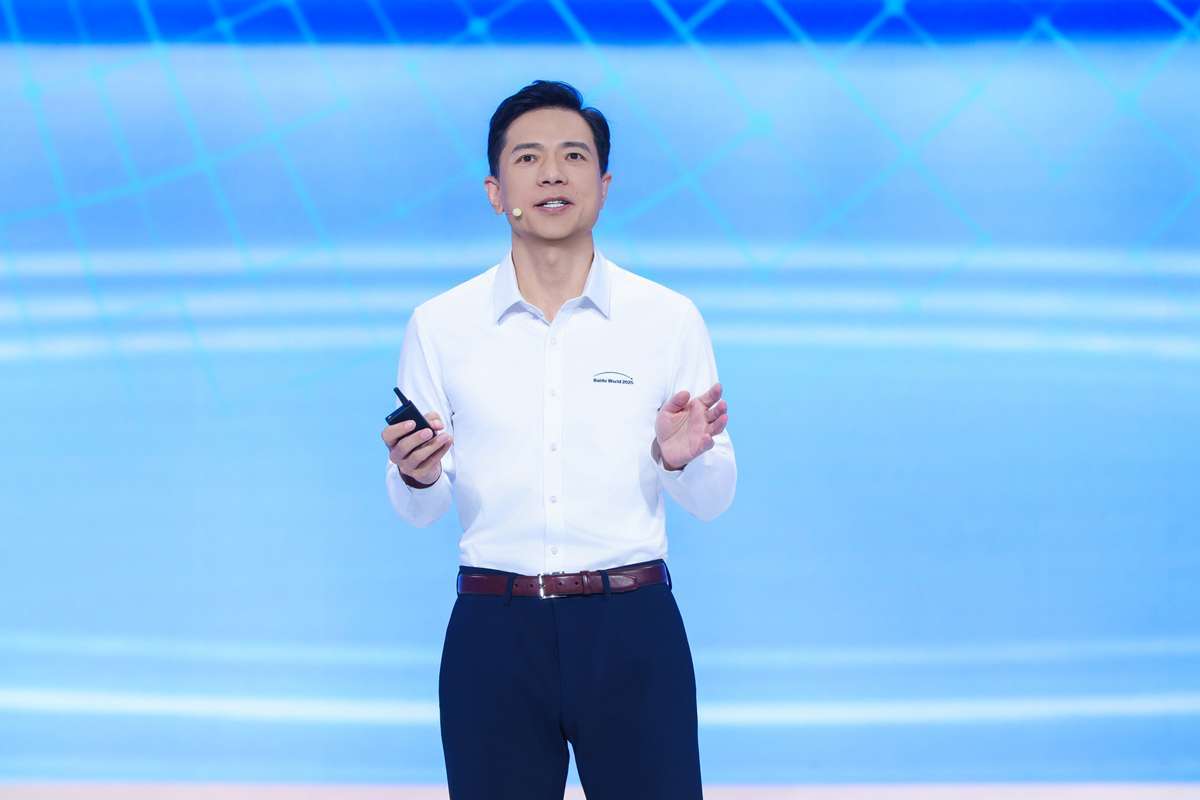
李彦宏:当AI能力被内化,智能不再是成本而是生产力
Sou Hu Cai Jing· 2025-11-13 05:00
Core Insights - The core message emphasizes the transformation of AI from a cost to a productivity driver, highlighting the importance of integrating AI into every task for both enterprise growth and personal development [3][6][14] AI Industry Structure - The AI industry structure is shifting from an unhealthy "pyramid" model to a healthier "inverted pyramid" model, where applications generate significantly more value than the underlying chips [4][6] - In the inverted pyramid, models should create 10 times the value of chips, and applications should generate 100 times the value of models, fostering a sustainable ecosystem [6][10] Internalizing AI Capabilities - Companies need to internalize AI capabilities, which can enhance decision-making, identify new growth points, reduce costs, increase profit margins, and shorten innovation cycles [6][14] - Three representative application directions for internalizing AI capabilities include: 1. AI replacing repetitive tasks, such as coding assistance tools [6] 2. Unlimited supply of productivity through AI-generated content, with 70% of search results being AI-generated [6][10] 3. AI surpassing human cognition by discovering previously unknown solutions through enhanced data processing [6] Digital Humans - Digital humans represent a new universal interface in the AI era, facilitating natural human-machine interactions and applicable across various sectors like e-commerce, education, and healthcare [10] AI Transformation in Search - Baidu is leading the global transformation of search engines by integrating AI into search result pages, moving from text-based results to rich media content, achieving a 70% coverage of rich media in top search results [10] Autonomous Vehicles - The advent of autonomous vehicles is expected to revolutionize urban living, with projections indicating a significant reduction in ride costs and a corresponding increase in demand [11] Global Optimal Solutions - Baidu introduced a new intelligent system capable of finding global optimal solutions across various fields, utilizing evolutionary algorithms to simulate complex problem-solving processes [11] Call to Action - A call for individuals and organizations to adapt their problem-solving approaches to leverage AI capabilities, aiming for a productivity revolution that translates "intelligent dividends" into "social dividends" [14]
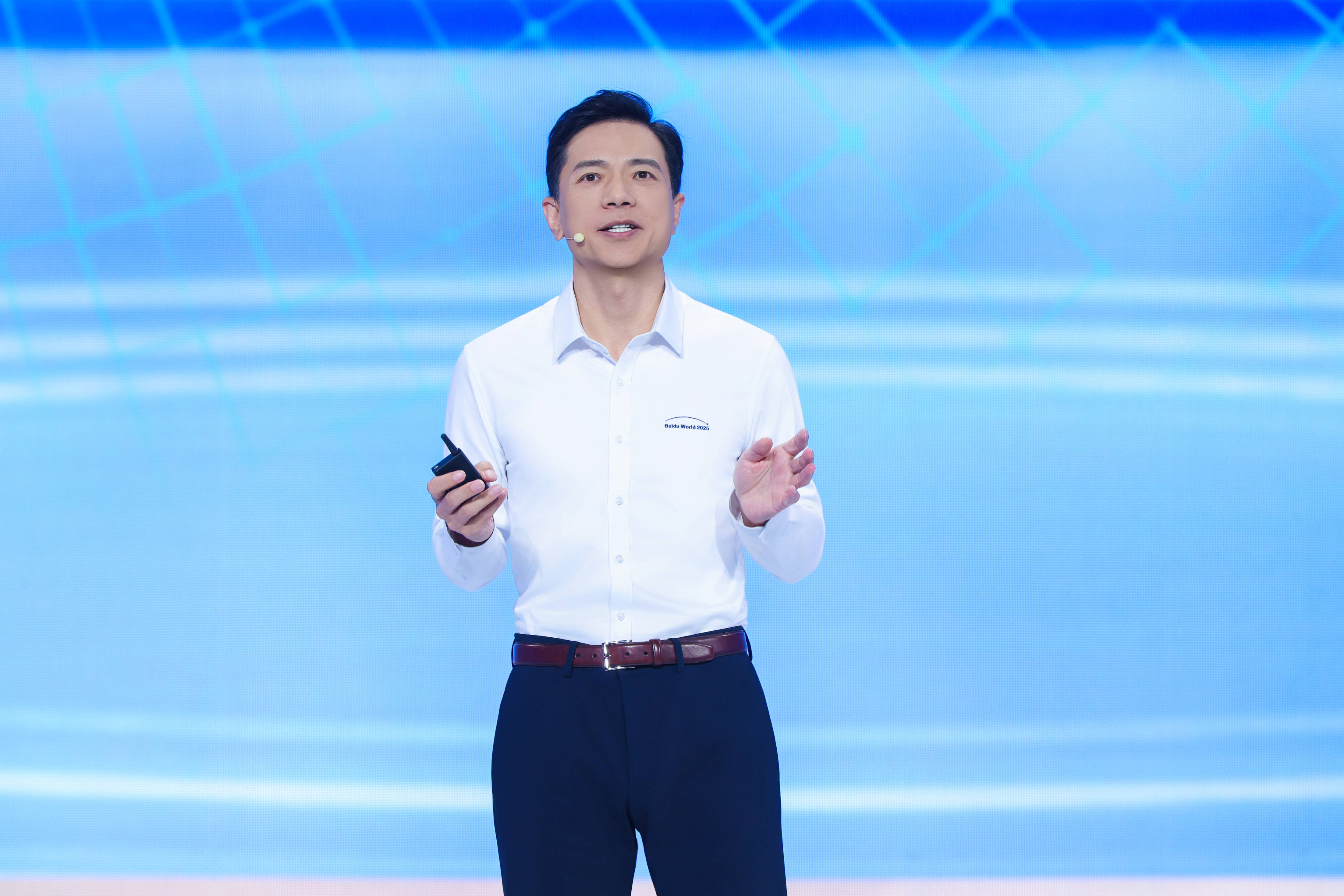
百度李彦宏:AI产业正从不健康向健康的结构进行转变
Sou Hu Cai Jing· 2025-11-13 02:32
Core Insights - The AI industry is transitioning from an unhealthy "pyramid" structure to a healthier "inverted pyramid" structure, emphasizing the importance of applications over chips and models [1][3]. Group 1: Industry Structure - The previous "pyramid" structure allocated most value to the chip layer, with model manufacturing receiving only 1/10 of that value, and application value being an order of magnitude smaller [3]. - A healthy industry structure should allow chip manufacturers to earn 10 times their value from models, and applications developed from those models to create 100 times the value [5]. Group 2: Market Environment - The AI large model development is nearing a critical point, with expectations of numerous valuable applications emerging soon, indicating an exciting market environment [5]. - Currently, 65% of content on Baidu's search platform incorporates generative content, primarily presented in formats like galleries, videos, or live broadcasts, marking a significant transformation in search engine capabilities [5].