AI内化

Search documents
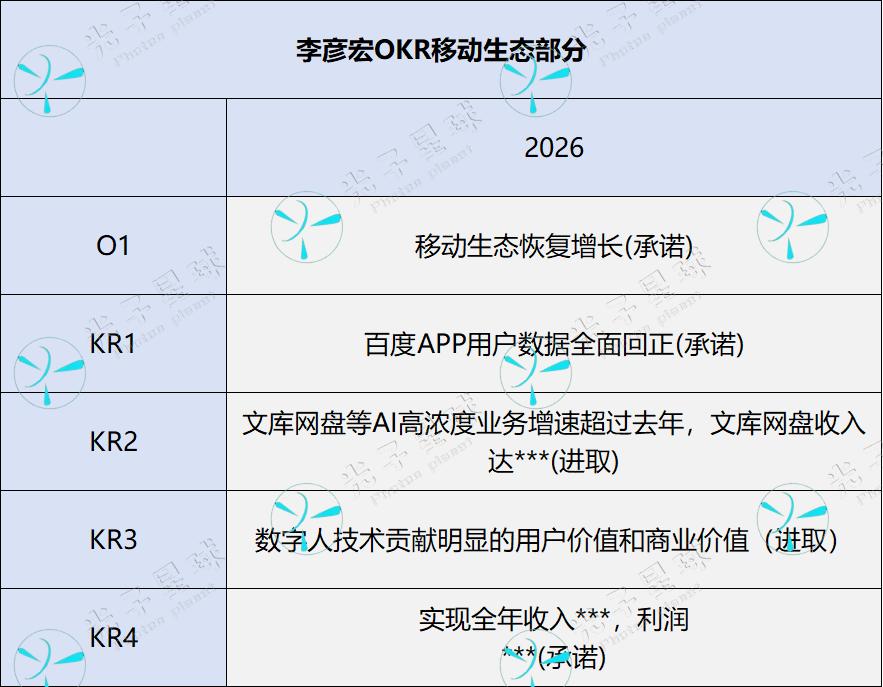
2026李彦宏OKR:AI进入兑现期
3 6 Ke· 2026-02-10 13:10
Core Insights - The article emphasizes that 2026 will be a year for Baidu to realize the commercial value of its various businesses after exploration in 2024 and restructuring in 2025 [1] Group 1: Organizational Changes - Baidu underwent three significant organizational adjustments in the first three months, including the split of TPG into two departments focusing on foundational and application model research [1] - The MEG group integrated PC and mobile search resources, forming a "search-push integration" team to enhance user operations and technical development [1] - A new PSIG group was established to focus on personal AI applications, with a subscription model for commercialization [1] Group 2: Strategic Shifts - Compared to the previous year, the number of aggressive objectives in Li Yanhong's OKR increased significantly, indicating a strategic shift towards more ambitious goals [2] - The focus on user experience has become a key operational strategy for the Baidu APP, reflecting a transition from traditional search to AI-driven interactions [3] Group 3: User Engagement Initiatives - Baidu launched a 500 million yuan Spring Festival red envelope campaign to boost user engagement, particularly targeting existing users rather than new user acquisition [5] - The emphasis on user experience necessitates a reorganization of services and interface within the Baidu APP to enhance user retention [5] Group 4: Business Model Diversification - Different business units within Baidu are adopting varied commercial models, with some focusing on classic search advertising while others explore subscription services [6] - The establishment of new business groups signals a strategic pivot towards AI and smart transportation, with specific revenue targets set for these units [7] Group 5: AI and Cloud Services - Baidu's intelligent cloud has shown strong performance, with AI cloud revenue surpassing 90% of total cloud revenue, indicating a successful transition to AI-centric services [11] - The focus on "super agents" in AI development aims to address specific high-frequency pain points in both business and consumer sectors [12] Group 6: Operational Efficiency and Growth - The operational strategy for Baidu's autonomous driving service has shifted from validation to scaling, with a focus on reducing operational costs and improving service metrics [15] - Li Yanhong's emphasis on internalizing AI capabilities reflects a broader strategy to enhance productivity and commercial value across various business units [18]


独家丨2026李彦宏OKR:AI进入兑现期
Sou Hu Cai Jing· 2026-02-10 11:27
Core Insights - The year 2026 is projected to be a significant year for Baidu, focusing on the realization of commercial value across its various businesses after a period of exploration in 2024 and restructuring in 2025 [1] Group 1: Organizational Changes and Strategy - Baidu has undergone three major organizational adjustments in the first three months of the year, including the split of the Technology Platform Group (TPG) into two departments focusing on foundational model research and application model optimization [2] - The Mobile Ecosystem Group (MEG) has integrated PC and mobile search resources, establishing a "Search and Push Integration" team to enhance user-side operations and technical development [2] - The establishment of the Personal Super Intelligent Group (PSIG) focuses on personal AI applications, with a commercial exploration of subscription models [2] - The aggressive OKR (Objectives and Key Results) set by CEO Li Yanhong reflects a strategic shift towards more ambitious goals, with a notable increase in aggressive targets from 3 to 8 out of 12 key results [2] Group 2: AI and Revenue Generation - Multiple objectives and key results now include specific revenue and profit indicators, indicating that Baidu's AI initiatives are entering a phase of value realization [3] - The focus on user experience and operational strategies within the Baidu APP has shifted, emphasizing the importance of user data and interaction as AI search technologies mature [4][6] - The 5 billion yuan prize pool for the 2026 Spring Festival activity aims to stimulate existing user engagement rather than acquiring new users, highlighting Baidu's strong presence in lower-tier markets and among older demographics [6] Group 3: Business Model and Product Development - The strategy of leveraging existing user bases and enhancing service offerings is critical, with a need to streamline services and interfaces within the Baidu APP [6] - The differentiation in business models across various consumer-facing products, such as classic search advertising versus subscription services for Baidu Wenku and Baidu Wangpan, presents challenges that need to be addressed [7] - The establishment of new business groups signals a commitment to AI and intelligent transportation, with specific revenue growth targets set for Baidu Wenku and Baidu Wangpan [8][9] Group 4: Cloud Services and AI Integration - Baidu's intelligent cloud has shown significant growth, with AI cloud revenue reaching 62 billion yuan, accounting for over 90% of total intelligent cloud revenue [12] - The shift in focus from merely running AI models to winning market share reflects a deeper understanding of AI infrastructure and business-to-business (B2B) opportunities [13] - Baidu's approach to AI emphasizes the development of "super agents" that address specific high-frequency pain points in both business and consumer contexts [15][16] Group 5: Operational Efficiency and Future Directions - The operational metrics for Baidu's autonomous driving service, including over 1.7 million service orders and 240 million kilometers driven, indicate a shift towards more precise operational management [18] - The emphasis on internalizing AI capabilities and cultural adaptation within the organization is crucial for aligning business strategies with evolving market demands [21] - The focus on achieving concrete financial outcomes rather than merely linking business activities to numerical metrics signifies a maturation in Baidu's strategic approach [21]
内化AI,百度智能云的硬底子
雷峰网· 2025-11-13 14:00
Core Viewpoint - The article emphasizes the necessity for enterprises to internalize AI capabilities as a fundamental skill to achieve sustainable intelligent growth, moving beyond temporary applications to integrate AI deeply into their organizational structure and business processes [1][2][3]. Group 1: AI Integration in Enterprises - Enterprises are increasingly clear about their goals regarding AI, seeking growth, efficiency, and innovation, and are less interested in applications that do not integrate with their core business [2]. - The consensus in the industry is that AI must be embedded into the organizational structure and innovation processes of enterprises to become a foundational capability, akin to utilities like water and electricity [2][3]. Group 2: Baidu's AI Infrastructure - Baidu's strategy involves two evolutionary paths: leveraging existing cloud resources to integrate AI into PaaS and SaaS applications, or building a full-stack AI capability from the ground up [6]. - Baidu's AI infrastructure includes the Kunlun chip and the Baidu Intelligent Cloud, which aims to provide a robust AI cloud infrastructure for enterprises to internalize AI capabilities [6][9]. Group 3: AI Infra and Agent Infra - The dual approach of AI Infra and Agent Infra is essential for enterprises to internalize AI, where AI Infra provides the necessary computational power and Agent Infra offers tools for developing AI applications [8][9]. - Baidu's AI Infra focuses on providing stable, efficient, and cost-effective computing resources, while Agent Infra simplifies the development of AI applications by encapsulating complex elements [9][12]. Group 4: Real-World Applications and Success Stories - Baidu has successfully implemented AI agents in various industries, such as the "multi-collaboration SOP analysis Agent" in the restaurant sector, which improved operational standards during peak times [19]. - In the financial sector, the "off-exchange trading Agent" developed with Galaxy Securities increased the conversion rate from inquiry to order by three times, demonstrating significant business growth [19]. - The collaboration with Southern Power Grid led to the development of agents that enhanced the efficiency and reliability of power grid operations, freeing up personnel for more complex tasks [19]. Group 5: Future Directions and Innovations - Baidu has introduced the "self-evolving" super intelligent agent, "Baidu Famo," which aims to find global optimal solutions in complex business scenarios, marking a significant advancement in AI capabilities [21][22]. - The agent's design is inspired by evolutionary algorithms, allowing it to simulate and discover solutions that have not been previously identified by human experts [21][22]. - Baidu's focus on expanding the capabilities of AI agents from executing tasks to autonomous evolution and strategic decision-making sets it apart from other players in the industry [22][24]. Group 6: Strategic Vision for AI Adoption - Baidu's comprehensive strategy encompasses building a solid computational foundation (AI Infra), lowering development barriers (Agent Infra), and leading future directions with the "Famo" super intelligent agent [29]. - The article concludes that a true revolution in intelligent productivity is just beginning, highlighting the transformative potential of AI in various sectors [30].
起大早的百度为何能领跑AI“赶大集”?
Feng Huang Wang· 2025-11-13 11:17
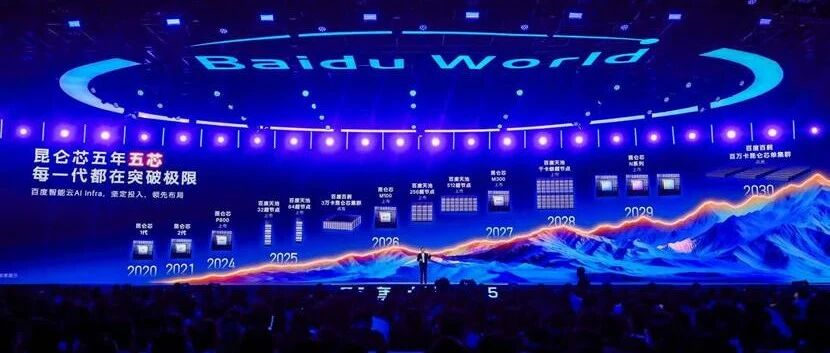
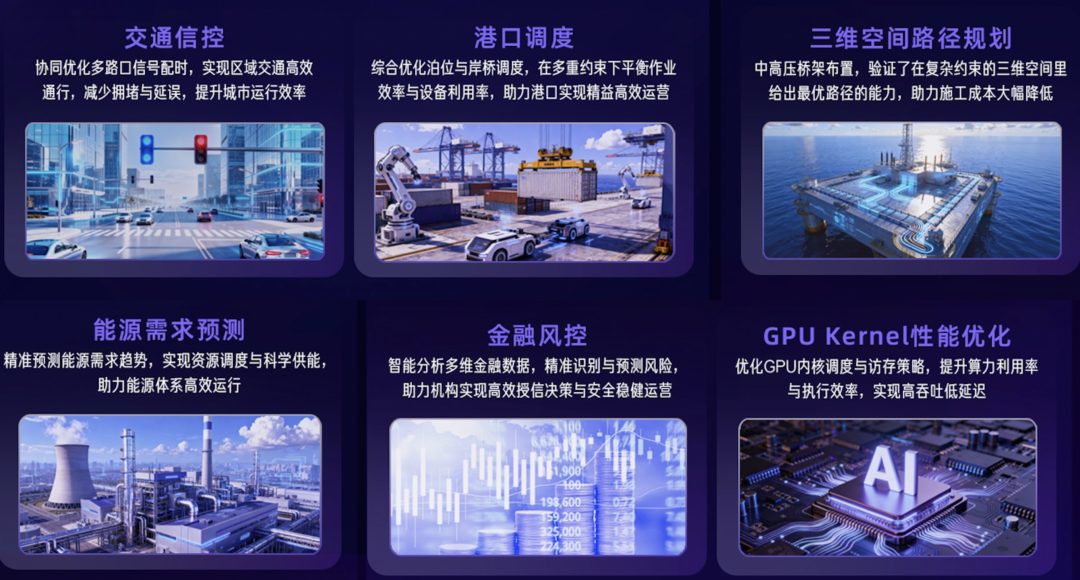
Core Insights - The healthy AI industry structure should resemble an "inverted pyramid," where models generate ten times the value of chips, and AI applications create one hundred times the value of models [1][5]. Group 1: AI Evolution and Internalization - Baidu's "伐谋" is the world's first commercially viable self-evolving super-intelligent system, reshaping industry logic by internalizing AI capabilities within enterprises [2][3]. - The traditional reliance on top algorithm experts has created a bottleneck in AI application, necessitating a shift from manually optimized models to self-evolving AI systems [3][4]. - The internalization of AI capabilities allows enterprises to activate dormant data energy, transitioning from superficial solutions to fundamental improvements [4][10]. Group 2: Industry Applications and Impact - In the energy sector, Baidu's "伐谋" optimizes cable layout in complex environments, significantly reducing project delivery time and costs [1][4]. - In finance, the collaboration between Citic Baixin Bank and Baidu has led to a dynamic risk model that enhances credit decision-making accuracy, improving feature extraction efficiency by 100% and risk differentiation by 2.41% [4]. - The application of "伐谋" extends to traffic control, where it has optimized traffic light timing across 4,942 intersections, alleviating congestion during peak hours [4]. Group 3: Comprehensive AI Infrastructure - Baidu's full-stack AI layout includes self-developed Kunlun AI chips, robust cloud infrastructure, and advanced deep learning frameworks, addressing core concerns of enterprises regarding computational efficiency and data security [6][8]. - The recent launch of the next-generation Kunlun chip and super node products enhances Baidu's AI capabilities, solidifying its position as a leader in AI transformation [6][8]. Group 4: Diverse AI Solutions - Baidu offers a comprehensive toolbox for enterprises, including "慧播星" for e-commerce, "萝卜快跑" for autonomous driving, and various AI development tools that lower application development barriers [8][9]. - The integration of AI into Baidu's search business has transformed 70% of search results into AI-generated outputs, enhancing user experience and engagement [9][10]. Group 5: Competitive Landscape - The AI industry is likened to a bustling marketplace, where efficiency and scale are the new competitive advantages, and early adopters are likely to establish significant barriers to entry [10].
李彦宏:当AI能力被内化,智能不再是成本而是生产力
Sou Hu Cai Jing· 2025-11-13 05:00
Core Insights - The core message emphasizes the transformation of AI from a cost to a productivity driver, highlighting the importance of integrating AI into every task for both enterprise growth and personal development [3][6][14] AI Industry Structure - The AI industry structure is shifting from an unhealthy "pyramid" model to a healthier "inverted pyramid" model, where applications generate significantly more value than the underlying chips [4][6] - In the inverted pyramid, models should create 10 times the value of chips, and applications should generate 100 times the value of models, fostering a sustainable ecosystem [6][10] Internalizing AI Capabilities - Companies need to internalize AI capabilities, which can enhance decision-making, identify new growth points, reduce costs, increase profit margins, and shorten innovation cycles [6][14] - Three representative application directions for internalizing AI capabilities include: 1. AI replacing repetitive tasks, such as coding assistance tools [6] 2. Unlimited supply of productivity through AI-generated content, with 70% of search results being AI-generated [6][10] 3. AI surpassing human cognition by discovering previously unknown solutions through enhanced data processing [6] Digital Humans - Digital humans represent a new universal interface in the AI era, facilitating natural human-machine interactions and applicable across various sectors like e-commerce, education, and healthcare [10] AI Transformation in Search - Baidu is leading the global transformation of search engines by integrating AI into search result pages, moving from text-based results to rich media content, achieving a 70% coverage of rich media in top search results [10] Autonomous Vehicles - The advent of autonomous vehicles is expected to revolutionize urban living, with projections indicating a significant reduction in ride costs and a corresponding increase in demand [11] Global Optimal Solutions - Baidu introduced a new intelligent system capable of finding global optimal solutions across various fields, utilizing evolutionary algorithms to simulate complex problem-solving processes [11] Call to Action - A call for individuals and organizations to adapt their problem-solving approaches to leverage AI capabilities, aiming for a productivity revolution that translates "intelligent dividends" into "social dividends" [14]