
AI投资热

Search documents
美联储或暂停降息,比特币年内涨幅接近归零,特朗普威胁对加拿大征收100%关税
2 1 Shi Ji Jing Ji Bao Dao· 2026-01-25 14:56
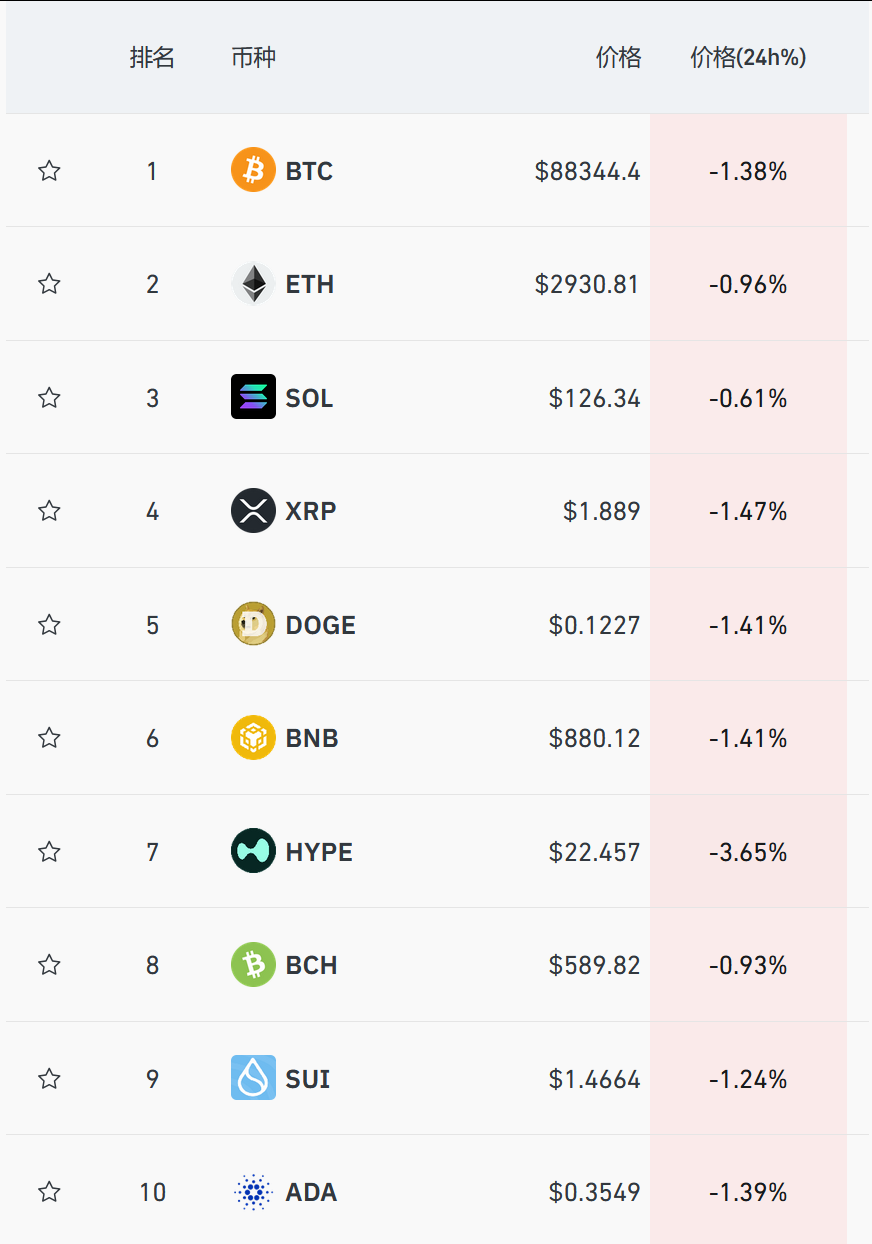
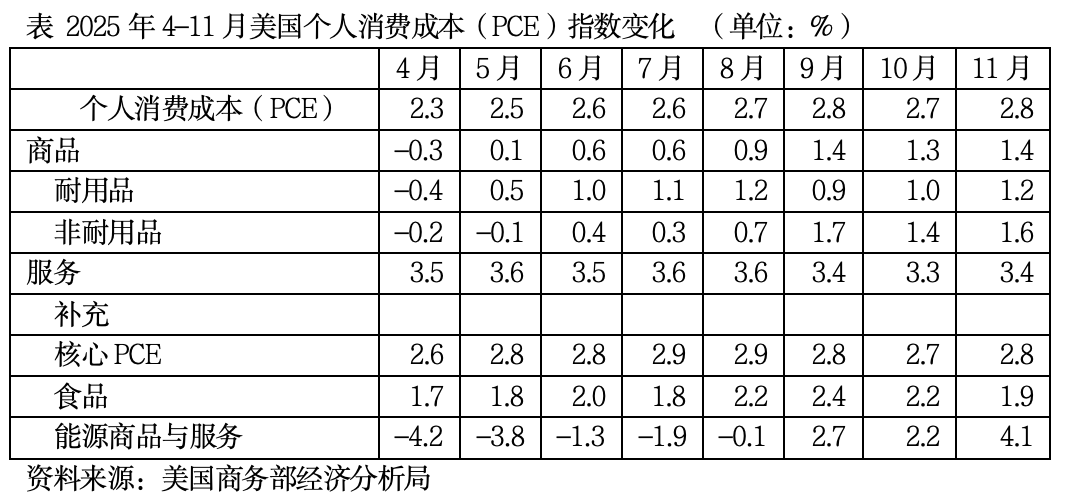
Group 1: Federal Reserve and Interest Rates - The Federal Reserve is expected to pause interest rate cuts during the upcoming meeting on January 27-28, with a 95.6% probability of maintaining current rates and only a 4.4% chance of a 25 basis point cut [1] - The market's anticipation of the Fed's decision is influenced by recent employment and inflation data, which show mixed signals regarding the economic outlook [4][9] Group 2: Cryptocurrency Market - The cryptocurrency market continues to decline, with Bitcoin experiencing a 7.3% drop this week, bringing its year-to-date gains close to zero [1] - Ethereum has fallen below $3,000, and other cryptocurrencies like BNB and Dogecoin have also seen declines of around 1% [1][2] - Nearly 100,000 traders faced liquidation in the last 24 hours, with total liquidation amounts reaching $121 million [1] Group 3: Economic Indicators - The latest PCE data indicates that the U.S. inflation rate remains elevated, with the November PCE index rising 2.8% year-over-year, aligning with expectations [4][5] - Core PCE, excluding food and energy, also rose by 2.8%, indicating persistent inflationary pressures that are far from the Fed's long-term target of 2% [4][5] Group 4: Government Debt and Fiscal Policy - The U.S. government debt has reached $38.65 trillion, with plans to increase military spending by over 50% compared to the previous fiscal year [8] - The government's fiscal policies, including cuts to food and green energy subsidies, are raising concerns about long-term sustainability and could lead to a shift in investment preferences away from U.S. assets [8] Group 5: Technology Sector Performance - The technology sector is facing a downturn, with major companies like META and Microsoft experiencing significant stock price declines following earnings reports [7][9] - The performance of AI stocks has been mixed, with some leading companies seeing substantial losses, while others like Google have gained [7] - The upcoming earnings reports from tech giants will be crucial in determining market adjustments and investor sentiment [9]

美联储或暂停降息,比特币年内涨幅接近归零,特朗普威胁对加拿大征收100%关税
21世纪经济报道· 2026-01-25 14:52
Group 1 - The Federal Reserve is expected to pause interest rate cuts in its upcoming meeting, with a 95.6% probability of maintaining current rates and only a 4.4% chance of a 25 basis point cut [1] - Bitcoin has experienced a significant decline, with a 7.3% drop this week, bringing its year-to-date gains close to zero, while Ethereum has fallen below $3,000 [1][2] - Gold and silver have seen explosive growth in January, reaching historical highs as they attract safe-haven investments amid the downturn in cryptocurrencies [2] Group 2 - The U.S. job market shows mixed signals, with a cooling trend that may suppress financial market performance, while inflation remains persistent, as indicated by the PCE data showing a 2.8% year-over-year increase [5] - The GDP data released indicates a better-than-expected performance, but underlying details suggest a distorted economic rhythm due to tariff policies, with personal consumption contributing 2.34% to GDP [6][7] - The AI investment boom has led to fluctuations in fixed asset investment growth, with recent trends showing a decline in growth rates, impacting future economic potential [7] Group 3 - Following the earnings report from META, AI stocks have faced significant sell-offs, with the information sector index dropping 7.5%, while other sectors like industrials and materials have seen gains [9] - The U.S. government debt has reached $38.65 trillion, with plans to increase military spending by over 50%, raising concerns about fiscal sustainability and potential impacts on international relations [10] - The upcoming earnings reports from tech giants will be crucial in determining the future adjustments in the stock market, as geopolitical issues and inflation trends continue to influence market dynamics [12][13]





美国通涨压力依旧,美股市场仍在寻找方向
Sou Hu Cai Jing· 2026-01-25 08:39
Market Overview - The U.S. stock market experienced volatility, with the S&P 500 index down 0.35%, the Dow Jones down 0.53%, and the Nasdaq down 0.06% over the week [1] - The U.S. 10-year Treasury yield rose to 4.239%, reflecting a 0.19% increase, while gold and silver futures saw significant gains of 8.36% and 14.45%, respectively [1] Economic Indicators - The U.S. Commerce Department reported a better-than-expected Q3 GDP, with personal consumption contributing 2.34%, the highest since Q1 2022 [4] - The core Personal Consumption Expenditures (PCE) price index rose to 2.8%, the highest level since November 2023, indicating persistent inflationary pressures [2][4] Sector Performance - The technology sector, particularly AI stocks, has seen a decline, with major companies like META and Microsoft experiencing significant drops of 12.4% and 14%, respectively [5] - In contrast, industrial, materials, and energy sectors showed positive performance, with increases of 14.7%, 14.5%, and 12.1% [5] Government Fiscal Policy - The U.S. government debt has reached $38.65 trillion, with plans to increase military spending by over 50% to $1.5 trillion, raising concerns about fiscal sustainability [6] - The Treasury Department's proposal to tax foreign official institutions on Treasury yields may lead to a shift away from dollar-denominated assets [6] Future Outlook - The upcoming earnings reports from tech giants will significantly influence market adjustments, with the Federal Reserve's policy statement on January 29 being a key focus for investors [7] - Geopolitical issues, including the Greenland acquisition and ongoing tensions in Ukraine, are expected to impact market sentiment and financial stability [7][8]
加密货币集体遭抛售,近25万人爆仓,比特币一度跌破92000美元
21世纪经济报道· 2026-01-19 14:04
Core Viewpoint - The cryptocurrency market is experiencing significant sell-offs due to the impact of the US-EU tariff war, leading to a collective drop in prices and a high number of liquidations in the market [1][4]. Market Performance - Bitcoin's price fell over 3% to below $92,000, with a slight recovery bringing it close to $93,000, while over 247,000 liquidations occurred in the past 24 hours [1][2]. - Other cryptocurrencies also saw declines, with Ethereum down 3.03% to $3,215, and Solana down 5.88% to $133.7 [2][3]. Tariff Impact - President Trump announced a 10% tariff on goods from several European countries starting February 1, with plans to increase it to 25% by June 1, which has drawn criticism and potential retaliatory measures from European leaders [4][5]. - This announcement disrupted the early-year rebound in the cryptocurrency market, which had been recovering from previous lows [6]. Institutional Investment Concerns - Institutional support for Bitcoin has weakened, with recent ETF fund movements revealing vulnerabilities in the narrative surrounding Bitcoin as an inflation hedge [7]. - The volatility of Bitcoin, which exceeds that of gold, and its correlation with US stock markets challenge its role as a risk hedge [7]. Market Sentiment and Future Outlook - Despite recent downturns, some analysts remain optimistic about Bitcoin's future, citing ongoing global asset diversification trends and increasing institutional participation as potential drivers for future price increases [10].

耶伦警告:美国面临沦为“香蕉共和国”的危险
第一财经· 2025-11-17 13:12
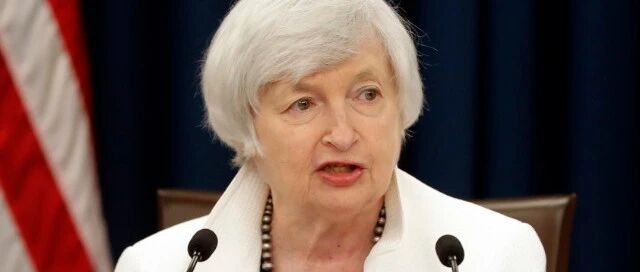
Core Viewpoint - The article discusses the potential risks to the independence of the Federal Reserve and the broader implications for the U.S. economy, particularly in light of President Trump's influence and the current AI investment boom [3][4][5]. Group 1: Federal Reserve Independence - Former Federal Reserve Chair Janet Yellen warns that the U.S. risks becoming a "banana republic" due to political pressures on the Federal Reserve, particularly from President Trump, who has called for interest rate cuts and threatened to dismiss Fed Chair Jerome Powell [3][4]. - Yellen emphasizes that Trump's actions could undermine the long-standing separation between fiscal and monetary policy, damaging the Fed's credibility in controlling inflation [3][5]. - The Trump administration is attempting to dismiss Fed Governor Lisa Cook, which Yellen believes would end the Fed's independence, allowing for political interference in monetary policy [6]. Group 2: Economic Risks and AI Investment - Yellen highlights that the current AI investment boom may obscure underlying economic risks, with significant growth in technology investments projected for 2025 [7]. - A report from Oxford Economics predicts that AI-related investments could see annual growth rates of 20% to 40%, the fastest since the late 1990s [7]. - However, Yellen warns that if the tech sector underperforms, the U.S. economy could become vulnerable, recalling the tech bubble burst of 2001-2002, which led to a 70% drop in tech stocks and a decline in business investment [7]. Group 3: Broader Economic Implications - Yellen expresses concern over the potential loss of scientists and researchers due to tensions between U.S. universities and the Trump administration, which could hinder technological advancement and economic growth [7]. - She notes that the financial markets appear stable, but there are signs of tension, particularly with the U.S. dollar depreciating by about 4% since the announcement of Trump's tariffs [8].
蔡昉:这轮AI投资热“浇不冷”|快讯
Hua Xia Shi Bao· 2025-11-13 09:16
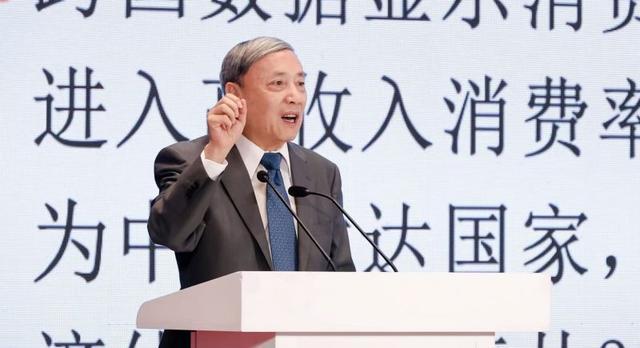
Core Insights - The current wave of investment in artificial intelligence (AI) is described as "unquenchable," with predictions indicating that over 90% of the growth in the U.S. GDP in the first half of the year is attributed to AI-related investments [2] - There is a debate on whether this investment surge represents a technological revolution or another investment bubble, with distinctions made between industrial and financial bubbles [2] - China's advantage lies in the application of AI, supported by a large market and diverse application scenarios, highlighting the dual-edged nature of AI [2] Group 1 - The investment boom in AI may contain elements of a bubble, as noted by industry experts, with the potential for both over-exuberance and eventual technological advancement [2] - The alignment of AI systems with human values and moral standards is crucial, as is the need for AI investments to align with high-quality development goals [2] - AI's impact on productivity may lead to a "Matthew effect," where productivity gains are unevenly distributed, potentially limiting overall productivity improvements [2] Group 2 - On the demand side, demographic challenges such as population decline and aging are increasingly constraining consumer demand [3] - The burden of pension contributions and family care responsibilities on the working-age population is suppressing their consumption capacity [3] - AI can enhance the basic pension system and the silver economy, improving care productivity and resource sharing, thereby benefiting the elderly population [3]
资讯早班车-2025-11-12-20251112
Bao Cheng Qi Huo· 2025-11-12 09:28
Report Industry Investment Rating No relevant content provided. Core Viewpoints of the Report - The report analyzes multiple aspects including macro - data, commodity investment, financial news, and stock market trends, and presents various viewpoints and expectations for different industries. For example, in 2026, fiscal policy is expected to continue a moderately expansionary trend, and monetary policy will maintain a moderately loose tone [32]. - The Chinese economy is expected to have new momentum and new forces emerging in 2026, and it is recommended to invest in Chinese A - share assets [35]. Summary by Related Catalogs 1. Macro Data - GDP in Q3 2025 had a year - on - year growth of 4.8% at constant prices, down from 5.2% in the previous quarter [1]. - In October 2025, the manufacturing PMI was 49.0%, down from 49.8% in the previous month; the non - manufacturing PMI for business activities was 50.1%, up slightly from 50.0% in the previous month [1]. - In September 2025, M1 year - on - year growth was 7.2%, up from 6.0% in the previous month; M2 year - on - year growth was 8.4%, down from 8.8% in the previous month [1]. - In October 2025, CPI year - on - year was 0.2%, up from - 0.3% in the previous month; PPI year - on - year was - 2.1%, up from - 2.3% in the previous month [1]. 2. Commodity Investment 2.1 Comprehensive - The central bank will implement a moderately loose monetary policy, and 500 billion yuan of new policy - based financial instrument funds have been fully disbursed by October 29, 2025 [2]. - As of November 11, 2025, 39 domestic commodity varieties had positive basis, and 29 had negative basis [3]. - The US will suspend the implementation of export control penetration rules from November 10, 2025, to November 9, 2026 [3]. 2.2 Metals - From November 15, 2025, the minimum fixed - amount investment for accumulated gold in CITIC Bank will be adjusted from 1000 yuan to 1500 yuan, and the daily accumulation starting amount for gold in China Construction Bank will be raised from 1000 yuan to 1200 yuan [5]. - International precious metal futures generally rose. Deutsche Bank predicts future prices for silver, platinum, palladium, gold, copper, aluminum, and zinc [5]. 2.3 Coal, Coke, Steel, and Minerals - The National Development and Reform Commission will ensure energy supply, and on November 11, 2025, the Simandou Iron Ore Project in Guinea was put into production [8]. 2.4 Energy and Chemicals - The US's new sanctions on Russian crude oil and the expected end of the US government shutdown boosted the price of Brent crude oil [9]. - Indonesia plans to increase the biodiesel blending ratio to B50 next year, which may affect palm oil exports and prices [9]. 2.5 Agricultural Products - On November 10, 2025, the price of white - striped pigs in Beijing Xinfadi Market decreased compared to the average price on October 31 [12]. - Germany's oilseed industry association UFOP estimates the winter rapeseed planting area in 2026 [12]. - Brazil's November 2025 exports of soybeans, corn, and soybean meal are expected to increase [12]. 3. Financial News 3.1 Open Market - On November 11, 2025, the central bank conducted 403.8 billion yuan of 7 - day reverse repurchase operations, with a net investment of 286.3 billion yuan [14]. 3.2 Key News - The central bank will implement a moderately loose monetary policy, deepen financial reform, and expand high - level opening - up [15]. - The Chinese government encourages the development of the bond market's "technology board" and promotes the internationalization of the RMB [17]. - The US Senate voted to end the government shutdown, and the House of Representatives will vote on the temporary appropriation bill [23]. 3.3 Bond Market Summary - The Chinese bond market generally continued to be warm, with most interest - rate bond yields falling [25]. - The CSI Convertible Bond Index closed down 0.16% [26]. 3.4 Foreign Exchange Market - The on - shore RMB against the US dollar closed down 32 basis points at 7.1207 on November 11, 2025 [30]. 3.5 Research Report Highlights - CITIC Securities predicts that in 2026, fiscal policy will continue to be moderately expansionary, and monetary policy will be moderately loose [32]. - It is expected that the 10 - year Treasury bond yield in 2026 will fluctuate in the range of 1.6% - 1.9% [33]. 4. Stock Market - A - shares were weakly sorted, with the Shanghai Composite Index down 0.39%, the Shenzhen Component Index down 1.03%, and the ChiNext Index down 1.4% [37]. - The Hong Kong Hang Seng Index rose 0.18%, and south - bound funds had a net inflow of HK$44.67 billion on November 11, 2025 [38]. - Since October, margin trading funds have continuously flowed into the power equipment, electronics, and non - ferrous metals industries [38]. - As of November 11, 2025, 87 new stocks have been listed in the Hong Kong stock market this year, with a total IPO fundraising of over HK$240 billion [39].