美国经济风险

Search documents
美国9月非农新增就业11.9万人 失业率为4.4%
Sou Hu Cai Jing· 2025-11-20 15:45
Group 1 - The U.S. Labor Department reported that 119,000 jobs were added in September, with an unemployment rate of 4.4% [1] - The previous two months' employment data were revised downwards, with July's job additions adjusted from 79,000 to 72,000 and August's from 22,000 to a decrease of 4,000, totaling a reduction of 33,000 jobs for July and August [1] - Employment in healthcare, dining, and social assistance sectors continued to rise, while transportation and warehousing, along with federal government jobs, saw declines [1] Group 2 - The average hourly wage for non-farm employees in September was $36.67, reflecting a month-over-month increase of 0.2% and a year-over-year increase of 3.8% [1] - Due to the federal government shutdown, data collection was interrupted, leading to the absence of the October non-farm employment data, which will be reported alongside November's data on December 16 [1] - Economic indicators suggest that while the U.S. economy appears stable, there are increasing signs of pressure, including a slowdown in hiring, reduced consumer spending, and rising inflation [2]
耶伦警告:美国面临沦为“香蕉共和国”的危险
第一财经· 2025-11-17 13:12
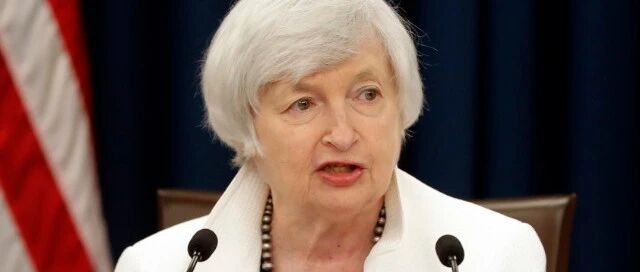
Core Viewpoint - The article discusses the potential risks to the independence of the Federal Reserve and the broader implications for the U.S. economy, particularly in light of President Trump's influence and the current AI investment boom [3][4][5]. Group 1: Federal Reserve Independence - Former Federal Reserve Chair Janet Yellen warns that the U.S. risks becoming a "banana republic" due to political pressures on the Federal Reserve, particularly from President Trump, who has called for interest rate cuts and threatened to dismiss Fed Chair Jerome Powell [3][4]. - Yellen emphasizes that Trump's actions could undermine the long-standing separation between fiscal and monetary policy, damaging the Fed's credibility in controlling inflation [3][5]. - The Trump administration is attempting to dismiss Fed Governor Lisa Cook, which Yellen believes would end the Fed's independence, allowing for political interference in monetary policy [6]. Group 2: Economic Risks and AI Investment - Yellen highlights that the current AI investment boom may obscure underlying economic risks, with significant growth in technology investments projected for 2025 [7]. - A report from Oxford Economics predicts that AI-related investments could see annual growth rates of 20% to 40%, the fastest since the late 1990s [7]. - However, Yellen warns that if the tech sector underperforms, the U.S. economy could become vulnerable, recalling the tech bubble burst of 2001-2002, which led to a 70% drop in tech stocks and a decline in business investment [7]. Group 3: Broader Economic Implications - Yellen expresses concern over the potential loss of scientists and researchers due to tensions between U.S. universities and the Trump administration, which could hinder technological advancement and economic growth [7]. - She notes that the financial markets appear stable, but there are signs of tension, particularly with the U.S. dollar depreciating by about 4% since the announcement of Trump's tariffs [8].

常规关门还是经济风险?专家警告:特朗普政府举措或引发连锁反应
Sou Hu Cai Jing· 2025-10-02 22:49
Core Viewpoint - The current government shutdown in the U.S. poses unprecedented risks, particularly with potential mass layoffs of federal employees, which could severely impact the economy and market confidence [1][5][7]. Economic Impact - Historically, government shutdowns have resulted in temporary disruptions, with the S&P 500 remaining stable during such periods. However, the potential for significant layoffs this time could lead to a more severe and lasting economic downturn [1][5]. - Stephanie Ross, Chief Economist at Wolf Research, emphasizes that layoffs would lead to serious economic issues that are difficult to rectify in the medium term, as federal employees' income and consumer confidence are crucial for economic stability [2][4]. - The shutdown could create an information vacuum, as key economic data may not be collected or released, complicating decision-making for the Federal Reserve and investors [2][4][7]. Market Reactions - Despite the looming risks, Wall Street remains optimistic, relying on historical precedents where shutdowns did not lead to significant economic fallout. This optimism may be misplaced if mass layoffs occur [4][5][8]. - Bob Elliott, CIO of UnlimitedFunds, warns that the current fragile job market could exacerbate the situation, leading to a prolonged economic recovery if layoffs happen [4][5]. Social Consequences - The potential for mass layoffs not only poses economic risks but also social implications, as the loss of income for hundreds of thousands of families could lead to decreased consumer spending and local economic downturns [5][6]. - The impact on local government tax revenues and public services could further strain the economy, creating a cascading effect on various sectors [5][6]. Conclusion - The current market confidence is based on assumptions that may soon be challenged if layoffs occur, indicating that the stakes are higher than in previous shutdowns [8].

特朗普施压未果,美联储按兵不动!中方大手笔再抛82亿美债,释放强烈信号!
Sou Hu Cai Jing· 2025-06-20 07:11
Group 1 - The Federal Reserve, under Powell's leadership, decided to maintain the federal funds rate at 4.25%-4.50%, reflecting the complex realities facing the U.S. economy [1][3] - Despite pressure from Trump for rate cuts to stimulate economic recovery, Powell remained steadfast, indicating significant economic uncertainties, particularly due to the delayed effects of tariffs imposed by the Trump administration [3][5] - The decision to keep rates unchanged is seen as a rational choice amidst rising fiscal pressures on the U.S. government, with high rates increasing debt servicing costs [5] Group 2 - China reduced its holdings of U.S. Treasury bonds by $8.2 billion, bringing its total to $757 billion, marking the second consecutive month of reduction, which reflects a strategic shift in response to escalating U.S.-China tensions [3][5] - This reduction in U.S. debt holdings is part of a broader trend where China has been decreasing its reliance on U.S. Treasuries since 2022, indicating a search for alternative investment opportunities to diversify risk [5][7] - The sell-off of U.S. bonds by China has contributed to market unease, with foreign demand for U.S. debt changing, raising concerns about potential depreciation of the dollar [7] Group 3 - The geopolitical tensions, including conflicts in the Middle East and rising oil prices, are exerting additional pressure on the Federal Reserve, complicating its policy decisions [7] - Analysts warn that if oil supply chains are severely disrupted, oil prices could exceed $100, posing new challenges for U.S. inflation [7] - Powell's challenge lies in balancing short-term market reactions while avoiding a repeat of the stagflation experienced in the 1970s [7]
中金:美国经济风险并未消退
中金点睛· 2025-05-05 23:42
Core Viewpoint - The U.S. economy experienced a contraction in Q1 2025, with real GDP declining at an annualized rate of -0.3%, marking the first shrinkage in nearly three years. Concerns over tariffs have led to a surge in imports, which negatively impacted GDP growth, while consumption and investment remained relatively stable. Looking ahead, the economy may face further pressure in Q2 due to increased tariffs, inventory depletion, and declining exports [1][3][5]. Economic Performance - In Q1 2025, real GDP fell short of market expectations, declining from a robust 2.4% in Q4 2024 to -0.3%. The surge in actual goods imports, which rose by 41.3% on a quarter-over-quarter basis, significantly detracted from GDP growth by 4.8 percentage points. Meanwhile, private domestic final sales increased slightly from 2.9% to 3.0%, indicating stable domestic demand prior to the tariff implementation [3][4]. - Fixed asset investment showed mixed results, with equipment investment rebounding significantly to a growth rate of 22.5%, contributing 1.1 percentage points to GDP. However, real estate and construction growth slowed, reflecting ongoing pressures from high interest rates. Personal consumption expenditure growth also declined from 4.0% to 1.8%, with durable goods consumption turning negative [4][5]. Future Economic Outlook - The second quarter is expected to face additional economic pressure as imports may slow down due to tariffs, potentially alleviating some of the negative impact from "import rushing." However, this could lead to greater disruptions in economic activity. Inventory depletion is anticipated to further suppress economic growth, while consumer spending may slow due to higher costs [5][6]. - The labor market is showing signs of cooling, with April's non-farm payrolls adding 177,000 jobs, surpassing expectations. However, the labor market may face increased pressure from tariff-related uncertainties, which could dampen overall employment growth [6][7]. Inflation and Monetary Policy - Inflation risks remain elevated, with the core PCE price index rising from 2.6% to 3.5% in Q1 2025, moving further away from the Federal Reserve's 2% target. The ongoing high tariffs and unresolved trade negotiations may exacerbate inflationary pressures, particularly affecting low-income consumers reliant on affordable goods [9][10]. - Given the current economic landscape, the Federal Reserve is unlikely to lower interest rates in the near term. The upcoming FOMC meeting is expected to maintain a neutral to hawkish stance, as resilient GDP and employment data do not support rate cuts. Future rate decisions will depend on the evolution of tariff impacts and inflation trends [10][11].