
AI辅助诊疗

Search documents
合富中国:预计2025年全年归属净利润亏损2500万元至3600万元
Sou Hu Cai Jing· 2026-01-25 10:25
Core Viewpoint - Company expects a net profit loss of 25 million to 36 million yuan for the full year of 2025 due to various challenges in the market and operational adjustments [1] Group 1: Performance Forecast - Company anticipates a net profit loss of 25 million to 36 million yuan for 2025 [1] - The forecasted loss is attributed to changes in the macro environment and the impact of centralized procurement policies in the in-vitro diagnostics industry [2] Group 2: Reasons for Performance Changes - The competitive landscape is being reshaped, leading to a decrease in product procurement prices and fluctuations in order volumes, which pose challenges to sales revenue and gross margin [2] - Despite cost-saving measures, fixed expenditures remain constant, and investments in talent optimization and capability upgrades have contributed to the expected losses [2] - The company is adjusting its business layout and strategy, focusing on the "ACME" proprietary products, increasing R&D investment, and expanding the market development team to enhance high-value services for hospital clients [2] Group 3: Financial Performance - For the first three quarters of 2025, the company's main revenue was 549 million yuan, a year-on-year decrease of 22.8% [3] - The net profit attributable to shareholders was -12.39 million yuan, a decline of 146.65% year-on-year [3] - The gross margin was reported at 15.84%, with a debt ratio of 27.18% [3]

合富中国:公司合作开发了终端客户重点专科指定病种的临床诊断辅助系统
Zheng Quan Ri Bao Zhi Sheng· 2026-01-15 10:11
Core Insights - The company is focusing on smart healthcare, which is a key area supported by national policy [1] - The company collaborates with top research universities and medical institutions to develop clinical diagnostic assistance systems using AI and big data [1] - The company is actively seeking hospital partnerships for practical application of its systems and plans to continuously optimize based on feedback [1] Industry Developments - The national health commission is promoting the development of intelligent healthcare, providing a broad growth space for the industry [1] - The aging population and uneven distribution of medical resources highlight the need for AI-assisted diagnosis and remote medical services [1] - The company is committed to enhancing grassroots medical service capabilities through technology and service integration [1]
万孚生物:坚持“AI创新+国际化”战略 推动业务转型升级
Zhong Zheng Wang· 2026-01-09 13:25
Core Viewpoint - Wanfu Bio expects a net profit of 46 million to 69 million yuan for the year 2025, facing challenges in the IVD sector due to market adjustments, but plans to drive growth through innovation and AI in 2026 [1][2] Group 1: Financial Performance - The company anticipates a net profit of 46 million to 69 million yuan for 2025 [1] - The revenue from the domestic market, particularly in the grassroots medical sector, has declined, impacting profitability [1] - The terminal pure sales in the new thrombus six-item project have increased by 40% year-on-year [1] Group 2: Market Strategy - In 2026, the company aims to expand its business from point-of-care testing to in vitro diagnostics and enhance its international presence [1] - The overseas revenue has surpassed domestic revenue for the first time, providing significant support for sustainable growth [2] - The company has signed a long-term supply agreement for respiratory products with a major client in the U.S., establishing a solid foundation for its strategic layout in respiratory infectious diseases [2] Group 3: Innovation and Product Development - The company is entering a new product harvest phase by the end of 2025, with several key products obtaining registration certificates [2] - The AI-assisted diagnostic software for coagulation disorders has been selected for a national initiative, marking a significant breakthrough in the AI-assisted diagnosis field [2] - The company plans to leverage favorable policies and existing AI developments to achieve commercialization in pathology and clinical diagnostics [2]

界面新闻揭晓2025年度超级CEO榜单:以远见破局,以实干领航
Xin Lang Cai Jing· 2025-12-16 08:08
Group 1: Economic Overview - In 2024, China's GDP exceeded 134.9 trillion yuan, growing by 5.0% year-on-year, ranking among the top major economies globally [2] - The economic structure continues to optimize, with the primary, secondary, and tertiary industries accounting for 6.8%, 36.5%, and 56.7% of GDP, respectively [2] - Consumption, investment, and net exports contributed 2.2, 1.3, and 1.5 percentage points to GDP growth, respectively [2] Group 2: Technological Advancements - China has made significant breakthroughs in cutting-edge technologies such as 6G communication, AI large models, and quantum computing [3] - The first international 6G field test network was established in July 2024, demonstrating potential 6G transmission capabilities [3] - China ranks second globally in the number of open-source participants, with rapid growth in the sector [3] Group 3: New Energy and Carbon Neutrality - The new energy sector has become a growth engine, with China accounting for over 60% of global new wind and solar installations in 2024 [4] - The installed capacity of new energy storage exceeded 70 million kilowatts, with leading companies like CATL and BYD holding a 65.5% market share in the global power battery market [4] - Solid-state battery technology has achieved mass production breakthroughs, with energy density exceeding 400 Wh/kg [4] Group 4: Healthcare Sector - The healthcare market is expanding due to aging population and rising health consumption demands, with government spending in the sector reaching 2.03 trillion yuan in 2024 [5] - AI-assisted diagnosis, gene editing, and telemedicine technologies are accelerating breakthroughs and applications in the industry [5] - Leading companies like WuXi AppTec and Mindray are actively pursuing globalization strategies to capture high-end medical equipment and biopharmaceutical markets [5] Group 5: Financial and Consumer Trends - The total assets of China's financial institutions reached 495.59 trillion yuan in 2024, growing by 7.5% year-on-year [6] - The banking sector's total assets were 444.57 trillion yuan, with a growth rate of 6.5% [6] - The rise of new retail and domestic brands is reshaping the consumer market, with companies like Luckin Coffee and Pop Mart leveraging data-driven strategies [6] Group 6: Emerging and Future Industries - Emerging industries such as new energy, aerospace, and quantum technology are driving economic growth and international competitiveness [7] - The low-altitude economy is projected to reach a market size of 1.5 trillion yuan by 2025 and 3.5 trillion yuan by 2035 [7] - The embodied intelligence market is expected to exceed 480 billion yuan in 2024, with potential to surpass one trillion yuan by 2031 [7] Group 7: Super CEO Recognition - The "Super CEO" list highlights leaders across various sectors, including healthcare, new energy, entertainment, and technology, showcasing their exceptional leadership and performance [8] - These CEOs have demonstrated resilience and strategic vision in navigating industry challenges and driving company growth [8]




美皓医疗:中国领先的口腔医疗服务提供商通过港交所聆讯,或很快香港上市
Xin Lang Cai Jing· 2025-12-06 08:30
Core Viewpoint - Meihao Medical Group Limited is preparing for an upcoming IPO in Hong Kong, with the aim of raising funds for strategic expansion and technological advancements in dental services [1] Group 1: Fundraising Purpose - The funds raised from the IPO will be used for strategic expansion of dental service networks in first and second-tier cities, as well as high-growth third-tier cities, including the establishment of new dental clinics and upgrading existing ones [1] - Investment will be made to enhance digitalization and intelligence levels, including the procurement of advanced medical equipment, development of digital management systems, and introduction of AI-assisted diagnostic technologies [1] - The company plans to strengthen talent training and clinical research by collaborating with medical schools to establish training programs and support dental research [1] - Additional funds will be allocated for working capital and general corporate purposes [1] Group 2: Company Overview - Meihao Medical is a leading dental service provider in China, focusing on comprehensive dental care services, including orthodontics, implants, general dentistry, pediatric dentistry, and oral preventive care [1] - The company operates a chain of medical institutions under the "Meihao" brand, establishing standardized clinical treatment processes, quality control systems, and customer service models [1] - As of the last feasible date, the company has established a network of medical outlets in multiple cities, creating a certain level of regional brand influence [1]
第一医药:老字号大药房“变身记”
Shang Hai Zheng Quan Bao· 2025-12-02 00:46
Core Viewpoint - The transformation of traditional pharmacies into comprehensive health service centers is driven by AI technology and strategic initiatives from First Pharmaceutical, aiming to adapt to the evolving pharmaceutical retail landscape and meet consumer demands in the health sector [1][2][3]. Group 1: Industry Challenges - The pharmaceutical distribution industry is facing unprecedented challenges, including changes in policy environment, sales models, professional capabilities, and expansion logic [2][3]. - The implementation of drug traceability codes, increased regulation, and continuous price reductions are fundamentally altering the profitability of pharmacies [3]. - The rise of O2O instant retail has fostered a consumer habit of purchasing medications without visiting physical stores, leading to declining foot traffic in traditional pharmacies [3]. Group 2: Company Performance - First Pharmaceutical's revenue increased from 1.398 billion to 1.915 billion from 2021 to 2024, while total profit rose from 65 million to 216 million [3]. - The number of stores doubled from 115 to 206, reflecting the company's proactive strategies and innovations [3]. Group 3: Strategic Focus - The company is aligning its strategic planning with national initiatives, particularly focusing on the silver economy and integrating traditional Chinese medicine into its service offerings [4][5]. - First Pharmaceutical aims to create a "professional integrated elderly care service platform" by enhancing community store services and collaborating with third parties for home care and health monitoring [5]. Group 4: Technological Integration - The company is exploring AI-assisted diagnostic technologies to address the scarcity of experienced traditional Chinese medicine practitioners and to attract younger consumers [6]. - Plans include the introduction of an "AI health management smart engine" combined with wearable devices for personalized health management [6]. Group 5: Capital Market Strategy - First Pharmaceutical is leveraging capital market opportunities to drive growth, focusing on value management and potential mergers and acquisitions [7]. - The company is enhancing its internal mechanisms and performance assessment systems to boost employee motivation and align interests with long-term corporate goals [7]. Group 6: Future Vision - The company envisions transforming pharmacies into "community health service centers" that integrate various health services, including traditional medicine and chronic disease management [8]. - First Pharmaceutical aims to become a leading pharmaceutical and health service provider in the Yangtze River Delta region by refining its operations and strengthening its support systems [8].

报名:医疗器械政策解读会
思宇MedTech· 2025-11-29 01:10
Group 1 - The core viewpoint of the article is the recent release of policies by six departments in Beijing aimed at promoting the high-quality development of the medical device industry, establishing a comprehensive policy system covering "R&D—clinical—promotion—industrialization—going abroad" [2] - The policies include support for innovation in R&D, clinical implementation, industrial space, supply chain challenges, AI large models, and international pathways [2] - There are noticeable differences in the direction, mechanisms, and intensity of policies among Beijing, Shanghai, and Shenzhen, with each city having its unique focus and strategies [3] Group 2 - The event scheduled for December 4, 2025, aims to provide an in-depth analysis of Beijing's new medical device policies, focusing on clinical implementation and promotion [4] - Key highlights of the event include the meaning of the "directory + direct hospital recommendation" system, the logic behind the establishment of application demonstration centers and training centers, and the applicable scope of clinical promotion effectiveness rewards (up to 10 million) [4] - The comparison of policy highlights among the three cities will cover Shanghai's focus on high-end devices, payment system reforms, and industrial cluster development [4] Group 3 - Observations on the biopharmaceutical alliance will discuss policy trends over the next 3-5 years and provide strategic recommendations for companies [5] - Shenzhen's policies emphasize clinical trial efficiency, real-world data, and internationalization strategies, highlighting the matching relationship between policies and enterprise development stages [8] - The article raises questions about whether clinical implementation mechanisms will become a competitive focus among cities and the actual impact of AI and large models on medical device companies [8]

卫宁健康(300253):四季度收入有望恢复增长
Xin Lang Cai Jing· 2025-10-29 12:47
Core Viewpoint - The company reported a significant decline in revenue and net profit for the first three quarters of 2025, primarily due to project delays and cost pressures, but maintains a positive long-term outlook based on its competitive advantages in the medical IT industry [1][5]. Financial Performance - For the first three quarters of 2025, the company achieved revenue of 1.296 billion yuan, a year-on-year decrease of 32.27%, and a net profit attributable to shareholders of -241 million yuan, down 256.10% [1]. - In Q3 2025, revenue was 457 million yuan, a decline of 33.78%, with a net profit of -123 million yuan, down 199.16% [1]. - The gross margin for the first three quarters was 29.07%, a decrease of 11.97 percentage points, attributed to increased implementation costs from project delays [2]. - The operating cash flow for the first three quarters was -11 million yuan, showing significant improvement compared to -104 million yuan in the same period last year [2]. Business Segments - The medical health informationization business generated revenue of 1.191 billion yuan, down 25.71%, with core software sales and technical services at 1.098 billion yuan, down 22.78% [3]. - The internet healthcare business saw revenue drop to 105 million yuan, a decline of 66.24% [3]. Product Development - The WiNEX 2025 version upgrade enhances the core system for digital hospitals, adding over 2,500 optimized features, with AI capabilities accounting for 15% [4]. - The company aims to streamline user habits and business processes, reducing implementation time by 50% and total cost of ownership (TCO) by approximately 20% [4]. Profit Forecast and Valuation - The company's net profit forecasts for 2025-2027 have been revised downwards to 20 million yuan, 331 million yuan, and 502 million yuan, reflecting a decrease of 95.29%, 38.96%, and 27.37% respectively [5]. - The target price is set at 10.46 yuan, based on a 70.0 times price-to-earnings ratio for 2026, down from a previous value of 14.34 yuan [5].

有大一女生确诊乳腺癌,专家呼吁筛查年龄前移
第一财经· 2025-10-23 15:32
Core Viewpoint - The article highlights the increasing incidence of breast cancer among younger women in China and emphasizes the need for improved early screening methods to enhance early detection rates and survival outcomes [3][5][6]. Group 1: Breast Cancer Statistics and Trends - Breast cancer is the most common malignant tumor among women globally, with new cases surpassing lung cancer in 2020, making it the leading cancer worldwide [4][5]. - In China, the standardized five-year relative survival rate for breast cancer has exceeded 60% from 2019 to 2021, but over 20% of patients are still diagnosed at advanced stages (III-IV) [5][6]. - The incidence of breast cancer is rising among women aged 30 and below, as well as those aged 35 to 45 [5]. Group 2: Screening and Diagnosis - Current screening methods include breast examinations, ultrasound, and mammography, which have achieved high detection rates, particularly in underdeveloped regions [6][7]. - Despite advancements, screening precision remains a challenge, with a need for increased awareness among younger women and those in perimenopause [7][8]. - AI technology is being integrated into screening processes to enhance diagnostic accuracy and efficiency [8][9]. Group 3: Genetic Factors and Personalized Screening - Breast cancer has a strong genetic component, with mutations in BRCA1 and BRCA2 genes significantly increasing risk [9]. - High-risk individuals should begin screening at age 20, utilizing a combination of ultrasound, MRI, and genetic testing for personalized risk assessment [9]. - Early detection can lead to a five-year survival rate of nearly 90%, while late-stage detection results in a survival rate of less than 30% [9].
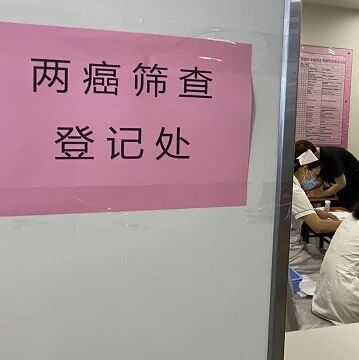
有大一女生确诊乳腺癌,专家呼吁筛查年龄前移
Di Yi Cai Jing· 2025-10-23 12:09
Core Insights - The five-year survival rate for breast cancer patients can reach nearly 90% if detected early, while the rate drops to less than 30% for late-stage patients [8] Group 1: Breast Cancer Statistics and Trends - The five-year survival rate for breast cancer in China has gradually increased, exceeding 60% recently, but the early diagnosis rate still lags behind developed countries due to insufficient screening precision [2][3] - The incidence of breast cancer among women in China is rising, particularly in the age groups of 30 and below, and 35 to 45 years old [3][4] - Over 20% of breast cancer patients are diagnosed at late stages (III-IV) [4] Group 2: Screening and Diagnosis - The "Two Cancers" screening program (breast and cervical cancer) is included in basic public health services for women aged 35-64, but awareness and participation in screening among younger women are still low [2][5] - Current screening methods, including breast ultrasound and mammography, have shown high detection rates, with early detection rates in underdeveloped regions reaching 71% [4] - The precision of screening needs improvement, especially for younger women who may not prioritize regular check-ups [5] Group 3: Technological Innovations - Advances in imaging technology and the integration of AI in diagnostic processes are enhancing the accuracy of early breast cancer screenings [6][7] - Genetic testing and AI risk assessment technologies are becoming crucial for high-risk populations, particularly those with mutations in BRCA1 and BRCA2 genes [7] Group 4: Clinical Benefits of Early Detection - Early detection of breast cancer significantly improves clinical outcomes and societal benefits, with a stark contrast in survival rates between early and late-stage diagnoses [8]