AI for Science(AI4S)

Search documents
锦秋基金被投企业深度原理完成A2轮融资,加速AI for Materials范式重构|Jinqiu Spotlight
锦秋集· 2026-03-05 05:57
Core Insights - Deep Principle is a leading global AI for Chemistry/Materials technology innovation company that accelerates chemical materials innovation through generative AI and first-principles calculations [2] - Jinqiu Fund, with a 12-year history as an AI Fund, focuses on long-term investment in groundbreaking technologies and innovative business models within the general artificial intelligence startup sector [4] Funding and Development - In early 2025, Jinqiu Fund participated in a strategic Pre-A round financing of over 100 million yuan for Deep Principle, highlighting its commitment to supporting innovative AI startups [4] - Recently, Deep Principle completed its A2 round of financing, led by Jinma Investment, with continued support from existing shareholders such as Jingtai Technology and Baidu Ventures, indicating strong market confidence in the company's technological capabilities and long-term prospects [6] - The funds from the latest round will be used to upgrade the "LLM + Diffusion" dual-driven algorithm model system, refine the full-stack product matrix including Agent Mira, and advance the strategic implementation of AI Materials Factory and self-developed pipelines [6] Vision and Mission - Deep Principle aims to unlock breakthrough materials with AI, positioning itself as a global technology pioneer in the AI for Materials field [6] - The company's vision is to industrialize materials innovation with AI scientists, fostering deep integration of technological innovation and industry needs, and continuously injecting AI momentum into the development of global materials science [7]

AI加速材料发现,技术进步催化,新材料ETF国泰(159761)收涨超2%
Mei Ri Jing Ji Xin Wen· 2026-02-09 12:40
Group 1 - The core viewpoint of the article highlights that AI is revolutionizing material discovery and development, particularly through the AI for Science (AI4S) paradigm, which enhances modeling, simulation, and prediction in advanced materials research [1] - The new materials ETF, Guotai (159761), has seen a rise of over 2% on February 9, indicating positive market sentiment towards the new materials sector [1] - AI-driven new materials are expected to become a key application and investment direction within AI4S, with a focus on "AI prediction + automated experiments," significantly shortening traditional R&D cycles by a factor of ten [1] Group 2 - The Guotai new materials ETF tracks the new materials index (H30597), which focuses on companies involved in advanced basic materials, strategic materials, and cutting-edge new materials, reflecting the overall performance of listed companies engaged in material innovation in high-tech fields such as energy conservation, information technology, and biomedicine [1] - Future applications of AI in materials science are anticipated to extend from perovskite solar cells to higher value areas such as solid-state battery electrolytes, high-temperature superconductors, and semiconductor photoresists [1] - AI not only accelerates material discovery but also drives industrialization through digital process optimization, positioning itself as a core engine for upgrading the manufacturing industry [1]
AI引爆科学,MIT博士创业一年拿到数亿融资
Xin Lang Cai Jing· 2026-02-09 00:15
Core Insights - The article discusses the emergence of AI for Science (AI4S) as a transformative force in scientific discovery, particularly in addressing critical challenges in foundational science [2][6][36] - The company DeepMind and the Baker team developed a deep learning model called "RFdiffusion," which predicted approximately 200 million protein structures, showcasing the potential of AI in scientific research [2][36] - The founder of Deep Origin, Jia Haojun, emphasizes the importance of AI in enabling new scientific discoveries rather than merely serving as a tool for existing processes [2][36] Company Overview - Deep Origin was founded by Jia Haojun, who integrated generative AI with first principles to apply AI in material research [3][33] - The company has developed six proprietary algorithm modules, which are integrated into a self-developed platform named "ReactiveAI" [3][33][46] - The platform has recently been upgraded to a material discovery agent called "Agent Mira," which autonomously mobilizes data and resources for chemical material development [4][34] Industry Trends - In 2025, AI4S is expected to reach a critical turning point, with significant investments and initiatives from both the U.S. and China aimed at leveraging AI for scientific research [6][36] - Major companies like Tencent, Alibaba, and ByteDance are rapidly establishing AI4S teams and initiatives, indicating a strong competitive landscape [6][36] - The "Artificial Intelligence+" plan in China highlights AI4S as a key direction for upgrading scientific discovery paradigms [6][36] Funding and Growth - Deep Origin completed a Series A financing round exceeding 100 million RMB, led by Alibaba's entrepreneur fund and Ant Group, among others [7][37] - The company has received multiple rounds of funding, totaling several hundred million RMB, reflecting the growing interest in the AI4S sector [52][56] - The AI4S sector has become a favored area for investment, with notable companies achieving significant funding and market presence [52][56] Commercialization Efforts - Deep Origin is actively expanding its client base, securing contracts worth millions in various industries, including beauty and materials energy [24][56] - The company successfully collaborated with a European beauty giant to address stability issues in active ingredients, demonstrating the practical value of its AI platform [26][56] - The approach of "co-developing with clients" is seen as a more effective way to popularize AI applications compared to merely selling the platform [26][56] Technical Innovations - Deep Origin's unique "ECML system" combines AI model predictions, computational support, and experimental validation, significantly enhancing computational efficiency [45][46] - The company has developed a layered generation architecture to ensure the physical feasibility of generated material structures [45][46] - The integration of specialized algorithms tailored for chemical reactions and material performance prediction creates a competitive edge that is difficult to replicate [29][46]


AI4S科研基础设施路线图亮相,打通科研智能化“最后一公里”
第一财经· 2026-01-29 13:59
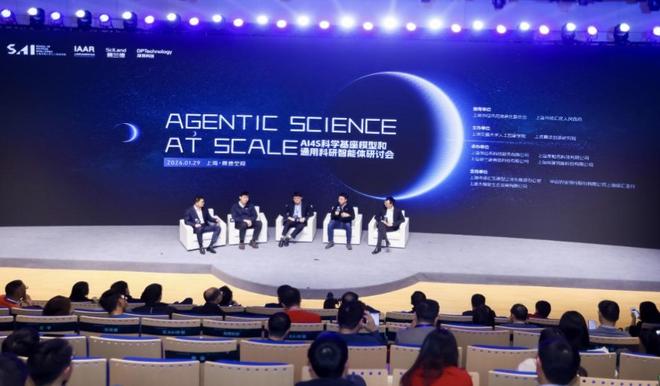
Core Insights - The article discusses the emergence of key infrastructure for AI for Science (AI4S), indicating that the time for scalable, agent-driven scientific research has matured [3]. Group 1: Event Overview - A seminar titled "Agentic Science at Scale" was held on January 29, co-hosted by Shanghai Jiao Tong University and the Shanghai Algorithm Innovation Research Institute, where core achievements like the Innovator model and SciMaster research agent were presented [3][4]. - The seminar featured a keynote speech by Academician E Wei Nan, who outlined the foundational capabilities and implementation paths for the era of intelligent and scalable scientific research [3]. Group 2: Key Developments - The SciMaster research agent, presented by Associate Professor Chen Siheng, aims to achieve a closed-loop process in scientific research across all disciplines, providing an "autonomous driving" experience with capabilities that can match the work output of a seasoned theoretical physics PhD in just 6 hours [4]. - The Innovator model, introduced by Assistant Professor Zhang Linfeng, achieves three goals: multi-modal scientific perception, scientific reasoning, and scientific tool invocation, supporting over 20 scientific modalities and demonstrating superior general visual understanding capabilities [4]. Group 3: Strategic Collaborations - Strategic cooperation agreements were signed between Shanghai Sairande Intelligent Technology Co., Ltd. and other companies, focusing on research computing power supply and data value mining [4].

AI4S科研基础设施路线图亮相,打通科研智能化“最后一公里”
Di Yi Cai Jing Zi Xun· 2026-01-29 12:33
Group 1 - The key infrastructure for AI for Science (AI4S) is gradually taking shape, marking the maturity of large-scale, agent-driven scientific research [1][3] - The "Agentic Science at Scale" era has officially begun, as stated by the chief advisor of the Shanghai Jiao Tong University AI Institute during the opening report [3] - The conference introduced core achievements such as the Innovator scientific base model and the SciMaster research agent, aimed at bridging the last mile of intelligent and scalable scientific research through industry-academia-research strategic agreements [1][3] Group 2 - The SciMaster research agent is designed to achieve a closed-loop process in scientific research across all disciplines, providing an "autonomous driving" experience that can match the output of a senior theoretical physics PhD in just 6 hours of operation [3][4] - The Innovator base model achieves three goals: multi-modal scientific perception, scientific reasoning, and scientific tool invocation, supporting over 20 scientific modalities and demonstrating superior general visual understanding capabilities [4] - Strategic cooperation agreements were signed between Shanghai Sailande Intelligent Technology Co., Ltd. and other companies to collaborate on research computing power supply and data value mining [4]
AI4S电池创新价值兑现,三个痛点:真实、规律、效率
高工锂电· 2026-01-13 15:57
Core Viewpoint - The article emphasizes that while AI has made significant advancements, particularly in language models, it still lacks a true understanding of the physical world, which limits its potential applications in scientific fields [1][20]. Group 1: AI's Limitations and Future Directions - Current mainstream AI excels in language and statistical associations but struggles to grasp fundamental concepts like distance, scale, and causality [1]. - The concept of "AI for Science" (AI4S) is introduced as a critical pathway that aims to integrate AI into scientific research, focusing on understanding the physical world governed by chemistry and physics [2][20]. - AI4S is not merely an enhancement of computational power but a targeted approach to solving complex scientific problems [2]. Group 2: Industry Applications and Capital Market Interest - AI4S is transitioning from concept to practical applications, with SES AI's "Molecular Universe" platform demonstrating real economic value through the development of new electrolyte materials [3]. - The capital market is increasingly interested in AI4S, with several companies in this space achieving billion-dollar valuations, indicating a growing recognition of its commercial potential [3][4]. - SES AI has developed six breakthrough electrolyte materials, showcasing the practical applications of AI4S in industries like battery manufacturing [3][7]. Group 3: Case Studies and Success Stories - The success of companies like Jingtai Technology, which became the first "specialized technology stock" in Hong Kong, illustrates the potential of AI4S in the pharmaceutical sector [4]. - The growth of AI4S companies is often rooted in long-term, practical experience in specific scientific fields rather than merely competing in model capabilities [4][6]. Group 4: Technological Innovations and Breakthroughs - SES's MU platform has produced innovative solutions across various applications, including electric vehicles and drones, with significant performance improvements over industry benchmarks [7][8][10]. - The introduction of the "Flavor" system in MU-1.5 allows AI to leverage both known scientific knowledge and hidden data correlations, enhancing its predictive capabilities [14][15]. Group 5: Efficiency and Future Prospects - The MU platform aims to transform research efficiency by integrating a comprehensive workflow that reduces costs and accelerates development cycles [16][17]. - The "MU in a Box" initiative allows for localized deployment of the MU platform, enabling companies to utilize their proprietary data for tailored AI applications [17][18]. - The article concludes that the true value of AI4S lies in its ability to enhance scientific understanding and drive efficient research, positioning it as a critical component of future innovations in battery technology and beyond [20][22].

AI4S又一瓶颈被攻克:两个AI「吵架」,让科研代码部署成功率突破95%
量子位· 2026-01-13 09:50
Core Insights - The article discusses the challenges in deploying scientific software, emphasizing that most tools are published but not executable, which limits reproducibility and integration in scientific research [3][6][11] - The emergence of AI for Science (AI4S) highlights the need for tools that can interact seamlessly with AI systems, making the ability to run these tools a fundamental issue [8][9][10] - Deploy-Master is introduced as a solution to streamline the deployment process, focusing on creating a shared infrastructure that ensures tools are executable [12][35][37] Group 1: Challenges in Scientific Software - Scientific software often requires extensive manual effort to compile and run, leading to inefficiencies and reliance on individual expertise [4][5] - The deployment bottleneck persists despite advancements in containerization and cloud computing, affecting the usability of scientific software [7] - The lack of a systematic approach to convert tools into executable formats is identified as a structural barrier to the scalability of AI4S and Agentic Science [11][35] Group 2: Deploy-Master Overview - Deploy-Master is designed as a one-stop automated workflow centered on execution, addressing the entire deployment chain from discovery to execution [12] - The tool employs a multi-stage funnel process to filter and validate scientific tools, reducing an initial pool of 500,000 repositories to 52,550 candidates for automated deployment [15] - A dual model review mechanism is implemented to enhance the success rate of building specifications, achieving over 95% success in generating executable tools [22] Group 3: Deployment Insights - The deployment process is characterized by a long-tail distribution of build times, with most tools completing in around 7 minutes, but some requiring significantly longer due to complexity [25][26] - A diverse language distribution is observed among successfully deployed tools, with Python being the most prevalent, followed by C/C++, R, and Java [27][28] - Failure rates in builds are concentrated in specific areas, primarily due to inconsistencies in build processes and missing dependencies [31][32] Group 4: Future Implications - Deploy-Master's success in creating a large collection of executable tools provides a foundation for community agents and various master agents to operate effectively [35][36] - The methodology established by Deploy-Master can be applied beyond scientific computing to other software ecosystems, emphasizing the importance of a robust execution infrastructure [37]

英伟达将AI4S列为AI,三大方向今年或是爆发年
Xuan Gu Bao· 2026-01-11 15:07
Group 1 - The core viewpoint of the article highlights that 2023 may be a breakout year for AI for Science (AI4S), driven by significant advancements in capabilities that allow for more extensive scientific research [1] - AI4S is now recognized as a strategic battleground among global tech giants, moving beyond the "proof of concept" stage in laboratories [1] - AI4S is aiding scientists in efficiently identifying new research opportunities, such as predicting protein functions, designing new materials, and discovering new targets [1] Group 2 - Related A-share concept stocks mentioned include Health元 and Northeast Pharmaceutical [2]

这脑洞神了,两AI“互喷”,竟治好祖传科研软件95%老毛病?
3 6 Ke· 2026-01-09 12:22
Core Insights - The article discusses the challenges in deploying scientific software tools, emphasizing that many open-source tools are not readily executable, leading to inefficiencies in research practices [2][6][24] - Deploy-Master is introduced as a solution to automate the deployment process, enabling the execution of over 50,000 scientific tools and addressing the deployment bottleneck in AI for Science (AI4S) and Agentic Science [1][8][21] Group 1: Challenges in Scientific Software Deployment - The scientific computing field has seen an unprecedented accumulation of open-source software tools, yet most remain in a state of "published" rather than "executable" [2] - Researchers often spend days or weeks resolving issues related to compilation failures, dependency conflicts, and system incompatibilities, which hampers reproducibility and large-scale evaluation [2][6] - The deployment bottleneck persists despite advancements in containerization, cloud computing, and high-performance computing (HPC) platforms, limiting the usability of scientific software [2][7] Group 2: The Role of AI in Scientific Tools - The emergence of AI for Science (AI4S) has intensified the need for scientific tools to interact closely with AI systems, requiring them to execute simulations, run analysis pipelines, and process real data [3][4] - The ability of tools to be executed has become a fundamental issue, impacting the planning and execution capabilities of intelligent agents in scientific research [5][6] Group 3: Deploy-Master Overview - Deploy-Master is designed as a one-stop automated workflow centered on execution, addressing the entire deployment chain from tool discovery to execution [10][21] - The tool employs a multi-stage funnel process to filter and validate scientific tools, ultimately narrowing down from approximately 500,000 repositories to 52,550 candidates for automated deployment [12] Group 4: Building and Validating Tools - The Build Agent within Deploy-Master utilizes a dual-model debate mechanism to generate and validate build specifications, significantly increasing the success rate of deployments to over 95% [15] - The deployment process reveals a long-tail distribution in build times, with most tools completing in around 7 minutes, while some require significantly longer due to complex dependencies [17] Group 5: Observability and Continuous Improvement - Deploy-Master aims to transform the deployment of scientific software from an experiential judgment into a quantifiable and analyzable engineering object [20] - The system allows for systematic observation of deployment behaviors, identifying failure points and underlying assumptions that can be improved over time [18][19] Group 6: Implications for the Broader Software Ecosystem - The methodology developed through Deploy-Master is not limited to scientific computing but can be applied to various software tool ecosystems, including engineering tools and data processing systems [23][25] - The article concludes that establishing an execution-centered infrastructure is crucial for overcoming deployment challenges across different software domains [24][26]
让两个大模型「在线吵架」,他们跑通了全网95%科研代码|深势发布Deploy-Master
机器之心· 2026-01-09 06:16
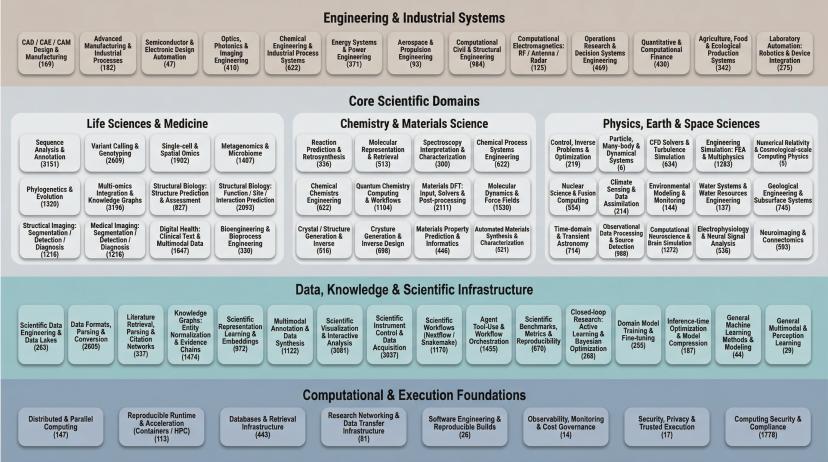
Core Insights - The article discusses the challenges in deploying scientific software, emphasizing that most tools are published but not executable, leading to inefficiencies in research practices [3][5][21] - It introduces Deploy-Master as a solution to create a shared infrastructure that transforms scientific tools into executable entities, addressing the deployment bottleneck in AI for Science (AI4S) and Agentic Science [5][19][20] Group 1: Challenges in Scientific Software Deployment - A significant issue is that scientific software often requires extensive time to resolve compilation failures and dependency conflicts, resulting in a lack of reproducibility and integration [3][4] - The emergence of AI4S has intensified the need for tools that can interact seamlessly with scientific processes, making the ability to execute tools a fundamental concern [3][5] - The deployment process is not isolated but part of a continuous chain that includes discovery, understanding, environment construction, and execution [5][19] Group 2: Deploy-Master Overview - Deploy-Master is designed to automate the deployment workflow, focusing on execution readiness and addressing the challenges of discovering and verifying scientific tools [5][19] - The initial phase involved searching through 91 scientific and engineering domains, resulting in a refined list of 52,550 candidates for automated deployment from an initial pool of 500,000 repositories [8][9] - A dual-model debate mechanism was implemented to enhance the success rate of building specifications, increasing it to over 95% by iteratively refining the proposed build plans [12][13] Group 3: Deployment Insights and Observations - The deployment process exhibits a long-tail distribution in build times, with most tools completing in around 7 minutes, while some require significantly longer due to complex dependencies [15] - A diverse language distribution was observed among the successfully deployed tools, with Python being the most prevalent, followed by C/C++, R, and Java [16] - The primary reasons for build failures were identified as inconsistencies in the build process, missing dependencies, and mismatched compilers or system libraries, highlighting the need for improved deployment strategies [16][17] Group 4: Implications for the Future - Deploy-Master provides a foundational infrastructure for community agents, enabling them to share verified tools and ensuring a stable action space for planning and execution [19][20] - The methodology established through Deploy-Master can be applied to broader software ecosystems, indicating that deployment challenges are not limited to scientific tools but are prevalent across various software types [20] - The article concludes that in the era of Agentic Science, execution is a prerequisite for all capabilities, and establishing a robust execution infrastructure is essential for future advancements [20][21]