AI4S(AI for Science)

Search documents
2亿美金留不住的华人天才,为何集体投奔OpenAI?
Xin Lang Cai Jing· 2026-02-27 10:11
Core Insights - The article discusses the recent trend of top talent, particularly Chinese researchers, leaving Meta for OpenAI, highlighting a shift in priorities from salary to platform capabilities in the AI industry [3][5][10]. Group 1: Talent Movement - Ruoming Pang, a prominent AI infrastructure leader at Meta, left the company after only 7 months to join OpenAI, despite a reported salary package exceeding $200 million [3][5]. - This trend is not isolated; other notable researchers, including Zhang Pengchuan, have also transitioned from Meta to OpenAI, indicating a broader pattern of talent migration [8][9][10]. Group 2: Reasons for Departure - The primary motivation for these researchers is not financial compensation but rather the superior computational resources and modeling infrastructure available at OpenAI [6][7]. - The article emphasizes that for high-caliber professionals like Pang, the ability to explore the frontiers of AI technology is more critical than salary alone [7][8]. Group 3: Industry Implications - The departure of top talent from Meta to OpenAI reflects a significant shift in the AI landscape, where infrastructure and system efficiency are becoming the new currency of value [11][15]. - The article suggests that the competition in AI is evolving from merely algorithmic prowess to a combination of theoretical and engineering expertise, as seen with the recruitment of scholars like Chen Lijie [11][12]. Group 4: Meta's Challenges - Meta's "Super Intelligence Lab" has become a talent pool for OpenAI, raising concerns about Meta's ability to retain top talent and produce competitive AI products [10][15]. - The article notes that despite significant investments, Meta has struggled to deliver groundbreaking products that can rival OpenAI's offerings, leading to a perception of stagnation within the company [10][15]. Group 5: Future Outlook - The ongoing talent redistribution indicates a recalibration of how top-tier AI professionals are valued, with a focus on those who can build and optimize foundational systems [11][15]. - The article concludes that the current environment in Silicon Valley resembles a high-stakes casino, with OpenAI currently holding the most advantageous position in the race towards Artificial General Intelligence (AGI) [15][16].


GEO引爆AI应用商业化浪潮,计算机ETF(159998)、云计算ETF天弘(517390)标的指数早盘大涨逾4%,券商称AI应用有望成为2026年AI产业行情核心主线
Mei Ri Jing Ji Xin Wen· 2026-01-14 06:45
Group 1 - The market experienced a collective rebound in early trading, with the Shanghai Composite Index rising over 1% and the ChiNext Index increasing by more than 2% [1] - The technology sector was the main focus, with significant gains in AI application concepts, including a rise of over 17% for Zhongke Xingtu and over 11% for Yihualu and Wanxing Technology [1] - The strong performance of the technology sector led to a more than 5% increase in the CSI Computer Theme Index tracked by the Computer ETF (159998) and over 4% for the CSI Hong Kong-Shenzhen Cloud Computing Industry Index tracked by Tianhong Cloud Computing ETF (517390) [1] Group 2 - Analysts attribute the recent strength in AI applications to two main catalysts: the shift from traditional SEO to Generative Engine Optimization (GEO) and the focus on AI for Science (AI4S) as a key policy direction supported by the government [1] - A brokerage firm anticipates that by 2026, AI applications will evolve from being merely usable to highly effective, with diverse business models emerging, positioning AI applications as a core theme in the AI industry market [1] Group 3 - Notably, the Computer ETF (159998) saw a net subscription of over 100 million units in half a day, with continuous net inflows over the past nine days, peaking at a single-day net inflow of 302 million yuan and a total of 761 million yuan accumulated [2]
“AI4S”,对青年科学家意味着什么?
Tai Mei Ti A P P· 2025-11-13 02:53
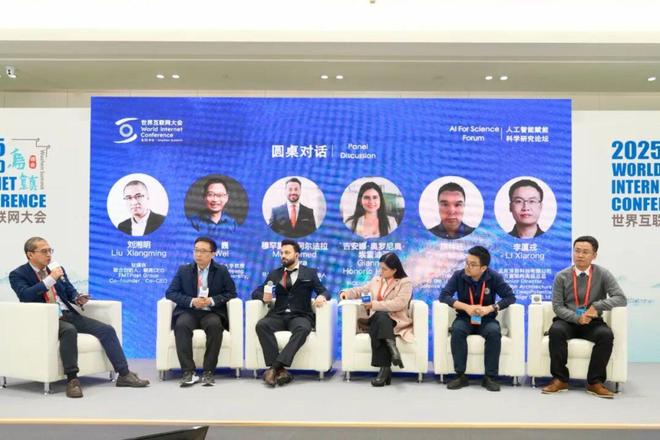
Core Insights - The article discusses the transformative impact of artificial intelligence (AI) on scientific research, emphasizing its role as a collaborative partner rather than just a tool [1] - The forum at the World Internet Conference highlighted the opportunities and responsibilities for young scientists in the context of AI's integration into research [1] Group 1: AI in Research - AI and automation have significantly altered research methodologies, allowing for remote experimentation and streamlined processes [3] - AI tools can cater to personalized learning needs in scientific education, enabling tailored instruction for students with varying abilities [5] - The consensus in academia and industry is that AI is beneficial for drug molecular design and overall industry health [8] Group 2: Responsibilities of Young Scientists - Young scientists are encouraged to balance the efficiency gained from AI with a sense of social responsibility, considering the broader impacts of their research [12] - Collaboration is essential in research, as AI serves as an accelerator rather than a standalone solution [13] - Developing engineering thinking and capabilities is crucial for students, as these skills remain irreplaceable by AI [15] Group 3: Perspectives on AI Utilization - Effective use of AI requires researchers to leverage existing models while also contributing their insights [10] - The notion of "working smarter" with AI suggests that young scientists may need to invest less effort while still achieving significant results [15]
浦东引领区建设5周年:服务赋能出海 科创驱动未来
Guo Ji Jin Rong Bao· 2025-10-31 07:27
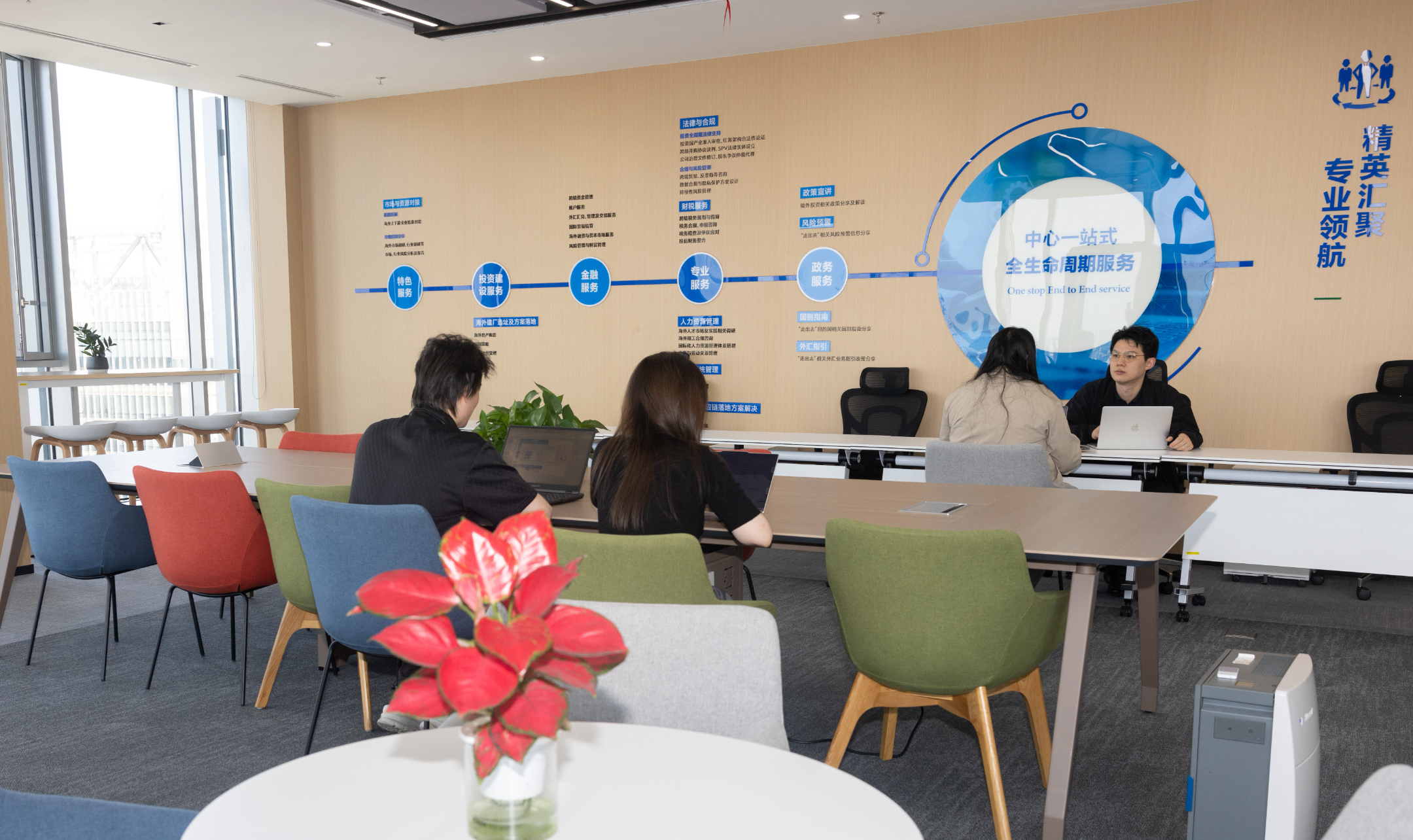
Group 1: Internationalization Support - The Shanghai Pudong New Area Enterprise Going Global Comprehensive Service Center, established in March 2025, is the first "going global" comprehensive service platform registered as a consulting organization in China, marking an innovative initiative to support international development for enterprises [2] - The center has formed a complete service ecosystem with 11 leading industry organizations and over 90 strategic partners, covering legal, financial, consulting, and accounting fields, successfully integrating government guidance, market operations, and professional empowerment [4] - The center has established over 270 global sites, creating an overseas service network covering key regions such as Europe, America, Asia-Pacific, and the Middle East, providing one-stop services including international market research, business investigation, investment project implementation, cross-border operation support, and systematic risk warning [5] Group 2: Case Studies of Benefiting Companies - Shanghai Yamazaki Circuit Board Co., Ltd., a high-tech enterprise focusing on precision circuit board R&D and production, successfully invested in a factory in Thailand in 2023, overcoming ODI procedure challenges with the center's assistance [5] - East Asia Asset Management (ATA), under Zhengchuang Group, has rapidly developed by leveraging the center's platform, providing one-stop services for Chinese enterprises going abroad and family asset allocation in Southeast Asia [6] Group 3: Innovation and Research Development - Fudan University has transformed the Zhangjiang campus into a technology innovation park, launching the Zhangjiang Fudan International Innovation Center in 2017, focusing on three leading industries: biomedicine, artificial intelligence, and integrated circuits [7] - The innovation center has a total construction area of approximately 653,000 square meters, with the first phase consisting of three research buildings covering about 320,000 square meters, supporting major research platform construction and innovation tasks [10] - The center aims to cultivate top global talent, produce original landmark results in brain science and integrated circuits, and accelerate the incubation of disruptive technologies, thereby promoting deep integration of scientific innovation and industrial innovation [11]
“我们不与竞争对手对标”——专访晶泰科技董事局主席温书豪
Zhong Guo Ji Jin Bao· 2025-05-21 14:36
Core Viewpoint - The core competitiveness of the company lies in its algorithms, computing power, and scalable robotic systems, positioning itself as a leader in the AI-driven pharmaceutical and materials research sector [2][7][16]. Company Overview - Founded in 2015 by three physicists from MIT, the company leverages quantum physics, AI, and robotics to create an innovative R&D platform [2]. - The company is recognized as the "first AI pharmaceutical stock" in China, having gone public on the Hong Kong Stock Exchange in 2024 [2]. Technological Advancements - The company has developed a data-driven autonomous experimental platform that enhances drug development efficiency, achieving a fivefold increase in human productivity and a 40% improvement in data collection capabilities [3][7]. - Currently, the company operates 300 robotic devices, potentially the largest commercial AI automated chemical laboratory cluster globally, with plans to scale to thousands of robots [7][16]. Market Trends - The integration of digitalization and AI in the biopharmaceutical sector is an irreversible trend, presenting significant opportunities for growth [7][10]. - The company anticipates that the proportion of orders from non-pharmaceutical sectors will gradually increase over the next 3-5 years, as these projects typically have shorter return cycles [26]. Competitive Landscape - The company does not benchmark against competitors but focuses on its unique development path, emphasizing its distinct technological foundation in quantum physics algorithms combined with AI and robotics [7][14][15]. - The company positions itself as an enabler within the AI pharmaceutical ecosystem, providing foundational infrastructure and high-precision robotic systems to assist other companies in drug development [13][22]. Efficiency and Cost Reduction - Compared to traditional CXO companies, the company claims its AI-driven drug development process can reduce the average time to clinical trials by about 50%, with potential future reductions of up to 90% as algorithms evolve [16][18]. - The company emphasizes that AI can enhance drug development efficiency, accuracy, and cost-effectiveness, addressing critical regulatory requirements [12][19]. Collaborations and Investments - The company has secured partnerships with major pharmaceutical firms like Pfizer and Eli Lilly, which validate its technological capabilities and market position [22][23]. - Notable investments from tech giants like Google and Tencent highlight the company's appeal in the frontier technology space [19][20]. Future Directions - The company aims to evolve into a comprehensive AI platform company, focusing on vertical industry innovations in pharmaceuticals, materials, and beyond [10][11]. - The company is also exploring investments in hardware firms to strengthen its control over the entire experimental process [25].

继续看好AI4S与量子计算
GOLDEN SUN SECURITIES· 2025-03-16 12:49
Investment Rating - The report maintains a "Buy" rating for key stocks in the industry, including Dongyangguang, Zhongyan Dadi, and Weixing Chemical [5]. Core Insights - The report emphasizes the potential of AI for Science (AI4S) in revolutionizing scientific research and its applications in various industries, particularly in materials and pharmaceuticals [1][2][3]. - AI4S is expected to grow into a significant market, potentially reaching a value of $140 billion if penetration rates increase to 25% in relevant sectors [3]. - China is identified as a favorable environment for the emergence of AI4S leaders due to its comprehensive chemical manufacturing capabilities and a shift towards research and development [4]. Summary by Sections Industry Overview - AI4S is recognized as the fifth paradigm of scientific research, integrating machine learning and high-performance computing to enhance research efficiency [1]. - The pharmaceutical sector is currently the largest market for AI4S, with major companies like Pfizer and Johnson & Johnson actively investing in this technology [2]. Market Potential - The report forecasts that AI4S could cover a downstream market size of approximately $11 trillion across six key sectors, including chemicals and semiconductors [3]. - If the research penetration rate reaches 2.5%, the AI4S industry could generate around $14.9 billion, with potential growth to $140 billion at a 25% penetration rate [3]. Key Companies - The report highlights key companies such as Crystal Technology and Zhizhi New Materials, which are making strides in AI4S applications in new materials [4]. - Notable collaborations include Crystal Technology's partnership with GCL Group for renewable materials R&D, with a total contract value of approximately 1 billion yuan [2]. Stock Performance - The report provides earnings per share (EPS) and price-to-earnings (PE) ratios for key stocks, indicating a positive outlook for companies like Dongyangguang and Zhongyan Dadi [5].