ETF交易

Search documents
ETF场内交易的佣金一般多少?最低可以做到多少?
Sou Hu Cai Jing· 2026-02-05 07:35
Group 1 - The current trading fee for ETFs among major brokerages is generally around 0.03% with a minimum charge of 5 yuan, but this rate can vary, and some brokerages may offer fees as low as 0.005% [1] - Investors do not need to open a separate account to trade ETFs; they can trade ETFs with an existing A-share securities account, similar to trading stocks [1] - The minimum trading unit for ETFs is 1 lot, which equals 100 fund shares, and the minimum price fluctuation is 0.001 yuan [1] Group 2 - Stock ETFs combine the advantages of both funds and stocks, providing investors with a convenient, flexible, and low-cost investment channel [2] - Investing in stock ETFs allows investors to invest in a basket of stocks with a single transaction, reducing risk compared to investing in individual stocks [2] - The price movement of stock ETFs generally aligns with the stock market, allowing investors to focus on market trends rather than individual stock analysis [2] Group 3 - The trading rules for ETFs include specific trading hours, with trading sessions on weekdays from 9:30 to 11:30 and 13:00 to 15:00, and T+1 settlement for stock ETFs, while money/bond/cross-border ETFs allow T+0 trading [3] - The minimum trading unit for ETFs is 1 lot (100 shares), and the price can change by 0.001 yuan, with potential larger spreads for less liquid ETFs [3] - There are limits on price fluctuations, with main board ETFs capped at ±10%, and ChiNext/STAR Market ETFs at ±20%, while cross-border and commodity ETFs have no limits [3]

黄金价格剧烈波动,谁是背后推手?
日经中文网· 2026-02-04 03:24
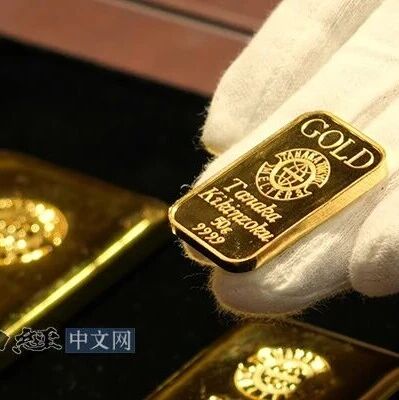
Core Viewpoint - The article discusses the significant fluctuations in gold prices, highlighting a sharp decline followed by a rapid rebound, driven by increased buying activity from investors in Japan and China, and the impact of leveraged ETFs on market volatility [2][4][5]. Group 1: Price Fluctuations - On February 2, the London spot price of gold dropped to $4,403 per ounce, a decrease of up to 21% from the peak of $5,594 on January 29 [4]. - On February 3, gold prices rebounded, returning to the $4,900 range during Asian trading hours [4]. - The Osaka Exchange's gold futures triggered a circuit breaker due to a 10% increase, leading to a temporary halt in trading [4][5]. Group 2: Investor Behavior - Following the price drop, there was a surge in buying from Japanese and Chinese investors, indicating a strong demand for gold at lower prices [4]. - Market expert Rona O'Connell from StoneX noted that geopolitical risks continue to support gold prices, encouraging new investments [4]. Group 3: Market Mechanisms - The article explains the circuit breaker mechanism, which temporarily halts trading during significant market fluctuations to allow investors to make informed decisions [5]. - The presence of leveraged ETFs, such as ProShares Ultra Gold, has amplified price volatility, with trading volumes increasing significantly during market peaks [5][6]. Group 4: Retail Impact - Retail gold prices in Japan have been subject to frequent adjustments due to market volatility, with major retailers like Tanaka Kikinzoku experiencing increased customer traffic [7]. - Customers expressed urgency in purchasing gold, believing in its value amidst global economic uncertainties [7].
两市股票型ETF成交额再创年内新高 4只千亿沪深300ETF成交创历史新高
Cai Jing Wang· 2026-01-28 11:01
Group 1 - The core viewpoint of the news is that the A-share ETF market has seen a significant increase in trading volume, particularly in stock ETFs, driven by institutional trading and market dynamics [1][2][3] - On January 27, the trading volume of stock ETFs reached a new high of 3,515.51 billion yuan, with several broad-based ETFs, including the CSI 300 ETF, achieving record single-day trading volumes [1] - The increase in ETF trading is attributed to three main factors: the deepening of quantitative trading, institutional funds using ETFs for efficient rebalancing, and a low-interest-rate environment encouraging funds to seek efficient allocation [1][2] Group 2 - The current trend shows a shift from large-scale index ETFs to thematic ETFs, with significant net outflows from broad-based products like the CSI 300 ETF, which saw over 100 billion yuan in net outflows this year [2] - Thematic ETFs in sectors such as precious metals, hard technology, and chemicals are experiencing continuous net inflows, indicating a market transition from "index-based allocation" to "thematic selection" [2] - The strong growth of industry-specific ETFs, such as those focused on non-ferrous metals and semiconductor equipment, highlights a structural change in fund allocation and the increasing demand for risk hedging tools among institutions [3]
ETF两市成交额超3000亿元
news flash· 2025-06-24 06:45
Core Insights - The total trading volume of ETFs in the two markets has exceeded 300 billion yuan, reaching 3000.99 billion yuan [1] - Among the different types of ETFs, stock ETFs accounted for 1063.56 billion yuan, bond ETFs for 1197.69 billion yuan, money market ETFs for 259.96 billion yuan, commodity ETFs for 74.56 billion yuan, and QDII ETFs for 405.21 billion yuan [1] - The highest trading volumes for non-money market ETFs were recorded for the Hong Kong Securities ETF (513090) at 93.41 billion yuan, the Hong Kong Innovative Drug ETF (513120) at 77.71 billion yuan, and the CSI 300 ETF (510300) at 42.33 billion yuan [1] Trading Dynamics - The trading volume of stock ETFs is significant, indicating strong investor interest in equity markets [1] - Bond ETFs show a substantial trading volume, reflecting a growing preference for fixed-income investments [1] - The ability to trade Hong Kong stocks through A-share accounts without the need for a Hong Kong Stock Connect account allows for increased accessibility and liquidity in the market [1]
ETF开盘:石油ETF领涨9.96%,500成长ETF领跌3.65%
news flash· 2025-06-13 01:27
Group 1 - The opening performance of ETFs showed mixed results, with the oil ETF (561360) leading gains at 9.96% [1] - The oil and gas resources ETF (563150) increased by 9.44%, while the S&P oil and gas ETF (513350) rose by 5.85% [1] - Conversely, the 500 growth ETF (159620) led the declines at 3.65%, followed by the S&P biotechnology ETF (159502) down 1.67%, and the Nasdaq technology ETF (159509) falling by 1.41% [1]
ETF交易过程中的常见问题一览表
Sou Hu Cai Jing· 2025-05-29 03:27
Group 1 - Investors do not need to open a separate account to trade ETFs; an A-share securities account is sufficient [1] - Some domestic ETF varieties support T+0 trading, such as bond ETFs, gold ETFs, cross-border ETFs, and currency ETFs, while stock ETFs implement T+1 trading [2] - ETF subscription and redemption generally follow the principle of share subscription and share redemption, with the consideration including a basket of securities, cash alternatives, cash differences, and other considerations [3] Group 2 - Investing in stock ETFs offers advantages of both funds and stocks, providing a convenient, flexible, and cost-effective investment channel, allowing investors to invest in a basket of stocks with a single transaction, thus reducing risk compared to individual stocks [4] - There is an arbitrage opportunity in bond ETFs; for example, if a bond ETF's net asset value in the primary market is 100 yuan and its price in the secondary market is 95 yuan, investors can buy in the secondary market and redeem a basket of bonds in the primary market to profit from the price difference [5]