T+0交易

Search documents
潮起香江,决胜港股!一图速览最新港股投资利器
Xin Lang Cai Jing· 2025-12-17 06:51
Group 1 - The first T+0 Hong Kong Information Technology ETF (159131) focuses on the "Hong Kong chip" industry chain [1][8] - The Hong Kong Internet ETF (513770) heavily invests in major Hong Kong internet giants and has a scale of over 100 billion [4][12] - The Hong Kong Innovation Drug ETF (520880) is 100% focused on innovative drugs [1][4] Group 2 - The Hong Kong Large Cap 30 ETF (520560) combines technology and dividends [1][4] - The Hong Kong Dividend ETF (159220) offers high dividends with low volatility [1][4] - The Hong Kong Medical ETF (159137) covers leading medical companies and is set to launch on December 15 [5][13] Group 3 - The Hong Kong Automobile 50 ETF (520780) focuses on scarce leading automobile companies and is expected to be listed soon [5][11] - The Hong Kong Small Cap LOF (501021) targets small and medium-sized assets [11] - The Value Fund LOF (501310) features A+H value stocks with dividend characteristics [11]


投资海外、港股等T+0 ETF大合集来了!
格隆汇APP· 2025-12-14 10:06
Core Viewpoint - The article discusses the evolution of ETFs, particularly focusing on investment opportunities in overseas and Hong Kong markets with T+0 ETFs, highlighting their growing popularity and potential benefits for investors [1]. Group 1: ETF Overview - ETFs have evolved significantly, providing investors with more options for diversification and liquidity [1]. - The introduction of T+0 ETFs allows for same-day trading, enhancing flexibility for investors [1]. Group 2: Investment Opportunities - The article presents a comprehensive collection of T+0 ETFs available for investment in overseas and Hong Kong markets, emphasizing their appeal to investors seeking quick access to capital [1]. - It highlights specific ETFs that have shown strong performance and potential for growth, making them attractive options for investors [1].
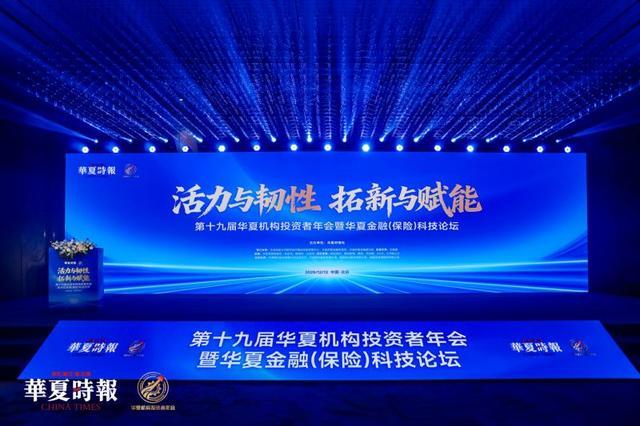
活力与韧性、拓新与赋能,回答时代命题——第十九届华夏机构投资者年会暨华夏金融(保险)科技论坛召开
Hua Xia Shi Bao· 2025-12-13 06:17
Group 1 - The forum held in Beijing focused on the theme of "Vitality and Resilience, Innovation and Empowerment," aiming to address contemporary challenges and explore future pathways for development [2][5] - The Chinese economy demonstrated resilience with a GDP growth of 5.2% year-on-year in the first three quarters, amounting to an economic increment of 39,679 billion [3][5] - The asset management industry in China is entering a golden development period, with a combined entrusted management scale of approximately 70 trillion, serving as a stabilizing force for the capital market [8][29] Group 2 - The banking sector is urged to balance development and safety, enhancing risk prevention capabilities while integrating deeply into the high-quality economic development framework [7][29] - The financial industry is increasingly focusing on technology to support innovation and the development of technology enterprises, marking a significant leap in financial technology [29][32] - The insurance industry is facing challenges due to outdated operational models, yet it remains a sunrise industry with significant potential for growth, particularly in serving low-income households [24][29] Group 3 - The transition of China's economy from high-speed to medium-speed growth necessitates a shift in growth drivers from investment and exports to innovation and consumption [10][12] - The capital market is encouraged to support new productive forces through a more inclusive venture capital market and a well-established legal environment [14][29] - The importance of long-term value creation in the face of uncertainty is emphasized, with a focus on managing market volatility and balancing returns [34][37]
【知识科普】股指期货是什么?大盘走势一致吗?
Sou Hu Cai Jing· 2025-12-05 00:46
Core Viewpoint - Stock index futures are standardized financial derivatives based on stock price indices, allowing for cash settlement on a specified future date, reflecting market expectations and trends [1][4]. Group 1: Characteristics of Stock Index Futures - Cross-period nature: Trading is based on future index expectations, directly impacting profits and losses [4]. - Leverage: Investors can control full asset value by paying a margin of only 10%-15%, amplifying both potential returns and risks. For instance, a margin of 12% allows an investor to control a contract worth approximately 900,000 yuan with about 108,000 yuan [4]. - Bidirectional trading: Allows for both long (betting on price increases) and short (hedging against price decreases) positions, overcoming the single-direction limitation of the stock market [5]. - T+0 trading: Enables multiple buy and sell transactions within the same day, enhancing capital efficiency [6]. - Expiration and settlement: Contracts have a defined expiration date, with cash settlement of price differences to avoid physical delivery [7]. Group 2: Relationship with Market Indices - Overall relationship: Stock index futures are strongly positively correlated with major indices like the Shanghai Composite Index and CSI 300, typically moving in tandem with market trends and investor expectations [8]. - Short-term discrepancies: Basis effects may cause futures prices to be either above (contango) or below (backwardation) the spot index, reflecting market expectations. For example, if an index is expected to rise, futures may trade at a premium [8]. - Market sentiment and capital flow: Investor sentiment, arbitrage activities, and capital movements can lead to short-term inconsistencies between futures and spot prices [8]. - Convergence on expiration: As the contract expiration date approaches, futures prices tend to converge with the spot index, reducing discrepancies [10]. Group 3: Functions and Strategies - Hedging and arbitrage: Institutions can hedge stock positions using stock index futures (e.g., shorting futures while holding stocks) or engage in arbitrage based on price differences between futures and spot markets [11]. - Price discovery function: The high liquidity of the futures market allows it to act as a "barometer" of market sentiment, potentially forecasting index movements [12].

支持T+0交易的金ETF(518680)跌幅收窄超1%,可借道把握日内波段机会
Mei Ri Jing Ji Xin Wen· 2025-10-22 06:01
Core Viewpoint - The precious metals market experienced a rare and significant decline, with gold and silver prices hitting their lowest levels in over a year, followed by a notable recovery during the trading session [1] Group 1: Market Performance - On October 21, the spot gold price fell by as much as 6.3%, reaching approximately $4080 per ounce, marking the largest single-day drop in over 12 years [1] - Spot silver saw a decline of 8.7%, trading at $47.89 per ounce, representing the worst single-day performance since February 2021 [1] - During the same trading session, international gold prices rebounded sharply, with London spot gold and Comex futures both turning positive, and futures rising by 1.11% to above $4155 per ounce [1] Group 2: ETF and Investment Opportunities - The Shanghai gold ETF (518680), which tracks the Shanghai gold spot contract, opened significantly lower, initially dropping over 5.5%, but has since recovered to a current decline of -4.48% [1] - The gold ETF (518680) supports T+0 trading, allowing investors to capitalize on intraday price movements [1] - Investors are encouraged to consider linked funds (Class A 009504/Class C 009505) for potential investment opportunities [1]
百利好丨现货黄金优势解析:双线作战的灵活之道
Sou Hu Cai Jing· 2025-09-28 15:30
Group 1 - Gold is recognized globally as a stable asset, maintaining its value over time and serving as a significant component in modern financial systems [1] - Spot gold has become an important choice for global investors due to its unique trading mechanism, which combines hedging properties with potential returns [1] Group 2 - The dual-direction trading mechanism of spot gold allows investors to profit from both rising and falling prices, providing opportunities in any market condition [3] - Spot gold trading employs a leverage model, enhancing capital efficiency while necessitating strict risk control measures due to the amplified risks associated with leverage [4] Group 3 - The T+0 trading model enables same-day opening and closing of positions, offering investors flexibility to adjust holdings based on market changes [5] - The global spot gold market features substantial daily trading volumes and depth, ensuring transparency in price formation and creating an ideal environment for technical and fundamental analysis [6] Group 4 - The market operates nearly 24 hours a day, allowing investors to trade flexibly and respond promptly to economic events and market fluctuations [7] - The dual-direction trading mechanism enhances profit potential, improves capital efficiency, and strengthens risk management capabilities for investors [8]
突然收紧!年内资金涌入这些T+0 ETF
格隆汇APP· 2025-09-10 12:12
Core Viewpoint - The article discusses the recent surge in investments into T+0 ETFs, highlighting the implications of tighter regulations and market dynamics affecting these financial instruments [1] Group 1: Market Trends - There has been a significant influx of capital into T+0 ETFs this year, indicating a growing interest among investors [1] - The tightening of regulations has led to a shift in investment strategies, with T+0 ETFs becoming more attractive due to their liquidity and flexibility [1] Group 2: Regulatory Environment - Recent regulatory changes have prompted a reevaluation of investment approaches, particularly in the context of T+0 ETFs [1] - The article emphasizes the need for investors to stay informed about regulatory developments that could impact the performance and accessibility of T+0 ETFs [1] Group 3: Investment Opportunities - The rise of T+0 ETFs presents new investment opportunities, particularly for those seeking quick access to capital and market movements [1] - Investors are encouraged to consider the potential benefits of T+0 ETFs in their portfolios, especially in a rapidly changing market environment [1]

债券基金VS债券ETF:一文读懂两者的区别与债券基金的四大类型
Sou Hu Cai Jing· 2025-09-04 01:00
Core Viewpoint - Bond funds serve as a stabilizing investment tool for balancing risk and return in the financial market, with a focus on distinguishing between bond funds and bond ETFs, and categorizing the four main types of bond funds to help investors find suitable investment options [1] Group 1: Differences Between Bond Funds and Bond ETFs - Trading Method: Bond funds are traded off-exchange with net asset value settlement, while bond ETFs are traded on exchanges like stocks, allowing for real-time buying and selling [2][3] - Transparency: Bond funds disclose net asset value daily but provide detailed holdings quarterly, whereas bond ETFs track specific indices with fully disclosed components, allowing investors to monitor holdings continuously [5] - Fee Structure: Bond funds typically have management fees ranging from 0.3% to 0.8% per year, while bond ETFs generally have lower fees below 0.3% per year, making them more cost-effective for frequent traders [6] Group 2: Types of Bond Funds - Standard Bond Funds (Pure Bond Funds): These funds invest 100% in bonds, making them the least risky category [7] - Ordinary Bond Funds (Mixed Bond Funds): These funds allocate at least 80% to bonds, with the remainder in stocks or new stock subscriptions, providing a balanced risk-return profile [9] - Convertible Bond Funds: These funds primarily invest in convertible bonds, offering a hybrid investment approach that can perform well in rising markets while providing downside protection [9][10] - Short-term Pure Bond Funds: These funds hold bonds with a remaining maturity of no more than one year, offering strong liquidity and minimal interest rate risk [10] - Long-term Pure Bond Funds: These funds hold bonds with maturities over one year, presenting higher yield potential but also greater capital loss risk due to interest rate increases [10] - Level One Bond Funds: These funds participate in the stock market primarily through new stock subscriptions, with stock holdings typically not exceeding 20% [11] - Level Two Bond Funds: These funds can directly trade stocks with a 20% stock holding limit, benefiting from both bond yields and stock appreciation [11] - Index Bond Funds: These funds passively track specific bond indices, with two subcategories: passive index funds that strictly follow index components and enhanced index funds that allow for active management to seek excess returns [13] Group 3: Investment Recommendations - For extreme liquidity needs: Choose bond ETFs, especially for short-term trading or as a hedge against stock market volatility [13] - For long-term stable investments: Opt for pure bond funds or passive index bond funds due to their low fees and transparent holdings [13] - For those who can tolerate moderate risk: Consider level two bond funds or convertible bond funds for a balanced risk-return strategy [13] - For investors seeking to outperform market averages: Enhanced index bond funds may be suitable, but it is essential to evaluate the fund manager's active management capabilities [14]
证券基金LOF: 招商中证全指证券公司指数证券投资基金2025年中期报告
Zheng Quan Zhi Xing· 2025-08-27 11:53
Core Viewpoint - The report outlines the performance and financial metrics of the China Securities Index Fund for the first half of 2025, highlighting a challenging market environment with a negative return on investment and various operational strategies to manage risks and enhance returns [1][7]. Fund Overview - The fund is named "China Securities Index Fund" and operates as a contract-based open-end fund, with a total share of 1,713,012,778.28 as of June 30, 2025 [2]. - The fund aims to passively track the China Securities Index, maintaining a tracking error of no more than 0.35% and an annual tracking error of no more than 4% [2]. Financial Performance - The fund reported a realized loss of approximately 4.51 million RMB and a total profit loss of about 63.29 million RMB for the reporting period [3]. - The weighted average net value profit rate was -3.49%, and the fund's share net value growth rate was -2.88% [3]. - The cumulative net value growth rate since inception is -29.10% [3]. Market Environment - The securities sector experienced a volatile adjustment phase, with a decline of 3.34% in the first half of 2025, influenced by intensified trade tensions between China and the U.S. [7]. - Market sentiment improved towards the end of the second quarter, leading to a recovery in trading volumes and expectations for brokerage income [7][8]. Investment Strategy - The fund maintained a stock position of approximately 94.5% during the reporting period, effectively tracking the benchmark index [7]. - The fund's management employs risk management strategies, including the use of stock index futures to enhance investment efficiency [2][5]. Future Outlook - The report anticipates potential benefits for the brokerage sector from expected interest rate cuts by the Federal Reserve and supportive domestic policies [8]. - The brokerage sector's valuation remains low, with a price-to-book ratio of approximately 1.44, indicating potential for valuation recovery [8].



从选股“小白”到榜单常客 他们的投资秘诀竟是同一种“神器”
申万宏源证券上海北京西路营业部· 2025-08-27 02:23
Core Viewpoint - The article highlights the increasing popularity of ETFs among various types of investors, showcasing how they serve as effective tools for risk diversification and market participation, regardless of the investor's background or experience level [1][21]. Group 1: Investor Profiles - The article features three distinct investors: a recent graduate with limited experience, a flexible 90s investor who prefers short-term trading, and a corporate professional with deep industry insights [3][10][15]. - Each investor has successfully utilized ETFs to navigate the market, demonstrating the versatility of ETFs in catering to different investment styles and strategies [21]. Group 2: Investment Challenges and ETF Advantages - Many investors face challenges such as stock selection anxiety, complex trading processes, and high individual stock risks, leading them to seek simpler investment solutions [4][15]. - ETFs provide a straightforward way to invest by tracking indices or specific sectors, allowing investors to focus on broader market trends rather than individual stock performance [4][16]. - The ability to trade ETFs like stocks while benefiting from reduced research complexity makes them appealing to both novice and experienced investors [5][17]. Group 3: Performance and Strategy - The article mentions specific performance metrics, such as a cumulative return of 29.57% for one participant and 90.11% for another, highlighting the potential for significant gains through strategic ETF investments [2][9]. - Successful investors attribute their achievements to selecting the right industry ETFs and leveraging the T+0 trading feature, which allows for same-day buying and selling, enhancing their ability to capitalize on market fluctuations [11][18]. Group 4: Conclusion and Insights - The article concludes that ETFs are highly adaptable investment tools suitable for a wide range of investors, emphasizing the importance of matching ETF types to individual circumstances, such as time availability, risk tolerance, and trading habits [22]. - The insights provided suggest that understanding and effectively utilizing the characteristics of ETFs can lead to impressive investment results, regardless of the investor's level of expertise [22][19].