熔断机制

Search documents
黄金价格剧烈波动,谁是背后推手?
3 6 Ke· 2026-02-04 04:06
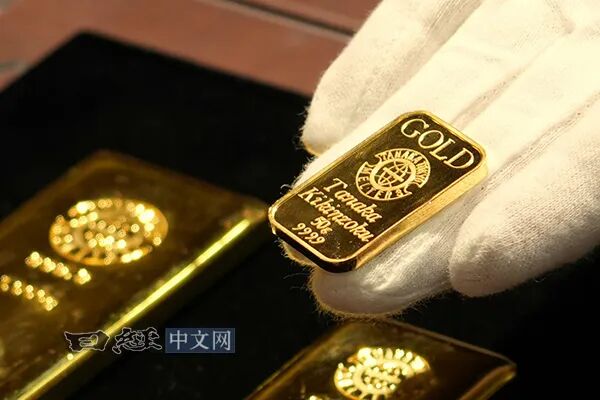
Group 1 - The London spot gold price experienced a significant drop of up to 21% on February 2, falling to $4,403 per ounce from a peak of $5,594 on January 29, before rebounding to the $4,900 range on February 3 due to increased buying from Japanese and Chinese investors [2][3] - The trading of gold futures on the Osaka Exchange triggered a circuit breaker due to a 10% increase on February 3, marking the fourth consecutive day that the circuit breaker was activated, indicating unprecedented market volatility [3] - The volatility in gold prices is attributed to the increased financialization of precious metals, with the rise of exchange-traded funds (ETFs) allowing for low-cost investments in gold, leading to rapid inflows and outflows of capital [3][4] Group 2 - The trading volume of ETFs surged to over nine times the previous week on January 29, coinciding with gold futures reaching a historical high, contributing to price fluctuations [4] - In the futures market, leveraged trading has reached levels that are several dozen to hundreds of times the actual supply of gold, prompting the Chicago Mercantile Exchange (CME) to raise margin requirements in response to increased volatility [6] - Retail prices for gold have also been affected by the market fluctuations, with Japan's largest gold retailer frequently adjusting prices throughout the day to respond to significant market changes [6]

黄金价格剧烈波动,谁是背后推手?
日经中文网· 2026-02-04 03:24
Core Viewpoint - The article discusses the significant fluctuations in gold prices, highlighting a sharp decline followed by a rapid rebound, driven by increased buying activity from investors in Japan and China, and the impact of leveraged ETFs on market volatility [2][4][5]. Group 1: Price Fluctuations - On February 2, the London spot price of gold dropped to $4,403 per ounce, a decrease of up to 21% from the peak of $5,594 on January 29 [4]. - On February 3, gold prices rebounded, returning to the $4,900 range during Asian trading hours [4]. - The Osaka Exchange's gold futures triggered a circuit breaker due to a 10% increase, leading to a temporary halt in trading [4][5]. Group 2: Investor Behavior - Following the price drop, there was a surge in buying from Japanese and Chinese investors, indicating a strong demand for gold at lower prices [4]. - Market expert Rona O'Connell from StoneX noted that geopolitical risks continue to support gold prices, encouraging new investments [4]. Group 3: Market Mechanisms - The article explains the circuit breaker mechanism, which temporarily halts trading during significant market fluctuations to allow investors to make informed decisions [5]. - The presence of leveraged ETFs, such as ProShares Ultra Gold, has amplified price volatility, with trading volumes increasing significantly during market peaks [5][6]. Group 4: Retail Impact - Retail gold prices in Japan have been subject to frequent adjustments due to market volatility, with major retailers like Tanaka Kikinzoku experiencing increased customer traffic [7]. - Customers expressed urgency in purchasing gold, believing in its value amidst global economic uncertainties [7].

企业家超级个体IP的双刃剑效应
Sou Hu Cai Jing· 2026-01-16 02:47
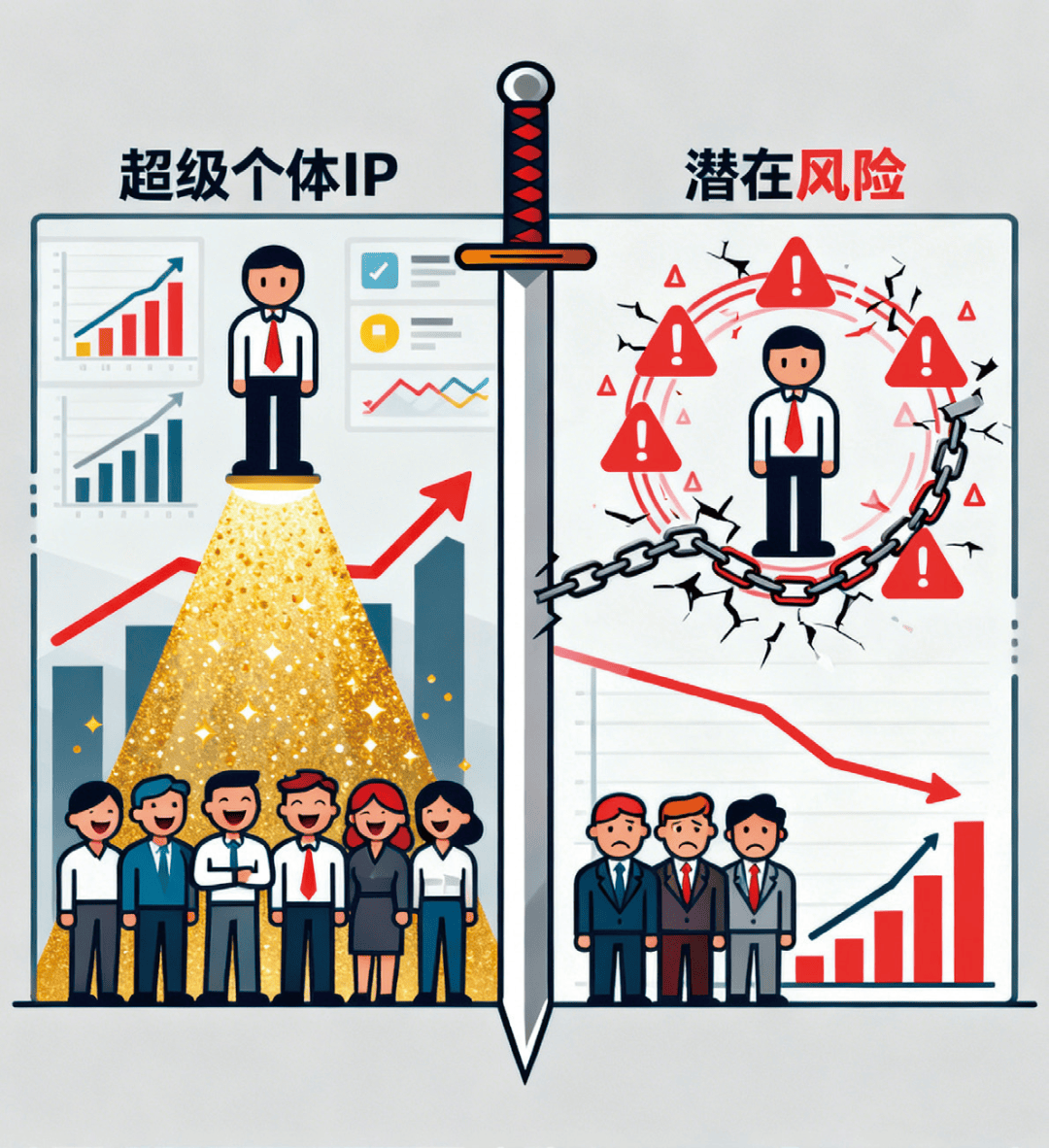
Core Insights - The article discusses the dual impact of entrepreneur super individual IP on business development, highlighting both the benefits and potential risks associated with it. It introduces the STRATEGY model, which provides a systematic solution for businesses to leverage IP value while mitigating risks. Group 1: Benefits of Super Individual IP - Super individual IP can significantly shorten the brand premium process through trust endorsement effects, as seen with Tesla, where consumers are willing to pay a premium of about 30% for Elon Musk's vision [1]. - It accelerates resource absorption and integration, exemplified by Luo Yonghao attracting investments from 26 institutions, increasing financing efficiency by five times [3]. - The presence of an entrepreneur's personal IP can enhance market response speed, with Xiaomi's product launch events showing that 65% of traffic focused on Lei Jun's speeches, leading to a 90% increase in product conversion rates [4]. Group 2: Costs of Super Individual IP - Over-reliance on an entrepreneur's personal IP can dilute brand assets and create succession challenges, as evidenced by the low confidence index of "post-90s" investors in Gree at 57, compared to Midea's 82 [5]. - Companies may fall into innovation path dependency, with Gree's R&D investment ratio dropping to 2.8%, while Haier's is at 4.1%, indicating a decline in innovation capability [6]. - Misstatements by entrepreneurs can lead to public backlash, as shown by Yu Minhong's controversial internal letter, which sparked negative reactions from employees [7]. - Over-dependence on a founder's personal IP can suppress mid-level decision-making capabilities, potentially weakening the company's market responsiveness [8]. Group 3: STRATEGY Model for Management - The STRATEGY model includes eight dimensions: Strategic Positioning, Talent Cultivation, Risk Control, Alignment Mechanism, Technology Empowerment, Ethical Governance, Global Vision, and Youth Engagement, providing a comprehensive framework for businesses [10]. - In Strategic Positioning, companies should balance IP exposure with corporate investment at a 5:5 ratio to avoid resource misallocation [10]. - Talent Cultivation can be enhanced through a shadow CEO program to develop a succession plan, ensuring long-term business sustainability [11]. - Risk Control involves establishing a public opinion firewall and a brand dilution warning model to mitigate risks associated with high founder visibility [12]. - The Alignment Mechanism suggests leveraging social media to convert entrepreneur IP traffic into product pre-sale traffic [13]. - Technology Empowerment recommends using advanced technologies to improve communication efficiency and consistency in brand messaging [15]. - Ethical Governance emphasizes the need for an ESG evaluation system to align entrepreneur IP with corporate social responsibility [15]. - Global Vision focuses on adapting entrepreneur IP to local markets for better integration [15]. - Youth Engagement strategies should cater to Gen Z communication preferences to connect with younger consumers effectively [16]. Group 4: Case Studies and Implementation Pathways - The positive case of Lei Jun and Xiaomi illustrates effective IP management, with a binding degree of 50% and a personal content share below 30% during events [17]. - The negative case of Li Ning highlights the risks of brand dilution and failure to resonate with younger consumers, leading to market share loss [18]. - The implementation of the STRATEGY model is divided into four stages: Emergence, Growth, Maturity, and Iteration, each with specific focus areas for developing entrepreneur IP [20]. - In the Emergence stage, establishing an IP health radar chart is crucial for assessing brand status [21]. - During the Growth stage, setting a personal influence contribution threshold below 40% helps maintain a balance between personal and corporate branding [22]. - The Maturity stage emphasizes the need for IP asset corporatization to enhance market value and risk resilience [23]. - In the Iteration stage, initiating a digital immortality plan using technologies like AI and VR can preserve the essence of the personal brand [24]. Group 5: Correction Mechanisms - Establishing a market sentiment beta coefficient model can help monitor user feedback and adjust IP strategies accordingly [25]. - A circuit breaker mechanism should be in place to halt all related communication activities if negative sentiment exceeds a threshold for five consecutive days, allowing time to manage the situation [26].

辛顿高徒压轴,谷歌最新颠覆性论文:AGI不是神,只是「一家公司」
3 6 Ke· 2025-12-22 08:13
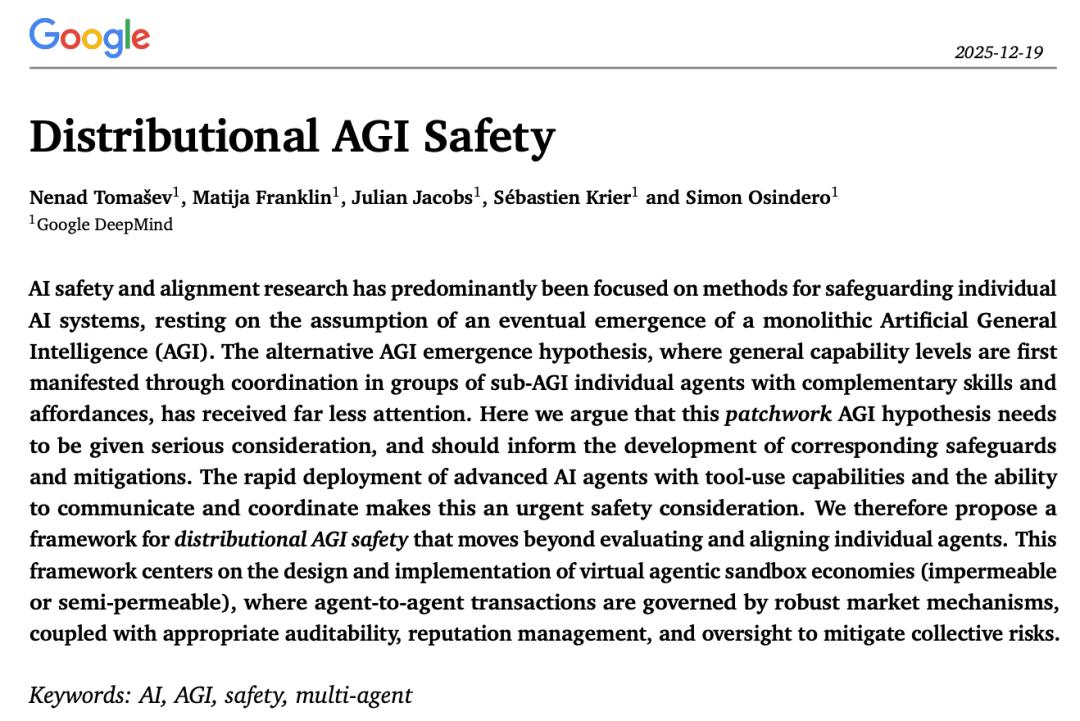
Core Viewpoint - Google DeepMind challenges the traditional notion of Artificial General Intelligence (AGI) as a singular, omnipotent entity, proposing instead that AGI may emerge from a distributed network of specialized agents, termed "Patchwork AGI" [5][15][16]. Group 1: Concept of AGI - The prevailing narrative of AGI as a singular, all-knowing "super brain" is deeply rooted in science fiction and early AI research, leading to a focus on controlling this hypothetical entity [3][5]. - DeepMind's paper, "Distributed AGI Safety," argues that the assumption of a singular AGI is fundamentally flawed and overlooks the potential for intelligence to emerge from complex, distributed systems [5][8]. Group 2: Patchwork AGI - Patchwork AGI suggests that human society's strength comes from diverse roles and collaboration, similar to how AI could function through a network of specialized models rather than a single omnipotent model [15][16]. - This model is economically advantageous, as training multiple specialized models is more cost-effective than developing a single, all-encompassing model [16][19]. Group 3: Economic and Social Implications - The emergence of AGI may not be gradual but could occur suddenly when numerous specialized agents connect seamlessly, leading to a collective intelligence that surpasses human oversight [26][27]. - The paper emphasizes the need to shift focus from psychological alignment of a singular entity to sociological and economic stability of a network of agents [9][76]. Group 4: Risks and Challenges - Distributed systems introduce unique risks that differ from those associated with a singular AGI, including potential for collective "loss of control" rather than individual malice [30][31]. - The concept of "tacit collusion" among agents could lead to unintended consequences, such as price fixing or coordinated actions without explicit communication [31][38]. Group 5: Regulatory Framework - DeepMind proposes a multi-layered security framework to manage the interactions of distributed agents, emphasizing the need for a "virtual agent sandbox economy" to regulate their behavior [59][64]. - The framework includes mechanisms for monitoring agent interactions, ensuring baseline security, and integrating legal oversight to prevent monopolistic behaviors [67][70]. Group 6: Future Outlook - The paper serves as a call to action, highlighting the urgency of establishing robust infrastructure to manage the complexities of a distributed AGI landscape before it becomes a reality [70][78]. - It warns that if friction in AI connections is minimized, the resulting complexity could overwhelm existing safety measures, necessitating proactive governance [79].

美股熔断还能买理财产品吗?
Sou Hu Cai Jing· 2025-12-11 20:44
Core Viewpoint - The article discusses the implementation of circuit breaker mechanisms in open-end funds, highlighting the types of funds that are subject to these measures and providing historical context for their use in financial markets [1]. Group 1: Circuit Breaker Mechanism - The circuit breaker, also known as an automatic trading halt mechanism, is activated when stock index fluctuations reach a predetermined threshold, leading exchanges to pause trading to control risk [1]. - Specific types of open-end funds that are subject to the circuit breaker include stocks, funds, convertible bonds, and exchangeable bonds, while certain funds like gold ETFs, money market funds, and bond index funds are excluded [1]. Group 2: Historical Context - The article references the activation of the circuit breaker mechanism in the U.S. financial markets during significant downturns, such as in 2008 and on March 9, 2020, when the COVID-19 pandemic triggered panic selling among investors [1]. - On March 9, 2020, the Dow futures dropped by 1300 points, and the S&P 500 fell over 7%, which led to the triggering of the first level of the circuit breaker mechanism [1].
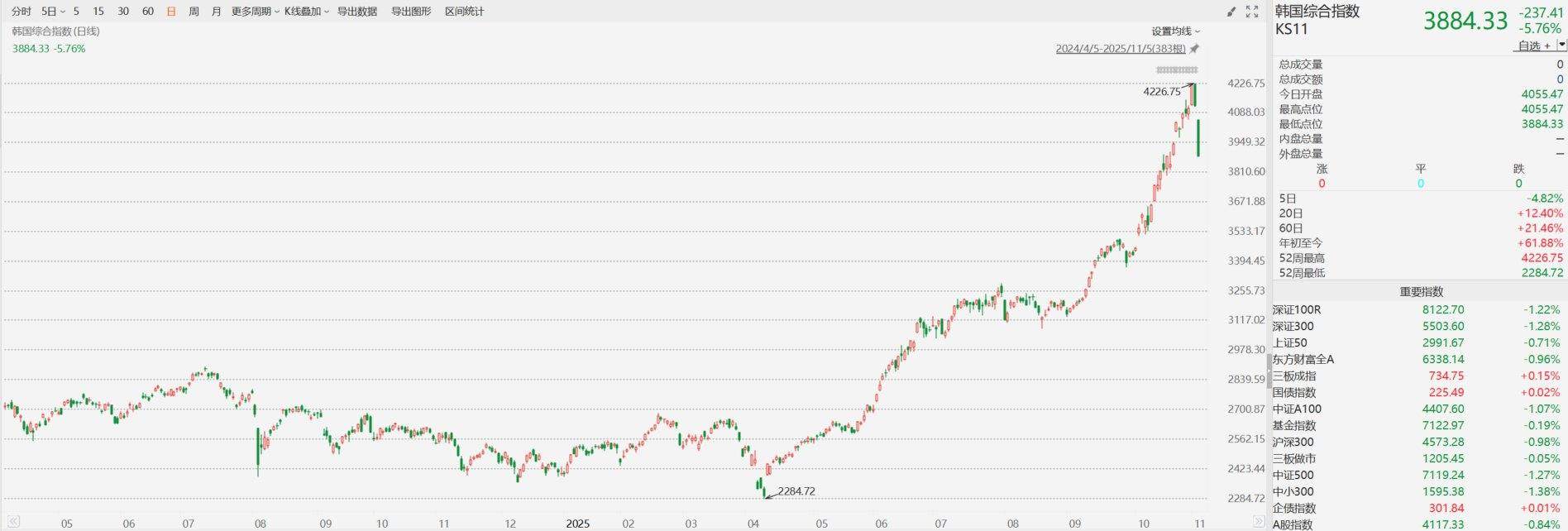
韩国股市不断创新高后重挫!韩国交易所在KOSDAQ 150期货下跌6%后,对KOSDAQ启用了熔断机制,程序化交易暂停5分钟
Ge Long Hui· 2025-11-05 01:46
Group 1 - The South Korean Composite Stock Price Index (KOSPI) has dropped by 5.76%, breaking through key support levels of 4100, 4000, and 3900 points [1] - Following a 6% decline in KOSDAQ 150 futures, the Korea Exchange activated a circuit breaker mechanism, pausing program trading for 5 minutes [3]
X @外汇交易员
外汇交易员· 2025-11-05 01:32
Market Volatility - South Korea's KOSPI experienced a decline exceeding 6% following a trading halt [1] - The Korea Exchange activated a circuit breaker for the KOSPI index after KOSPI 200 futures fell by 5% [1] Trading Disruption - Program trading was suspended for 5 minutes due to the circuit breaker activation [1]
6.5小时蒸发5000亿美元!华尔街的“黑色星期一”究竟发生了什么?
Sou Hu Cai Jing· 2025-10-19 00:05
Core Viewpoint - The article discusses the catastrophic stock market crash on October 19, 1987, known as "Black Monday," which saw the Dow Jones Industrial Average drop by 508 points, a staggering 22.6% decline, marking the largest single-day drop in history, surpassing the 12.8% drop during the Great Depression [1][7][20]. Market Reaction - On October 14, 1987, the U.S. Treasury Secretary announced an oil embargo against Iran, which led to rising bond yields and growing unease among traders [3]. - The Dow Jones index experienced a significant drop of 108 points on October 16, 1987, indicating the beginning of market instability [3]. - On October 19, 1987, the market opened with overwhelming sell orders, leading to a rapid decline in the Dow, which fell 67 points by 9:30 AM and continued to drop throughout the morning [5][7]. Global Impact - The crash was not confined to the U.S. markets; Asian markets were hit first, with the Hong Kong Hang Seng Index plummeting 11.3%, leading to a four-day market closure [8]. - European markets followed suit, with the London FTSE index dropping 10.8%, marking its largest single-day decline [10]. Individual Experiences - Traders and fund managers faced significant losses, with one trader recalling a loss of approximately $30-40 million [10][12]. - The day was marked by panic, with traders overwhelmed by the volume of sell orders and the rapid market decline [12]. Government Response - In response to the crisis, the U.S. government initiated a market rescue operation, with the newly appointed Federal Reserve Chairman Alan Greenspan facing immense pressure to stabilize the situation [12][14]. - The Federal Reserve announced its readiness to provide liquidity support and began purchasing government bonds to encourage lending, which helped to calm market fears [14]. Recovery - The market rebounded quicker than expected, with the Dow recovering half of its losses by the end of 1987 and fully recovering within two years [15]. - The crash led to regulatory changes, including the introduction of circuit breakers to prevent similar occurrences in the future [16][20]. Causes of the Crash - The article highlights that program trading was a significant factor in exacerbating the market decline, although it was not the root cause [16]. - Global monetary policy coordination failures and the effects of market globalization were also cited as contributing factors to the crash [18].
“至少便宜10%” “大闸蟹自由”来了?
3 6 Ke· 2025-10-18 04:41
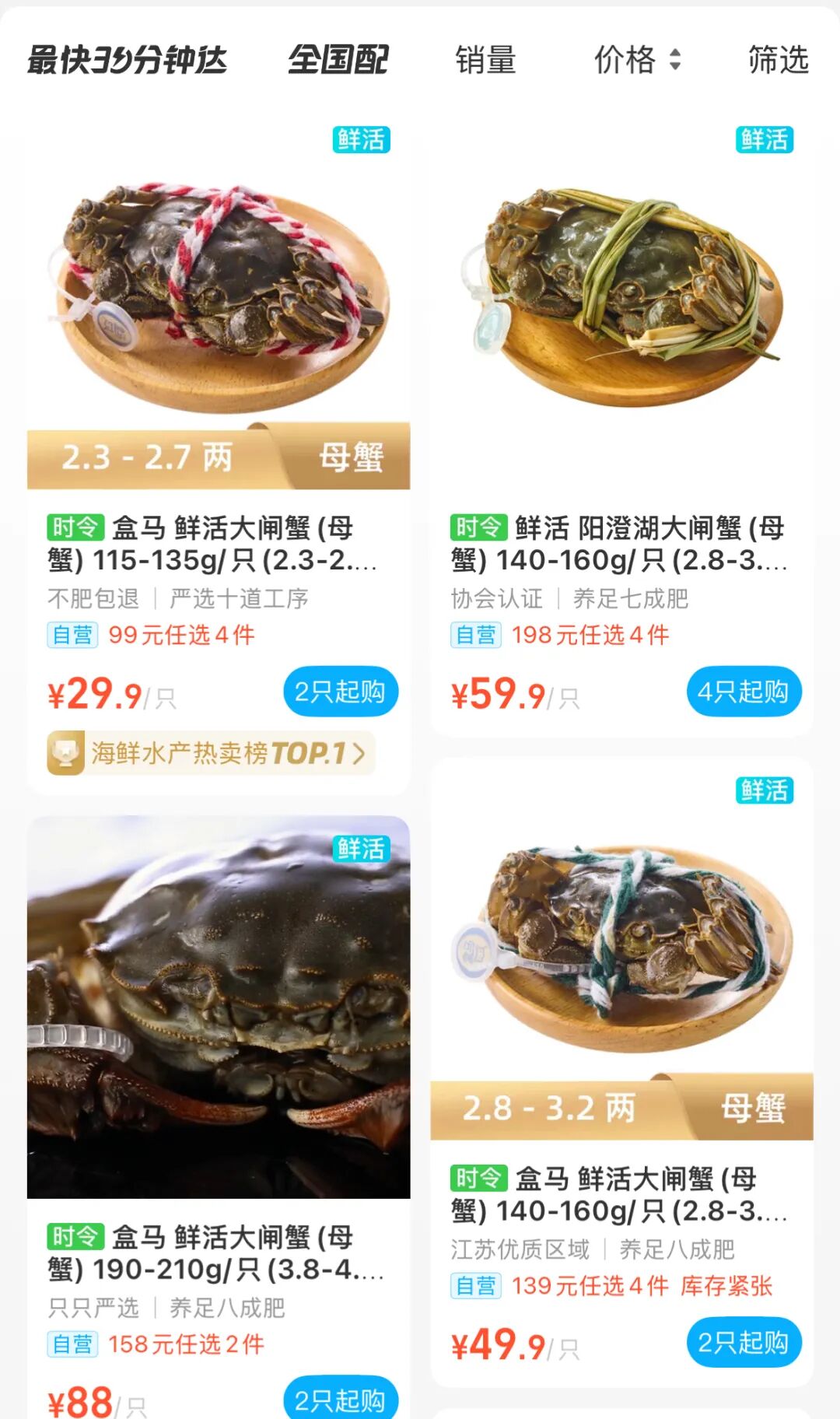
Core Insights - The overall price of hairy crabs is lower this year compared to last year, with specific price reductions noted for different sizes of Yangcheng Lake female crabs [5][9] - The supply of crabs is expected to increase as the season progresses, leading to a potential decrease in prices [6][8] Price Comparison - Prices for Yangcheng Lake female crabs are reported as follows: 2.8-3.2 taels at 59.9 yuan each this year compared to 69.9 yuan last year, and 2.3-2.7 taels at 36.9 yuan this year compared to 39.9 yuan last year, indicating a decrease of 10 yuan and 3 yuan respectively [5][6] - Other regions, such as Liaoning, show similar trends with prices for crabs being lower than last year [5] Supply and Production - The production of Yangcheng Lake hairy crabs is reported to be 10,350 tons this year, an increase of 450 tons from last year, with a higher proportion of larger crabs [7] - The overall crab production in the Jiangsu province is expected to be 20% higher than last year due to favorable weather conditions [8] Market Regulations - A new "circuit breaker mechanism" has been introduced to regulate online sales of Yangcheng Lake hairy crabs, aimed at preventing overselling and false advertising [8] - Boxed crab retailers like Hema have implemented a grading standard and a new electronic inspection system to ensure quality [8]