
REITs(不动产投资信托基金)

Search documents
利好频出,2026年中国楼市开局“步稳”
Zhong Guo Xin Wen Wang· 2026-01-19 01:05
Group 1 - The Chinese real estate market has received multiple favorable policies at the beginning of 2026, including a reduction in the down payment for commercial properties and adjustments to mortgage rates, indicating a steady start for the market [1][4] - The People's Bank of China has lowered the minimum down payment ratio for commercial property loans to 30%, down from previous requirements of 50% or higher, aiming to stimulate the commercial real estate market [1][2] - The extension of the tax refund policy for home sales is expected to stabilize market expectations and reduce costs for families looking to upgrade their housing, thereby promoting demand for improved housing [2][3] Group 2 - The reduction in mortgage rates for existing housing and some commercial loans is set to lower borrowing costs for homeowners, contributing to a more favorable market environment [4] - Local governments are also implementing supportive policies, such as increasing loan limits for families with multiple children and veterans, which further enhances the accessibility of housing finance [4] - Recent data indicates a gradual recovery in housing transactions in major cities, with a notable increase in the average price index for second-hand residential properties, suggesting a positive market outlook [4]
利好频出 2026年中国楼市开局“步稳”
Zhong Guo Xin Wen Wang· 2026-01-16 13:13
Group 1 - The Chinese real estate market is experiencing a positive start in 2026, supported by several favorable policies including reduced down payment requirements for commercial properties and lower mortgage rates for existing loans [1][4] - The People's Bank of China has lowered the minimum down payment for commercial property loans to 30%, down from previous requirements of 50% or higher, aiming to stimulate the commercial real estate market and reduce inventory [1][2] - The extension of tax incentives for homebuyers, allowing for a tax refund on personal income tax for those selling and repurchasing homes within a year, is expected to stabilize market expectations and lower costs for families looking to upgrade their housing [2][3] Group 2 - The reduction in mortgage rates for existing housing loans, including a 0.25 percentage point cut in housing provident fund loan rates, is set to lower borrowing costs for homeowners and stimulate demand in the housing market [4] - Local governments are also implementing supportive measures, such as increasing loan limits for families with multiple children and veterans, which further enhances the accessibility of housing finance [4] - Recent data indicates a steady recovery in housing transactions in major cities like Beijing, Shanghai, and Shenzhen, with a notable increase in the average price index for second-hand residential properties [4]
(经济观察)利好频出 2026年中国楼市开局“步稳”
Zhong Guo Xin Wen Wang· 2026-01-16 13:03
Group 1 - The Chinese real estate market is experiencing a positive start in 2026 with multiple favorable policies aimed at stabilizing the market and promoting economic activity [1][2] - The People's Bank of China has lowered the minimum down payment for commercial property loans to 30%, down from previous requirements of 50% or higher, to support the commercial real estate market [1][2] - The extension of the tax refund policy for home sellers who purchase new homes within a year is expected to lower costs for families looking to upgrade their housing, thereby stimulating demand [2][3] Group 2 - The reduction in interest rates for existing housing provident fund loans and some commercial loans is set to lower borrowing costs for homeowners, effective from January 1, 2026 [4] - Local governments are also implementing supportive measures, such as increasing loan limits for families with multiple children and veterans, to further stimulate the real estate market [4] - Major cities like Beijing, Shanghai, and Shenzhen have seen a steady increase in real estate transactions, indicating a gradual recovery in the housing market [4]
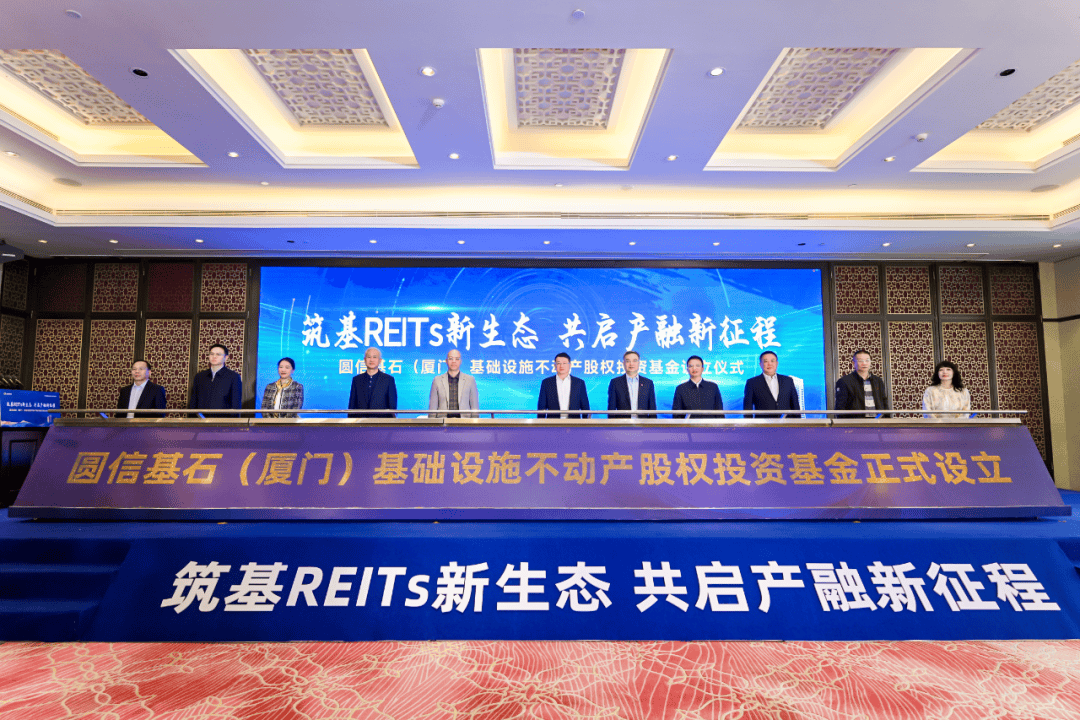
目标总规模55亿元!圆信基石(厦门)REITs投资基金正式设立
Sou Hu Cai Jing· 2026-01-06 12:09
Core Viewpoint - The establishment of the "Yuanxin Jicheng (Xiamen) REITs Investment Fund" with a target scale of 5.5 billion yuan marks a significant step in Xiamen's efforts to deepen financial reform and activate existing assets, aligning with national strategies for financial supply-side structural reform [3][5]. Group 1: Fund Overview - The fund is the first locally government-guided REITs theme fund in the country, highlighting Xiamen's innovative practices in financial reform and urban development [3]. - The fund has a target scale of 5.5 billion yuan and a duration of 10 years, focusing on listed REITs projects with support from strategic partners like Zhongbao Investment and CITIC Securities [5]. Group 2: Strategic Goals - The fund aims to activate existing assets by transforming high-quality assets in industrial parks, affordable housing, and new infrastructure into liquid capital through REITs [6]. - It seeks to enhance asset operation quality by introducing professional expertise from leading institutions and exploring replicable models [6]. - The fund intends to create a new financial service ecosystem by collaborating with various financial institutions to guide long-term capital towards infrastructure and strategic emerging industries [6]. Group 3: Operational Framework - Jinyuan Group plans to develop a distinctive "Jinyuan REITs model" by leveraging its diverse financial licenses to establish a comprehensive service system covering the entire REITs process from asset discovery to management [7]. - The initiative aims to foster deep integration of finance and industry, exploring new pathways for asset activation and capital empowerment to drive high-quality economic development in Xiamen [7].

Club Med十年内扩展到100家 加速盘活存量资产
Bei Jing Shang Bao· 2025-12-07 15:28
Core Insights - Fosun Tourism Group has unveiled its new strategy for 2026, emphasizing a continued shift towards a light asset model following its privatization nine months ago [1] - The company aims to accelerate its global expansion, with plans to operate 100 Club Med resorts by 2035 and to push for the independent listing of Atlantis [2][4] - The company is also focusing on divesting heavy asset projects, such as those in Lijiang and Taicang, to optimize its capital structure and reduce debt [4][5] Group 1: Club Med Development - Club Med is a core brand for Fosun Tourism, contributing nearly 90% of the company's revenue, with operational revenue reaching 102.3 billion yuan in the first half of 2025, of which 92.5 billion yuan came from Club Med [2] - By 2035, the company plans to operate 100 Club Med resorts, 20 Club Med Joyview resorts, and 5 HiSphere super cultural tourism malls, targeting different segments of the vacation market [2][3] Group 2: Super Cultural Tourism Malls - The first super cultural tourism mall is set to open in Chongqing in 2026, covering nearly 500,000 square meters and featuring immersive theme districts and indoor theme parks [3] - The company aims to revitalize existing large shopping centers in China by integrating cultural tourism elements, which is seen as a key strategy for future growth [3] Group 3: Atlantis Independent Listing - The independent listing of Sanya Atlantis through a REITs model is in progress, with documentation submitted and awaiting regulatory approval [4] - Successful listing is expected to improve cash flow and significantly reduce the company's overall debt ratio, marking a critical step in optimizing capital structure post-privatization [4] Group 4: AI Integration - Fosun Tourism is leveraging AI technology to enhance customer experience and operational efficiency, covering the entire visitor journey from pre-arrival to post-visit [6][7] - AI systems are being used to automate quality control and operational processes, allowing staff to focus on building personal connections with guests [7] Group 5: Inbound Tourism Opportunities - The inbound tourism market is a key focus for Fosun Tourism, with international visitors making up 20% of total guests at Club Med Lijiang and a 140% year-on-year increase at Sanya Atlantis [8] - The company is addressing challenges faced by international tourists, such as booking difficulties and the need for personalized services, to enhance their experience and increase repeat visits [8][9]
推动城市一刻钟便民生活圈建设扩围升级 重点聚焦服务“一老一小”
Zhong Guo Zheng Quan Bao· 2025-09-16 23:37
Core Insights - The article discusses the expansion and upgrade of the "15-Minute Convenience Living Circle" in urban areas, focusing on services for the elderly and children, and extending this model to eligible county towns [1][4]. Group 1: Development and Impact - The "15-Minute Convenience Living Circle" aims to meet the daily consumption needs of different age groups and adapt to demographic changes, serving as a crucial platform for community consumption [3]. - As of the end of 2024, 5,188 convenience living circles have been established across 210 pilot areas, serving 118 million community residents and creating 7.324 million jobs, reflecting a year-on-year growth of 44.9% [2]. Group 2: Policy Support - Continuous policy support has been provided for the construction of the convenience living circles, with a three-year action plan (2023-2025) aiming for nationwide implementation in eligible cities by 2025 [4]. - Recent government initiatives have emphasized the integration of community service facilities, including shopping, dining, and maintenance services, to enhance consumer convenience [4]. Group 3: Business Engagement - Companies like Alibaba's Hema are actively engaging in this sector, with their community store model gaining popularity, evidenced by nearly 300 stores opened by the end of August [6]. - The diversity of business models within the convenience living circles is acknowledged, but there is a need for improved support for various service types, especially in older communities [6]. Group 4: Recommendations for Improvement - Experts suggest enhancing policy and institutional innovations to create a more interconnected and comprehensive living circle, focusing on optimizing services for the elderly and children [7]. - Financial support mechanisms are recommended, including subsidies for essential service providers and tax incentives for community businesses, to foster sustainable development [7].