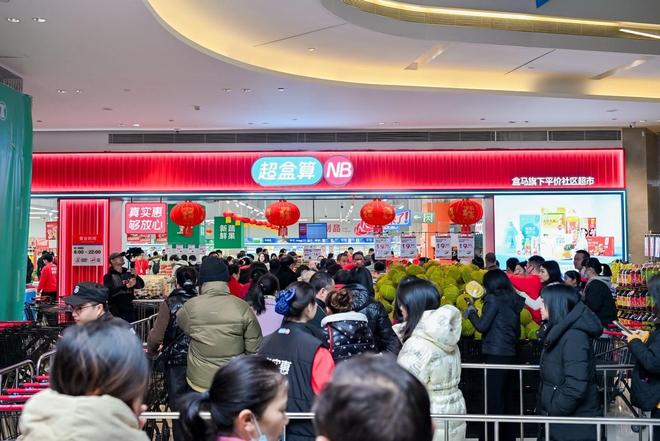
超盒算NB

Search documents
盒马2026年开店计划揭秘:冲击千亿,至少开300家
东京烘焙职业人· 2026-02-26 08:33
Core Viewpoint - The article highlights that 2025 is a transformative year for the retail industry, with Hema achieving significant growth and expansion, including entering 40 new cities and opening over 200 new stores, while focusing on core consumer needs and health-oriented products [5][6]. Group 1: Business Performance - Hema's overall GMV exceeded 75 billion yuan in the 2025 fiscal year, marking its first year of positive adjusted EBITA, with projections suggesting GMV could surpass 100 billion yuan by the end of March 2026 [5][6]. - The company plans to open nearly 100 new Hema Fresh stores and over 200 new Super Hema stores in 2026, aiming for a total of over 1,100 stores across all formats [8][10]. Group 2: Strategic Expansion - Hema's dual business strategy, combining Hema Fresh and Super Hema, is designed to drive growth through a "high-end focus + market penetration" approach, targeting both first-tier and potential second-tier cities [6][8]. - The company aims to enhance its supply chain and operational efficiency to support the differentiated growth of its two core business formats [6][11]. Group 3: Challenges Ahead - Hema faces challenges in supply chain depth and product selection adaptability, particularly in lower-tier markets where consumer price sensitivity is higher [12][15]. - The company must also address risks related to franchise management and quality control as it expands its franchise model, ensuring that product quality remains consistent across all locations [16][18]. - Increased competition in the retail sector, particularly from other major players like Meituan and JD, necessitates that Hema continuously enhance its market presence and customer experience [18][20]. Group 4: Future Outlook - Hema's future growth will depend on its ability to overcome current challenges and develop a retail capability that balances efficiency, quality, and consumer value [21]. - The company is positioned at a new starting point in 2026, with a focus on deepening value and addressing its operational shortcomings to sustain its competitive edge in the evolving retail landscape [21].


美团拟7.17亿美元收购叮咚买菜 生鲜即时零售格局生变
Shang Hai Zheng Quan Bao· 2026-02-05 17:52
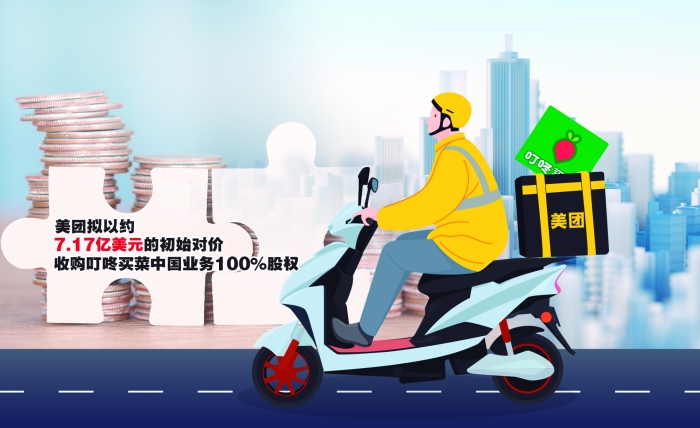
Group 1 - Meituan announced the acquisition of Dingdong Maicai's China business for approximately $717 million, which will make Dingdong a wholly-owned subsidiary of Meituan and integrate its financial performance into Meituan's financial statements [2][3] - This acquisition accelerates Meituan's strategy in the instant retail sector and indicates a potential concentration of competition towards leading platforms [2] - Dingdong Maicai, founded in 2017, focuses on the Jiangsu, Zhejiang, and Shanghai markets, utilizing a front warehouse model to deliver fresh produce within 29 minutes [3] Group 2 - Meituan already operates a similar instant retail platform, Xiaoxiang Supermarket, which aims to expand its coverage in major cities across China [4][5] - The acquisition is seen as a move to strengthen Xiaoxiang Supermarket's operations and increase market share in the Jiangsu, Zhejiang, and Shanghai regions [5] - Dingdong Maicai reported a revenue of 6.66 billion yuan and a GMV of 7.27 billion yuan for Q3 2025, with a net profit of 100 million yuan, indicating a net profit margin of 1.5% [3] Group 3 - The instant retail market is becoming increasingly competitive, with major players like Alibaba and JD.com also expanding their presence in this sector [6] - If the acquisition is successful, it may lead to a reshaping of the domestic instant retail landscape, consolidating resources between Xiaoxiang Supermarket and Dingdong Maicai [6][7] - Industry experts suggest that the future of the fresh retail sector will focus on private brand development, online-offline integration, and supply chain capabilities as key competitive factors [7]

盒马、沃尔玛、奥乐齐们离开舒适区
Sou Hu Cai Jing· 2026-01-31 05:20
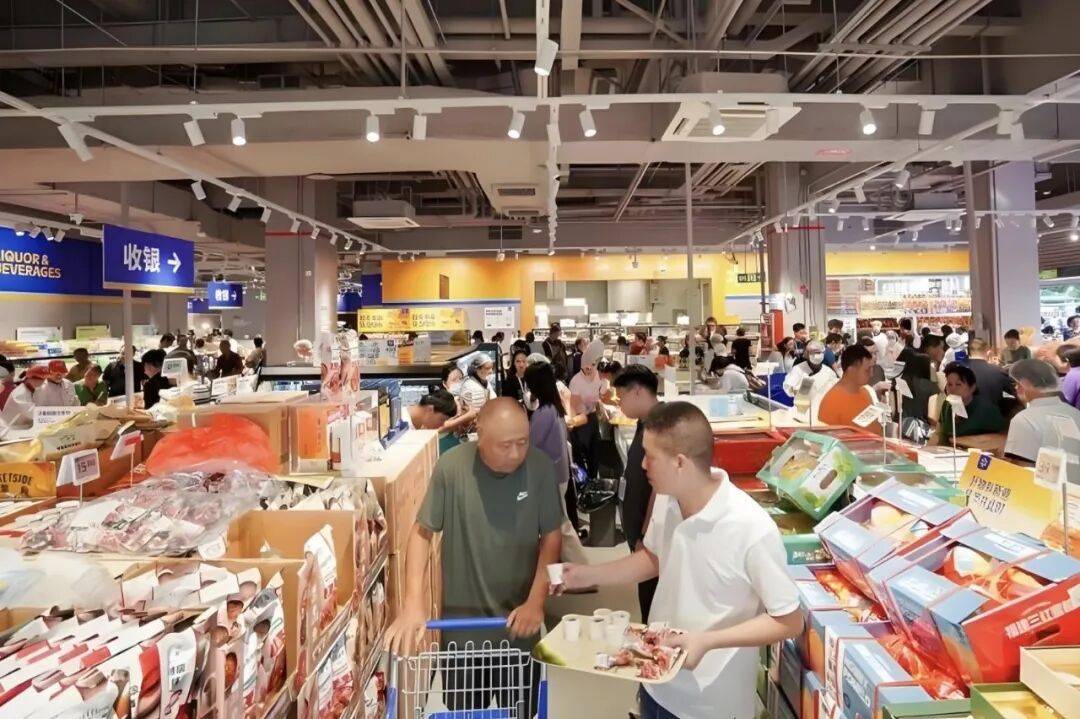
Core Insights - 2026 is expected to be a pivotal year for hard discount retailers, with intensified competition emerging in the sector [2][24] - Major players like Hema and Aldi are expanding aggressively, indicating a nationwide acceleration in hard discount strategies [8][10] Group 1: Market Dynamics - Hema's expansion includes the opening of three new stores in Dongguan and Shenzhen, with a total of over 400 stores expected by the end of 2025 [4][10] - Walmart is also ramping up its presence in Shenzhen, a key market, with plans to open new community stores [6][10] - The overall retail environment shows a slowdown in consumer spending, with retail sales growth dropping to 1.3% in the second half of 2025, leading consumers to prioritize value over brand [10][24] Group 2: Competitive Landscape - The hard discount market in China is projected to exceed 200 billion yuan by 2024, with a penetration rate of only 8%, indicating significant growth potential compared to countries like Germany and Japan [10][24] - Hema's strategy focuses on efficiency, utilizing a logistics system with cold storage to reduce costs and improve service [12][14] - Aldi's recent openings in Nanjing signal a broader trend of hard discount expansion, with multiple players entering the market simultaneously [8][10] Group 3: Product Strategy - Hema's product mix includes 60% private label items, allowing for lower prices by eliminating intermediaries, while Walmart's community stores focus more on standard products [14][15] - The competition is expected to intensify as hard discount retailers aim to differentiate their private label offerings and improve supply chain efficiency [19][20] - The emphasis on local products and fresh offerings is becoming a key differentiator among competitors, with Aldi showing strength in this area [17][26] Group 4: Future Outlook - The hard discount sector is likely to see a new wave of localized price competition, although a full-scale price war is not anticipated [22][24] - The market is expected to evolve with three main player categories: foreign brands like Aldi and Walmart, internet giants like Hema and Meituan, and traditional supermarkets transitioning to discount models [26][24] - 2026 is projected to be a year of significant developments in the hard discount space, as companies navigate the challenges of market expansion and consumer expectations [2][24]

湾区消费新脉动:盒马双城开新店解锁“盒区房”
Sou Hu Cai Jing· 2026-01-28 08:14
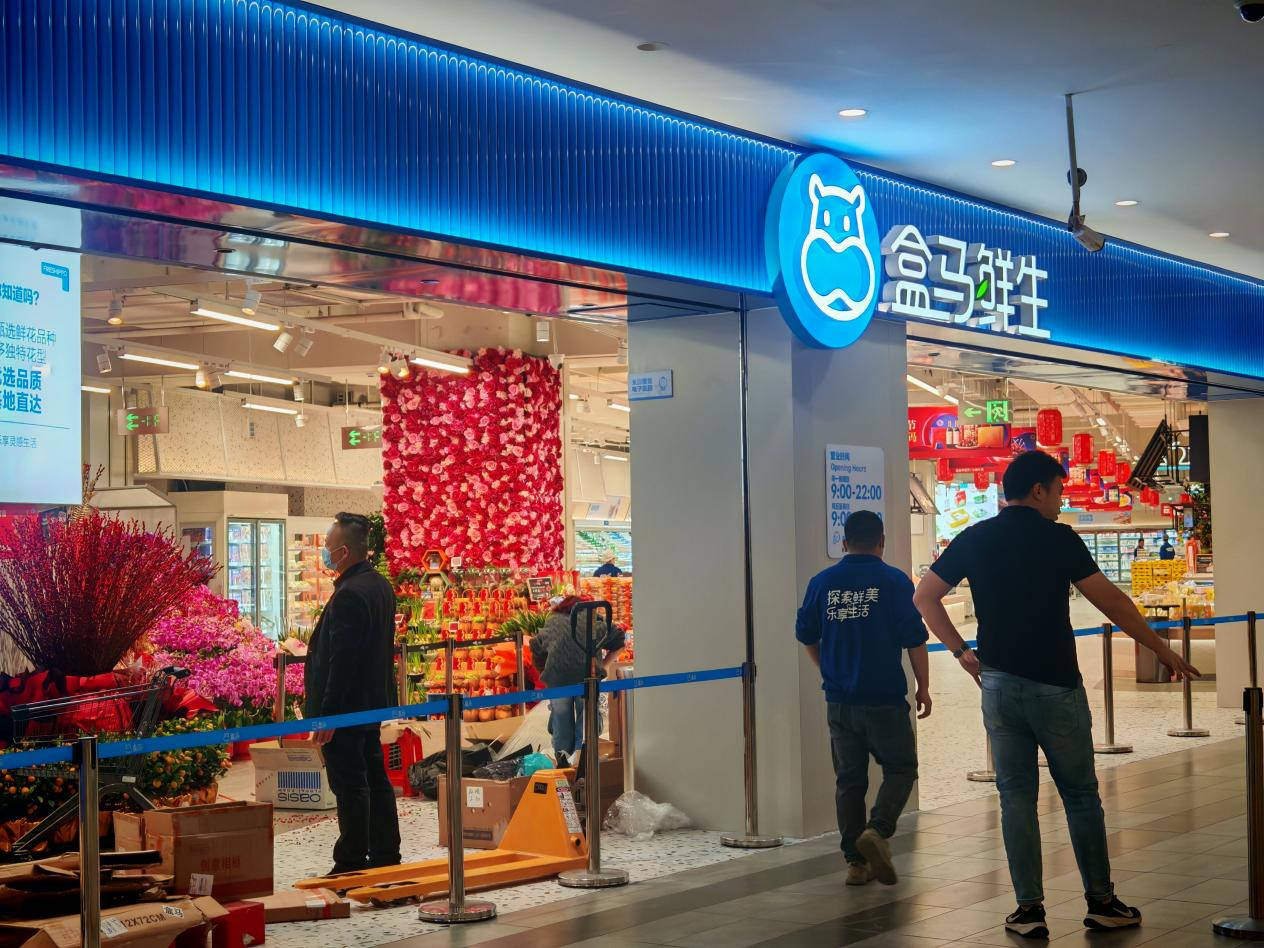
Core Insights - Hema is set to open two new stores in Guangdong, specifically in Guangzhou and Foshan, enhancing its presence in the region [1] - The new store in Guangzhou is strategically located near public transport, catering to a large population and active consumer market [1] - Hema aims to leverage its strengths in product variety and convenience to compete effectively in the market [3] Store Locations and Market Characteristics - The Guangzhou store is located at 1399 Airport Road, covering multiple residential areas and benefiting from the recent opening of metro lines [1] - The local population in Guangzhou's Baiyun District is approximately 3.7 million, with a significant number of migrant workers contributing to a vibrant consumer market [1] - The store will focus on three main product categories: baked goods, seafood, and ready-to-cook meals, targeting families and young professionals [5] Competitive Strategy and Expansion - Hema plans to utilize the brand effect of the shopping center to attract consumers from traditional markets in the vicinity [5] - The new store in Foshan's Beijiao area fills a market gap and is positioned near major companies, attracting high-quality talent and young families [5] - Hema has opened over 50 stores in the Greater Bay Area, establishing a dense network across key cities [5] Performance in Discount Retail - Hema's budget community supermarket brand "Chao He Suan NB" has shown strong performance, with new stores in Dongguan achieving top sales rankings shortly after opening [7] - The company's expansion in the Greater Bay Area reflects a dual approach of new retail and regional development, enhancing consumer capacity and spatial balance [7] - Hema's efforts are seen as a means to stimulate growth and balance in the market through innovative supply chain and industry collaboration [7]
首进华南三店齐开!盒马“平价超市”缘何抢滩华南?
Nan Fang Du Shi Bao· 2026-01-26 14:26
Core Insights - The launch of "超盒算NB" marks its entry into the South China market with three stores opening simultaneously in Dongguan and Shenzhen, aiming to establish a network of over 400 stores nationwide [1][2][4] Company Overview - "超盒算" translates to "super value," emphasizing the affordability of its products, while "NB" stands for "Neighbor Business," focusing on community-oriented services [2] - The brand aims to become a leading hard discount community supermarket by 2025, with over 400 stores already planned across the country [2] Product Offering - The stores feature over 1,500 products categorized into four main areas: cooking, ready-to-eat, leisure, and daily necessities, blending supermarket organization with market freshness [2][3] - The self-branded products account for 60% of sales, with popular items like bottled water at 9.9 yuan for 24 bottles and laundry pods at 0.3 yuan each [3][6] Supply Chain Strategy - The company employs a dual supply chain model, combining national and regional suppliers to ensure cost control and product freshness, with over 40% of products being locally sourced [5][6] - The focus on direct sourcing eliminates middlemen, allowing for lower prices and higher efficiency in product delivery [6] Market Positioning - The hard discount model is well-suited for the South China market, where consumers prioritize value and practicality, aligning with the brand's mission of providing affordable and reliable products [4][8] - The entry into South China is seen as a strategic move to capitalize on the region's dense population and community commerce, potentially revitalizing local retail dynamics [8][9] Industry Trends - The hard discount sector is gaining traction, with increasing competition among e-commerce giants and traditional retailers, particularly in the South China region [9] - The anticipated growth of "超盒算NB" is expected to accelerate market evolution, pushing other retailers to enhance their supply chains and operational efficiencies [9]
盒马超盒算NB华南首店开业 本地化商品数超40%
Bei Jing Shang Bao· 2026-01-23 15:14
Core Insights - Hema's budget community supermarket "Chao He Suan NB" has entered the South China market with the opening of three stores in Dongguan and Shenzhen [1] - The first store in Dongguan covers an area of approximately 600-800 square meters and offers around 1,500 SKUs, including fresh produce, frozen goods, and daily necessities [1] - The stores emphasize local products, with over 40% of items sourced locally, including familiar brands and regional specialties [1] Group 1 - "Chao He Suan NB" has established a logistics warehouse in Dongguan with three temperature zones: refrigerated, frozen, and ambient to support operations in South China [1] - The supermarket focuses on direct sourcing and customization to eliminate middlemen, thereby reducing costs and enhancing consumer value [1] - The self-branded products account for 60% of sales, which is a key factor in attracting customer traffic [1]
盒马硬折扣超市开进华南,东莞深圳连开3店,本地商品超四成
Nan Fang Du Shi Bao· 2026-01-23 13:37
Core Insights - The company "超盒算NB" has officially entered the South China market with the opening of its first store in Dongguan on January 23, and plans to open two more stores in Shenzhen on January 24 [1][6] - The store offers a wide range of products at competitive prices, with local specialties and a focus on fresh ingredients, catering to the preferences of South China consumers [3][4] Group 1: Market Entry and Expansion - 超盒算NB has opened over 400 stores in the Jiangsu, Zhejiang, and Shanghai regions over the past three years, establishing itself as a leading hard discount supermarket [3] - The company plans to rapidly expand in South China, with expectations to exceed 400 stores by the end of December 2025 [6] Group 2: Product Offering and Localization - The Dongguan store features approximately 1,500 products, with over 40% being localized items, including local delicacies and familiar brands [3] - The company emphasizes the importance of fresh ingredients and has tailored its offerings to meet local consumer preferences, such as providing specific types of chicken for soup [3][4] Group 3: Business Model and Efficiency - 超盒算NB operates on a hard discount model by eliminating middlemen and focusing on high-frequency essential goods, achieving a 60% sales share from its private label products [4][5] - The company employs a dual supply chain strategy, combining national and localized sourcing to enhance operational efficiency and product availability [5]
社区消费新力量!华南首批硬折扣店超盒算NB开业
Jin Rong Jie· 2026-01-23 06:58
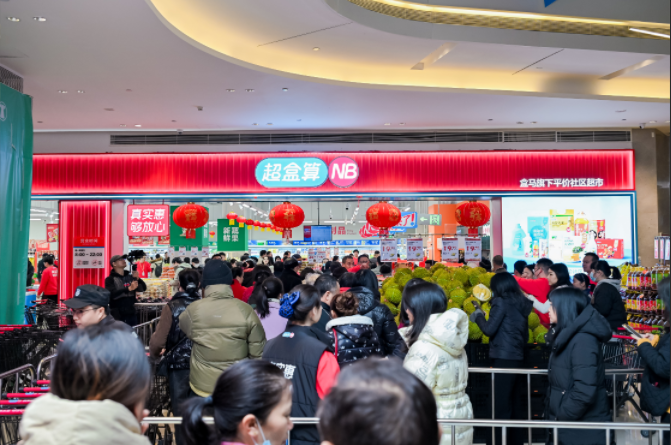
Core Insights - Hema's budget community supermarket, Super Box NB, has officially launched in Guangdong, marking the entry of a new generation of hard discount stores into the South China market, which is expected to bring significant changes to local consumer behavior and community ecosystems [1][4] Group 1: Store Launch and Offerings - Super Box NB has opened three stores in Dongguan and Shenzhen, attracting large crowds and demonstrating strong consumer interest with prices such as 1.9 yuan for 1 kg of Chinese cabbage and 26.9 yuan for 1.2 kg of pork ribs [2][3] - The stores, ranging from 600 to 800 square meters, offer around 1,500 products across various categories, including fresh produce, ready-to-eat meals, and household items, catering to four main consumer needs: cooking, ready-to-eat, leisure, and daily necessities [4][6] Group 2: Local Adaptation and Logistics - Over 40% of the products in the new stores are localized, featuring local specialties such as roasted meats and regional vegetables, alongside popular items from Jiangsu and Zhejiang provinces, enhancing consumer choice [6] - To support efficient operations, Super Box NB has established a logistics warehouse in Dongguan with three temperature zones: refrigerated, frozen, and ambient [6] Group 3: Cost Efficiency and Business Model - The hard discount model emphasizes low prices without compromising quality, achieved through a systematic reduction of costs across the supply chain, including direct sourcing and custom products, which eliminates middlemen [7][9] - The private label products account for 60% of sales, serving as a key strategy to attract customers and maintain competitive pricing [7] Group 4: Market Potential and Future Expansion - The launch of Super Box NB in South China signifies the establishment of the hard discount retail model in a region with high economic vitality and significant consumer demand, positioning it as fertile ground for community supermarkets [9] - Given the rapid expansion in East China, Super Box NB is expected to accelerate its presence in more communities in Guangdong by 2026, promising a more affordable shopping experience for local consumers [9]
山姆、盒马、奥乐齐、胖东来、快乐猴....7大超市2026年开店计划出炉
Sou Hu Cai Jing· 2026-01-22 06:08
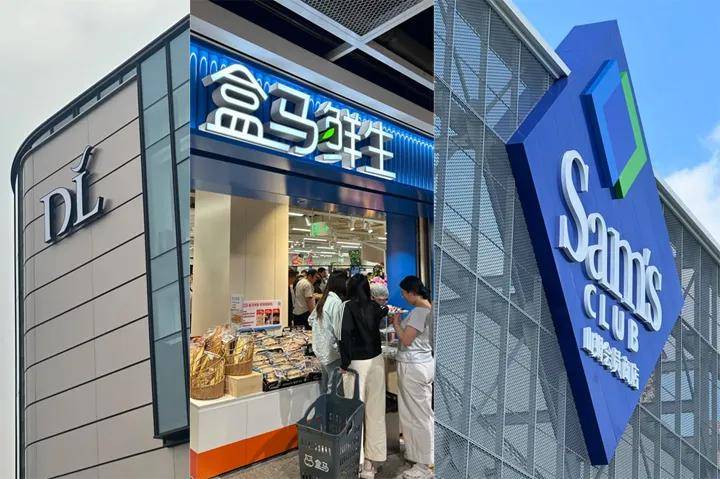
Group 1: Sam's Club - Sam's Club China plans to open 13 new stores in 2026, expanding its presence in cities like Beijing, Tianjin, and Guangzhou [3][5] - In 2025, Sam's Club achieved sales of 140 billion yuan, a 40% increase from 100.5 billion yuan in 2024, and surpassed 10 million paid members [7] - The total number of Sam's Club stores in China is expected to reach 76 by the end of 2026, moving closer to the "100-store plan" set by Walmart China [5][7] Group 2: Hema - Hema plans to open 100 new stores and accelerate the national expansion of its "Super Hema" brand, targeting lower-tier markets [8][10] - Hema's overall GMV is projected to exceed 100 billion yuan by the end of the 2026 fiscal year, with a reported GMV of over 75 billion yuan for the 2025 fiscal year [13] - Hema has entered 40 new cities in 2025, with nearly 900 stores nationwide, including around 500 Hema Fresh stores [10][12] Group 3: ALDI - ALDI plans to enter three new cities and aims to surpass 100 stores by the end of the first quarter of 2026 [15][16] - In 2025, ALDI opened 30 new stores, expanding its presence in Jiangsu and enhancing its supply chain in East China [15] - As of December 31, 2025, ALDI had 88 stores in China, with plans for further expansion in 2026 [15] Group 4: Pang Donglai - Pang Donglai reported sales of 23.5 billion yuan in 2025, a 38.71% increase from 16.96 billion yuan in 2024 [19] - The company plans to open its first store in Zhengzhou during the May Day holiday in 2026, which is expected to boost overall sales [19] - Pang Donglai's sales have shown consistent growth, with figures rising from approximately 7 billion yuan in 2022 to about 17 billion yuan in 2024 [19] Group 5: JD.com - JD.com plans to open two new Seven Fresh supermarkets and aims to launch 30-50 discount stores in 2026 [20][24] - The company has implemented a dual business strategy with "fresh large stores" and "discount stores" to enhance its market presence [20] - JD's discount supermarket model has seen rapid expansion, with nine new stores opened in just four months [24] Group 6: Meituan - Meituan's "Happy Monkey" discount supermarket plans to open 1,000 stores, while "Little Elephant Supermarket" is set to restart its offline business [25][30] - The "Happy Monkey" model focuses on low prices and quick delivery, with plans to expand significantly in major cities [25] - Little Elephant Supermarket has opened its first offline store in Beijing and plans to establish more locations in 2026 [30] Group 7: Walmart Community Stores - Walmart's community store format is expanding rapidly, with nearly 10 stores opened in Shenzhen [31][33] - The company plans to continue its aggressive expansion strategy, with new stores already in the works for 2026 [31] - Walmart's community stores have been validated in the market and are entering a phase of rapid scaling [33]
严筱磊旗开得胜,盒马“游向”下一个战场
Sou Hu Cai Jing· 2026-01-19 07:13
Core Insights - Hema's CEO Yan Xiaolei outlined ambitious goals for 2025, including entering 40 new cities, opening over 200 new stores for Super Hema, achieving a 40% year-on-year revenue growth, and surpassing 100 million users across its two main business formats [1][4]. Group 1: Financial Performance - Hema has achieved profitability for nine consecutive months under Yan Xiaolei's leadership, with a projected GMV of over 100 billion by March 2026 [4][5]. - The company has streamlined its business from 12 formats to focus on Hema Fresh and Super Hema, which has led to improved financial performance [9][10]. - The transition from a focus on business innovation to financial prioritization has been a key factor in Hema's recent profitability [7][12]. Group 2: Strategic Changes - Yan Xiaolei's appointment as CEO marked a shift towards a more financially driven approach, moving away from the exploratory phase of multiple business formats [6][8]. - The brand and supply chain assets accumulated during the previous leadership under Hou Yi are now being monetized effectively [13][15]. - The strategic direction of Hema is closely tied to Alibaba's broader corporate strategy, which has influenced the timing and necessity of achieving profitability [21][22]. Group 3: Competitive Landscape - Hema faces increasing competition from local players like Meituan and JD, who are rapidly expanding their presence in the offline retail space [28][33]. - The competitive environment is intensifying as these companies leverage their existing infrastructure to reduce costs and improve efficiency in the retail sector [32][34]. - Hema's ability to maintain its market position will depend on its performance in the two core business areas against these emerging competitors [35]. Group 4: Internal Challenges - Hema's integration with Alibaba's larger consumer strategy presents both opportunities and challenges, particularly regarding resource allocation and operational independence [36][37]. - The reliance on Alibaba's traffic and fulfillment capabilities could impact Hema's operational autonomy and strategic direction moving forward [36][38]. - The future of Hema's leadership and operational structure may be influenced by its integration with Alibaba's broader business ecosystem [37][38].