Zilebesiran

Search documents
New Data Presented at ACC.26 Further Support Benefits of Vutrisiran in ATTR-CM and Potential of Zilebesiran for Hypertension Management
Businesswire· 2026-03-30 17:00
Core Insights - New clinical and real-world data presented at ACC.26 reinforce the benefits of Vutrisiran for patients with ATTR-CM and highlight the potential of Zilebesiran for hypertension management [1][2][3] Vutrisiran Insights - Vutrisiran is the first and only TTR silencer that provides rapid knockdown of TTR at the source, showing significant improvements in health-related quality of life (QoL) for ATTR-CM patients, with effects comparable to those in patients over ten years younger [2][5][6] - The HELIOS-B analyses indicate that Vutrisiran leads to sustained benefits across various disease severities, demonstrating a 40% reduction in the risk of all-cause mortality and recurrent cardiovascular events in patients with advanced disease compared to placebo [7][8] - Real-world data show a high adherence rate of 93.8% among patients receiving Vutrisiran, with most patients continuing treatment after 12 months [8] Zilebesiran Insights - Zilebesiran is an investigational RNAi therapeutic aimed at reducing cardiovascular risk in patients with hypertension, showing a favorable safety profile in Phase 2 studies [3][11] - The ongoing ZENITH Phase 3 trial aims to evaluate Zilebesiran's efficacy in providing continuous blood pressure control, targeting angiotensinogen to manage hypertension effectively [10][17] Safety and Efficacy Data - Pooled safety data from Phase 2 studies indicate that Zilebesiran has an acceptable safety profile, with low incidences of clinically relevant safety events such as hypotension and hyperkalemia [11] - Vutrisiran's safety profile remains favorable, with no new safety issues identified in patients with advanced disease [15]



2025高血压4大突破性药物疗法,搞定降压难!
Xin Lang Cai Jing· 2026-02-08 10:17
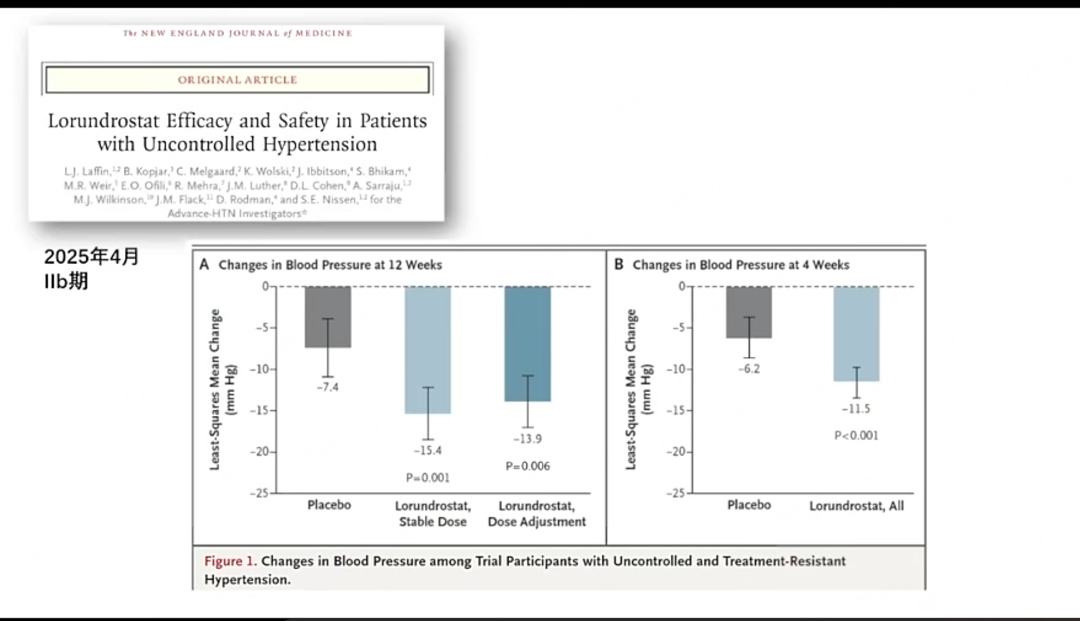
Core Insights - The article discusses significant advancements in hypertension treatment, focusing on new drug developments and their implications for clinical practice [1][19]. Group 1: Shifts in Treatment Focus - The focus of hypertension drug development has shifted from "resistant hypertension" to "uncontrolled hypertension," allowing for earlier intervention in treatment [1][2]. Group 2: Key Drug Developments - Four major advancements in hypertension treatment are highlighted: 1. **Aldosterone Synthase Inhibitors**: New second-generation inhibitors like Lorundrostat and Baxdrostat show promising clinical results, significantly lowering blood pressure in patients [2][3][7]. 2. **Angiotensinogen Inhibitors**: Utilizing innovative technologies such as siRNA, drugs like Zilebesiran demonstrate effective long-term blood pressure control [9][10]. 3. **Dual Endothelin Receptor Antagonists**: Aprocitentan, recently approved by the FDA, effectively treats resistant hypertension with a balanced receptor inhibition approach [12][13][16]. 4. **Hypertension Vaccine**: The HJY-ATRQβ-001 vaccine, recently approved for clinical trials, represents a novel long-term treatment option for hypertension [17][18]. Group 3: Clinical Implications - The advancements in drug development not only address existing clinical challenges but also reflect a deeper integration of basic research into clinical applications, promising more effective and safer treatment options for hypertension management [19].
医药生物行业周报:26年小核酸行业催化不断,持续看好产业链投资机会
China Post Securities· 2026-01-19 10:24
Investment Rating - The industry investment rating is "Outperform the Market" and is maintained [2] Core Views - The report highlights continuous catalysts in the small nucleic acid industry for 2026, with a focus on investment opportunities within the industry chain [5][19] - The report emphasizes the importance of clinical trial data releases and project advancements from major siRNA companies such as Alnylam, Arrowhead, and Wave Life Sciences [19][27] Summary by Sections Industry Overview - The closing index for the industry is at 8657.19, with a 52-week high of 9323.49 and a low of 6876.88 [2] Recent Market Performance - The A-share pharmaceutical and biotechnology sector declined by 0.68% from January 12 to January 16, 2026, underperforming the CSI 300 index by 0.11 percentage points and the ChiNext index by 1.68 percentage points [9][28] - Among the sub-sectors, the medical research outsourcing sector performed the best, increasing by 3.69%, while the vaccine sector saw a decline of 3.43% [10][28] Industry Insights and Investment Recommendations 1. **Innovative Drugs and Industry Chain**: The JPM conference reinforced the development logic of the industry, with increased merger and acquisition activity among multinational corporations (MNCs) and breakthroughs in domestic innovative drug companies. The report suggests focusing on companies with high certainty and relatively low business development (BD) disruption expectations, such as Innovent Biologics and others [11][30][31] 2. **Life Science Services**: The report sees stable recovery in overseas research and production outsourcing demand, with domestic Big Pharma's R&D spending increasing steadily. It recommends focusing on companies like WuXi AppTec and others [12][31] 3. **Medical Devices**: The report notes a potential turning point in the medical device sector, with improving performance from leading companies and a gradual reduction in the pressure from centralized procurement. It suggests monitoring companies like Mindray and others [13][34] 4. **Traditional Chinese Medicine**: The report highlights opportunities in basic drug policies and innovation-driven directions, recommending companies like Zhaoli Pharmaceutical and others [38][40] 5. **AI in Pharmaceuticals**: The report discusses the maturity of AI applications in pharmaceuticals, diagnostics, and medical services, identifying potential beneficiaries in various AI+medical sectors [42] Market Valuation - As of January 16, 2026, the overall valuation of the pharmaceutical sector is at 30.35, with a relative valuation premium of 124.45% over the CSI 300 index, indicating a slight increase from the previous week [48]
2026-01-19:26年小核酸行业催化不断,持续看好产业链投资机会
China Post Securities· 2026-01-19 08:24
Investment Rating - The industry investment rating is "Outperform" [2] Core Views - The report emphasizes the continuous catalysts in the small nucleic acid industry for 2026, highlighting the potential investment opportunities within the industry chain [5][19] - The report suggests a positive outlook for innovative drugs and the industry chain, with expectations of increased global participation from domestic innovative drug companies and the introduction of more innovative projects in 2026 [11][30] - The report identifies the medical device sector as a potential area for capital inflow, with signs of improvement in leading companies and a reduction in the pressure from centralized procurement [13][34] Summary by Sections Industry Overview - The closing index for the industry is at 8657.19, with a 52-week high of 9323.49 and a low of 6876.88 [2] Recent Market Performance - The A-share pharmaceutical and biotechnology sector fell by 0.68% from January 12 to January 16, 2026, underperforming the CSI 300 index by 0.11 percentage points [9][28] - The medical research outsourcing sector performed the best among sub-sectors, rising by 3.69%, while the vaccine sector declined by 3.43% [10][28] Innovative Drugs and Industry Chain - The JPM conference highlighted the strengthening of industry development logic, with increased merger and acquisition activity among multinational corporations and breakthroughs in domestic innovative drugs [11][30] - The report recommends focusing on companies with high certainty and relatively low disruption expectations, such as Innovent Biologics and others [11][30] Medical Devices - The report notes that the medical device sector is showing signs of improvement, with leading companies reporting better performance in Q3 [13][34] - The report suggests that the pressure from centralized procurement is decreasing, which may lead to valuation recovery [13][34] Small Nucleic Acid Drugs - The report highlights several key clinical trials and data readouts expected in 2026 from companies like Alnylam, Arrowhead, and Wave Life Sciences, indicating a significant focus on the weight loss and CNS fields [6][8][27] - The report encourages attention to domestic small nucleic acid-related companies and upstream industry chains [27] Investment Recommendations - The report suggests focusing on companies in the CXO and life science services sectors, as demand for overseas R&D and production outsourcing is expected to recover steadily [12][31] - It also highlights the potential for valuation re-evaluation opportunities in the biopharmaceutical sector, particularly for blood products and vaccines [32][33]
Alnylam Pharmaceuticals (NasdaqGS:ALNY) FY Conference Transcript
2026-01-12 18:02
Alnylam Pharmaceuticals FY Conference Summary Company Overview - **Company**: Alnylam Pharmaceuticals (NasdaqGS:ALNY) - **Industry**: Biotechnology, specifically RNA interference (RNAi) therapeutics Key Highlights Company Performance and Achievements - Alnylam has established a unique position in the biotech industry with a sustainable innovation engine and commercial excellence, leading to significant growth and success [2][3] - The company has six approved RNAi medicines generating multi-billion dollar annual revenues, treating approximately 500,000 patients globally [5][3] - In 2025, Alnylam achieved nearly $3 billion in combined net product revenues, an 81% year-over-year growth, largely driven by the launch of Amvuttra for ATTR cardiomyopathy [6][8] Strategic Goals - Alnylam has set ambitious five-year goals termed "Alnylam 2030," focusing on: 1. Achieving global TTR leadership and building a durable TTR franchise 2. Growing through sustainable innovation, including delivering transformative medicines beyond TTR 3. Scaling with discipline and agility to drive sustained, profitable growth [9][10] - The company aims for a total revenue CAGR of 25% or greater through 2030 and a Non-GAAP operating margin of approximately 30% [10][23] Pipeline and Innovation - Alnylam has over 25 programs in active clinical development, with plans to expand to 40 clinical programs and 10 tissue types by 2030 [5][9] - Key pipeline programs include: - **Nucresiran**: A next-generation TTR silencer expected to launch in polyneuropathy by 2028 and cardiomyopathy by 2030, offering a biannual dosing regimen [15][39] - **Zilebesiran**: Targets angiotensinogen for blood pressure control, addressing over 60 million patients with uncontrolled hypertension [17] - **Mivelsiran**: Targets amyloid precursor protein for treating cerebral amyloid angiopathy and Alzheimer's disease [18] - **ALN-HTT02**: Targets the Huntingtin gene for Huntington's disease, with a potential multi-billion dollar market opportunity [19] Market Dynamics and Competitive Position - Alnylam is positioned to challenge existing standards of care, with Amvuttra showing strong early market performance and approaching parity with Tafamidis in new starts [11][12] - The company anticipates that the introduction of Tafamidis generics in 2028 may unlock opportunities for combination therapies, enhancing Amvuttra's market position [33] - Alnylam's strategy includes significant investments in R&D, aiming to reinvest about 30% of revenues to accelerate innovation [9][10] Financial Guidance - For 2026, Alnylam expects total combined product sales between $4.9 billion and $5.3 billion, driven by the TTR franchise guidance of $4.4 billion to $4.7 billion, reflecting an 83% growth at the midpoint [20][23] - The company is focused on maintaining strong commercial execution and expanding its market share in both academic and community settings [30][31] Future Outlook - Alnylam aims to generate over $10 billion in annual revenues by 2030, driven by multiple blockbuster products and a best-in-class commercial organization [23] - The company is committed to social responsibility and plans to enhance manufacturing capacity while lowering production costs to support its expanding pipeline [23] Additional Insights - Alnylam's leadership emphasizes the importance of setting ambitious goals to create focus and accountability within the organization, which has historically led to exceeding expectations [25][26] - The company is actively working on initiatives to improve diagnosis rates and treatment access for patients with ATTR amyloidosis, recognizing the significant number of undiagnosed patients [14][13] This summary encapsulates the key points from Alnylam Pharmaceuticals' FY Conference, highlighting the company's strategic direction, performance metrics, and future aspirations in the biotechnology sector.
创新药盘点系列报告(24):难治高血压后线药物梳理-20251229
Guoxin Securities· 2025-12-29 05:27
Investment Rating - The report maintains an "Outperform" rating for the industry [1] Core Insights - The report emphasizes the importance of systematically researching next-generation innovative drugs for resistant hypertension (rHTN), highlighting that multiple new mechanism antihypertensive drugs will read out data and/or achieve clinical progress by 2025 [2] - Key catalysts include upcoming Phase 3 clinical studies focusing on cardiovascular and renal endpoints, which are expected to provide significant data in the coming years [2] - The report suggests paying attention to domestic companies involved in relevant target areas [2] Summary by Sections 01 Current Status and Unmet Needs in Hypertension Treatment - Hypertension is a prevalent cardiovascular disease, with approximately 90%-95% of patients suffering from primary hypertension, driven by factors such as salt sensitivity and obesity [3] - In the US, the prevalence of hypertension is around 48%, corresponding to approximately 120 million people, with about 60 million receiving antihypertensive treatment [3] - In China, the prevalence among adults aged 18 and older was 27.5% in 2018, with awareness, treatment, and control rates at 51.6%, 45.8%, and 16.8%, respectively [3] 02 Next-Generation Drug Focus on AGT and ASI - The report discusses the focus on AGT (Angiotensinogen) and ASI (Angiotensin II receptor blockers) in the development of next-generation antihypertensive drugs [3] - AGT-targeting drugs, particularly siRNA and ASO therapies, are highlighted as promising avenues for reducing blood pressure effectively [27] 03 Investment Recommendations - The report suggests that the market for resistant hypertension treatments is highly structured, with a focus on balancing efficacy and safety in drug development [16] - It emphasizes the need for drugs that can manage long-term adherence and safety, particularly for patients with comorbidities such as CKD and HF [19]
海外小核酸行业动态跟踪Alnylam:业绩增长势头强劲,研发管线布局丰富
Ping An Securities· 2025-12-11 06:28
Investment Rating - The industry investment rating is "Outperform" compared to the market, indicating an expected performance greater than the CSI 300 index by more than 5% over the next six months [49]. Core Insights - Alnylam has shown strong revenue growth, with total revenue reaching $1.249 billion in Q3 2025, a year-over-year increase of 149%. Net product revenue was $851 million, up 103%, and revenue from collaborations and royalties surged by 393% to $398 million [2][7]. - The TTR product line is experiencing rapid growth, with Q3 2025 revenue of $724 million, a 135% increase year-over-year. The company has raised its full-year revenue guidance for TTR products to between $2.475 billion and $2.525 billion [16][29]. - Alnylam's research pipeline is robust, with seven drugs in Phase 3 clinical trials, including Nucresiran, which is expected to offer a better dosing regimen. The company is also exploring siRNA therapies in chronic disease areas [38][40]. Summary by Sections 1. Q3 2025 Performance Overview - In Q3 2025, Alnylam's total revenue was $1.249 billion, reflecting a 149% increase from the previous year. The net product revenue was $851 million, up 103%, while collaboration and royalty revenues reached $398 million, a 393% increase [2][7]. 2. Rapid Growth of TTR Products - The TTR product revenue for Q3 2025 was $724 million, marking a 135% year-over-year increase. The company has adjusted its full-year revenue guidance for TTR products to $2.475 billion to $2.525 billion, up from the previous estimate of $2.175 billion to $2.275 billion [16][29]. 3. Rich R&D Pipeline - Alnylam has a diverse R&D pipeline with seven drugs in Phase 3 trials. Nucresiran, a new generation TTR product, is expected to provide a more effective dosing schedule. The company is also advancing siRNA therapies in chronic disease management [38][40].
Alnylam Pharmaceuticals (NasdaqGS:ALNY) 2025 Conference Transcript
2025-11-10 16:17
Summary of Alnylam Pharmaceuticals Conference Call Company Overview - **Company**: Alnylam Pharmaceuticals (NasdaqGS:ALNY) - **Event**: UBS Healthcare Conference - **Date**: November 10, 2025 Key Highlights from the Conference Call Financial Performance - **Third Quarter Earnings**: Alnylam reported $300 million in cardiomyopathy (CM) revenue for Q3, doubling the $150 million from Q2, leading to an upgraded full-year guidance by $275 million [6][11][24] - **Five-Year Goals**: The company has achieved its five-year goals set for 2025, including: - 500,000 patients on RNAi therapeutics - Six commercial products launched - 20 clinical programs - 40% compound annual growth rate (CAGR) in top-line growth - Non-GAAP profitability [10][11] Product Launch and Market Dynamics - **Cardiomyopathy Launch**: The launch has seen strong early momentum, with successful access to 170 health systems and first-line access to payers, primarily in a Medicare population (80%) [15][18][29] - **Pricing Strategy**: Alnylam anticipates a mid-single-digit year-over-year price decline for the TTR business in 2025, while volume growth is expected to offset the price decline [24][26] Pipeline and Future Goals - **2030 Goals**: The company plans to announce new goals at the JPMorgan conference, focusing on TTR leadership, pipeline progression, and financial profile evolution [12][14] - **Next-Generation Products**: Zilebesiran is expected to achieve over 95% TTR reduction with a twice-annual dosing regimen, with ongoing studies in both cardiomyopathy and hereditary polyneuropathy [32][33] Competitive Landscape - **Market Positioning**: Alnylam is focused on first-line positioning against competitors, with expectations of expanding the market pie rather than just taking market share [30][45] - **Combination Therapy**: The company is preparing for a potential shift towards combination therapies as Tafamidis goes generic, leveraging data from ongoing studies [45][46] Early-Stage Pipeline - **Mivelsiran**: Targeting amyloid precursor protein for Alzheimer's and cerebral amyloid angiopathy, with promising early results [48][49] - **Huntington's Disease**: The company is optimistic about its differentiated approach targeting both full-length and variant proteins [50][52] - **ALN-6400**: Aiming to be a universal hemostatic agent, with initial focus on hereditary hemorrhagic telangiectasia [54] Additional Insights - **Value-Based Agreements**: Alnylam has implemented value-based agreements with payers to ensure patient compliance and reduce costs associated with non-compliance [29] - **Patient Enrollment**: The company is confident in its ability to enroll patients in ongoing studies without significant impact from competitive dynamics [36] This summary encapsulates the key points discussed during the conference call, highlighting Alnylam Pharmaceuticals' financial performance, product launches, pipeline developments, and strategic positioning in the market.
siRNA 药物行业深度报告:小核酸,大时代,靶向治疗新纪元
GUOTAI HAITONG SECURITIES· 2025-10-10 11:23
Investment Rating - The report rates the industry as "Overweight" [4] Core Insights - The siRNA drug industry is entering a new era with the maturation of technology platforms and the expansion of indications, focusing on the commercial value of siRNA drugs for common diseases [2][3] - siRNA drugs have transitioned from rare diseases to common diseases, showcasing strong target expansion capabilities, robust research and development extensibility, long-lasting effects, and low resistance [4][12] - The industry is witnessing a surge in business development (BD) transactions, particularly among multinational corporations (MNCs), indicating a vibrant market for siRNA technology [4][31] Summary by Sections 1. Dawn of a New Era for Small Nucleic Acid Drugs - Small nucleic acid drugs, including siRNA and ASO, are becoming a significant path for drug development, with a focus on their ability to regulate protein production [7] - The global approval of small nucleic acid drugs has reached 23, with siRNA drugs leading the way in rare disease applications [12][13] - Alnylam and other leading companies have demonstrated significant market capitalization differences due to their innovative drug development technologies [14][16] 2. Platform Characteristics and Focus on Indications - The siRNA drug industry is characterized by high barriers in modification and delivery, with a focus on breakthroughs in extrahepatic delivery systems [6][29] - The commercialization of siRNA drugs is accelerating, with multiple common diseases nearing market readiness [6][29] - The GalNAc delivery system has become the mainstream strategy for liver-targeted siRNA delivery, while breakthroughs in extrahepatic delivery are still needed [6][29] 3. Related Companies - Listed companies in the siRNA space include Yuyuan Pharmaceutical, Hengrui Medicine, and others, while unlisted companies include Bewang Pharmaceutical and others [4][12]



罗氏,甩出“王炸”
Ge Long Hui· 2025-09-23 19:41
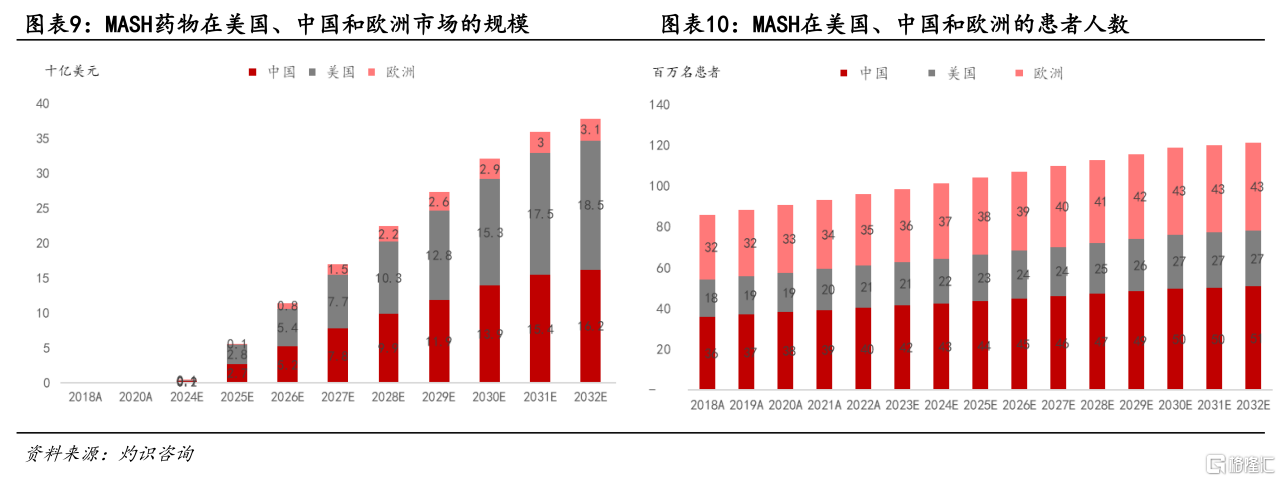
Core Viewpoint - Roche is strengthening its position in the cardiovascular, renal, and metabolic diseases (CVRM) sector through the acquisition of 89bio for $3.5 billion, securing the innovative MASH drug Pegozafermin, which is currently in Phase III clinical trials [1][10]. Group 1: Acquisition Details - Roche's acquisition of 89bio focuses on Pegozafermin, which has the potential to generate peak sales exceeding $5 billion, as the global MASH drug market is projected to reach $35 billion by 2030 [1][2]. - The acquisition agreement includes a base price of $14.50 per share plus up to $6 per share in contingent value rights (CVR), potentially bringing the total deal value to $3.5 billion [4][8]. - The CVR stipulates additional payments based on Pegozafermin achieving specific sales milestones, potentially adding up to $1 billion for 89bio's shareholders [5][6][7]. Group 2: Market Potential and Demand - MASH affects an estimated 5%-7% of the adult population globally, with significant unmet clinical needs, particularly in China and the U.S., where the number of patients is expected to rise substantially by 2032 [2][4]. - The MASH treatment landscape has seen numerous failures, making Pegozafermin's potential as a first-in-class therapy particularly promising [4][19]. Group 3: Roche's CVRM Strategy - Roche's CEO emphasized that the acquisition enhances the company's CVRM product portfolio and opens opportunities for combination therapies with existing projects [11]. - Roche has a diverse pipeline in the CVRM space, including several promising candidates such as GLP-1 drugs and RNAi therapies, indicating a strategic focus on this area for future growth [14][16][17]. - The company has invested in multiple potential blockbuster drugs, including Petrelintide and Zilebesiran, to solidify its position in the metabolic and cardiovascular markets [17][19]. Group 4: Competitive Landscape - The MASH treatment field is highly competitive, with over 60 active clinical trials and multiple candidates from major pharmaceutical companies, highlighting the intense research activity in this area [19][22]. - Roche's strategic investments and acquisitions are aimed at building a comprehensive network in the CVRM sector, positioning the company for significant growth in this rapidly evolving market [22][23].