
农业社会化服务

Search documents
挥“农”墨于岭南大地,执“工”笔绘“两业融合”新篇
Nan Fang Nong Cun Bao· 2026-02-24 03:06
Core Viewpoint - Guangdong is focusing on high-quality development through the integration of manufacturing and service industries, aiming to transition from scale to quality leadership in its economy [11][12][13]. Group 1: Economic Strategy - Guangdong has been the "first engine" of the national economy for 37 consecutive years and is strategizing to maintain its leadership in the "14th Five-Year Plan" period [7][9]. - The 2026 Guangdong High-Quality Development Conference will emphasize the collaborative development of manufacturing and service industries [11]. Group 2: Industry Integration - The province is implementing measures to promote the deep integration of manufacturing and productive services, with a focus on transforming from "manufacturing" to "intelligent manufacturing" [25][30]. - Guangdong's agricultural sector is evolving by integrating agricultural equipment manufacturing with socialized agricultural services, enhancing production relationships and value chains [33][34]. Group 3: Talent Development - Guangdong is prioritizing "investment in people," emphasizing the integration of human resources with manufacturing to drive long-term economic development [73][75]. - The province is cultivating "new farmers" and rural leaders through various training programs, such as the "Rural CEO" training initiative [83][86]. Group 4: Cultural and Consumer Experience - The integration of manufacturing and service industries is redefining "Guangdong goods," transforming products into cultural experiences and consumption scenes [116][118]. - Industrial design is becoming a key driver for high-quality development, with initiatives like the "Mayor's Cup" Industrial Design Competition promoting innovation [120][123]. Group 5: Agricultural Innovation - The establishment of smart farms in Guangdong is showcasing the collaboration between manufacturing and technology services, with examples of fully automated agricultural processes [46][49]. - The province is leveraging modern logistics and digital marketing to enhance the agricultural value chain, as seen in the case of lychee production in Maoming [128][130].


新服务织就现代农业新画卷
Jing Ji Ri Bao· 2026-02-10 22:14
Core Viewpoint - The central government emphasizes the modernization of agriculture and rural areas, focusing on the integration of smallholders with modern agricultural practices, addressing the critical question of who will farm and how to farm effectively [1] Group 1: Agricultural Socialization Services - Agricultural socialization services have shown significant progress, characterized by diversification, specialization, and standardization, with various service providers such as cooperatives and agricultural enterprises collaborating effectively [1] - The service content has expanded to include seed supply, land management, pest control, drying and storage, and processing and sales, addressing the needs of smallholders [1] - Innovative service models have emerged, such as "service provider + rural collective economic organization + farmers," effectively solving supply-demand matching issues [1] Group 2: Demand and Supply Dynamics - The third national agricultural census indicates that smallholders account for 98.1% of agricultural operators, managing over 70% of total arable land, highlighting the urgent need for professional and large-scale services [2] - Service providers like machinery cooperatives and pest control organizations are rapidly emerging, enhancing service capabilities and offering diverse production services to smallholders [2] - The central government's policy framework, as outlined in the central document, supports the establishment of an efficient agricultural socialization service system, providing a clear policy direction [2] Group 3: Challenges and Recommendations - Despite the growth, challenges remain, including structural supply-demand mismatches, insufficient policy support, low standardization of services, and weak benefit connection mechanisms [2] - Recommendations include fostering service providers, encouraging investment in agricultural socialization services, and enhancing the capabilities of service providers through improved equipment and management [2] Group 4: Service Innovation and Policy Support - Innovative service supply models such as full-service management and online-offline service networks are recommended to meet diverse farmer needs [3] - Strengthening the policy support system through increased financial investment and innovative financial support methods is essential to address the challenges faced by service providers [3] - Establishing a comprehensive service standard system and monitoring quality throughout the service process is crucial for ensuring service reliability and industry self-regulation [3]
“十四五”收官显成效 供销合作社化肥供应占全国7成
Zhong Guo Jing Ji Wang· 2026-02-09 03:25
Core Insights - The meeting of the All-China Federation of Supply and Marketing Cooperatives focused on summarizing the achievements of the "14th Five-Year Plan" and planning for the "15th Five-Year Plan" with an emphasis on agricultural supply, social services, agricultural product circulation, and resource recycling [1] Group 1: Agricultural Supply and Services - The supply and marketing cooperatives have established a comprehensive agricultural supply system, ensuring stable supply through various measures, including the establishment of an online platform for agricultural supplies and emergency response mechanisms [2] - The system has built 205 county-level agricultural supply distribution centers, enhancing the delivery of quality agricultural supplies directly to farmers [2] - The agricultural social service capacity has been strengthened, with 16,000 service centers established, covering various services such as fertilization and pest control, significantly reducing production costs for farmers [2][3] Group 2: Achievements in the "14th Five-Year Plan" - The supply and marketing cooperatives accounted for 70% of the national fertilizer supply and 40% of potassium fertilizer imports, playing a crucial role in ensuring national food security [3] - The system has expanded its agricultural social services, contributing to increased income for farmers and promoting moderate-scale agricultural operations [3] - The cooperatives have also made significant contributions to agricultural product circulation and recycling, with over 1,300 million tons of cold storage capacity established to reduce product loss [3][4] Group 3: Future Development Plans - The "15th Five-Year Plan" aims to establish or renovate around 100 strategic agricultural supply warehouses and 1,000 service centers to enhance agricultural social services [5] - In the recycling sector, the plan includes the establishment of over 10,000 standardized recycling stations and 500 green sorting centers by the end of the "15th Five-Year Plan" [5] - For 2026, the focus will be on enhancing emergency supply capabilities and expanding agricultural service centers to meet farmers' urgent needs [6]
经济日报财经早餐【2月9日星期一】
Jing Ji Ri Bao· 2026-02-08 23:04
Group 1 - In 2025, China's high-tech industry sales revenue is expected to grow by 13.9%, with lithium-ion batteries, integrated circuits, and biopharmaceutical manufacturing experiencing sales growth of 25.1%, 19.2%, and 7.7% respectively [1] - The national supply and marketing cooperative system is set to conduct agricultural social services covering 3.5 million acres in 2025, promoting cost reduction and stable grain production [2] - Germany's trade with China is projected to reach €253 billion in 2025, marking a year-on-year increase of approximately 2.7%, reaffirming China as Germany's largest trading partner [2] Group 2 - The number of cross-regional personnel movements during the Spring Festival is reported to be 222.51 million, reflecting a month-on-month increase of 5.3% and a year-on-year increase of 3.9% [2] - The Central Meteorological Administration has issued a blue wind warning, predicting strong winds in various regions, including parts of Xinjiang, Inner Mongolia, and the East China Sea [3] - The Macau Special Administrative Region reported a record daily entry and exit flow of 867,000 people, with the Gongbei Port seeing nearly 463,000, the highest in five years [1]
从2026年中央一号文件看乡村全面振兴新机遇
Shang Hai Zheng Quan Bao· 2026-02-03 18:19
Group 1: Core Opinions - The "Opinions" released by the Central Committee and State Council focus on modernizing agriculture and rural areas, emphasizing comprehensive rural revitalization [2] - The document outlines six key areas, including enhancing agricultural production capacity, implementing precise assistance, promoting stable income growth for farmers, and strengthening the leadership of the Party in agricultural work [2] Group 2: Enhancing Agricultural Production Capacity - The "Opinions" stress the need to enhance agricultural production capacity and quality, with measures such as stabilizing grain and oil production, improving the "vegetable basket" industry, and strengthening farmland protection [3] - Experts highlight the urgency of improving agricultural production capacity to ensure food security amidst increasing demand for agricultural products [3] Group 3: Consumer Demand and Agricultural Production - As urban and rural residents' income levels rise, dietary demands are shifting from mere sustenance to a focus on quality and nutrition, necessitating higher agricultural production standards [4] - Companies are already positioning themselves in response to these trends, indicating significant opportunities for capital market involvement [4] Group 4: Cultivating County-Level Prosperity Industries - The "Opinions" propose developing technology-driven, green, quality, and brand-oriented agriculture, promoting deep integration of rural industries [6] - Emphasis is placed on enhancing agricultural product processing, developing regional public brands, and fostering county-level economic development [7] Group 5: Modern Agricultural Operating System - The "Opinions" call for improving the operational capabilities of family farms and cooperatives, and establishing a comprehensive agricultural service system [8] - The agricultural social service sector has rapidly developed, with over 1.11 million entities providing services to nearly 93 million small farmers [8] Group 6: Challenges in Agricultural Social Services - Current challenges include inadequate infrastructure in key service areas, leading to disjointed service delivery across agricultural production stages [9] - Experts suggest that the construction of modern agricultural service centers should be market-driven, with a focus on enhancing service efficiency and addressing structural imbalances in the agricultural service system [9]

农业社会化服务行业快速崛起
Jing Ji Ri Bao· 2026-01-28 21:59
Core Insights - The agricultural social service industry in China is rapidly developing, driven by policy support and market demand, with a diverse range of service providers emerging to meet the needs of small farmers [2] Group 1: Agricultural Social Services Development - The agricultural social service sector has seen the emergence of 1.111 million operational entities providing services to nearly 93 million small farmers, covering over 2.29 billion acres annually [2] - Service providers are shifting from offering single service segments to providing comprehensive, multi-segment services that integrate advanced technologies and practices [2] Group 2: Challenges and Solutions - Farmers express concerns about timing and trust in service providers, while service entities face challenges related to fragmented land and operational efficiency [2] - Collaboration between farmers and service providers is essential to ensure timely agricultural practices, with a focus on not missing critical farming windows [2] Group 3: Cost Reduction and Efficiency - Many service providers are implementing collective procurement services to lower production costs, allowing small and large farmers to pool their purchasing power for better pricing [3] - Recommendations for the agricultural social service sector include prioritizing convenience for small farmers, encouraging innovation and digital transformation, and enhancing service quality and consumer experience [3] Group 4: Policy and Future Directions - The Ministry of Agriculture and Rural Affairs emphasizes the need to accelerate the establishment of a modern agricultural management system and improve the quality of new agricultural entities [3]
联小农、强服务、促衔接——农业社会化服务体系不断完善
Zhong Guo Jing Ji Wang· 2026-01-22 05:49
Core Viewpoint - The development of agricultural social services is essential for connecting small farmers with modern urban agriculture and serves as a driving force for new agricultural productivity [1][2]. Group 1: Agricultural Social Services Development - Agricultural social services are crucial for addressing the challenges faced by small farmers, such as high costs, weak bargaining power, and low risk resistance [2]. - The agricultural social service industry has rapidly emerged, with over 1.111 million operational entities providing services to nearly 93 million small farmers, covering an annual service area of over 2.29 billion acres [2]. - The integration of advanced technologies and comprehensive service offerings is promoting the organic connection between small farmers and modern agriculture [2]. Group 2: Practical Challenges and Solutions - Farmers express concerns about service timing and the scattered nature of service areas, which complicates machinery operations and trust in service providers [3]. - Agricultural service providers are focusing on not missing critical farming times, balancing service area size with timely execution to avoid losses [3]. - Many service providers are implementing collective procurement strategies to lower production costs, with examples showing a reduction of at least 50 yuan per acre in production costs for farmers through bulk purchasing [3]. Group 3: Future Directions and Recommendations - The agricultural social service system should prioritize the convenience and efficiency of service for small farmers, encouraging innovation and digital transformation [4]. - There is a call for the establishment of a modern agricultural operating system and a more efficient agricultural social service framework [4]. - Future development should focus on not missing farming times while ensuring profitability for service providers [4].
“一埂之隔”变“一家亲”
Xin Lang Cai Jing· 2026-01-20 21:54
Core Viewpoint - The Hongxinglong Company has made significant strides in agricultural modernization and rural revitalization through its innovative "1133" agricultural social service model, which has led to increased crop yields and farmer income in the region [5][6][15]. Group 1: Agricultural Social Service Model - The "1133" model includes one service platform, one set of service standards, and three types of customized packages, covering an area of 4.6 million acres and increasing local grain production by 17 million pounds [5][6]. - The company has established 16 demonstration sites and has successfully integrated with local municipalities, exemplified by the cooperative plan with Shuangyashan City [5][6]. Group 2: Farmer Engagement and Trust Building - The company has actively engaged with farmers through multiple forums to build trust and clarify the benefits of the new agricultural technologies [6][8]. - A "knock on doors" initiative was launched to address farmers' concerns about costs, guarantees, and benefits, leading to increased participation in the new agricultural practices [8][9]. Group 3: Technological Integration and Standardization - The company has implemented a standardized service approach, offering 12 types of service menus tailored to various agricultural needs, which has improved operational efficiency [10][11]. - The introduction of advanced farming techniques, such as the "three-five sowing method," has resulted in increased yields and reduced costs for farmers [12][14]. Group 4: Long-term Commitment and Systematic Support - The company emphasizes that agricultural social services are a long-term commitment, supported by a robust institutional framework and continuous training for agricultural technicians [13][14]. - A set of technical standards has been established to ensure quality control, with farmers participating in the evaluation of service effectiveness [14][15]. Group 5: Economic Impact and Future Plans - The full-service management model has led to an average income increase of 280 yuan per acre for managed plots, with cost savings of 15% to 20% for participating farmers [15]. - The company plans to continue its development strategy aimed at increasing land productivity, employee income, and overall efficiency in the agricultural sector [15].
农业现代化水平不断提高
Ren Min Ri Bao Hai Wai Ban· 2025-12-31 02:01
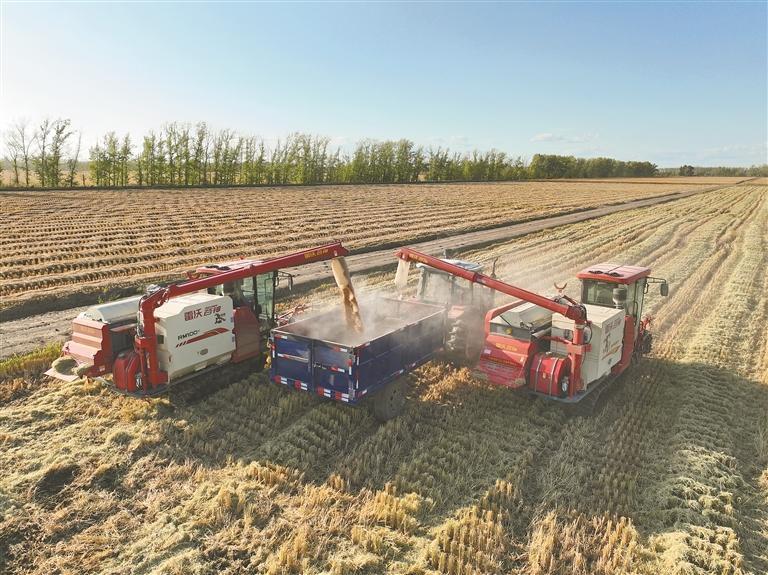
Core Insights - The agricultural sector in China is experiencing significant growth, with the value of agriculture and related industries reaching 20.6173 trillion yuan in 2024, accounting for 15.29% of GDP [2] - The seed industry revitalization initiative has led to a stable grain production of over 1.3 trillion jin for several years, with a record high of 1.4298 trillion jin achieved this year [3] - The modernization of agricultural production and seed safety assurance levels are improving, with seed quality compliance rates remaining above 98% [4] Group 1: Agricultural Development and Modernization - Hebei Province is advancing agricultural structural adjustments by developing specialty facility agriculture and high-quality vegetable cultivation to increase farmers' income and support rural revitalization [2] - The agricultural modernization level is continuously improving, with major grain crops achieving full mechanization in planting and harvesting [2] - The national seed supply guarantee rate has reached 80%, an increase of 10 percentage points since 2020 [4] Group 2: Seed Industry and Technological Innovation - The proportion of domestically bred crop varieties has exceeded 95%, with domestic seed sources for livestock, aquatic products, and vegetables holding market shares of over 80%, 85%, and 91% respectively [3] - The establishment of national livestock and poultry genetic resource banks has positioned China as the world leader in the preservation of agricultural genetic resources [3] - The investment in research and development by crop seed companies has doubled since 2020, indicating a robust innovation ecosystem [3] Group 3: Agricultural Social Services - The coverage and quality of agricultural social services are expanding, with a target to enhance service capabilities across the entire production chain by 2025 [5] - There are currently 1.111 million operational entities providing social services, serving nearly 93 million smallholder farmers [6] - The shift towards comprehensive service models is promoting the integration of advanced varieties, technologies, and equipment to support smallholder and modern agricultural development [6] Group 4: Policy and Strategic Initiatives - The Central Rural Work Conference emphasized the need to accelerate the construction of an agricultural powerhouse, focusing on improving grain quality and diversifying food supply capabilities [7] - The Ministry of Agriculture and Rural Affairs is implementing a new round of initiatives to enhance grain production capacity and ensure food security [8] - The promotion of smart agriculture and the application of new technologies such as big data and AI in agriculture are key components of the modernization strategy [8]
农业农村部:推动农业社会化服务向产前和产后环节延伸
Ren Min Wang· 2025-12-24 08:25
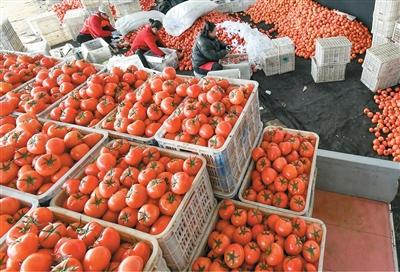
Core Viewpoint - The Ministry of Agriculture and Rural Affairs is focused on enhancing the agricultural social service system to improve the production service capabilities of grain and important agricultural products, utilizing modern comprehensive agricultural service centers as a key approach [1] Group 1: Service System Development - The Ministry is promoting various organizational forms such as "service entities + rural collective economic organizations + farmers" and "service entities + new agricultural management entities + farmers" to develop single and multi-link entrusted services tailored to local conditions [1] - The initiative aims to expand service coverage while consolidating and expanding the service scale for grain, cotton, oil, and sugar [1] Group 2: Service Expansion - Services are being extended to pre-production and post-production stages, as well as to economic crops, livestock, aquaculture, and facility agriculture [1] - In Inner Mongolia, socialized services in livestock are being implemented in three counties, supporting small farmers with services like mechanical shearing, medicinal baths, and entrusted breeding [1] Group 3: Future Goals - By 2024, the plan includes the establishment of 375 large and medium-sized forage storage facilities, the mowing of 1.16 million acres, and the transportation of 120,000 tons of forage, effectively exploring new models for agricultural social services in the livestock sector [1]