
自动驾驶卡车

Search documents
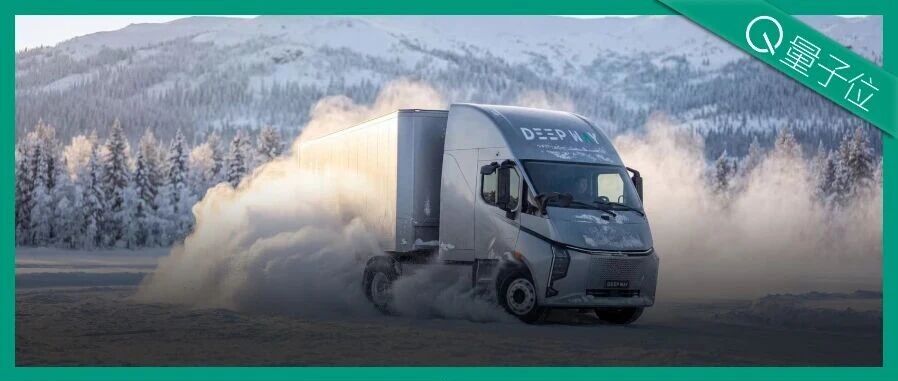
11.77亿资本押注卡车新势力「一哥」,L2升维路线率先在商用车跑通!
量子位· 2026-01-27 02:33
Core Viewpoint - The article highlights the growth potential and investment interest in DeepWay, a new player in the autonomous driving truck sector, despite the high technical barriers and commercialization challenges in the industry [1][3]. Group 1: Company Overview - DeepWay, established in 2020, is a technology company focused on new energy heavy trucks and intelligent road freight solutions, and it is the first new force in the industry to achieve mass delivery of forward-defined heavy trucks [13]. - The company has achieved significant revenue growth, with annual revenues increasing from 426 million in 2023 to 1.969 billion in 2024, representing a 360% year-on-year increase [24]. - DeepWay's truck sales surged from 509 units in 2023 to 3,002 units in 2024, marking a 490% year-on-year growth [16]. Group 2: Investment and Financing - DeepWay recently completed a Pre-IPO financing round totaling 1.177 billion, bringing its total funding to over 3 billion [3][5]. - The company has attracted a diverse range of investors, including state-owned, foreign, and industrial capital, indicating strong market confidence [5][9]. - Despite high valuation concerns, investor interest remains strong, driven by the potential returns from the upcoming IPO [9][8]. Group 3: Technology and Product Development - DeepWay focuses on self-research and development of its three electric systems and L2 autonomous driving technology, which aims to reduce costs and improve safety [21][23]. - The company emphasizes the importance of a fully integrated vehicle platform to maximize the value of autonomous driving technology [34]. - DeepWay's L2 system has reportedly reduced average accident rates by 60%, showcasing its safety benefits [50]. Group 4: Future Growth and Strategy - The company plans to transition from L2 to L4 autonomous driving, with a strategy that includes a human-driven lead vehicle and multiple following vehicles in a platoon formation [50][54]. - DeepWay's approach to L4 development is based on leveraging data and engineering capabilities accumulated from L2 operations, which is seen as a feasible path to achieving full autonomy [55][58]. - The ongoing growth in delivery volumes and improvements in gross margins are expected to enhance DeepWay's self-sustaining capabilities, supporting future L4 development [61][62].

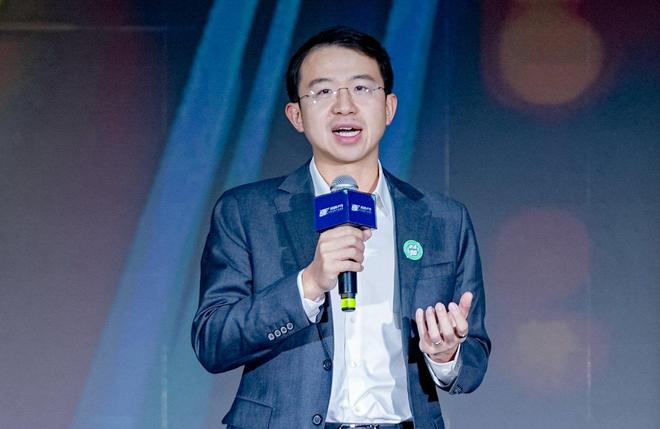
卡尔动力CEO韦峻青:不追求100%无人化
Mei Ri Jing Ji Xin Wen· 2025-12-04 13:30
Core Insights - The focus on L2 and L3 level autonomous driving and Robotaxi is prevalent, but the company emphasizes that autonomous heavy trucks represent a high-value, high-potential market for L4 level autonomous driving [1][4] - The global market for autonomous trucks is expected to exceed 400 billion yuan by 2030, entering a phase of large-scale verification of fully unmanned products starting in 2025 [1][4] - The company prioritizes commercial viability over achieving 100% automation, aiming for significant cost savings and operational efficiency [2][3] Company Overview - Founded in 2021 and incubated by Didi, the company has built a fleet of over 400 autonomous trucks, accumulating over 35 million kilometers of operational mileage and transporting a total of 1.2 billion tons [2][5] - The company achieved the first commercial operation qualification for autonomous freight in the country and has realized a positive economic model for single-route operations [2][5] - The annual revenue is approximately 500 million yuan, with hardware costs around 90,000 yuan, offset by savings of over 100,000 yuan in driver costs, leading to a payback period of about six months [2][5] Market Strategy - The company aims to reduce overall logistics costs by 20% to 25% through autonomous driving platooning technology, with further efficiency gains expected from warehouse transport robots [2][3] - The focus is on achieving a 50% to 80% reduction in labor costs while ensuring scalable operations, which is deemed to have significant commercial value [3][5] - The company plans to conduct unmanned testing of its KargoBot Space transport robot by 2026, with expectations of one million unmanned transport vehicles on the road within the next decade [3][5] Industry Context - The commercial progress of autonomous trucks has faced challenges, as evidenced by the acquisition of Embark and the delisting of TuSimple, highlighting the difficulties in achieving large-scale commercial operations [4][5] - The company has taken a pragmatic approach, focusing on freight scenarios and planning to achieve unmanned testing in 2024 and unmanned operations in 2025 [5] - The company has successfully achieved profitability on specific routes with autonomous vehicles, marking a significant milestone in the commercial vehicle sector [6]
对话卡尔动力CEO韦峻青:自动驾驶卡车赛道即将形成商业闭环 | 巴伦精选
Tai Mei Ti A P P· 2025-11-30 07:19
Core Insights - The primary goal of the company is not to completely replace human labor but to significantly enhance the feasibility of logistics solutions by reducing labor costs by 50% to 80% through scalable operations [2] - The ultimate aim of autonomous driving is 100% automation, but the company emphasizes a balanced approach where machines handle standardized transport tasks while humans manage more complex operations [2][5] - The company has developed a hybrid intelligent convoy model, which combines manned lead vehicles with unmanned following vehicles, and has successfully implemented regular autonomous driving tests in various regions of China [2][4] Company Strategy - The company plans to test its kargoBot Space transport robot in 2026, which will have a 25% increase in cargo space and a 10% increase in effective load, leading to a fivefold increase in gross profit per vehicle [4] - The CEO predicts that in the next decade, there will be one million unmanned transport vehicles operating across urban and rural areas, supporting a new logistics network [5] - The company focuses on enhancing its AI capabilities, having achieved end-to-end autonomous driving, and aims to develop a specialized driving model for heavy trucks based on extensive operational data [5][6] Market Positioning - The company believes that the hybrid intelligent convoy model will remain relevant, especially for bulk commodity transport, and anticipates that it will capture a significant market share in the long term [8][11] - The company has deployed over 400 autonomous trucks, with a hardware cost of only 90,000 yuan per unit, and has achieved a gross profit increase of 3 to 6 times through its operational model [13][14] - The CEO emphasizes the importance of achieving route-level profitability rather than just focusing on individual vehicle profitability, aiming for a sustainable business model that can handle large volumes of freight [14][15] Technological Development - The company utilizes data-driven reinforcement learning techniques and various autonomous driving solutions to achieve fully unmanned operations in complex logistics scenarios [3] - The hybrid intelligent convoy model enhances safety, fuel efficiency, and intelligence by allowing vehicles to share sensor data and control commands, improving overall operational efficiency [12][13] - The company is positioned as a key player in the autonomous truck sector, with a focus on leveraging specific domain data and fine-tuning applications to enhance performance [7][16]
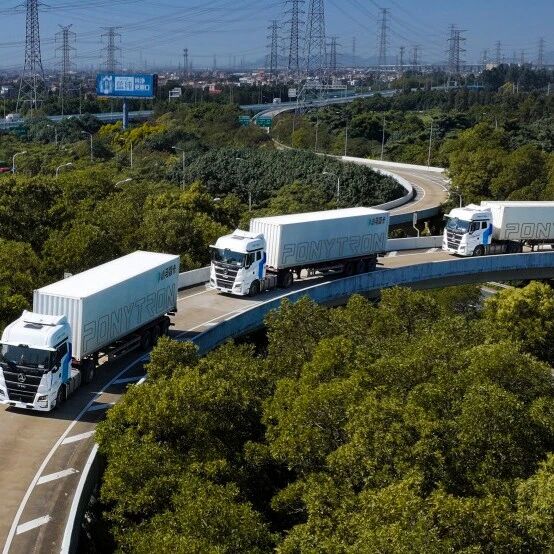
与三一重卡、东风柳汽达成合作,小马智行:第四代自动驾驶卡车家族明年量产
Zheng Quan Shi Bao· 2025-11-20 03:04
Core Insights - The collaboration between Xiaoma Zhixing, SANY Heavy Truck, and Dongfeng Liuzhou Motor aims to develop a fourth-generation autonomous truck family, enhancing the adaptability of vehicle models through a platform-based design [1][2] - The first two models will be based on advanced pure electric platforms, targeting mass production of around a thousand units, with operations expected to commence next year [1][2] - The new autonomous truck suite will utilize 100% automotive-grade components, significantly reducing the bill of materials (BOM) cost by approximately 70% compared to the previous generation [1][2] Cost and Efficiency Improvements - The "1+4" platooning autonomous driving scheme is projected to reduce freight costs by 29% per kilometer compared to traditional freight, while increasing freight profits by 195% [1][2] - The annual carbon emissions per vehicle are expected to decrease by about 60 tons, aligning with national goals for green and low-carbon logistics [1][2] Safety and Reliability Enhancements - The fourth-generation autonomous trucks will feature a fully redundant design for critical systems, enhancing safety and reliability for freight logistics [2] - The system is designed for a lifespan of 20,000 hours and can support up to 1 million kilometers of freight operations, ensuring robust performance in various conditions [2] Market Position and Strategic Alignment - China is the largest long-haul truck freight market globally, and the push for intelligent logistics transformation is accelerating [2] - Since 2018, Xiaoma Zhixing has been developing autonomous truck technology, currently operating around 200 autonomous trucks with a freight volume exceeding 10 billion ton-kilometers [2] - The launch of the fourth-generation autonomous trucks aligns with multiple strategic opportunities, including the promotion of new energy heavy trucks and the maturation of autonomous driving technology [2][3]
与三一重卡、东风柳汽达成合作,小马智行:第四代自动驾驶卡车家族明年量产
Zheng Quan Shi Bao Wang· 2025-11-20 02:28
Core Insights - The collaboration between Xiaoma Zhixing, SANY Heavy Truck, and Dongfeng Liuzhou Motor aims to develop a fourth-generation autonomous truck family, enhancing the adaptability of vehicle models through a platform-based design [1][2] - The first two models will be based on advanced pure electric platforms, targeting mass production of around a thousand units, with operations expected to commence next year [1][2] - The new autonomous truck suite will utilize 100% automotive-grade components, significantly reducing the BOM cost by approximately 70% compared to the previous generation [1][2] Cost and Efficiency Improvements - The "1+4" platooning autonomous driving scheme is projected to reduce freight costs by 29% per kilometer compared to traditional freight, while increasing freight profit by 195% [1][2] - The annual carbon emissions per vehicle are expected to decrease by about 60 tons, aligning with national goals for green and low-carbon logistics [1][2] Safety and Reliability Enhancements - The fourth-generation autonomous trucks will feature a fully redundant design for critical systems, ensuring safety and reliability in various operational conditions [2] - The system is designed for a lifespan of 20,000 hours and can support up to 1 million kilometers of freight operations [2] Market Position and Strategic Alignment - China is the largest long-haul truck freight market, and the push for intelligent logistics transformation is accelerating [2] - Since 2018, Xiaoma Zhixing has been developing autonomous truck technology, currently operating around 200 autonomous trucks with a freight volume exceeding 10 billion ton-kilometers [2] - The launch of the fourth-generation trucks aligns with multiple strategic opportunities, including the promotion of new energy heavy trucks and the maturation of autonomous driving technology [2][3] Industry Impact - As a leader in autonomous freight logistics, the company aims to address long-standing industry challenges such as safety risks, labor shortages, and inefficient management [3] - The initiative supports the construction of a green, low-carbon, and intelligent logistics system, enhancing the overall safety, efficiency, and sustainability of logistics operations [3]
小马智行与三一重卡、东风柳汽达成合作,第四代自动驾驶卡车家族明年量产
IPO早知道· 2025-11-19 05:21
Core Insights - The article discusses the collaboration between Xiaoma Zhixing and major truck manufacturers to develop the fourth generation of autonomous trucks, which aims to enhance the logistics industry through advanced technology and cost efficiency [2][5]. Group 1: Company Developments - Xiaoma Zhixing has been focusing on autonomous truck technology since 2018 and has achieved significant milestones, including obtaining road testing permits and operational licenses for autonomous trucks across multiple regions in China [5]. - The fourth generation of autonomous trucks will utilize a platform-based design, allowing for high adaptability to various vehicle models, with initial production targeting a scale of around 1,000 units [2][4]. Group 2: Technological Advancements - The new autonomous truck system will employ 100% automotive-grade components, resulting in a 70% reduction in the bill of materials (BOM) cost compared to the previous generation [4]. - The "1+4" platooning strategy is expected to reduce freight costs by 29% per kilometer and increase profit margins by 195%, significantly enhancing the efficiency and quality of freight logistics [4]. Group 3: Environmental Impact - The fourth generation trucks are projected to reduce carbon emissions by approximately 60 tons per vehicle annually, aligning with national goals for green and low-carbon logistics [4]. - The design life of the new trucks is set at 20,000 hours, supporting up to 1 million kilometers of freight operations, which emphasizes durability and sustainability in logistics [4]. Group 4: Industry Context - China is the largest long-distance truck freight market globally, and the push for intelligent logistics transformation is accelerating, positioning Xiaoma Zhixing as a leader in this sector [5][6]. - The launch of the fourth generation trucks coincides with strategic opportunities in the promotion of new energy heavy trucks and the maturation of autonomous driving technology, supporting national initiatives in AI and transportation [6].
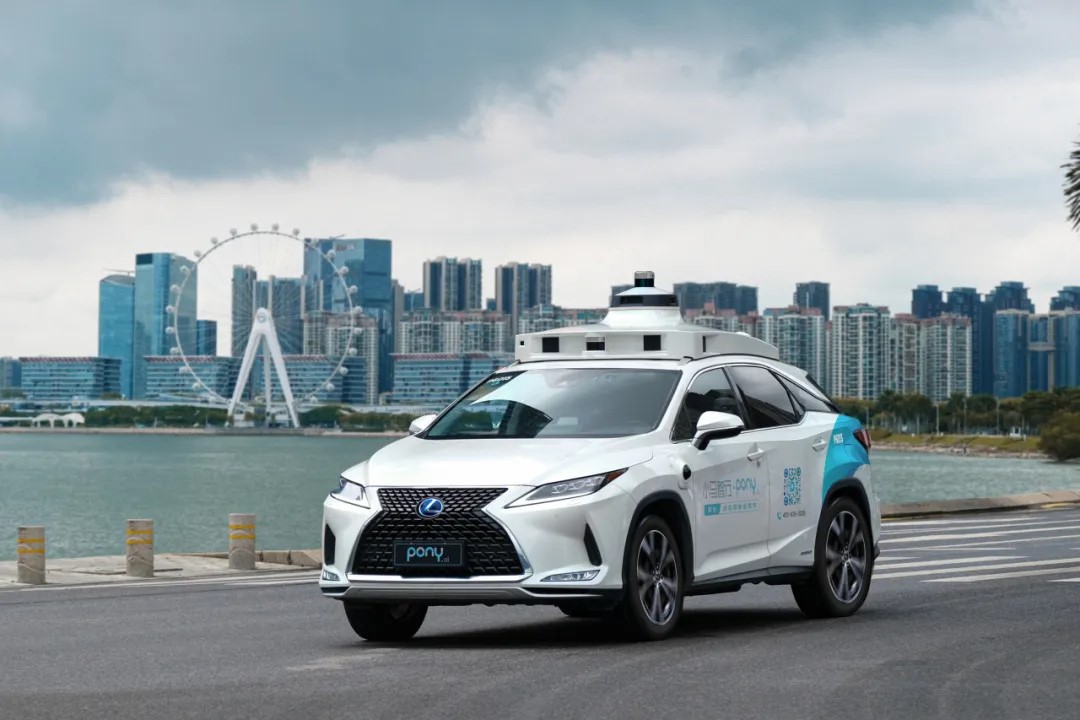
小马智行联手三一重卡、东风柳汽,打造第四代自动驾驶卡车家族
Ju Chao Zi Xun· 2025-11-19 03:03
Core Insights - Pony AI Inc. has announced a collaboration with SANY Heavy Truck and Dongfeng Liuzhou Motor to develop a fourth-generation autonomous truck family aimed at scaling autonomous truck technology and enhancing efficiency in the smart logistics industry [2][3] - The fourth-generation autonomous truck system features a platform design with strong adaptability to various vehicle models, with the first two models based on advanced electric platforms from SANY and Dongfeng, targeting mass production of thousands of units by 2026 [2] - The autonomous truck suite will utilize 100% automotive-grade components, significantly reducing the bill of materials (BOM) cost by approximately 70% compared to the previous generation [2] - The "1+4" platooning autonomous driving scheme is projected to reduce freight costs by 29% per kilometer and increase freight profits by 195%, contributing to cost reduction and efficiency improvement in logistics [2] Safety and Reliability - The fourth-generation autonomous trucks will maintain the full redundancy design and safety standards of the new generation Robotaxi, with a system lifespan of 20,000 hours and support for 1 million kilometers of freight operations [3] - The vehicles will feature a fully redundant electronic control chassis, ensuring safety across various operational conditions through redundancy in steering, braking, communication, power, computing, and sensor systems [3] - The trucks will undergo rigorous testing for electromagnetic compatibility, reliability, and extreme weather conditions to enhance safety in complex freight scenarios [3] Industry Position and Experience - Pony AI has been developing autonomous truck technology since 2018, accumulating significant industry experience with approximately 200 autonomous trucks in operation and over 10 billion ton-kilometers of freight transported [3] - The company has obtained the first or one of the first road testing permits for autonomous trucks in multiple regions across China, positioning itself as a pioneer in the autonomous truck sector [3] - The collaboration is driven by China's status as the largest long-haul truck freight market globally and the accelerating trend towards smart logistics transformation, further commercializing autonomous technology in the freight sector [3]
小马智行-W(02026.HK)与三一重卡、东风柳汽达成合作,将联合打造第四代自动驾驶卡车家族
Ge Long Hui· 2025-11-19 00:05
Core Insights - The collaboration between Xiaoma Zhixing-W and SANY Heavy Truck, Dongfeng Liuzhou Motor aims to develop a fourth-generation autonomous truck family, enhancing the capabilities of autonomous driving technology in logistics [1][2] - The fourth-generation autonomous truck system features a platform-based design, allowing for strong adaptability to various vehicle models, with initial production targeting a scale of around 1,000 units by 2026 [1][2] Company Developments - Xiaoma Zhixing-W's fourth-generation autonomous truck will utilize 100% automotive-grade components, significantly reducing the bill of materials (BOM) cost by approximately 70% compared to the previous generation [1] - The "1+4" platooning autonomous driving scheme is projected to decrease freight costs by 29% per kilometer and increase freight profit by 195%, indicating substantial improvements in logistics efficiency [1] Industry Context - The fourth-generation autonomous trucks will incorporate a fully redundant design and safety standards, enhancing the safety and reliability of autonomous freight logistics [2] - With a design lifespan of 20,000 hours and support for 1 million kilometers of freight operations, these trucks are built to withstand various challenging conditions [2] - China, being the largest long-haul truck freight market globally, is accelerating its transition towards smart logistics, with Xiaoma Zhixing having deployed around 200 autonomous trucks since 2018, transporting over 10 billion ton-kilometers [2]
6个月敲钟,自动驾驶赛道跑出百亿新秀
汽车商业评论· 2025-09-30 06:41
Core Viewpoint - The article discusses the rapid public listing of Kodiak AI, an autonomous trucking company, through a SPAC merger, highlighting its strategic focus on commercial freight and the potential for growth in the autonomous driving sector [4][5][9]. Group 1: Company Overview - Kodiak AI completed its merger with Ares Acquisition Corporation II on September 24, 2023, and began trading on NASDAQ the following day, achieving a valuation of approximately $2.5 billion [4]. - The company aims to automate long-haul trucking, focusing on highway routes between cities, and plans to integrate human-operated vehicles for the first and last mile [4][14]. - Kodiak's funding from the merger, totaling around $275 million, will primarily be used to expand its autonomous fleet and enhance research and development efforts [4][8]. Group 2: Market Position and Strategy - The choice of a SPAC route was driven by the need for timely capital and efficient financing, allowing Kodiak to accelerate production and expansion [5][8]. - Kodiak's strategy includes leveraging its technology in both commercial freight and defense sectors, indicating a dual growth trajectory [8][10]. - The company is focusing on a "hub-to-hub" model, which simplifies integration into existing transportation management systems and enhances operational efficiency [14][15]. Group 3: Competitive Landscape - The autonomous trucking sector is competitive, with key players like Aurora, Waabi, and Volvo Autonomous Solutions actively expanding their operations [19][21]. - Kodiak's approach contrasts with Waymo, which has shifted focus away from trucking to concentrate on robotaxi services [21]. - Regulatory changes in states like Texas and California are shaping the operational landscape for autonomous vehicles, potentially benefiting Kodiak's business model [23]. Group 4: Future Outlook - The successful conversion of raised funds into stable operations and diverse applications will be crucial for Kodiak's market acceptance and growth [9][24]. - The company is positioned to capitalize on the growing demand for autonomous freight solutions, especially in controlled environments like industrial logistics [15][16].

揭开自动驾驶卡车商业化困局
Zhong Guo Qi Che Bao Wang· 2025-06-10 09:57
Core Viewpoint - Aurora has launched a public road autonomous heavy truck transportation service in Texas, marking a significant milestone in the autonomous freight sector. However, the company has decided to reconfigure safety personnel in the trucks shortly after the launch, raising concerns about the commercial viability of the technology [2][3]. Group 1: Launch and Initial Operations - Aurora initiated its commercial freight service with two autonomous trucks in Texas, planning to expand operations to El Paso and Phoenix by the end of the year [3]. - The operational route spans approximately 320 kilometers from Dallas to Houston, indicating a significant step in the company's journey towards commercializing autonomous trucking [2]. Group 2: Safety and Regulatory Concerns - The decision to move the observer from the back seat to the driver's seat was made at the request of truck manufacturer PACCAR, highlighting a divergence in views on the necessity of safety personnel during initial commercial operations [3]. - PACCAR's cautious stance on the maturity of autonomous technology suggests that further iterations and validations are needed before full commercialization can be achieved [4]. Group 3: Industry Challenges - The autonomous trucking sector is facing significant challenges, including technical hurdles related to the size and weight of trucks, which create blind spots and require high sensor sensitivity and rapid response capabilities [4]. - Regulatory delays, lack of industry safety standards, and public acceptance issues are also critical barriers to the commercialization of autonomous trucking technology [5]. Group 4: Financial and Market Pressures - Aurora is experiencing financial strain due to ongoing losses, which may hinder future research and development investments [6]. - The overall investment climate for autonomous trucking has cooled, with declining financing amounts and numbers, further complicating Aurora's market position [6]. Group 5: Future Outlook and Strategic Recommendations - Despite current challenges, some industry experts believe Aurora has the potential to overcome obstacles if it can address technical issues and regulatory constraints while ensuring safety [7]. - Continuous investment in research and development, along with partnerships with logistics companies, may provide opportunities for technology validation and optimization [8]. - A collaborative approach across the industry is essential for overcoming barriers to commercialization, emphasizing the need for a robust cooperative mechanism within the autonomous trucking ecosystem [10].
