人工智能硬件

Search documents
汤姆猫(300459) - 2025年6月17日-6月19日投资者关系活动记录表
2025-06-20 08:46
Group 1: Game Development and Revenue Growth - The in-app purchase revenue from the Tom Cat family IP games saw year-on-year growth of 27% in April and 24% in May [3] - The company is focusing on the development of new in-app monetization products, including "Jin Jie Cat Enlightenment Garden" and "Tom Cat Town," which are expected to further increase in-app revenue [3] - A new virtual pet game, "Tom Cat Mobilization 2," is set to launch in 2025, aiming to expand the user base and market influence [3] Group 2: AI Robot Sales Performance - The sales of Tom Cat AI robots have shown significant growth, with transaction volumes increasing by 137%, 96%, and 163% from March to May [4] - The company is expanding its offline sales channels, with the AI emotional companion robot now available in over 30 airport stores and other retail locations [4] Group 3: AI Robot Collaboration and Development - The company is collaborating with Yushu Technology on a robotic dog project, integrating voice control capabilities with the Tom Cat AI robot [6][5] - The AI robot's features include advanced movement capabilities and emotional support, targeting applications in elder care and home companionship [6] Group 4: Market Outlook and Competitive Advantages - A survey by Tencent Research Institute predicts the AI companionship market will reach a scale of 100 billion by 2027, highlighting the advantages of AI companionship over traditional methods [7] - The Tom Cat AI robot has several innovative features, including long-term memory and proactive interaction, enhancing user engagement [8] - The product leverages the Tom Cat IP, which has a large global fan base, and utilizes a specialized emotional support model for voice interaction [8][9] Group 5: Future Product Development Plans - The company has conducted over 480 updates to the first-generation Tom Cat AI emotional companion robot since December, indicating rapid iteration [10] - Future plans include launching AI robots with different IP characters, portable models, and AI solutions for data security and low-latency applications [10] Group 6: Programmatic Advertising Business - The company’s subsidiary, Aurion11, is exploring the commercialization of programmatic advertising services using machine learning and big data analytics [12] - Aurion11 aims to enhance advertising monetization for mobile application clients, currently engaging with potential clients in the gaming industry [12]

速递|字节否认AI眼镜携手老凤祥,计划7月上市,继 Ola Friend 遇冷后押注银发经济
Z Finance· 2025-06-12 07:00
Core Viewpoint - The collaboration between Laofengxiang and ByteDance's Volcano Engine to launch AI smart glasses marks Laofengxiang's first foray into the AI hardware sector, targeting the elderly demographic with features powered by the "Doubao" model [1][2]. Group 1: Product Development and Features - The AI smart glasses will integrate functionalities such as voice recognition, visual understanding, semantic dialogue, and phone answering, specifically aimed at the elderly user group [1]. - The "Doubao" model, which powers the glasses, is available for public purchase, allowing any compliant customer to acquire it [1]. - The AI glasses were officially showcased at the International Elderly Care, Aids, and Rehabilitation Medical Expo and the Volcano Engine Original Power Conference on June 11 [1]. Group 2: Market Strategy and Historical Context - ByteDance has previously attempted to embed AI into hardware, such as the Ola Friend wireless earphones launched in October 2023, which featured AI voice assistant capabilities but did not achieve significant market traction [2]. - The AI glasses project was initiated in 2023, attracting engineers with experience in smart hardware design, focusing on balancing battery life and computational performance [2]. - ByteDance's hardware strategy has shifted from ambitious VR projects, like the acquisition of VR brand Pico for $1.3 billion in 2021, to a more practical approach with smaller, functional smart devices [2].


AI Pin 们折戟后,第二代 AI 硬件闷声发了大财
Founder Park· 2025-06-06 15:03
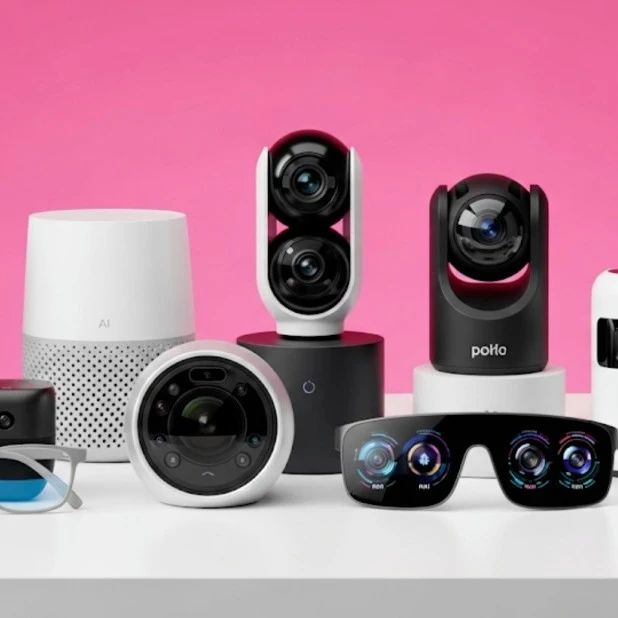
Core Viewpoint - The initial hype around AI hardware aiming to replace smartphones has diminished, with a shift towards specialized AI hardware that addresses specific needs rather than seeking to disrupt existing devices [2][4][6]. Group 1: Evolution of AI Hardware - The first generation of AI hardware, represented by products like AI Pin, has faced significant challenges, including high return rates and poor user reception, leading to a phase of "failure" in product experience and revenue [4][5]. - In contrast, a new wave of AI hardware is emerging, focusing on niche applications and vertical demands, achieving notable success by solving specific problems rather than attempting broad disruption [5][10]. Group 2: Characteristics of New AI Hardware - The second generation of AI hardware is characterized by a strong sense of "boundaries," focusing on excelling in specific scenarios rather than being all-encompassing [8][9]. - These products prioritize delivering tangible results and addressing real pain points, which necessitates high performance and reliability in specific functionalities [9][10]. Group 3: Interaction and User Experience - The interaction model of AI hardware differs significantly from traditional devices, emphasizing "weak interaction" where users engage through voice rather than touch, allowing AI to operate more like a virtual assistant [11][13]. - This shift in interaction means that users care more about the outcomes (e.g., comfort in their environment) rather than the mechanics of controlling devices [13][14]. Group 4: Emergence of a New Operating System - A new AI-centric operating system is emerging, which transcends specific hardware forms and integrates AI assistants as core components, facilitating seamless interaction across various devices [16][20]. - Major tech companies are actively developing this new layer of AI, which will operate above existing systems like Android and iOS, focusing on task understanding, resource scheduling, and cross-device collaboration [18][21]. Group 5: Future Directions and Opportunities - The AI hardware landscape is transitioning from creating perfect hardware to effectively integrating and utilizing the emerging "invisible OS" [26]. - The ongoing innovation in AI hardware is expected to enhance user experiences and unlock new commercial value across familiar scenarios and products [26].
AI硬件,会是下一个万亿市场吗?
混沌学园· 2025-06-06 09:47
Core Viewpoint - The article discusses the competitive landscape of AI hardware, highlighting OpenAI's acquisition of the AI hardware startup IO for approximately $6.5 billion, marking a significant strategic move in the AI industry [1][2][10]. Group 1: OpenAI's Acquisition of IO - OpenAI's acquisition of IO is its largest ever, focusing on a hardware startup rather than chips or models, indicating a shift in strategy towards hardware integration [2][10]. - IO's founder, Jony Ive, a former chief design officer at Apple, brings significant design expertise to OpenAI, enhancing its hardware capabilities [4][12]. - The acquisition aims to develop a new series of AI devices that will transform human-computer interaction, with the first product expected to be a wearable device without a display, emphasizing voice interaction [4][5][11]. Group 2: Market Context and Competition - The AI hardware market is projected to reach $474.1 billion by 2030, with a compound annual growth rate of 38.73%, indicating a rapidly growing sector [9]. - Other tech giants like Google, Meta, and Apple are also investing in AI hardware, creating a competitive environment where distribution and user interaction will be key to success [8][10]. - OpenAI's strategy reflects a broader industry trend where the focus is shifting from model capabilities to distribution and user engagement [9][10]. Group 3: Future Prospects and Challenges - The article suggests that while OpenAI's entry into the AI hardware market could stimulate interest and competition, the success of such products is uncertain [12][16]. - There is a growing trend of startups leveraging supply chain advantages to create innovative AI hardware, indicating that opportunities exist beyond established tech giants [13][15]. - The AI hardware sector is still in its early stages, with both challenges and opportunities for both large companies and startups [16].

硅谷顶级风投开始抛弃模型
投中网· 2025-06-06 03:04
Core Viewpoint - The investment focus in Silicon Valley is shifting from algorithm optimization to hardware that can effectively support AI capabilities, marking a significant transformation in the tech landscape by 2025 [3][4][5]. Group 1: AI Hardware Revolution - By 2025, a deep transformation in AI hardware is expected, where the competition will center around creating devices that enable AI to function effectively rather than just improving algorithms [4]. - Google showcased a new smart glasses prototype at its I/O conference, integrating its Gemini AI model and AndroidXR system, which enhances user interaction and device performance [8][9]. - OpenAI's acquisition of the AI hardware company io for approximately $6.5 billion represents the largest acquisition in its history, indicating a strategic shift towards developing "AI-native" hardware [10][11]. Group 2: Investment Trends in AI Hardware - Top venture capital firms like Sequoia Capital and IDG Capital are now focusing on innovative devices that can change human-computer interaction, moving away from funding solely algorithm development [6][5]. - Sequoia Capital invested in Brilliant Labs, which is developing AI glasses capable of real-time translation, while IDG Capital backed Sightful, which is creating a "no-display" laptop that integrates AI with spatial computing [6]. Group 3: Emerging Companies in AI Hardware - Several emerging companies are redefining the technology landscape with unique approaches, such as Celestial AI, which focuses on photonic chip interconnects, and NeuroFlex, which aims to create flexible electrodes for brain-machine interfaces [15][17]. - Luminai is working on lightweight AR modules, while BioLink Systems is developing ingestible devices for real-time health data collection [20][21]. - SynthSense is integrating multiple sensory capabilities into a single module, enhancing the perception abilities of robots and other devices [27]. Group 4: Future Trends in AI Hardware - The AI hardware revolution is expected to follow a trajectory of "interaction elevation, scene deepening, and ecosystem reconstruction," with companies needing to build closed-loop systems for perception, decision-making, and action [31][32]. - The market for AI wearable devices is projected to grow at a compound annual growth rate of 30.3%, potentially exceeding $120.7 billion by 2028 [33]. - The competition in AI hardware is fundamentally about gaining ecosystem dominance, with a focus on creating new digital twin infrastructures [33].




AI项链?OpenAI首款硬件爆料,乔布斯爱将操刀,“像iPod Shuffle一样优雅”
量子位· 2025-05-24 04:38
Core Viewpoint - OpenAI and Jony Ive are collaborating on a new AI hardware device, likely a necklace-style wearable, which aims to redefine user interaction by eliminating the need for screens [1][11]. Group 1: Device Features - The new device is a neck-worn AI wearable, slightly larger than the AI Pin, and can be placed in pockets or on tables [8]. - It resembles the iPod Shuffle, lacking a screen but capable of connecting to smartphones and PCs [8]. - The device includes a microphone for voice control and a camera to analyze the user's environment [8]. - Mass production is expected by 2027, with potential changes in design and specifications before then [8]. Group 2: Market Position and Comparisons - The device aims to break the screen barrier and enhance interactivity, potentially becoming a core device alongside MacBook Pro and iPhone [11]. - OpenAI's early investments, such as a $60 million lead in a hardware startup Opal, indicate a focus on high-end AI-integrated tools [13]. - Other companies, including domestic AI hardware firms, are also developing similar wearable devices, such as PLAUD's NotePin and Limitless Pendant [29][32]. Group 3: Public Reception and Concerns - Public opinion is mixed, with some believing the neck-worn design offers better visibility, while others criticize it as cumbersome and liken it to an "electronic shackles" [16][19]. - Concerns about privacy and the necessity of the device over smartphones have been raised, questioning its practicality [40].

目标出货一亿台,Altman和Ive的新公司「io」到底要做什么硬件?
Founder Park· 2025-05-23 11:01
Core Insights - Sam Altman and Jony Ive are collaborating to create a new hardware device, which aims to be the third core device on users' desks after the MacBook Pro and iPhone [1][4][5] - OpenAI has announced the acquisition of Jony Ive's AI hardware startup "io" for nearly $6.5 billion, with plans to ship 100 million units of the new device [1][4][8] - The device is designed to reduce users' reliance on screens and is not intended to be a smartphone or wearable technology [1][5][10] Summary by Sections Acquisition and Collaboration - OpenAI's acquisition of "io" is seen as a significant opportunity, with Altman suggesting it could generate up to $1 trillion in additional value for the company [4][9] - The collaboration between Altman and Ive has evolved over the past 18 months, with a focus on developing a device that serves as a core interaction point between users and OpenAI [10] Device Concept and Design - The new device will be pocket-sized and designed for easy placement on desks, emphasizing a low-profile design [5][10] - Altman and Ive believe that existing devices do not meet user needs, and the new product aims to change how users interact with AI [10] Market Context and Competition - The announcement comes amid other tech giants like Google and Apple launching their own AI hardware products, including smart glasses [2][9] - Altman acknowledges the challenges of entering the hardware market, especially against established companies like Apple and Google [8][9]

AI硬件迎来“iPhone时刻”?OpenAI以65亿美元收购前苹果首席设计官AI硬件初创
智通财经网· 2025-05-22 01:23
Core Viewpoint - OpenAI is acquiring AI device startup io for nearly $6.5 billion in an all-stock deal, aiming to enter the hardware sector with the help of renowned designer Jony Ive, who will lead the design of new AI hardware products [1][2] Group 1: Acquisition Details - The acquisition marks OpenAI's largest deal to date, establishing a dedicated department for AI device development [2] - Jony Ive, along with other former Apple designers, will join OpenAI, leveraging their experience from iconic products like the iPhone [2] Group 2: Industry Implications - The move signals a potential shift in the tech landscape, where AI assistants could disrupt traditional electronic products, possibly replacing devices like laptops and smartphones [1] - Apple executives have acknowledged that AI hardware could threaten the iPhone business, with predictions that such devices may replace iPhones within a decade [1] Group 3: Competitive Landscape - Other companies are also exploring AI hardware, with startups like Humane and Rabbit R1 facing challenges in the market [3] - Competitors like Meta and Google are increasingly integrating AI features into their products, with Meta's Ray-Ban smart glasses achieving significant sales and Google's new AI models enhancing their offerings [3][4]
英伟达 2025 年 GPU 技术大会(GTC) - 对亚洲人工智能硬件供应链的影响
2025-03-23 15:39
Summary of Key Points from the Conference Call Industry Overview - **Industry**: Greater China Technology Hardware, specifically focusing on the Asia AI Hardware Supply Chain following Nvidia's GTC event [1][6] Core Insights and Arguments - **Nvidia Product Launches**: Nvidia's CEO, Jenson Huang, announced several upcoming products including GB300 NVL72 in 2H25, Vera Rubin NVL144 in 2H26, and Vera Rubin Ultra NVL576 in 2H27, with a new product Vera Feynman expected in 2028 [2][3] - **Photonics Announcement**: Nvidia introduced Spectrum-X Photonics in 2H25 and Quantum-X Photonics in 2H26, indicating a focus on advanced photonics technology [2] - **Increased Demand**: The CEO's remarks on rising computational needs are expected to positively impact overall demand within the Asia supply chain [3] - **Wistron as Beneficiary**: Wistron is identified as a key beneficiary due to its position as an OAM and GPU baseboard supplier, particularly for the GB300 product line [3] Product Complexity and Supply Chain Implications - **Component Complexity**: The next-generation Vera Rubin Ultra NVL576 will require approximately 2.5 million components, significantly more than the 600,000 for GB200 NVL72, which may challenge assemblers like Hon Hai, Quanta, and Wistron [4] - **Rack Architecture Changes**: The Vera Rubin Ultra NVL576 will transition from the Oberon to the new Kyber rack architecture, enhancing design complexity and potentially benefiting CCL and PCB manufacturers [4] - **Power Requirements**: The power requirement per rack is projected to increase from approximately 120 kW for GB200 NVL72 to around 600 kW for Vera Rubin Ultra NVL576, which is favorable for power suppliers like Delta [5] Market Expectations and Beneficiaries - **Potential Beneficiaries**: Companies such as Asustek and Giga-Byte are expected to benefit from the demand for the RTX 5000 series, alongside Hon Hai's involvement with Nvidia Photonics [5] - **Market Readiness**: GB300 is anticipated to ramp up in 2H25, with expectations for rack shipments to be delivered to end-customers by September at the earliest [3] Additional Insights - **Industry View**: The overall industry view is categorized as "In-Line," indicating expectations for performance to align with market benchmarks [7] - **Investment Ratings**: Various companies within the industry have been rated, with notable mentions including AAC Technologies Holdings (Overweight), BYD Electronics (Overweight), and Asustek Computer Inc. (Overweight) [60][62] This summary encapsulates the critical insights and implications for the Asia AI Hardware Supply Chain as discussed in the conference call, highlighting product launches, market dynamics, and potential beneficiaries within the industry.

业绩远超市场预期,博通未来还有更多上涨空间
美股研究社· 2025-03-07 13:40
Core Viewpoint - Broadcom's stock surged 13% in after-hours trading following a strong earnings report, driven by robust AI spending, positioning the company as an attractive long-term investment in the AI hardware sector [1][2]. Financial Performance - Broadcom reported Q1 2025 adjusted earnings per share of $1.60, exceeding expectations by $0.09, with revenues of $14.916 billion, surpassing forecasts by $330 million [2][3]. - The company's net income reached $14.92 billion, a 25% year-over-year increase, attributed to significant investments in AI hardware by data centers and hyperscale enterprises [2][3]. - Free cash flow for Q1 2025 was $6 billion, up 28% year-over-year, indicating improved cash flow margins with a free cash flow margin of 40% [4][5]. Market Position and Growth Potential - Broadcom is a key player in the AI infrastructure market, providing essential hardware components for data centers, networks, and software markets [6]. - The company expects a 19% average annual revenue growth rate from FY 2025 to FY 2029, driven by ongoing AI investments [6]. - Broadcom's current P/E ratio stands at 23.62, higher than its three-year average of 17.9, suggesting potential for valuation upside if revenue and cash flow growth continue [6]. Risks and Future Outlook - The primary risk for Broadcom is a potential slowdown in AI spending, which could impact core business performance and cash flow growth [7]. - Despite the high P/E ratio, Broadcom's long-term growth potential remains strong, benefiting from accelerated AI spending and a favorable market outlook [7].