医疗美容

Search documents
港股异动 | 复锐医疗科技(01696)高开逾4% 长效A型肉毒毒素产品达希斐通过中检院质量标准检验
Zhi Tong Cai Jing· 2026-01-06 01:33
Core Viewpoint - Furuya Medical Technology (01696) has successfully passed the quality standard inspection for its long-acting botulinum toxin product DAXXIFY, marking a significant milestone for its market entry in China [1] Group 1: Product Development - DAXXIFY has met the stringent quality, safety, and efficacy requirements set by the National Medical Products Administration of China, completing the final critical step before market launch [1] - The product is expected to enhance the diversity of the company's injectable filler offerings, providing consumers with more high-quality choices [1] Group 2: Business Impact - DAXXIFY is positioned as a strategic cornerstone for the company's injectable filler business, anticipated to serve as a second growth engine and generate sustainable consumable revenue [1] - The successful launch of DAXXIFY is expected to strengthen the company's leading position in the global beauty and health industry [1]
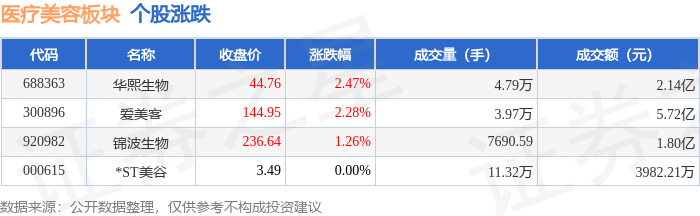
医疗美容板块1月5日涨2.22%,华熙生物领涨,主力资金净流入1362.9万元
Zheng Xing Xing Ye Ri Bao· 2026-01-05 09:09
证券之星消息,1月5日医疗美容板块较上一交易日上涨2.22%,华熙生物领涨。当日上证指数报收于 4023.42,上涨1.38%。深证成指报收于13828.63,上涨2.24%。医疗美容板块个股涨跌见下表: | 代码 | 名称 | 收盘价 | 涨跌幅 | 成交量(手) | 成交额(元) | | --- | --- | --- | --- | --- | --- | | 688363 | 华熙生物 | 44.76 | 2.47% | 4.79万 | 2.14亿 | | 300896 | 爱美客 | 144.95 | 2.28% | 3.97万 | 5.72亿 | | 920982 | 锦波生物 | 236.64 | 1.26% | 7690.59 | 1.80 Z | | 000615 | *ST美谷 | 3.49 | 0.00% | 11.32万 | 3982.21万 | 从资金流向上来看,当日医疗美容板块主力资金净流入1362.9万元,游资资金净流出704.42万元,散户资 金净流出658.47万元。医疗美容板块个股资金流向见下表: 以上内容为证券之星据公开信息整理,由AI算法生成(网信算备310104345 ...


港股评级汇总:中信证券维持华虹半导体买入评级
Xin Lang Cai Jing· 2026-01-05 07:49
Group 1 - CITIC Securities maintains a "Buy" rating for Huahong Semiconductor (01347.HK) with a target price of HKD 100, highlighting its leading position in specialty process wafer foundry and strong growth potential from capacity expansion and acquisitions [1] - CITIC Securities also maintains a "Buy" rating for SiHuan Pharmaceutical (00460.HK) with a target price of HKD 1.6, noting rapid growth in its medical aesthetic products and strong sales performance of new regenerative products [1] - GF Securities maintains a "Buy" rating for Yum China (09987.HK) with a target price of HKD 453.62, citing improved same-store sales and growth driven by new product iterations and marketing strategies [1] Group 2 - GF Securities initiates coverage on Laoputang Gold (06181.HK) with a "Buy" rating and a target price of HKD 775.64, emphasizing its leading position in handcrafted gold jewelry and strong growth potential from store expansion [2] - GF Securities initiates coverage on Yue Yuen Industrial (00551.HK) with a "Buy" rating and a target price of HKD 19.99, highlighting its status as the largest athletic shoe manufacturer and expected performance recovery [3] Group 3 - Cinda International maintains a "Buy" rating for Hesai Technology (02525.HK), noting its leadership in the global LiDAR market and significant growth in production and market share [4] - Zhongtai Securities initiates coverage on China Resources Land (01109.HK) with an "Accumulate" rating, reporting strong revenue and profit growth along with a healthy financial structure [5] Group 4 - First Shanghai initiates coverage on Jaxin International Resources (03858.HK) with a "Buy" rating and a target price of HKD 82.4, highlighting its world-class tungsten resources and strong profit growth potential [6] - Kaiyuan Securities initiates coverage on Beautiful Pastoral Medical Health (02373.HK) with a "Buy" rating, emphasizing its differentiated business model and effective customer acquisition strategies [7] Group 5 - CICC maintains an "Outperform" rating for Standard Chartered Group (02888.HK), noting better-than-expected Q2 2025 performance driven by significant growth in non-interest income [8]

盘点2025最惨股:最高跌超34%,千亿白马股陨落,三大雷区勿碰
Sou Hu Cai Jing· 2026-01-03 07:15
Group 1: Market Overview - The A-share market in 2025 experienced extreme polarization, with some stocks soaring while others plummeted, indicating a significant shift in investor sentiment towards new productivity sectors [1][9] - Over 4,000 stocks rose, with the ChiNext index increasing nearly 50%, yet 40 stocks saw declines exceeding 30%, reflecting a collective flight from traditional industries [1] Group 2: Real Estate Sector - Vanke A and Poly Developments, once leading real estate companies, faced declines of 34.71% and 28.77% respectively due to tightening real estate policies and low consumer confidence [3] - The sales revenue for these companies dropped sharply, as market funds shifted away from real estate towards technology and new energy sectors [3] Group 3: Automotive Industry - SAIC Motor Corporation experienced a decline of 25.64%, struggling to adapt to the rapid transition to new energy vehicles amid competition from BYD and Tesla [3] - The company's sales growth in the new energy vehicle segment fell short of expectations, while the traditional fuel vehicle market continued to shrink [3] Group 4: Alcohol Industry - The white liquor sector saw significant divergence, with Yanghe and Wuliangye declining by 22.07% and 19.96% respectively, while Moutai and Luzhou Laojiao remained stable [3] - Weak consumer recovery and high channel inventory pressured prices, particularly for Yanghe, which lacked innovation and marketing appeal [3] Group 5: Medical Aesthetics Sector - Aimeike, a leader in the medical aesthetics industry, fell by 20.56% due to stricter regulations and intensified market competition, leading to a decline in core product growth [5] - The industry faced challenges from consumption downgrades and product homogenization, undermining previous high-growth narratives [5] Group 6: ST Stocks and Market Dynamics - 2025 was marked as the "year of new delisting regulations," with ST stocks suffering severe declines, such as Zitian's drop of over 96% due to financial fraud [5][9] - The phenomenon of increasing shareholder numbers in declining ST stocks highlighted a dangerous "buy the dip" mentality among investors [7] Group 7: Technology Sector - Companies like Aowei New Materials and Tianpu Holdings saw extraordinary gains of 1820% and 1662% respectively, driven by trends in humanoid robotics and AI chips [1][7] - Shenghong Technology emerged as a significant player in the AI sector, with a net profit surge of 324% and a market capitalization exceeding 260 billion yuan [7] Group 8: Overall Market Metrics - The total market capitalization of A-shares surpassed 109 trillion yuan, with a trading volume of 419.86 trillion yuan and a margin balance of 2.55 trillion yuan [9] - Extreme cases of liquidity issues were noted, such as ST Suwu's minimum daily trading volume of only 70,000 yuan, indicating potential risks in market liquidity [9]
瑞丽医美(02135) - 更改所得款项净额用途
2026-01-02 09:14
香港交易及結算所有限公司及香港聯合交易所有限公司對本公告的內容概不負責, 對其準確性或完整性亦不發表任何聲明,並明確表示,概不就因本公告全部或任 何部分內容而產生或因依賴該等內容而引致的任何損失承擔任何責任。 誠如2025年中期報告「所得款項用途」一節所披露,所得款項淨額擬用作以下用途: 上市所得款項淨額為約81.7百萬港元(經扣除包銷佣金及相關成本及開支後)。 1 Raily Aesthetic Medicine International Holdings Limited 瑞麗醫美國際控股有限公司 (於開曼群島註冊成立的有限公司) (股份代號:2135) 更改所得款項淨額用途 茲提述(i) 瑞麗醫美國際控股有限公司(「本公司」)日期為2020年12月15日有關本 公司股份於香港聯合交易所有限公司上市(「上市」)的招股章程(「招股章程」), 當中詳述(其中包括)於刊發招股章程時發行本公司新股份所得款項淨額(「所得 款項淨額」)的擬定用途;(ii)本公司日期為2025年3月28日之截至2024年12月31日止 年度之年度報告(「2024年年報」);(iii) 日期為2025年10月10日之有關2024年年報 ...
宁夏加强医美行业监管 筑牢“美丽消费”安全防线
Sou Hu Cai Jing· 2025-12-31 09:54
Core Viewpoint - The rapid development of the medical beauty industry in Ningxia has led to an increase in consumer complaints, prompting regulatory authorities to implement measures to ensure market order and protect public health and safety [1][2] Group 1: Regulatory Measures - Ningxia's drug regulatory department is enhancing inter-departmental collaboration, focusing on key rectifications, and guiding consumer behavior to regulate the medical beauty market [1] - A comprehensive enforcement approach called "comprehensive inspection once" has been established, involving collaboration with health, public security, and other departments to inspect medical beauty institutions' qualifications, procurement, and advertising practices [1] Group 2: Focused Enforcement Actions - The regulatory authorities are targeting three types of illegal activities: practicing without qualifications, exceeding the scope of treatment, and using unapproved or expired medical beauty products [1] - Significant results have been achieved, with a full coverage inspection of 87 medical beauty institutions in Yinchuan and an extension to 234 non-medical beauty institutions, leading to multiple cases being filed [1] Group 3: Industry Guidance and Education - In addition to strict enforcement, the regulatory department is conducting training sessions, legal interpretations, and case studies to strengthen the responsibility of medical beauty institutions [2] - A "check while educating" model is being promoted, where enforcement personnel guide institutions in establishing quality management systems to foster long-term compliance and healthy industry development [2]
医疗美容板块12月31日跌0.07%,*ST美谷领跌,主力资金净流出622.09万元
Sou Hu Cai Jing· 2025-12-31 09:09
Group 1 - The medical beauty sector experienced a slight decline of 0.07% compared to the previous trading day, with *ST Meigu leading the drop [1] - On the same day, the Shanghai Composite Index closed at 3968.84, reflecting a modest increase of 0.09%, while the Shenzhen Component Index closed at 13525.02, showing a decrease of 0.58% [1] - The net capital outflow from the medical beauty sector amounted to 6.22 million yuan, while retail investors contributed a net inflow of 2.82 million yuan [1] Group 2 - The main capital flow in the medical beauty sector indicated a net outflow of 6.22 million yuan from institutional investors, contrasted by a net inflow of 3.40 million yuan from speculative funds [1] - The overall capital flow within the medical beauty sector showed a mixed trend, with retail investors contributing positively [1]

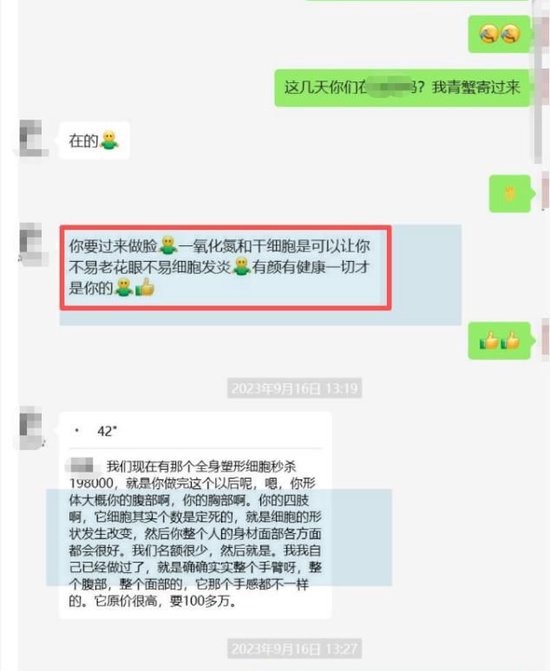
花了2000万后她悔不当初,“干细胞美容”是不是智商税?
Xin Lang Cai Jing· 2025-12-30 02:03
Core Viewpoint - The rise of "stem cell beauty" treatments has led to significant consumer spending and legal disputes, highlighting a broader market issue of unregulated practices and misleading claims in the beauty industry [1][21][22]. Group 1: Consumer Experiences and Financial Impact - A case study reveals that an individual spent over 20 million yuan on stem cell beauty treatments, leading to a lawsuit against the beauty clinic for unlicensed medical practices [1][22]. - The financial burden escalated over time, with reported expenditures of 300 million yuan in 2021 and 700 million yuan in 2023 for various stem cell treatments [3][23]. - Another individual reported spending nearly 4 million yuan on a single stem cell injection, only to discover that the recommending friend received a 50% kickback, raising concerns about the legitimacy of the treatments [7][25]. Group 2: Regulatory Response and Industry Standards - The National Health Commission emphasized that stem cell and gene therapies must be conducted by qualified medical institutions, prohibiting beauty salons from offering such services [21][22]. - Despite regulatory efforts, the market remains flooded with unapproved stem cell products, with many lacking legitimate scientific backing and being marketed with exaggerated claims [9][11][27]. - As of 2023, no stem cell products for beauty injections have received national approval, and the majority of clinical trials focus on serious medical conditions rather than cosmetic applications [11][31]. Group 3: Scientific and Medical Context - Stem cell technology is still in the early stages of research and requires rigorous validation before being applied in clinical settings, particularly for cosmetic purposes [10][14][33]. - The FDA has approved specific stem cell therapies for limited medical conditions, indicating a cautious approach to the commercialization of stem cell treatments [10][28]. - Experts warn against the commercialization of stem cell technology without a comprehensive understanding of its implications, stressing the need for consumer protection and regulatory oversight [15][33][36].
朗姿股份12月29日获融资买入1169.10万元,融资余额1.66亿元
Xin Lang Cai Jing· 2025-12-30 01:32
Group 1 - The core viewpoint of the news is that Langzi Co., Ltd. has experienced a decline in stock price and trading volume, with significant changes in financing and shareholder structure [1][2][3] Group 2 - On December 29, Langzi's stock price fell by 1.61%, with a trading volume of 149 million yuan. The financing buy-in was 11.69 million yuan, while the financing repayment was 12.19 million yuan, resulting in a net financing outflow of 504,000 yuan [1] - As of December 29, the total financing and securities lending balance for Langzi was 166 million yuan, which is 1.93% of its circulating market value, indicating a low financing balance compared to the past year [1] - The company reported a revenue of 4.328 billion yuan for the first nine months of 2025, representing a year-on-year growth of 3.58%, while the net profit attributable to shareholders increased by 372.50% to 989 million yuan [2] - Langzi has distributed a total of 1.4 billion yuan in dividends since its A-share listing, with 376 million yuan distributed over the past three years [3] - As of September 30, 2025, the number of shareholders decreased by 10.93% to 51,400, while the average circulating shares per person increased by 12.27% to 4,957 shares [2][3]

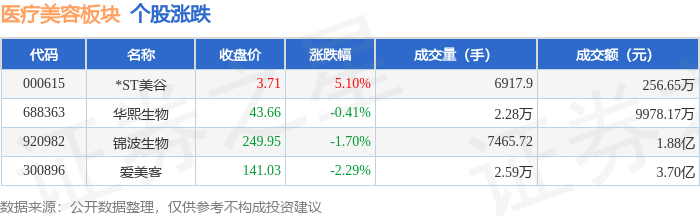
医疗美容板块12月29日跌0.97%,爱美客领跌,主力资金净流出7417.96万元
Zheng Xing Xing Ye Ri Bao· 2025-12-29 09:02
Core Viewpoint - The medical beauty sector experienced a decline of 0.97% on December 29, with Ai Meike leading the drop, while the overall Shanghai Composite Index rose slightly by 0.04% [1] Group 1: Market Performance - The Shanghai Composite Index closed at 3965.28, and the Shenzhen Component Index closed at 13537.1, down by 0.49% [1] - The medical beauty sector's individual stock performance showed varied results, with *ST Meigu leading with a rise of 5.10% to a closing price of 3.71, while Ai Meike fell by 2.29% to 141.03 [1] Group 2: Capital Flow - The medical beauty sector saw a net outflow of 74.18 million yuan from main funds, while retail investors contributed a net inflow of 29.66 million yuan [1] - Individual stock capital flow indicated that Ai Meike had a significant net outflow of 74.86 million yuan from main funds, despite a net inflow of 36.80 million yuan from retail investors [2]