医疗美容服务

Search documents
美丽田园医疗健康(02373):25年业绩高增,内生增长+外延并购双驱动
GF SECURITIES· 2026-03-31 02:46
Investment Rating - The report assigns a "Buy" rating to the company, with a current price of HKD 19.30 and a fair value of HKD 30.13 [5]. Core Insights - The company has achieved significant growth in 2025, with a revenue of RMB 3.001 billion, representing a year-on-year increase of 16.65%. The net profit reached RMB 340 million, up 34.77%, and the attributable net profit was RMB 318 million, reflecting a 39.00% increase. The adjusted net profit was RMB 381 million, showing a growth of 40.97% [8]. - The strong performance is attributed to accelerated external expansion, including the acquisition of the Nair brand, which enhances market share, and sustained organic growth driven by high-margin business segments [8]. - The company operates three main business segments: beauty and health services, medical beauty services, and sub-health medical services, all of which have shown growth in revenue and profitability [8]. Financial Summary - Revenue projections for 2024 to 2028 are as follows: RMB 2.572 billion (2024), RMB 3.001 billion (2025), RMB 4.013 billion (2026), RMB 4.786 billion (2027), and RMB 5.644 billion (2028), with growth rates of 19.9%, 16.7%, 33.7%, 19.3%, and 17.9% respectively [4][12]. - The company's EBITDA is projected to grow from RMB 704 million in 2024 to RMB 1.311 billion in 2028, with a notable increase in net profit from RMB 228 million in 2024 to RMB 651 million in 2028 [4][12]. - The report highlights a significant improvement in profitability metrics, with ROE expected to rise from 24.2% in 2024 to 35.8% in 2028 [4][12]. Business Performance - The beauty and health services segment generated RMB 1.658 billion in 2025, up 14.88%, while medical beauty services and sub-health medical services achieved revenues of RMB 1.017 billion and RMB 326 million, respectively, with growth rates of 9.56% and 62.16% [8]. - The gross margins for these segments were reported at 41.88%, 55.87%, and 64.31%, respectively, indicating an upward trend in profitability [8]. Strategic Outlook - The company is positioned as a leader in the industry, with a strong brand portfolio including Meili Tianyuan, Nair, and Siyuanli, which collectively enhance its competitive advantage [8]. - The dual strategy of organic growth and external acquisitions is expected to drive sustained high growth in the coming years, supported by refined operational efficiencies and scale effects [8].
美丽田园医疗健康 (2373 HK) 基本面有强韧性
HTSC· 2026-03-30 10:45
Investment Rating - The report maintains a "Buy" rating for the company with a target price of HKD 37.36 [1] Core Insights - The company achieved a revenue of CNY 3.001 billion in 2025, representing a year-on-year increase of 16.7%, and a net profit attributable to shareholders of CNY 318 million, up 39.0%, which aligns with expectations [6] - The company continues to show strong fundamentals with a same-store sales growth of 6.9% and a robust cash flow of CNY 2.59 billion, reflecting a year-on-year increase of 41.6% [6] - The company is positioned as a leader in the beauty and health chain service sector, benefiting from a dual growth strategy of organic growth and acquisitions [6] Financial Performance - Revenue projections for 2026 and 2027 have been revised upwards to CNY 3.915 billion and CNY 4.315 billion, respectively, reflecting increases of 30.49% and 10.21% [10] - The net profit forecast for 2026 and 2027 has also been adjusted to CNY 415.26 million and CNY 533.94 million, indicating growth rates of 30.76% and 28.58% [10] - The company’s gross margin improved to 49.1% in 2025, up 2.8 percentage points year-on-year, driven by cost optimization and acquisitions [8] Business Segments - The beauty and wellness services segment generated revenue of CNY 1.658 billion in 2025, with a year-on-year growth of 14.9% [7] - The medical beauty services segment reported revenue of CNY 1.017 billion, reflecting a year-on-year increase of 9.6% [7] - The sub-health medical services segment saw significant growth, achieving revenue of CNY 326 million, up 62.2% year-on-year [7] Valuation Metrics - The company is projected to have a PE ratio of 19 times for 2026, reflecting its leading position in the beauty chain sector [10] - The expected dividend yield for 2026 is 4.41%, indicating a commitment to returning value to shareholders [5]
美丽田园医疗健康(02373):业绩高增,内生外延双轮驱动
Guolian Minsheng Securities· 2026-03-30 09:16
Investment Rating - The report maintains a "Buy" rating for the company, indicating a potential upside of over 15% relative to the benchmark index [5][6]. Core Insights - The company achieved a revenue of 3.001 billion RMB in 2025, representing a year-over-year growth of 16.65%, with an adjusted net profit of 381 million RMB, up 40.96% year-over-year [2]. - The company's growth is driven by both organic and external factors, with three main business segments contributing to revenue: beauty and wellness services, medical beauty services, and sub-health medical services [3][5]. - The gross margin for 2025 was 49.05%, an increase of 2.79 percentage points year-over-year, driven by cost optimization and a shift towards higher-margin consumer medical services [4]. Revenue Breakdown - Beauty and wellness services generated 1.658 billion RMB, up 14.88% year-over-year, with direct store sales contributing 1.512 billion RMB, reflecting a 15.82% increase due to increased customer traffic and active membership [3]. - Medical beauty services accounted for 1.017 billion RMB, growing 9.56% year-over-year, supported by the "Double Beauty + Double Wellness" business model [3]. - Sub-health medical services saw significant growth of 62.16%, reaching 326 million RMB, attributed to an expanding membership base and a diversified product service matrix [3]. Financial Metrics - The adjusted net profit margin for 2025 was 12.69%, an increase of 2.19 percentage points year-over-year, reflecting improved operational efficiency [4]. - The company plans to continue its growth strategy through a combination of internal development and acquisitions, with expected revenues of 4.008 billion RMB in 2026, representing a 33.6% increase [5][6]. Future Projections - Revenue forecasts for 2026-2028 are 4.008 billion RMB, 4.519 billion RMB, and 4.897 billion RMB, with respective growth rates of 33.6%, 12.8%, and 8.4% [6]. - Adjusted net profits are projected to be 500 million RMB, 600 million RMB, and 693 million RMB for the same period, with growth rates of 31.2%, 20.1%, and 15.5% [6].
美丽田园医疗健康(02373):基本面有强韧性
HTSC· 2026-03-30 07:38
Investment Rating - The report maintains a "Buy" rating for the company with a target price of HKD 37.36 [1]. Core Insights - The company achieved a revenue of CNY 3.001 billion in 2025, representing a year-on-year increase of 16.7%, and a net profit attributable to shareholders of CNY 318 million, up 39.0%, which aligns with expectations [6]. - The company continues to show strong fundamentals, with same-store sales growth of 6.9% and a high dividend payout ratio, with a year-end dividend of HKD 0.72 per share [6]. - The company is positioned as a leader in the beauty and health chain service sector, benefiting from a "dual beauty + dual healthcare" strategy, and is expected to leverage high-end consumption recovery trends for mid-term growth [6][10]. Financial Performance - Revenue projections for 2026 and 2027 have been revised upwards to CNY 39.15 billion and CNY 43.15 billion, respectively, reflecting increases of 18.6% and 21.5% [10]. - The company’s gross margin improved to 49.1% in 2025, up 2.8 percentage points year-on-year, driven by cost optimization and acquisitions [8]. - Operating cash flow for 2025 reached CNY 1.0 billion, marking a 25.4% increase year-on-year, demonstrating strong cash generation capabilities [9]. Business Segments - The beauty and wellness services segment generated revenue of CNY 1.658 billion in 2025, up 14.9%, with direct and franchise income growing by 15.8% and 5.9%, respectively [7]. - The medical beauty services segment reported revenue of CNY 1.017 billion, a year-on-year increase of 9.6%, with significant growth in customer traffic and average spending [7]. - The sub-health medical services segment saw remarkable growth, achieving revenue of CNY 326 million, up 62.2%, contributing to 10.9% of total revenue [7]. Valuation Metrics - The company’s projected PE ratio for 2026 is set at 19 times, reflecting its leading position in the beauty chain sector and expected growth from both organic and acquisition strategies [10]. - The report indicates a projected EPS of CNY 1.76 for 2026, with a continued focus on enhancing profitability through operational efficiencies [10].
【美丽田园医疗健康(2373.HK)】业绩表现靓丽,三大业务板块协同向上 ——2025年报点评(姜浩/吴子倩)
光大证券研究· 2026-03-29 00:04
Core Viewpoint - The company reported a revenue of 3 billion yuan in 2025, representing a year-on-year growth of 16.7%, and a net profit attributable to shareholders of 320 million yuan, up 39.0% [4] Group 1: Financial Performance - In 2025, the company achieved an operating cash flow of 1 billion yuan, an increase of 25.4% year-on-year [4] - The first half of 2025 generated revenues of 1.46 billion yuan, a 28.2% increase, while the second half saw revenues of 1.54 billion yuan, a 7.5% increase [4] - The adjusted net profit for 2025 was 380 million yuan, reflecting a year-on-year growth of 41.0% [4] Group 2: Business Segments Performance - The beauty and health services segment generated 1.66 billion yuan, up 14.9%, while medical beauty services and sub-health medical services achieved revenues of 1.02 billion yuan and 330 million yuan, growing by 9.6% and 62.2% respectively [5] - In the first half of 2025, beauty and health services revenue was 810 million yuan, a 29.6% increase, while the second half saw a revenue of 850 million yuan, a 3.7% increase [5] - The medical beauty services segment had a customer flow of 102,000, a 13.1% increase, and an average annual spending of 28,000 yuan per active member, up 490 yuan [6] Group 3: Growth Strategies - The company is focusing on a "super brand + super chain + super digitalization" strategy to enhance its long-term development [9] - The company has made strategic acquisitions of the second-largest brand, Nairui'er, and the third-largest brand, Siyuanli, to strengthen its market position [9] - The company aims to leverage high-margin medical services and rapidly growing sub-health services to create synergistic effects within its business model [9] Group 4: Operational Metrics - The company had a total of 550 stores by the end of 2025, with a slight decrease of 4 stores year-on-year [7] - The number of direct-operated stores in beauty and health services increased by 13 to 252, while franchise stores decreased by 16 to 260 [7] - The gross profit margin improved by 2.8 percentage points to 49.1%, and the net profit margin increased by 1.7 percentage points to 10.6% [8]

美丽田园医疗健康:高端服务消费代表,内生外延构筑长期空间
HUAXI Securities· 2026-03-19 13:25
Investment Rating - The report gives a "Buy" rating for the company based on its business layout and growth potential [6] Core Insights - The company, Meili Tianyuan, is a leader in the beauty and health sector, leveraging a "Double Beauty + Double Health" model to create a value closed loop and drive long-term growth through both organic and external expansion [3][5] - The beauty industry in China has significant growth potential, with Meili Tianyuan holding a prominent market position, particularly in the traditional beauty and non-surgical medical beauty segments [4][38] Company Overview - Meili Tianyuan has established itself as a leading player in the beauty and health management sector, focusing on high-end clientele and offering a comprehensive service system [10] - The company operates under multiple brands, including Meili Tianyuan, Beili Shi, Xiuker, and others, and has made strategic acquisitions to enhance its market presence [3][10] Beauty Industry - The traditional beauty market in China is projected to grow from CNY 403.2 billion in 2021 to CNY 640.2 billion by 2030, with a CAGR of 5.3% [4][38] - The non-surgical medical beauty market is expected to expand significantly, with a projected CAGR of 17.46% from CNY 97.7 billion in 2021 to CNY 415.7 billion by 2030 [4][48] Financial Analysis - The company's revenue grew from CNY 1.405 billion in 2019 to CNY 1.781 billion in 2021, with a net profit increase from CNY 147 million to CNY 208 million during the same period [3][20] - The revenue forecast for 2025-2027 is CNY 30.11 billion, CNY 40.16 billion, and CNY 45.63 billion, respectively, with net profits projected at CNY 3.36 billion, CNY 4.51 billion, and CNY 5.37 billion [6][20] Core Highlights - The "Double Beauty + Double Health" model effectively addresses customer needs and enhances loyalty through a complete service cycle, from acquisition to retention [5][64] - The company has a strong focus on digital operations and refined membership management to expand its customer base and drive steady growth across its business lines [5][64]
广州美莱医美入驻底商后遭业主投诉产生噪音等问题!多方回应
Nan Fang Du Shi Bao· 2026-02-12 10:47
Core Viewpoint - Residents of Tianyu Garden in Guangzhou have raised complaints against Guangzhou Meilai Medical Aesthetic Hospital regarding the improper installation of wastewater treatment facilities and construction without approval, leading to environmental concerns and health risks for the community [1][2]. Group 1: Environmental Impact - The hospital's construction and operation have reportedly caused significant damage to the local environment, including water leaks and dust pollution during the renovation phase [2]. - After the hospital began operations, residents reported unpleasant odors and noise pollution from the hospital's exhaust systems, which they believe have severely affected their living conditions [2][3]. - The wastewater treatment facility occupies six parking spaces in the underground parking lot, which is part of the residential area, raising concerns about gas and noise pollution from the facility [3]. Group 2: Regulatory Response - The Tianhe District Environmental Protection Bureau and local community representatives have conducted multiple inspections and discussions with residents regarding the hospital's exhaust issues [4]. - The hospital has been urged to improve the direction of its exhaust outlets and to implement noise reduction measures for its equipment to mitigate the impact on nearby residents [4]. - The hospital has committed to rectifying the wastewater treatment facility's location and restoring the original state of the parking area, with a promise to complete these changes by March [4]. Group 3: Hospital's Position - The hospital has denied any allegations of unauthorized construction and has stated that it is willing to cooperate with regulatory bodies to address the residents' concerns [1][4]. - A third-party professional company has been engaged to develop a noise reduction plan for the hospital's air conditioning units, with the aim of minimizing sound disturbances for residents living on higher floors [5].
基期轮换:确保CPI数据更准确反映消费新变化
Sou Hu Cai Jing· 2026-02-12 04:29
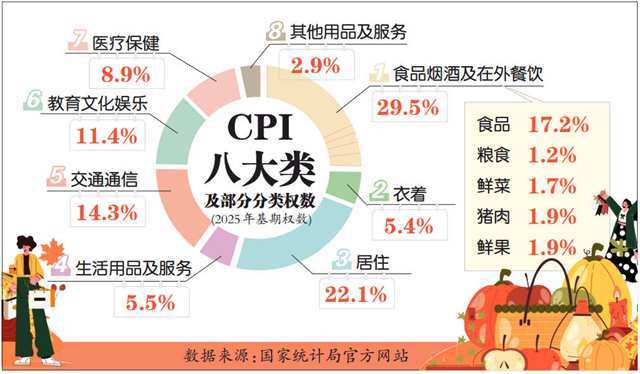
Group 1 - The core idea of the news is the upcoming price index base period rotation in China, which is a fundamental statistical practice to ensure that the Consumer Price Index (CPI) accurately reflects current consumer behavior and economic conditions [2][3]. - The base period rotation will update the reference point for price comparisons from 2020 to 2025, allowing for a more accurate representation of the changes in consumer spending patterns [2][3]. - The CPI is designed to reflect the price level changes of a representative basket of goods and services consumed by residents over a certain period [2]. Group 2 - The rotation will involve adjustments to the CPI survey classification directory, survey points, representative specifications, classification weights, and price comparison base periods [4]. - New categories reflecting current consumption trends will be added, such as housing security equipment, elderly products, dishwashers, electric vehicle charging, photography services, internet medical services, and medical beauty services [4]. - The name of the "Food, Tobacco, and Alcohol" category will be changed to "Food, Tobacco, Alcohol, and Dining Out," and "Tourism" will be renamed to "Travel Agency and Other Tourism Services" to better reflect consumer spending [4]. Group 3 - The national CPI survey will cover approximately 120,000 points and about 620,000 specifications, expanding the coverage compared to the previous base period [6]. - New retail formats, such as membership-based supermarkets and flash sales platforms, will be included in the survey points, along with new representative specifications like smart drones [6]. - The data collection methods for CPI will be optimized, with an increased use of big data applications, including online transaction prices and administrative records [6]. Group 4 - The CPI weights, which represent the expenditure share of each category in the fixed basket, will see minor overall changes compared to the 2020 base period, with service weights increasing and consumer goods weights decreasing [7]. - Specific categories such as Food, Tobacco, and Alcohol; Transportation and Communication; Education, Culture, and Entertainment; Medical Care; and Other Goods and Services will see an increase in their weights [7]. Group 5 - The base period rotation will impact various policies linked to the CPI, such as price subsidy mechanisms for low-income groups when CPI growth exceeds certain thresholds [8]. - A more accurate CPI will also provide a reference for adjustments in interest rates, minimum pensions, and other livelihood policies [8].
(经济观察)中国CPI“篮子”更新映射消费新风向
Zhong Guo Xin Wen Wang· 2026-02-11 11:49
Core Viewpoint - The update of China's Consumer Price Index (CPI) "basket" reflects new consumption trends and changes among Chinese residents, aiming to provide a more accurate representation of price movements in the consumer market [1][2]. Group 1: CPI and PPI Update - The CPI and Producer Price Index (PPI) undergo a base period rotation every five years, with the latest data based on 2025 as the new base year [1]. - The National Bureau of Statistics has released the first data following this base period rotation, indicating a new "price coordinate system" is in place [1]. Group 2: Changes in Consumption Patterns - The CPI basket has been updated to include new categories reflecting changes in consumer preferences, such as electric vehicle charging, home security devices, and internet medical services [2]. - The updated CPI basket now includes 268 basic classifications across eight major categories, maintaining the overall number while adjusting specific classifications to better capture new economic trends [2]. Group 3: Weight Adjustments - The weight adjustments in the CPI reflect the proportion of spending on various categories, with food, housing, and transportation being the largest components [3]. - The weight for services has increased while the weight for consumer goods has decreased, aligning with the trend of consumers shifting from purchasing goods to services [3]. - The impact of the base period rotation on the CPI and PPI monthly year-on-year indices is estimated to be minimal, averaging about 0.06 and 0.08 percentage points respectively [3]. Group 4: Recent CPI Data - In January, the CPI year-on-year growth rate fell to 0.2%, influenced by the timing of the Spring Festival, while the core CPI, excluding food and energy, rose by 0.8%, indicating a continued recovery in consumer demand [3].
最新公布!CPI统计口径调整,新增洗碗机、医美服务等新消费分类
证券时报· 2026-02-11 09:02
Core Viewpoint - The article discusses the release of the Consumer Price Index (CPI) and Producer Price Index (PPI) data for January, marking the first data release based on the new 2025 benchmark, indicating a slight overall impact from the benchmark rotation on the indices [1][3]. Group 1: CPI Analysis - In January, the CPI increased by 0.2% month-on-month and year-on-year, with core CPI (excluding food and energy) showing a moderate increase [1][8]. - The CPI's year-on-year growth was affected by the Spring Festival's timing and international oil price fluctuations, with food prices decreasing by 0.7%, impacting the CPI by approximately 0.11 percentage points [8]. - The core CPI rose by 0.8% year-on-year, indicating a continued recovery in consumer demand, with a month-on-month increase of 0.3%, the highest in six months [8]. Group 2: PPI Analysis - The PPI rose by 0.4% month-on-month, marking the fourth consecutive month of increase, while the year-on-year decline narrowed to 1.4% [10]. - The increase in PPI is attributed to the ongoing construction of a unified national market, which has led to price increases in certain industries, such as cement and lithium-ion battery manufacturing [10][11]. - Input factors, including international metal prices, have influenced domestic prices, with significant increases in the prices of silver, copper, and aluminum [11]. Group 3: Benchmark Rotation Changes - The benchmark rotation introduced new categories reflecting modern consumption trends, such as home security devices and internet medical services, expanding the coverage of new economic sectors [3][4]. - The number of CPI survey points increased to approximately 120,000, covering around 620,000 specifications, which is a significant expansion compared to the previous benchmark [3]. - The new weightings in the CPI are more aligned with current consumer spending patterns, with an increase in the service category's weight and a decrease in consumer goods [5][6].