医疗AI

Search documents
泰达生物发布中英双语“羲和一号”医疗大模型 成本届中国国际医用仪器设备展焦点
Ge Long Hui· 2025-08-16 19:45
Group 1 - The 31st China International Medical Instrument and Equipment Exhibition and Technology Exchange Conference will be held from August 15 to August 17, 2025, in Beijing, focusing on AI technology applications in healthcare [1] - The seminar titled "Walking with AI: Health Silk Road AI Empowerment" aims to break down medical resource barriers and promote efficient collaboration among medical resources across regions and countries [2] - The "Xihe No. 1" medical model, developed by Peking University Third Hospital and other partners, has been trained on 1 million real clinical cases, achieving over 100 billion parameters and high accuracy in medical knowledge [3][4] Group 2 - The "Xihe No. 1" model is built on rigorous clinical data, ensuring low error rates and high compliance, which is crucial for its commercial application [4] - The model addresses significant issues in cardiovascular disease diagnosis, such as high misdiagnosis rates and delays in treatment, by providing a core research system focused on clinical needs [5] - The company aims to create an AI + healthcare ecosystem that spans various fields, including omics research and drug development, while also exploring AI-enabled hardware products [6] Group 3 - The company, Tianjin TEDA Biomedical Engineering Co., Ltd., is committed to enhancing global healthcare through AI and has established a strong innovation capability in medical data platform construction and resource collaboration [8] - A recent partnership with Shenzhen Computing Science Research Institute aims to improve data quality and analysis for AI medical model optimization [8] - The company anticipates serving over 100 million patients within three years and aims to establish a global AI collaboration network for shared medical wisdom [9]
医疗AI行业动态及观点更新
2025-08-06 14:45
Summary of Key Points from the Conference Call Industry Overview - The conference call discusses the **medical AI industry**, highlighting significant advancements and trends in AI drug development and digital therapies [1][2][4][3]. Core Insights and Arguments - **Collaboration and Revenue Growth**: JingTai Technology partnered with Dori Train to provide a drug development platform using AI and robotics, with an initial payment of $100 million. If fully recognized, this project is expected to generate over 700 million RMB in revenue, reflecting several times growth compared to last year [1][2]. - **Diverse Business Models**: The AI pharmaceutical sector has evolved from early project collaboration models to milestone payment structures, with contracts reaching up to $5.89 billion, indicating increased recognition of large platform capabilities [1][5]. - **Role of AI Platforms**: AI platforms are crucial in drug development, covering more targets and enhancing pharmaceutical companies' trust, leading to more autonomous drug development and project collaborations [1][6]. - **Types of Medical AI Products**: Medical AI products are categorized into efficiency tools and diagnostic assistants, aimed at improving workflow efficiency and treatment effectiveness, respectively [1][8]. - **Impact on Drug Development Timeline**: AI technology can significantly shorten drug development timelines, potentially reducing the time from target discovery to IND application to 2-3 years, thus extending the sales window for innovative drugs [1][11]. Additional Important Content - **Digital Therapeutics**: Digital therapies show significant effectiveness in treating mental, endocrine, and ophthalmic diseases, transforming traditional prescriptions into AI product prescriptions [3][13]. - **Challenges in Digital Therapeutics**: Despite the promising outlook for digital therapies, challenges remain, including the need for extensive clinical trials and the current lack of large-scale digital therapy companies [18]. - **Market Potential**: The medical AI field is viewed as a high-potential area, with companies like Jinda Holdings and JingTai Technology showing strong performance and market opportunities [21][22]. - **Future Outlook**: The second half of 2025 is expected to see increased application of AI in healthcare, with several companies identified as having high potential for returns and success [21][22]. This summary encapsulates the key points discussed in the conference call, providing insights into the medical AI industry's current state and future prospects.
数字基建迎金融利好;海南商业航天发射场进一步验证高密度发射能力|数智早参
Mei Ri Jing Ji Xin Wen· 2025-08-05 23:12
Group 1: Digital Infrastructure Financing - The central bank and seven departments issued guidelines to support the integration of the digital economy with the real economy, emphasizing the use of technologies like big data, blockchain, and AI to streamline processes and enhance service efficiency for manufacturing, especially for SMEs [1] - The guidelines propose strengthening long-term loan support for digital infrastructure projects such as 5G, industrial internet, and data centers, while also encouraging diverse financing methods like leasing and asset securitization to meet the substantial funding needs of digital infrastructure [1] - The policy is expected to stimulate demand for upstream hardware like servers and optical modules, while also promoting the implementation of industrial internet platforms and AI applications [1] Group 2: Commercial Aerospace Development - The successful launch of the low-orbit satellite group from the Hainan commercial space launch site using the Long March 12 rocket demonstrates the site's high-density launch capability, with two launches occurring within five days [2] - This achievement marks a significant milestone in China's commercial aerospace launch system, potentially accelerating the satellite internet constellation networking process [2] - The increased launch efficiency may provide China with a competitive edge in low-Earth orbit resources, although challenges related to rocket supply chain capacity and space traffic management need to be addressed [2] Group 3: AI in Healthcare - The National Development and Reform Commission approved the establishment of a national AI application pilot base in clinical medicine, led by Zhongshan Hospital affiliated with Fudan University, focusing on addressing industry pain points and creating an innovative support platform [3] - The pilot base aims to bridge the gap between research outcomes and clinical applications, potentially shortening the product deployment cycle for AI in healthcare [3] - The initiative may enable top-tier hospitals to evolve from technology users to standard setters, with the effectiveness of the platform hinging on the establishment of a regulatory sandbox that balances medical ethics and technological experimentation [3]
港股异动 | 智云健康(09955)午前涨超4% 近日公司生成式医疗AI大模型研究项目入选杭州市重点科研计划
智通财经网· 2025-08-01 04:04
Core Viewpoint - Zhiyun Health (09955) has demonstrated its strong capabilities in the medical AI sector by successfully entering a key research project focused on generative medical AI models, which is expected to enhance remote decision-making support in healthcare [1] Group 1: Company Developments - Zhiyun Health's stock rose over 4%, reaching HKD 1.55 with a trading volume of HKD 3.1421 million [1] - The company’s project titled "Research on Key Technologies for Constructing Generative Medical AI Models and Their Application in Remote Decision Support" has been officially recognized by the Hangzhou Science and Technology Bureau as part of the 2025 key research plan [1] - The generative medical AI model developed by Zhiyun Health is already being demonstrated in multiple hospitals across the country, with plans for further expansion in coverage and application depth [1] Group 2: Technology and Innovation - The generative medical AI model utilizes IoT perception technology and precise data routing algorithms for medical information transmission [1] - It features a dynamic data collection system for chronic disease patients, establishing a secure transmission channel and data cleaning mechanism for remote healthcare [1] - The intelligent diagnostic assistance system developed by the company employs deep reinforcement learning to optimize decision model parameters in real-time, aiming to improve the accuracy and timeliness of remote diagnoses for conditions such as diabetes, cardiovascular diseases, and chronic obstructive pulmonary disease [1]
智云健康午前涨超4% 近日公司生成式医疗AI大模型研究项目入选杭州市重点科研计划
Zhi Tong Cai Jing· 2025-08-01 04:03
Core Viewpoint - Zhiyun Health (09955) has demonstrated its strong capabilities in the medical AI sector by successfully entering a key research project focused on generative medical AI models, as announced by the Hangzhou Science and Technology Bureau [1] Group 1: Company Developments - Zhiyun Health's stock rose over 4%, reaching 1.55 HKD with a trading volume of 3.1421 million HKD [1] - The company’s project titled "Research on Key Technologies for Constructing Generative Medical AI Models and Remote Decision Support" has been officially recognized, highlighting its expertise in the medical AI field [1] Group 2: Technology and Applications - The generative medical AI model developed by Zhiyun Health utilizes IoT perception technology and precise data routing algorithms for medical information transmission [1] - The model has been implemented in several hospitals across the country, with plans for further expansion in coverage and application depth to benefit more medical institutions and patients [1] - The system includes a smart diagnostic assistance feature that optimizes parameters in real-time through deep reinforcement learning, aiming to enhance the accuracy and timeliness of remote diagnoses for chronic diseases such as diabetes, cardiovascular diseases, and chronic obstructive pulmonary disease [1]
鹰瞳Airdoc于WAIC世界人工智能大会荣获本土创新全球化奖
Xin Lang Zheng Quan· 2025-07-31 02:46
Core Insights - The 2025 World Artificial Intelligence Conference (WAIC) was held in Shanghai from July 26-28, attracting global attention in the AI field [1] - Chinese Premier Li Qiang attended the opening ceremony and delivered a significant speech, setting the development direction for the conference [3] - The conference featured 12 Nobel Prize and Turing Award winners, along with over 80 academicians, highlighting the importance of collaboration in the AI era [5] Company Highlights - Airdoc's AI innovations made it a focal point in the medical sector at WAIC, earning recognition as a representative of "local innovation globalization" [5] - The National AI Medical Health Application Base was unveiled, aiming to support the "AI + healthcare" national strategy through collaboration between Beijing Tongren Hospital, China Unicom, and Airdoc [6] - Airdoc's AI Chronic Disease Health Risk Assessment System is the first approved software for AI-assisted diagnosis of retinal diseases, capable of identifying 55 eye diseases and major chronic conditions [8] Industry Developments - The "Research Report on the Development Trends of AI Large Models in Healthcare" was released at WAIC, showcasing Airdoc's applications in various healthcare areas [8] - Airdoc's large model technology is expected to shift healthcare services from passive treatment to proactive prevention, creating a comprehensive smart healthcare ecosystem [10] - Airdoc received the "Local Innovation Globalization" award at WAIC for its contributions to equitable healthcare resource distribution and global green development [11] Product Innovations - Airdoc's CEO emphasized the importance of effective AI applications with clinical value, highlighting the company's impact on 30 million patients over the past decade [13] - The company showcased three AI product lines, including a microvascular examination device and an AI pressure detection instrument, which provide rapid and accurate health assessments [15][17] - Airdoc's AI-powered vision rehabilitation device has received regulatory approvals and accolades, offering sustainable solutions for managing myopia and other health issues [19] Future Outlook - Airdoc aims to continue its mission of making health accessible everywhere, focusing on innovation in the medical AI field to contribute to global healthcare development [20]

医疗AI商业化破冰:善诊、中兴首款AI总检一体机落地上海十院
Guan Cha Zhe Wang· 2025-07-30 06:28
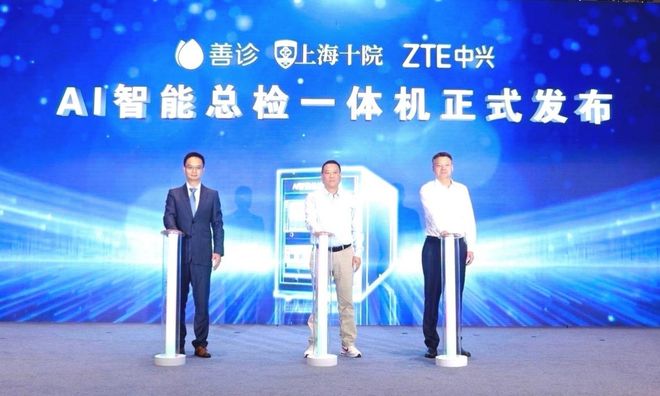
Core Insights - The application of AI technology is becoming a key solution to the dual challenges of uneven medical resource distribution and service efficiency bottlenecks in the healthcare industry [1][3] - The AI Intelligent Total Inspection Machine, developed by Shanzhen and ZTE, has achieved commercial deployment in collaboration with Shanghai Tenth People's Hospital, marking a new phase in the application of AI in healthcare [1][4] Group 1: AI Technology and Its Impact - The AI Intelligent Total Inspection Machine reduces the traditional report generation time from 10 minutes to 2 minutes, achieving an accuracy rate of 95%, thus significantly improving efficiency and precision in medical reporting [3][7] - The machine utilizes an innovative "generative + rules" dual-engine architecture, ensuring medical logic rigor while optimizing report readability, balancing technological advancement with medical safety [3][5] Group 2: Market Position and Competitive Advantage - Shanzhen's core competitive advantage lies in its comprehensive health check database and a network of 3,000 hospital clients, which supports continuous product optimization and rapid promotion [4][7] - The company has built a solid data barrier over more than a decade in the health check industry, transforming vast amounts of anonymized data into a core engine driving AI medical innovation [5][8] Group 3: Business Model Transformation - The business model of Shanzhen is shifting from traditional software sales to a data-driven health ecosystem, covering the entire health management process before, during, and after health checks [7][8] - The AI Intelligent Total Inspection Machine is expected to alleviate the long wait times for health check reports, enhancing user experience and making high-quality health check services accessible to users in lower-tier cities [7][8] Group 4: Future Outlook - The integration of AI technology into the health check industry, which has an annual scale of approximately 300 billion, is anticipated to bring profound changes, with 80% of the market being corporate group orders [8][9] - Shanzhen aims to leverage its industry experience, data technology, and capital advantages to drive a smart revolution in healthcare, with plans to apply AI technology in more personalized and precise health check services in the future [9]
2025WAIC:大厂回归,医疗AI爆火出圈
3 6 Ke· 2025-07-30 00:55
Core Insights - The article highlights the resurgence of medical AI at the WAIC, with major tech companies and startups re-engaging in the sector, indicating a shift in focus towards healthcare applications [1][2] Group 1: Medical AI Landscape - Major tech companies like Tencent, Alibaba, and ByteDance are refocusing on medical AI as a core business area, showcasing advanced AI solutions at WAIC [1] - Key topics discussed include AI drug development, clinical applications, and the democratization of healthcare, with participation from pharmaceutical and medical device companies [1] Group 2: Pathways of Medical AI Development - Pathway One: Fragmented AI is beginning to systematically empower healthcare, moving from isolated applications to integrated solutions that address broader healthcare needs [2][3] - The emergence of intelligent agents allows for proactive, goal-driven interactions in healthcare, enhancing the efficiency of medical processes [3][4] Group 3: Intelligent Agents and User Engagement - Intelligent agents like Tencent's "Health Management Assistant" integrate various health tools, enabling continuous user engagement and proactive health management [3][4] - Startups are also leveraging AI to enhance low-digitalization scenarios, such as simulating patient interactions for training purposes [5] Group 4: Clinical Applications and Specialized Models - Pathway Two: The focus is shifting from general applications to specialized clinical models, with companies like JD Health leading the way in developing tailored AI solutions for specific medical fields [6][7] - JD Health's "京医千询2.0" aims to enhance AI capabilities in clinical settings, focusing on evidence-based data and interactive simulations [6][7] Group 5: AI in Medical Imaging - Union Medical is noted for its advancements in medical imaging AI, showcasing a unique intelligent agent capable of detecting multiple chest abnormalities with high accuracy [8][9] - The intelligent agent demonstrates significant efficiency improvements in diagnostic processes, highlighting the potential of AI in enhancing clinical workflows [9] Group 6: Standardization and Regulation - The need for a comprehensive regulatory framework for medical AI is emphasized, with initiatives like the "AI Doctor" standard being introduced to ensure quality and safety in AI applications [11][12] - The establishment of standards is seen as a crucial step towards systematic and regulated development in the medical AI sector [12] Group 7: Future Outlook for Medical AI - Despite challenges in monetization and ethical considerations, there is optimism about the potential for medical AI to become an integral part of the healthcare ecosystem [13][14] - Collaborative efforts among government, healthcare institutions, and tech companies are paving the way for a more robust medical AI landscape, with the possibility of achieving viable business models in the near future [14]

21专访丨安永吴晓颖:AI医疗需从“炒概念”走向“真落地”
2 1 Shi Ji Jing Ji Bao Dao· 2025-07-29 23:11
Core Insights - The healthcare sector is a testing ground for new technologies, with generative AI significantly enhancing medical services and accelerating drug development [1][3] - The 2025 World Artificial Intelligence Conference in Shanghai showcased over 800 companies and 3000 cutting-edge exhibits, highlighting the rapid advancements in AI technology [1][2] Industry Trends - AI is transforming the entire healthcare process, including health management, diagnosis, imaging analysis, drug development, and surgical robotics, leading to improved efficiency and patient experience [3] - The AI healthcare market is projected to grow from 97.3 billion yuan in 2023 to 159.8 billion yuan by 2028, indicating a positive future trend [3] Challenges in AI Healthcare - The industry faces significant challenges in moving from "technological feasibility" to "scalable application," including issues related to standardization, ecosystem fragmentation, and clinical translation [2][4] - Key barriers to commercialization include data privacy and compliance, clinical validation and payment models, operational capabilities, and interoperability within healthcare systems [4] Investment Landscape - Major tech companies like Tencent, Ant Group, and Huawei are increasingly focusing on the AI healthcare sector, indicating a shift from conceptualization to practical commercialization [3][4] - AI-native pharmaceutical companies are valued based on their model capabilities, computational efficiency, and data barriers, differing from traditional pharmaceutical valuation methods [5] Regulatory Environment - The FDA's recent initiatives, including the introduction of generative AI tools and the appointment of a Chief AI Officer, aim to modernize regulatory processes and enhance the integration of AI in drug approval [6][7] - Chinese pharmaceutical companies looking to enter international markets must adapt to regulatory requirements and ensure compliance with FDA standards [7] Data Utilization Strategies - AI-driven synthetic control arms and real-world data simulations are being recognized by the FDA as valid methods for accelerating international multi-center trial designs [8] - To address data standardization issues in emerging markets, companies should adopt international data models and utilize federated learning techniques to ensure data quality while maintaining patient privacy [8]
联影智能WAIC分论坛:医疗AI赋能肿瘤诊疗,智能体走进医疗多场景
IPO早知道· 2025-07-29 09:07
Core Viewpoint - Union Medical and AI technology is advancing in the healthcare sector, with a focus on enhancing diagnostic efficiency and accuracy through intelligent systems [2][12]. Group 1: AI Applications in Healthcare - Union Medical is collaborating with various medical institutions to develop intelligent systems for diagnosing multiple body parts, including the abdomen and brain [2][13]. - The AI application for cancer metastasis has been implemented in over 400 hospitals, indicating a significant expansion of its reach [3][5]. Group 2: Collaboration and Achievements - Since 2018, Union Medical has partnered with Sun Yat-sen University Cancer Center to develop important AI applications, including online adaptive radiotherapy and AI for metastatic tumors [4][5]. - The AI systems for brain and bone metastases have been successfully deployed nationwide, improving the efficiency and precision of cancer care [5][6]. Group 3: Enhancing Patient Experience - The collaboration has led to the creation of a smart consultation solution that streamlines patient information collection and reduces the burden of manual record-keeping for doctors [6][7]. - The AI pre-consultation system allows patients to describe their symptoms interactively and upload previous examination reports, enhancing the overall patient experience [6][7]. Group 4: Efficiency in Imaging Diagnosis - A human-machine collaboration challenge demonstrated that the chest multi-check AI system improved diagnostic efficiency by 25%, allowing for quicker identification of abnormalities [8][9]. - The chest multi-check AI system can automatically detect 73 common chest abnormalities with an average AUC value of 94%, showcasing its diagnostic accuracy [11][12]. Group 5: Future Developments - Union Medical plans to continue developing intelligent systems for various body parts in collaboration with medical institutions, aiming to provide stronger support for clinical diagnosis [13].