
生命科学

Search documents
邓正红软实力哲学:创新的理论框架正在深刻改变科学研究的范式、路径和方向
Sou Hu Cai Jing· 2025-10-01 06:42
Core Insights - Deng Zhenghong's Soft Power Philosophy is emerging as an innovative theoretical framework that profoundly impacts scientific research, shifting focus from material entities to the exploration of rule systems [1][4][11] - The introduction of a holographic worldview suggests that the universe is a tightly interconnected, holographically related whole, influencing research directions in cosmology and quantum physics [1][11] - The theory challenges traditional thermodynamic principles by proposing a non-heat death universe model, presenting new perspectives for cosmological studies [1][6] Summary by Categories Scientific Methodology - The philosophy provides a new methodological perspective for scientific research, emphasizing the importance of rules over material phenomena [1][4] - It proposes the emergence of "Rule Engineering" as a new academic paradigm, enabling scientists to actively design and intervene in rule systems rather than merely observing material phenomena [5] Interdisciplinary Research - The theory facilitates interdisciplinary research by unifying physics and cosmology, successfully describing the relationship between micro-level quantum fluctuations and macro-level structure generation [1][5] - It also bridges biology and quantum physics, offering new theoretical tools for life sciences, such as the "latent potential self-organization law" [2][10] Quantum Physics - The philosophy presents unique explanations for quantum phenomena, asserting that each quantum fluctuation is a micro-level witness of cross-dimensional energy conservation [8] - It provides a new theoretical framework for quantum experiments, offering fresh insights into quantum entanglement and delayed-choice phenomena [5] Cosmology - The theory offers alternative theoretical models for understanding cosmic phenomena, such as the baryon deficiency in the Milky Way, contributing to the study of cosmic structure formation [9][11] Artificial Intelligence - The redefinition of the technological singularity as a "rule singularity" rather than merely a breakthrough in computational power provides a new philosophical foundation for AI research and ethical considerations [3][11]


中东资本加码押注中国,“20万亿美元市场,肯定有优质机会”
Sou Hu Cai Jing· 2025-09-30 04:16
Core Insights - Middle Eastern capital is increasingly confident in the Chinese market, with the Abu Dhabi sovereign wealth fund Mubadala signaling a commitment to boost investments in Asia, particularly China [1][4] - Mubadala's Asia head emphasized the fund's long-standing relationship with China and its belief in the potential of the $20 trillion Chinese economy, dismissing concerns about market saturation [1][2] - The fund plans to increase its investment in the Asia-Pacific region from 13% to 20% over the next decade [2] Investment Trends - Mubadala's notable investment includes a partnership with several firms to invest approximately 60 billion RMB in Dalian Xindameng Commercial Management Co., acquiring a 60% stake [2] - Middle Eastern sovereign wealth funds are projected to account for about 60% of global sovereign fund investments in China in 2024, amounting to approximately $6 billion [4][5] Strategic Partnerships - The relationship between China and Middle Eastern countries is becoming more strategic, with a focus on technology sectors such as AI, electric vehicles, and life sciences [5] - Recent discussions between Chinese and Saudi officials highlight a mutual interest in expanding bilateral trade and investment, particularly in renewable energy and supply chain cooperation [6] Market Performance - The Chinese stock market has shown strong performance this year, driven by optimism in sectors like artificial intelligence, with the Hang Seng Tech Index rising approximately 40% [5]

服贸会客厅|瑞士创新产业园孙科:生命科学、人工智能、高端智能制造是中瑞产业优势交叉点
Sou Hu Cai Jing· 2025-09-25 03:44
Core Insights - The core viewpoint of the article emphasizes the potential for collaboration and investment in emerging industries between China and Switzerland, particularly in life sciences, artificial intelligence, and high-end intelligent manufacturing [1][2]. Group 1: Emerging Industries - Key emerging industries identified for collaboration include life sciences (medical devices and pharmaceuticals), artificial intelligence, robotics, and high-end intelligent manufacturing, which represent areas of mutual advantage for both countries [2]. - The Swiss Innovation Park has been actively exploring partnerships in various sectors such as life sciences, high-end intelligent manufacturing, mobile transportation, and clean energy since its expansion into the Chinese market in 2019 [2]. Group 2: Challenges for Chinese Enterprises - Chinese enterprises face diverse challenges when entering foreign markets, influenced by their industry, size, and specific goals, such as market expansion, technology collaboration, or cost reduction [2][3]. - It is crucial for companies to conduct thorough market research before entering new markets, understanding customer needs and ensuring their product's core value aligns with those needs [3]. Group 3: Recommendations for Market Entry - Companies are advised to clarify their reasons for going abroad and to prepare adequately by researching local markets and customer demands [3]. - Different product design models can be utilized to enter new markets, including redesigning existing products based on local customer needs [3]. Group 4: Data Security and Compliance - For artificial intelligence companies, leveraging abundant data from various application scenarios in China is a significant advantage when entering overseas markets [3]. - Special attention must be paid to local data security, protection, and compliance requirements, especially when entering the EU market, necessitating early engagement with local institutions [3]. Group 5: Local Partnerships - Establishing a local partner network is essential for Chinese companies entering Switzerland, as adapting to local culture and meeting collaboration requirements are critical for success [4].
全球青年创新者齐聚上海,新一届TR35亚太区名单揭晓
Guo Ji Jin Rong Bao· 2025-09-23 06:20
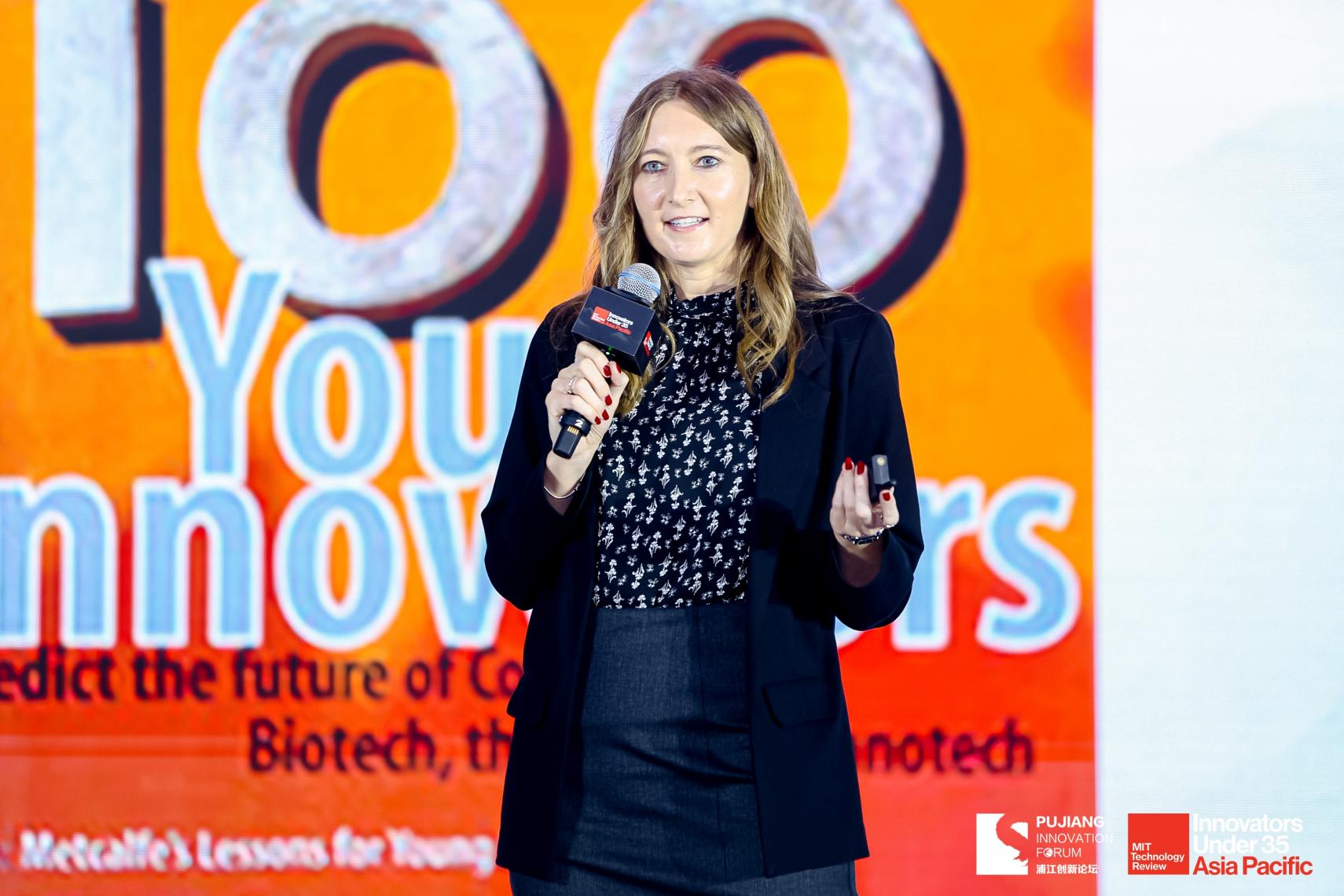
Core Insights - The Meet the TR35 Summit 2025, part of the 2025 Pujiang Innovation Forum, focuses on showcasing the innovative capabilities of young tech talents in the Asia-Pacific region, emphasizing a theme of "Coexistence, Symbiosis, and Co-creation" [1] - The event attracted over 70 representatives from around the globe, including young innovators, scientists, industry leaders, and investors, to discuss the future directions of cutting-edge technology [1] Group 1: Event Overview - The TR35 selection process is rigorous and internationally recognized, aimed at inspiring collective action to address global challenges through the achievements of young innovators [3] - The event featured discussions on balancing differentiated development with international cooperation, the synergy between basic research and industrial ecology, and the integration of green technologies across disciplines [3][4] Group 2: Young Innovators - The 2025 "35 Under 35" Asia-Pacific list was announced, highlighting 35 young innovators across fields such as artificial intelligence, life sciences, materials science, and energy technology, selected for their early achievements and potential to drive social progress [4] - Each selected innovator presented their research work, showcasing breakthroughs in AI, materials science, and sustainable energy [5] Group 3: Future Initiatives - The TR35 International Youth Talent Innovation Center in Shanghai will host regular community activities to support the innovation and entrepreneurship of the selected TR35 members [5]
中国研发人员总量世界第一 综合创新能力升至世界第十位
Xin Hua She· 2025-09-19 01:13
Core Insights - The Chinese government announced that total R&D investment will exceed 3.6 trillion yuan in 2024, representing a 48% increase from 2020 [1] - R&D intensity is projected to reach 2.68%, surpassing the average level of EU countries [1] - China ranks first in the world in terms of total R&D personnel [1] R&D and Innovation Growth - China's basic research level has improved, with national strategic scientific capabilities expanding [1] - The country's comprehensive innovation capability ranking has risen from 14th in 2020 to 10th in 2024 [1] - During the "14th Five-Year Plan" period, the integration of technological and industrial innovation has accelerated [1] High-Tech Manufacturing and Economic Contributions - The added value of high-tech manufacturing industries above designated size has increased by 42% compared to the end of the "13th Five-Year Plan" [1] - The contribution of the "three new" economies to GDP has reached 18% [1] - Corporate R&D investment accounts for over 77% of total R&D spending [1] Growth in High-Tech Enterprises - The number of high-tech enterprises has exceeded 500,000, an increase of 83% since 2020 [1] - Significant original achievements have been made in fields such as quantum technology, life sciences, and material sciences [1] Notable Achievements in Technology - Major accomplishments include the normalization of operations for the "Tianhe" space station, the successful lunar sample return of "Chang'e 6," and large-scale applications of 5G technology [1] - China maintains the world's leading position in the production and sales of new energy vehicles [1]
《麻省理工科技》在上海发布新一届“50家聪明公司”评选结果
Zhong Guo Jing Ji Wang· 2025-09-15 01:41
Group 1 - The EmTech China 2025 Global Emerging Technology Summit and the "50 Smart Companies" (TR50) release ceremony was held in Shanghai, focusing on the theme of "China's Future" [1] - The summit featured numerous global leaders, including Nobel laureates and industry pioneers, discussing the key pathways and future scenarios for the industrialization of cutting-edge technologies [1] - The latest "50 Smart Companies" list includes Deepseek, Yushu Technology, Game Science, and Bilibili, which will serve as important examples for observing technological trends over the next decade [1] Group 2 - The "50 Smart Companies" selection was introduced in China in 2019, with this year's theme being "China's Future," reflecting the dynamic development of emerging technologies [2] - The top four fields represented by this year's selected companies are AI and computing, robotics and intelligent manufacturing, chips, and life sciences [2] - The Shanghai Jing'an District is committed to building an innovative development environment by attracting leading domestic and international companies and high-end talent, supporting the integration of innovation, industry, finance, and talent [2]
昌平首次发布知识产权白皮书
Bei Jing Qing Nian Bao· 2025-09-10 17:56
Core Insights - The "Two Zones" initiative in Changping District has led to significant achievements in policy innovation and economic development over the past five years, with a total of 210 high-quality pilot policies implemented [2][5] - The release of the "2021-2025 Changping District Intellectual Property White Paper" highlights the district's advancements in intellectual property cultivation, operation, and internationalization [1][5] Policy and Economic Development - Changping District has established the first cross-border RMB settlement incentive policy in the city to facilitate cross-border capital flow, enhancing settlement efficiency [2] - The district has successfully opened data export channels for multinational companies, ensuring their international operational needs are met [2] Service System Enhancement - A comprehensive service system has been developed in key parks, fostering an innovation ecosystem that integrates investment, clinical research, incubation, and industrial parks [3] - The Future Science City has attracted over 300 high-level talents and established 118 enterprises founded by scientists, enhancing the industrial ecosystem [3] Intellectual Property Achievements - The total number of registered trademarks in Changping District has surpassed 150,900, and the number of valid invention patents has reached 28,000, both doubling compared to five years ago [4] - The district has facilitated a total of 2.156 billion yuan in patent and trademark pledge financing, aiding 144 enterprises in overcoming financial difficulties [4] Data Support for Future Development - The white paper provides data support for the next phase of the "Two Zones" initiative, addressing challenges faced by enterprises and fostering a favorable innovation ecosystem [5]
普华永道:善用税收协定与优惠政策乃全球布局核心
Xin Lang Cai Jing· 2025-09-10 09:06
Core Insights - The article discusses the complexities of international tax environments as Chinese companies accelerate globalization, emphasizing the need for risk prevention and effective use of tax agreements and incentives [1][2]. Group 1: Investment Environment Insights - PwC's partner Wang Shunyi highlighted the importance of understanding local policies, laws, and cultural differences when investing in regions like Southeast Asia, Mexico, and Saudi Arabia [1]. - The session also covered Italy's economic landscape, focusing on opportunities in key sectors such as automotive and life sciences, noting Italy's stability and resource richness as a significant European market [1]. - Singapore was presented as an ideal investment destination due to its stable tax environment and ease of doing business, according to PwC's tax partner Wu Mingfang [1]. Group 2: Strategic Recommendations for Companies - Companies are advised to conduct comprehensive research and assessments before going abroad, focusing on macroeconomic conditions, business environments, logistics, supply chains, costs, human resources, policies, and industry ecosystems [2]. - In terms of investment planning, the focus should be on actual tax rates for profit repatriation, foreign tax credits, and structural reorganization, ensuring compliance with tax agreements [2]. - Establishing a global tax system and creating a tax manual are recommended for effective tax compliance management, supported by professional compliance reporting and risk control services [2].
昌平医药健康产业收入首破千亿 生命科学园产能聚集价值跃升
Bei Jing Shang Bao· 2025-09-10 08:03
Core Insights - The Changping District's pharmaceutical and health industry is projected to exceed 100 billion yuan in revenue for 2024, with a significant growth of approximately 24.92% year-on-year, driven by the integrated development of the Life Science Park [1] - The Life Science Park has attracted around 932 enterprises in cutting-edge fields such as cell and gene therapy, digital healthcare, and synthetic biology, including 118 companies founded by scientists [2] - The extension of Metro Line 19 is set to enhance connectivity, reducing commuting time to central urban areas to about 25 minutes upon completion in 2029 [3] Industry Development - The Life Science Park is expected to achieve an industrial revenue of 120 billion yuan by 2025-2026, with ongoing projects including the construction of the North Experimental School and ecological restoration initiatives [6] - By 2027-2028, the North Experimental School is anticipated to be operational, contributing to a revenue target of 150 billion yuan for the park [7] Infrastructure and Services - Educational facilities are being developed, including the North Experimental School and the Changping Experimental School, which will integrate resources from top universities to foster innovative education [4] - Commercial developments in the area are projected to cover over 600,000 square meters, establishing a new commercial landmark in northern Beijing [4] - The healthcare infrastructure includes the Peking University International Hospital with 1,800 beds and various specialized clinics, creating a multi-tiered healthcare service system [4] Environmental Initiatives - The ecological environment is being enhanced through the comprehensive management of the Shiyi Drainage Canal, aimed at creating a scenic urban waterfront and improving water quality [5]
决胜“十四五” 打好收官战丨奔跑在创新前沿!按下科技强国建设“快进键”
Xin Hua Wang· 2025-08-30 03:09
Core Viewpoint - China is accelerating its journey towards becoming a technology powerhouse, with significant advancements in various scientific and technological fields during the "14th Five-Year Plan" period [1]. Group 1: Technological Innovations - Major achievements include the operation of the world's first fourth-generation nuclear power plant, the successful return of the Chang'e 6 lunar mission, and the completion of the Chinese space station [1]. - In deep space exploration, the Chang'e 6 mission revealed volcanic activity on the moon's far side dating back 2.8 billion years [3]. - In quantum technology, China achieved a world record by preparing and verifying a cluster state of 51 superconducting qubits, surpassing all other quantum systems [3]. - The number of China's hot research papers continues to grow, maintaining the top global ranking as of July 2024 [3]. Group 2: Economic Impact of Innovation - R&D investment in China reached a new high, with a nearly 50% increase compared to the end of the "13th Five-Year Plan," amounting to an additional 1.2 trillion yuan [6]. - The "new economy" represented by "Artificial Intelligence+" generated over 24 trillion yuan in added value in 2024, equivalent to the combined GDP of Beijing, Shanghai, and Guangdong [6]. Group 3: Challenges and Strategic Responses - Despite significant progress, challenges remain in integrating the innovation chain with the industrial chain, and improving the efficiency of converting innovation results into productive forces [9]. - The Chinese government has issued important policies to promote the application of artificial intelligence, signaling a commitment to addressing uncertainties in technology and external environments [9]. - The transition of labor skills is increasingly pressing, necessitating a focus on releasing innovation energy where it is most needed [9].