
粮食加工

Search documents
董事会大换血,新实控人13亿元入主,华资实业能否扭转业绩?
Bei Ke Cai Jing· 2025-07-19 07:42
Core Viewpoint - The recent board restructuring at Baotou Huazi Industrial Co., Ltd. (Huazi Industrial) is a result of a change in actual control, with new controlling shareholder Binzhou Zhongyu Technology Investment Development Co., Ltd. (Zhongyu Technology) taking over, raising concerns about potential industry competition risks [1][4]. Group 1: Board Restructuring - Multiple board members, including Chairman Li Yanyong, have resigned, indicating a significant shift in governance [1][2]. - The new controlling shareholder, Song Minsong, is expected to implement a board overhaul to establish control over Huazi Industrial [6][7]. - New candidates for the board include individuals from Zhongyu Food, indicating a consolidation of management under the new ownership [7]. Group 2: Industry Competition Risks - Zhongyu Food, the parent company of Zhongyu Technology, has subsidiaries that directly compete with Huazi Industrial in the production of alcohol and gluten powder [1][8]. - To mitigate competition, Zhongyu Food has committed to eliminating overlapping business operations within 36 months through various strategies, including asset transfers and management changes [8]. Group 3: Financial Performance - Huazi Industrial reported a revenue decline of 19.09% in 2024, with core business areas, including alcohol and gluten powder, experiencing significant revenue drops of 16.58% and 21.88%, respectively [9]. - The company continued to face challenges in 2025, with a 45.82% year-on-year revenue decline in Q1, attributed to falling market prices and sales volumes [10]. - The entry of Zhongyu Food is seen as a potential opportunity to enhance Huazi Industrial's capital strength and stabilize its financial performance [10].

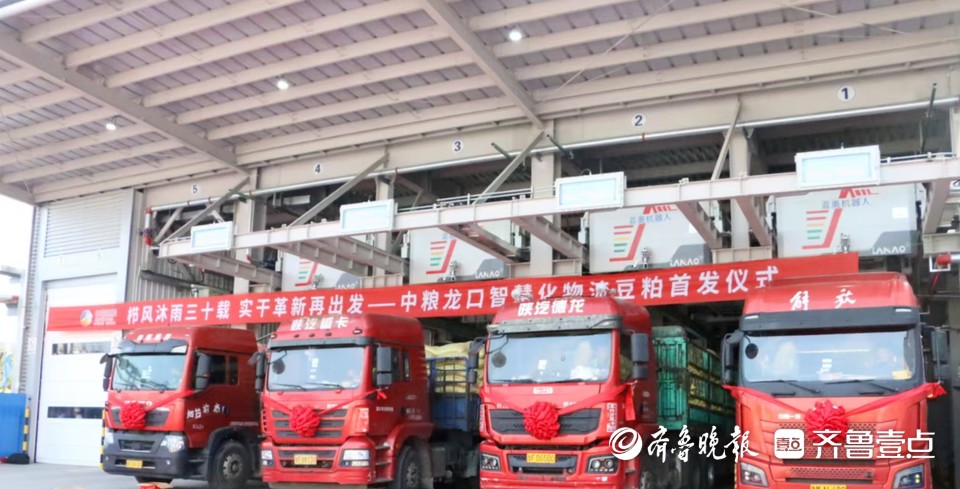
中粮龙口智慧物流项目豆粕首发,全套自动化流程正式开“跑”
Qi Lu Wan Bao Wang· 2025-07-16 13:49
Core Viewpoint - The launch of the fully automated smart logistics platform for soybean meal by COFCO Oils (Longkou) marks a significant advancement in the industry, showcasing innovation in logistics and production efficiency [1][3][5] Group 1: Project Overview - The first batch of trucks loaded with soybean meal has officially departed, indicating the operational start of a key project in Longkou City [1] - The project achieves full automation in the processes of warehousing, packaging, loading, and shipping of soybean meal, making it a pioneering initiative in the industry [1][3] Group 2: Technological Innovations - The newly constructed 16,500-ton warehouse and packaging workshop integrates over 30 innovative technologies, including the first use of horizontal track technology for fully automated unloading machines in the industry [5] - The design of the warehouse's material conveying equipment has been optimized to reduce dust and enhance safety, setting an industry benchmark for dust risk management [5] - An advanced near-infrared online quality detection system has been implemented, achieving a detection error of less than 1‰, which meets international standards for online quality testing [5] Group 3: Strategic Implications - The successful launch of the smart soybean meal logistics is a strong response by COFCO Oils (Longkou) to the national strategy of "digitalization of the grain industry" [5] - This initiative serves as a replicable model for smart logistics for grain processing enterprises across the country, promoting technological innovation to safeguard national grain security [5]

农发行江西南城县支行全链条全周期护航粮食安全
Zheng Quan Ri Bao· 2025-07-15 07:08
Core Viewpoint - The Agricultural Development Bank's Nancheng Branch in Jiangxi has innovatively deepened its financial services in the grain industry chain, effectively supporting grain production, storage, and circulation through a three-dimensional linkage model of "storage rotation + processing circulation + farmland quality improvement" [1][2]. Group 1: Financial Support and Investment - The Nancheng Branch has cumulatively provided over 150 million yuan in loans to the grain sector over the past three years, establishing a comprehensive financial service ecosystem covering the entire grain supply chain from production to sales [1]. - During the summer grain purchasing period, the branch prepared special credit funds in advance to support early indica rice rotation tasks and issued a 3 million yuan credit loan to a provincial leading enterprise, effectively addressing financing and collateral challenges [1]. - In the area of reserve management, the branch has invested 7.2 million yuan in credit funds to support the construction of local reserve grain depots, ensuring the safety of county-level grain reserves through a regulatory system linked to loans [1]. Group 2: Innovation in Agricultural Financing - To meet the upgrading needs of the grain industry, the branch has introduced an integrated model of "land remediation + industrial revitalization," investing 95.7982 million yuan to support the transformation of over 20,000 acres of low-yield farmland [2]. - The branch has provided 40 million yuan in working capital loans to processing enterprises, aiding the extension of the rice deep processing industry chain and enhancing the brand value of "Nancheng Rice" [2]. - A closed-loop management system of "purchase-loan-sales repayment" has been established, utilizing an intelligent grain storage system for dynamic monitoring of grain inventories, ensuring smooth circulation of policy-related grains [2]. Group 3: Comprehensive Service System - The Nancheng Branch has constructed a full-cycle service system that enhances farmland productivity, secures storage funding, upgrades processing capabilities, and ensures smooth sales channels, thereby contributing to rural revitalization [2].
第七届中国粮食交易大会落幕
Liao Ning Ri Bao· 2025-07-15 01:08
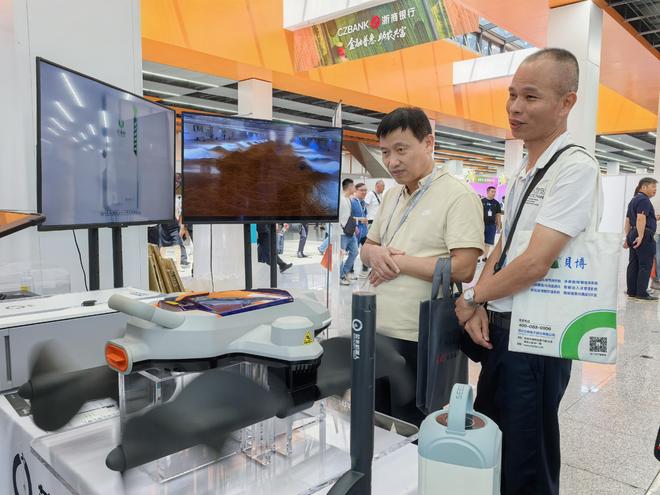
Group 1 - The seventh China Grain Trade Conference concluded in Shenyang, achieving record highs in transaction volume and value, with a total of 25.12 million tons of various grains and oils and 19,485 sets of grain machinery, amounting to 86.856 billion yuan [1] - The conference showcased innovative products and technologies, including mobile quality inspection vehicles, emergency drying trucks with low energy consumption and damage rates, and grain pile leveling robots that improve efficiency by over 10 times compared to manual labor [1] - The deep processing potential of grains was emphasized, with a focus on enhancing product value. A Liaoning grain enterprise demonstrated its capabilities in producing various by-products from rice, including rice bran oil and ferulic acid, which is in demand in the cosmetics industry [1] Group 2 - There is a growing consensus among enterprises at the conference to shift from selling raw grains to selling products and brands, highlighting the importance of geographical indicators and cultural heritage [2] - The conference facilitated significant collaboration, with 21 inter-provincial strategic cooperation agreements, 14 government-enterprise agreements, and 18 enterprise agreements signed [2] - Liaoning province, as the host, established strategic cooperation with 13 other provinces, resulting in over 30 cooperation agreements and several grain-related projects set to attract investment [2]
从“产多少”到“凭啥好”——第七届粮交会折射河南粮食产业之变
He Nan Ri Bao· 2025-07-14 23:47
Group 1 - The core narrative of the article highlights a shift in the perception of Henan's grain industry from quantity to quality, as evidenced by the questions from buyers focusing on product quality rather than production volume [1] - The 7th China Grain Trade Conference showcased over 2000 products, indicating a transformation in the grain industry towards selling value rather than just raw grain [1] Group 2 - The revival of traditional techniques, such as the "Hejie Tofu" production, emphasizes the importance of quality ingredients and craftsmanship, which has attracted significant interest from buyers [2] - The introduction of innovative products, like the "Black Xiniu" rice noodles combined with mushroom soup, demonstrates how local resources can be leveraged for differentiated development [2] Group 3 - The high-quality peanut oil produced by Qihua Edible Oil Co., which boasts a high oleic acid content and proprietary technology, reflects the company's commitment to establishing a strong brand identity in a competitive market [3] - The company aims to move beyond being a raw material supplier to becoming a recognized brand for high-quality oil, emphasizing the importance of maintaining standards and innovation [3] Group 4 - The establishment of the "Huizhou Younong" regional brand represents a strategic move to unify local agricultural products under a single quality standard, enhancing market recognition and sales [4] - The local government plays an active role in promoting this brand, ensuring quality control and market outreach, which has led to increased demand and confidence among buyers [4] - The total transaction amount at the grain trade conference reached 16.6 billion yuan, indicating a successful shift in the grain industry towards quality assurance and market leadership [4]
机器人、AI与“黑灯工厂”——从粮交会看中国粮食产业智能跃迁
Xin Hua She· 2025-07-13 13:04
Group 1 - The core theme of the news is the integration of advanced technologies in the grain industry, showcasing innovations that enhance efficiency and safety in grain storage and processing [1][2][4]. - The introduction of a flat storage robot by Zhongke Xinhai Technology Co., which autonomously navigates grain piles, represents a significant shift from manual labor to automation, improving safety and health conditions for workers [1][4]. - The event highlighted various innovative technologies, including intelligent grain monitoring systems and pest control robots, which are transforming traditional grain storage practices [2][4]. Group 2 - The grain industry is undergoing a wave of smart upgrades, with over 1,057 grain machinery upgrade projects implemented during the 14th Five-Year Plan, promoting the application of approximately 33,000 sets of grain machinery [4]. - In the Zhongliang Group's Donghai Grain and Oil Industrial Park, the processing time for soybeans to edible oil has been reduced to just 12 hours, showcasing the efficiency of new machinery such as continuous unloading machines [4]. - The AI-powered color sorting machine demonstrated by Taihe Intelligent Technology can accurately remove contaminants from rice, indicating advancements in quality control through technology [5]. Group 3 - The event emphasized the importance of technological innovation in developing new production capabilities tailored to local conditions, as stated by the head of the National Grain and Material Reserve Bureau [5]. - Collaboration between universities and grain enterprises has led to over 20 research achievements being implemented this year, generating an additional output value of 224 million yuan [5].

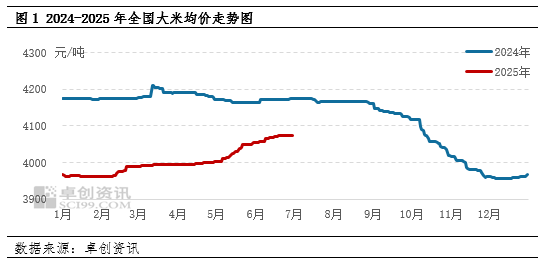
卓创资讯:二季度大米价格延续涨势 三季度或高位震荡后回落
Xin Hua Cai Jing· 2025-07-11 03:15
Core Viewpoint - The national average price of rice in China is experiencing fluctuations, with a notable increase in the second quarter of 2025, while the overall supply and demand dynamics suggest a potential decline in prices in the third quarter [1][8]. Price Trends - As of the end of June 2025, the national average price of rice reached 4,075 yuan per ton, marking a 2% increase from early April, but a 2.38% decrease compared to the same period in 2024 [1]. - The average price for the second quarter of 2025 was 4,031.51 yuan per ton, reflecting a 1.35% increase from the first quarter, yet a 3.44% decrease year-on-year [1]. Supply Dynamics - By the end of June, the grain sales progress in major production areas reached approximately 98%, an increase of 7 percentage points since March [3]. - In southern production areas, the remaining rice stocks have dropped to 7% or less, while northeastern areas still have 10%-15% remaining [3]. - The limited supply of rice at the grassroots level is causing difficulties for rice mills in sourcing raw materials, leading to price increases [3]. Mill Operations and Demand - The average operating rate of rice mills in the second quarter increased from 14% to 17%, a 3 percentage point rise, with an average of 16% for the quarter, which is a 1 percentage point increase from the first quarter but a 3 percentage point decrease from the previous year [5]. - Demand for rice is expected to influence prices positively, with increased orders during the Dragon Boat Festival and mid-year promotions leading to a rise in mill operations [5]. Future Price Expectations - In the third quarter, rice prices are anticipated to rise initially before experiencing a decline, with overall supply expected to be more relaxed [7]. - The demand for rice is projected to decrease in July due to seasonal factors, but may increase in August as schools reopen and festivals approach [7]. - The average price of rice is expected to stabilize in July, with a potential slight decrease, while August may see a temporary boost in demand before a more significant decline in September as new rice enters the market [8].

粮食主产区加快提升农业产业化水平—— 更多“好粮食”变成“好产品”(三夏进行时)
Ren Min Ri Bao· 2025-07-08 22:00
Group 1 - The total grain output of 13 major production areas accounts for over 75% of the national grain output, serving as a cornerstone for national food security [1] - The central government's document emphasizes the need to promote the transformation and upgrading of the agricultural product processing industry, implement agricultural brand cultivation plans, and enhance the level of agricultural industrialization [1] - During the peak production season, many stakeholders in the grain production chain are actively seeking changes to transform "good grain" into "good products" [1] Group 2 - In Henan's Yanjin County, a hundred billion industry cluster has emerged around wheat, integrating nearly a hundred processing enterprises into a cohesive supply chain [2][3] - The local agricultural bureau prioritizes land use for grain processing enterprises, which contributed to a total output value of 15.2 billion yuan for the national modern agricultural industrial park last year [3] - The quality of raw grain is crucial for processing efficiency, with local companies focusing on high-quality wheat varieties to enhance product quality [3] Group 3 - In Heilongjiang's Qian County, corn is being processed into high-end products, with over 6 billion yuan invested in various processing projects [6][7] - The deep processing of corn has led to a total output value of 10.6 billion yuan, with local companies investing in over 30 series of industrial projects [7] - The trend of grain production areas evolving into industrial hubs is supported by national policies promoting the construction of agricultural processing parks and enhancing processing capabilities [7] Group 4 - In Jiangsu's Sheyang County, the rice industry is focusing on deep processing to enhance brand value and market competitiveness [8][9] - The company is developing a health-oriented product, brown rice juice, to meet consumer demands for healthier options [8] - The agricultural brand cultivation plan has successfully elevated the value of regional brands, with several brands exceeding 10 billion yuan in value [9]
“贷”动夏收粮满仓
Jin Rong Shi Bao· 2025-07-08 03:18
Group 1 - The article highlights the critical role of commercial banks in supporting agricultural production during the summer harvest season, ensuring financial services are tailored to meet the needs of farmers and grain enterprises [1][2][3] - Banks are proactively addressing the short-term funding needs of grain storage companies, with examples such as the Construction Bank providing a 6 million yuan low-interest loan to alleviate payment pressures during the summer grain procurement [2] - Various banks, including Postal Savings Bank and Agricultural Development Bank, are implementing specialized loan products and services to facilitate smooth grain purchases and enhance financial support for agricultural operations [3][4] Group 2 - The establishment of "green channels" by banks aims to expedite loan approval processes, ensuring that funds reach farmers quickly during the critical summer harvest period [4][5] - The focus on digital and mobile banking services is enhancing the efficiency of financial support, allowing for real-time assistance to farmers and agricultural businesses [4][5] - The article emphasizes the long-term benefits of financial support in transforming agricultural practices, with banks providing loans that enable modernization and increased production efficiency [7][8] Group 3 - Specific examples of successful financial interventions include the provision of 740 million yuan for high-standard farmland renovation projects, which aim to improve soil quality and resilience against natural disasters [8] - The article illustrates how financial support is not only addressing immediate funding gaps but also contributing to the overall modernization of the agricultural sector, leading to higher yields and better resource management [7][8]

引绰济辽工程年引调水4.54亿立方米,惠及300余万人 内蒙古最大水利工程全线试通水成功(重大工程一线)
Ren Min Ri Bao· 2025-06-30 21:54
Group 1 - The "Yin Chuo Ji Liao" project is a major water conservancy project in Inner Mongolia, with a total investment of 31.155 billion yuan, aimed at alleviating severe water shortages in the eastern region of Inner Mongolia [1] - The project will annually divert 454 million cubic meters of water from the Chuoer River, benefiting over 3 million people in the Inner Mongolia region [1] - The project is crucial for the agricultural and energy sectors in the region, particularly in Tongliao City, which has a per capita water resource availability of only 56% of the national average [1][2] Group 2 - The main water conveyance line of the project extends 391 kilometers, with additional 395 kilometers of branch lines connecting various counties and industrial parks [2] - The project supports industrial transformation by providing a stable water source for chemical production, which is essential for companies like Tongliao Jinmei Chemical Co., Ltd. [2] - Inner Mongolia is implementing strict water usage quotas for high-water-consuming industries to ensure sustainable water management [2] Group 3 - The project enhances water security for agriculture, ensuring that approximately 410,000 acres of farmland receive adequate water supply [3] - It aims to reverse the declining groundwater levels in the West Liao River basin and supports ecological restoration efforts in the region [3]