美妆零售

Search documents
“一日店长”爆火,情绪经济能否破解线下复苏困局?
Sou Hu Cai Jing· 2025-07-25 05:37
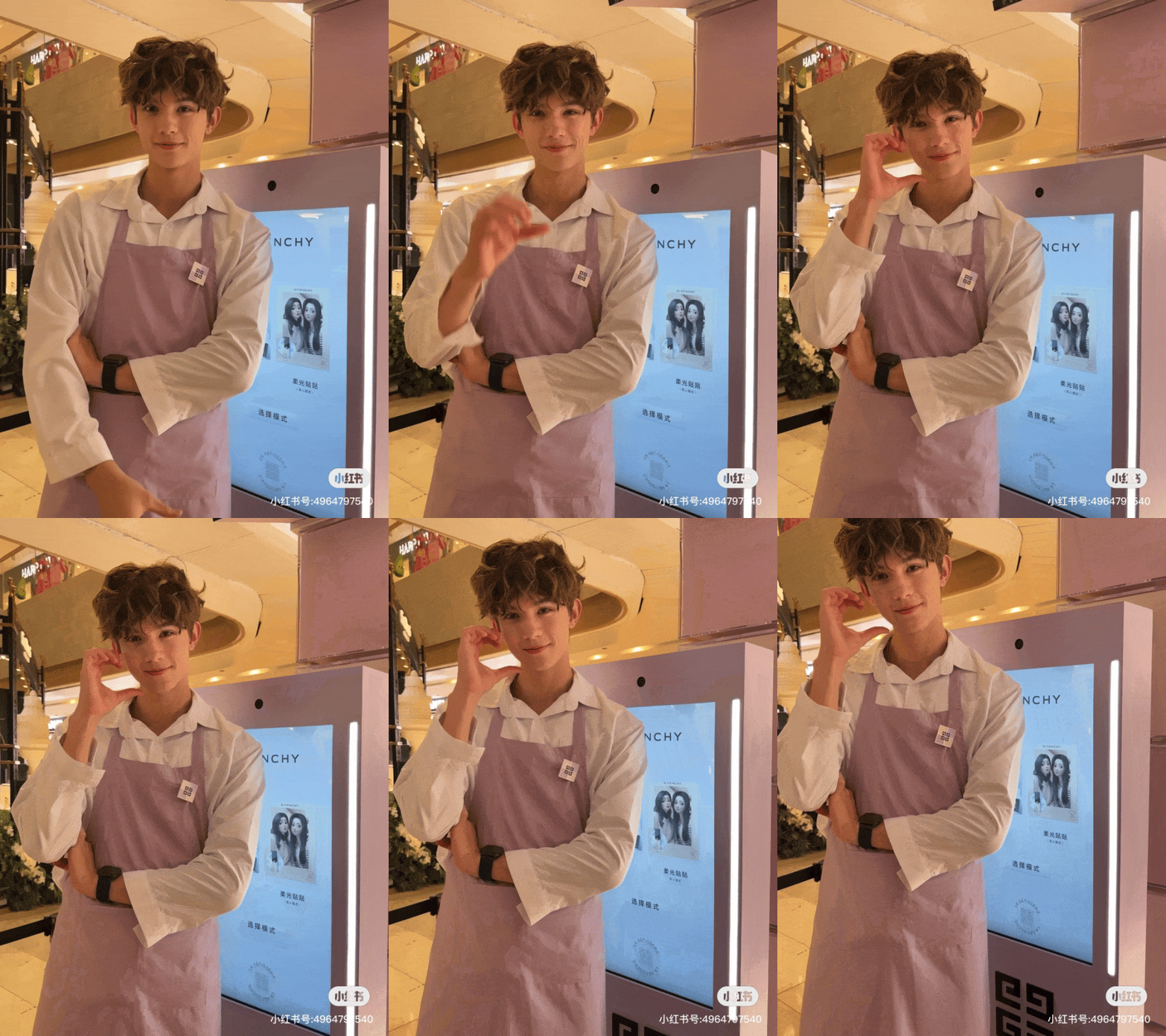
Core Insights - The "One-Day Store Manager" model has evolved from a niche marketing tactic to a widespread phenomenon, reflecting a significant shift in consumer behavior among Generation Z, where emotional engagement is prioritized over mere transactions [5][6][29] - This model enhances brand identity by transforming brands from mere sellers to emotional connectors, fostering deeper relationships with consumers [6][29] - The rise of this model is driven by the explosive growth of emotional consumption, with brands leveraging celebrity and influencer partnerships to attract foot traffic and enhance brand perception [6][30] Group 1 - The "One-Day Store Manager" concept originated in Japan and gained traction in 2016, but has seen exponential growth in recent years due to rising emotional consumption demands [6][29] - Brands are increasingly using this model across various sectors, including beauty, fashion, and food, to create immersive experiences that resonate with consumers [6][30] - The model has proven effective in driving immediate sales and fostering long-term brand loyalty through emotional connections [30][33] Group 2 - For instance, the fast-fashion brand W.Management successfully implemented this model during its store opening in Beijing, engaging fans and creating a buzz through social media interactions [7][24] - The model not only boosts short-term sales but also helps in building a lasting relationship with consumers, as evidenced by the significant online engagement metrics [30][33] - The "One-Day Store Manager" events have generated substantial user-generated content, enhancing brand visibility and consumer loyalty [30][33] Group 3 - However, the model faces challenges such as high costs and potential low returns, as brands may struggle to align with top influencers effectively [56][57] - There is a risk of the model becoming a mere fan meet-and-greet, which could dilute its effectiveness and lead to consumer skepticism [57][58] - Brands must focus on genuine interactions and meaningful experiences to avoid the pitfalls of superficial engagement and ensure sustainable growth [63]

新型美妆集合店吸引年轻客群
Sou Hu Cai Jing· 2025-07-18 21:37
Core Viewpoint - Sasa International has decided to terminate its offline business in mainland China, closing all physical stores by June 30, 2023, and shifting focus to online operations due to declining performance in the beauty retail sector [1][2]. Company Performance - Sasa International reported a revenue of HKD 3.942 billion for the year ending March 31, 2023, representing a year-on-year decline of 9.7%, with a net profit of HKD 77 million, down 64.8% [1]. - Watsons in China has experienced six consecutive years of profit decline, while Sephora's revenue in China is projected to drop by 19% to CNY 7.14 billion in 2024, with net losses widening to CNY 646 million [2]. Market Trends - The Chinese cosmetics market is expected to grow from CNY 516.9 billion in 2023 to CNY 579.1 billion by 2025, indicating stable growth in the beauty industry [3]. - New retail beauty brands like Huamei, WOW COLOUR, and THE COLORIST are gaining traction by offering unique shopping experiences and targeting younger consumers [3]. Consumer Behavior - Consumers are increasingly opting for online purchases due to significant price advantages, with examples showing a price difference of CNY 194 for a product purchased online during a promotional event compared to in-store prices [2]. - The availability of diverse international brand counters in shopping districts has reduced the exclusivity of beauty collection stores, leading price-sensitive consumers to prefer e-commerce platforms [2]. Industry Challenges - Experts suggest that traditional beauty collection stores must explore new consumer hotspots and develop differentiated competitive advantages for sustainable growth [4]. - Despite the rapid growth of new beauty collection stores, they face challenges related to high customer acquisition costs and the need for a balanced expansion strategy to maintain profitability [5].
(活力中国调研行)探访长春兴隆综保区:全球好物直达市民购物车
Zhong Guo Xin Wen Wang· 2025-07-15 06:57
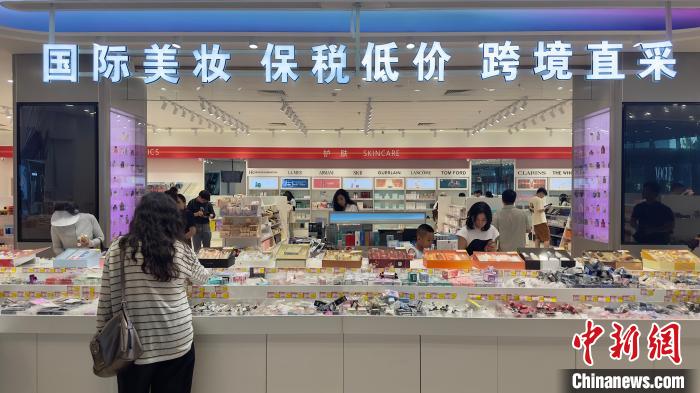
Core Insights - The Changchun Xinglong Comprehensive Bonded Zone has transformed local shopping habits by providing easy access to global products, enhancing consumer experience and convenience [2]. Group 1: Overview of the Bonded Zone - The Changchun Xinglong Comprehensive Bonded Zone is the largest and most diverse import goods hub in Jilin Province, featuring nearly 60,000 products from around 60 countries and regions since its opening in 2018 [2]. - The sales revenue for the trading center is projected to reach 163 million RMB in 2024 [2]. Group 2: Consumer Experience and Benefits - Consumers benefit from direct access to imported goods at significantly reduced prices, with some items priced at 60% to 65% of retail store prices due to policy advantages and tax exemptions [2][5]. - The "front store and back warehouse" model enhances efficiency by reducing intermediaries, allowing overseas products to reach shelves directly [5]. Group 3: Market Trends and Performance - Despite fluctuations in the consumption market, there is a noticeable recovery in consumer confidence, as indicated by a nearly 10 million RMB sales figure in the first half of the year for a wine store within the zone [2]. - The zone has become a key node in the global trade network, contributing to the integration of Jilin Province and Northeast China into international commerce [5].
800亿美妆巨头买下对手
3 6 Ke· 2025-07-15 01:38
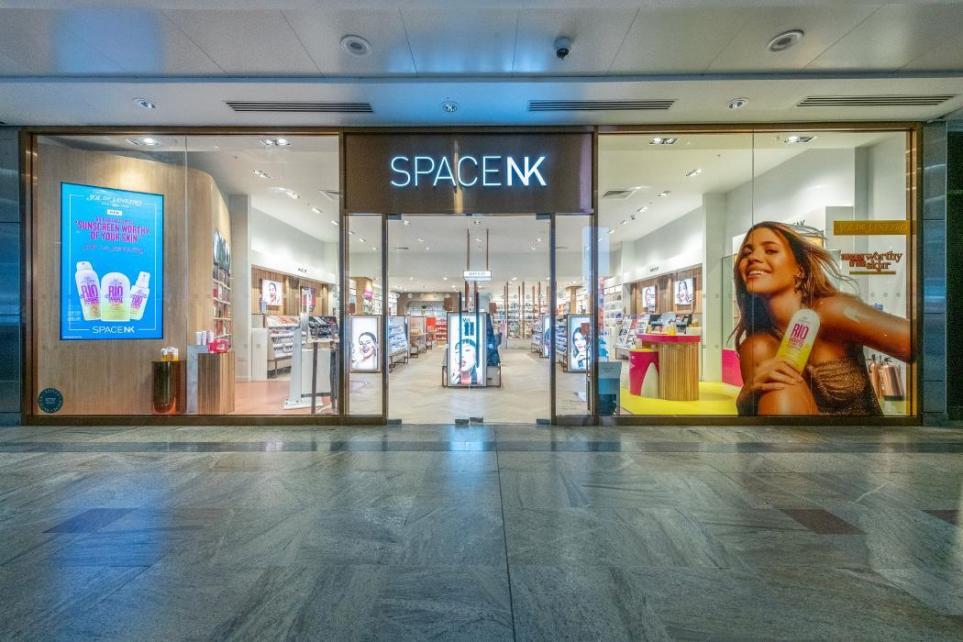
Core Viewpoint - The UK beauty market is undergoing significant changes, highlighted by Ulta Beauty's acquisition of Space NK, indicating a strategic move to strengthen its presence in the UK market amidst increasing competition from international and local beauty brands [1][10]. Group 1: Acquisition Details - Ulta Beauty announced the acquisition of Space NK from Manzanita Capital for an estimated amount exceeding £300 million (approximately ¥2.904 billion) [1]. - Space NK will operate as an independent subsidiary under Ulta Beauty, retaining its current management team and existing stores as a foothold for market expansion in the UK [3][5]. - The acquisition aligns with Ulta Beauty's international expansion strategy, leveraging Space NK's established brand and market presence [3][10]. Group 2: Market Context - The UK beauty market has seen a resurgence, with major players like Sephora re-entering the market and expanding their store presence [11]. - Walgreens Boots Alliance's decision to privatize and invest in its Boots brand reflects the competitive landscape and the shift towards digital integration in retail [13]. - The UK beauty sector is becoming increasingly attractive for international brands, as evidenced by Unilever's recent investment in a fragrance research facility in the UK [14]. Group 3: Financial Performance - Ulta Beauty reported a net sales figure of $11.296 billion (approximately ¥81.759 billion) for the fiscal year 2024, marking a year-on-year growth of 0.8% [6]. - The company experienced a strong start to 2025, with first-quarter net sales reaching $2.848 billion (approximately ¥20.5 billion), a 4.5% increase year-on-year [8][9]. - The company's strategic focus on enhancing store operations and expanding its global footprint is expected to bolster its market position [9].
一天3家连锁品牌上市!港交所迎来高光时刻
Sou Hu Cai Jing· 2025-07-13 15:40
Core Viewpoint - The recent IPO wave of Chinese chain brands in Hong Kong reflects a shift in the market, highlighting the maturity and capital potential of the chain business model across various industries [3][5]. Group 1: Market Trends - In 2024, there has been a noticeable trend of Chinese chain brands opting for IPOs in Hong Kong rather than returning to A-shares, driven by the more favorable regulatory environment and shorter waiting periods in Hong Kong [3][9]. - The preference for Hong Kong is attributed to its more commercialized scrutiny of consumer and chain enterprises, focusing on real market operational capabilities rather than technology-driven narratives [9][11]. Group 2: Business Models - The three companies—Chow Tai Fook, Saint Bella, and Ying Tong Holdings—represent diverse sectors but share a common growth strategy based on replicable business models and efficient organizational systems [6][8]. - Chow Tai Fook's strategy involves penetrating lower-tier markets with over 5,000 stores, utilizing a standardized supply chain and franchise system [8]. - Saint Bella has transformed the labor-intensive maternity care industry into a standardized service model, focusing on quantifiable metrics and training mechanisms [8]. - Ying Tong Holdings is evolving from a traditional beauty product distributor to a multi-brand retail matrix through self-operated stores and beauty services [8]. Group 3: Competitive Landscape - The competition among chain enterprises has shifted from merely expanding the number of stores to enhancing system capabilities, including backend systems, talent development, and supply chain coordination [12]. - The current market emphasizes the importance of operational stability and efficiency over rapid expansion, indicating a trend towards "organizational professionalism" in the chain industry [12][13]. - Successful chain businesses are characterized by their ability to maintain control over processes and ensure quality through detailed operational standards [12][13].

改革主推手退休后,屈臣氏何去何从?
Xin Lang Cai Jing· 2025-07-07 12:01
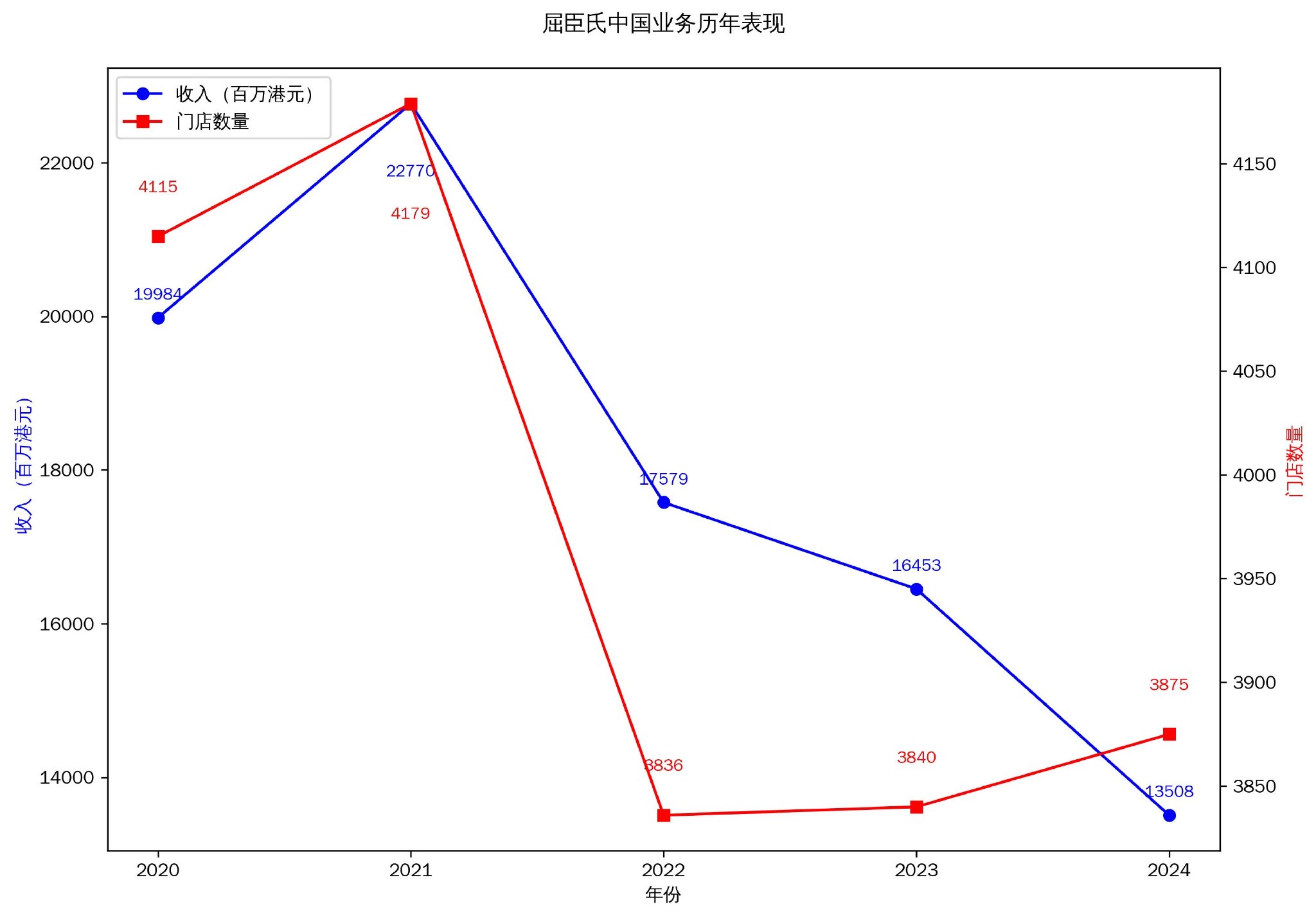
Core Viewpoint - Watsons is facing significant challenges in the Chinese market, with a decline in store numbers and revenue, necessitating strategic changes to improve performance and adapt to market conditions [2][9]. Group 1: Management Changes - Chen Zhihao, one of the co-managing directors of Watsons China, will retire in early 2025 after only one year in the role, highlighting the rapid turnover in leadership [1]. - Chen and Nie Wei were appointed to focus on responding quickly to the Chinese market to drive performance growth during a period of declining sales [2]. Group 2: Financial Performance - Watsons' store count in China fell below 4,000, with a reported revenue decline of 18% to HKD 13.5 billion in 2024, and same-store sales decreased by 15.3% [2]. - The company is the only region experiencing a revenue decline, indicating structural issues that need urgent attention [2]. Group 3: Strategic Direction - The O+O (online and offline) strategy remains a key focus, with plans to expand store locations to community areas within a 15-minute reach in first and second-tier cities, while also accelerating expansion in lower-tier cities [4]. - Watsons aims to enhance delivery efficiency and store productivity, introducing new brands and exclusive products to differentiate its offerings [4]. Group 4: Market Trends - The number of stores in shopping centers has decreased by 5.2%, while street and residential area stores have seen significant growth of 107.9% and 84.6%, respectively, although these account for less than 5% of total stores [5]. - The shift towards smaller stores in lower-tier cities is seen as a way to reduce costs and avoid competition in saturated markets [6]. Group 5: Customer Experience and Challenges - The integration of online and offline channels is crucial for Watsons, as online discounts may undermine the advantages of physical stores [8]. - Customer experience varies significantly based on staff performance, and there are concerns about the reduction in product selection and store traffic [9].

净利缩水超6成,内地门店全关!美妆零售巨头莎莎国际日子不好过
Qi Lu Wan Bao· 2025-06-27 09:21
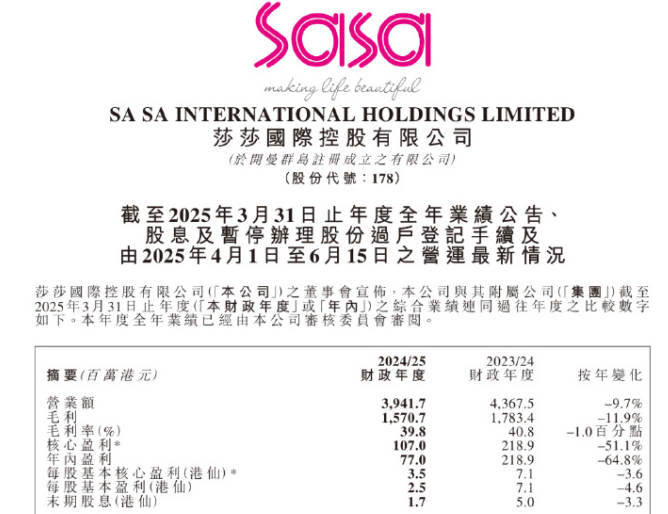
Core Viewpoint - Sa Sa International Holdings Limited reported a significant decline in revenue and profit for the fiscal year ending March 31, 2025, indicating challenges in its business operations and a shift in consumer behavior towards online shopping [1][2]. Financial Performance - The company achieved a revenue of HKD 3.942 billion, a year-on-year decrease of 9.7% [2]. - Net profit plummeted by 64.8% to HKD 76.973 million [1][2]. - The gross profit margin decreased by 1.0 percentage point to 39.8% [2]. Business Strategy and Market Position - Sa Sa International plans to close all 18 physical stores in mainland China by June 30, 2025, transitioning to a supplier model to focus on online sales [5]. - The decision to close physical stores is driven by the fact that over 80% of local revenue comes from online business, reflecting a consumer shift towards e-commerce [5]. - The company aims to enhance its presence on popular social media platforms and digital channels, utilizing live streaming and mini-programs to boost brand visibility and competitiveness [5]. Operational Challenges - The company's online shopping platforms, such as its WeChat mini-program, have faced operational issues, including a closure announcement and long delivery times for products shipped from Hong Kong [5][7]. - Despite a recent sales increase of 4.5% to HKD 811.2 million for the latest fiscal quarter, the company still lags behind competitors in online market positioning [10].
莎莎国际关闭内地所有门店,多家美妆巨头业绩失速,下滑明显
Sou Hu Cai Jing· 2025-06-26 13:35
Core Viewpoint - Sasa International Holdings Limited has announced plans to close all offline stores in mainland China by June 30, 2025, shifting focus to online sales due to declining profitability in physical retail [1][3]. Group 1: Company Performance - Sasa International, established in 1978, is a prominent beauty retail group in Asia, listed on the Hong Kong Stock Exchange since 1997, with operations in Hong Kong, Macau, mainland China, and Southeast Asia, offering over 600 product brands [2]. - For the fiscal year ending March 31, 2025, Sasa reported a 9.7% year-on-year decline in total revenue to HKD 3.942 billion, with net profit plummeting 64.8% to HKD 76.97 million [2]. - Online sales in mainland China reached HKD 418 million, a slight increase of 0.6% year-on-year, accounting for 58.4% of the group's total online revenue [2]. Group 2: Strategic Shift - The decision to close offline stores is driven by the inability to effectively cover the vast mainland market with only 18 stores, alongside the fact that online sales constitute 80% of the group's revenue in mainland China [3]. - Sasa International plans to concentrate resources on online business, having already established seven third-party online platforms in mainland China, with improving profitability in recent years [3]. Group 3: Market Outlook - Sasa International remains optimistic about retail performance in Hong Kong and Macau, despite a 12.3% decline in revenue to HKD 2.9918 billion for the fiscal year 2024/25 [7]. - The company anticipates a recovery in foot traffic and sales in the Hong Kong and Macau markets due to government initiatives to stimulate tourism, with a narrowing decline in offline sales from 19.4% in the first half to 6.3% in the second half of the fiscal year [7]. - The company will continue to seek suitable locations for new stores in traditional tourist areas to serve both local and mainland customers [7].

退场!港妆老牌莎莎关闭内地所有线下店,公司回应“集中资源做线上业务”
Hua Xia Shi Bao· 2025-06-26 05:53
Core Viewpoint - Sasa International, a Hong Kong beauty retail chain, is officially exiting the mainland China market by closing all offline stores by June 30, 2023, due to ineffective market coverage and a shift towards online sales, which account for 80% of its revenue in the region [1][2][3] Group 1: Company Performance - As of March 31, 2023, Sasa International reported a 9.7% year-on-year decline in total revenue to HKD 3.942 billion, with net profit dropping 65% to HKD 76.97 million [2] - The company's mainland China business saw a 10.5% decrease in revenue to HKD 521 million, resulting in a loss of HKD 44.95 million [2] - Sasa has estimated and accrued severance costs of HKD 17.224 million and compensation for early lease termination of HKD 3.01 million related to the closure of its mainland stores [2] Group 2: Market Dynamics - The beauty retail landscape in mainland China has changed significantly, with e-commerce becoming the primary sales channel and domestic brands gaining market share due to competitive pricing and innovation [4][5] - Sasa's offline store model failed to adapt to the e-commerce impact, leading to high operational costs and inefficiencies [4][5] - The company plans to focus on online platforms, having expanded its presence to seven major third-party platforms, including Kuaishou and Pinduoduo, in the 2024/25 fiscal year [5] Group 3: Strategic Focus - Sasa International aims to concentrate resources on the Hong Kong market, where over 80% of its sales are generated, and will continue to seek suitable locations for new stores in traditional tourist areas [3] - The company acknowledges the need for a digital transformation and intends to enhance its online operations while monitoring changes in the mainland market [3][4]
事关政府采购,三部门最新发布!哈啰进军Robotaxi;杜超出任小鹏汇天CFO→
新华网财经· 2025-06-24 00:26
Government Procurement and Regulatory Updates - The Ministry of Finance, Ministry of Public Security, and State Administration for Market Regulation issued a notice on June 23 to conduct a special rectification of four types of illegal activities in government procurement from June this year to January next year, aiming to standardize the market order [4] - The National Medical Products Administration approved measures to support the innovation and development of high-end medical devices [4] Industry Development Plans - The Ministry of Industry and Information Technology and nine other departments released the "Implementation Plan for High-Quality Development of the Gold Industry (2025-2027)", targeting a 5%-10% increase in gold resource volume and over 5% growth in gold and silver production by 2027 [5] Market Regulation and Initiatives - The State Administration for Market Regulation launched two new query functions in the antitrust business system for operators to check unconditional approval cases and simplified case public lists [6] - The Guangzhou Municipal Government issued a three-year action plan to promote the development of the intelligent connected new energy vehicle industry, aiming for significant transformation by 2027 [6] Energy Sector Statistics - The National Energy Administration reported that from January to May, the total installed power generation capacity reached 361 million kilowatts, a year-on-year increase of 18.8%, with solar power capacity growing by 56.9% [6] Market Trends and Stock Performance - The Hong Kong "Stablecoin Regulation" will take effect on August 1, establishing a strict licensing system for stablecoin issuers, leading to active stock performance in related companies [8] - The solid-state battery concept continues to gain traction, with companies like XINWANDA and YIWAI LITHIUM ENERGY making significant advancements [8] - As of June 20, the net subscription amount for innovative drug-themed ETFs reached 3.54 billion yuan, indicating strong interest from public funds [9] Corporate Developments - Xiaomi announced the launch of the YU7 model on June 26, along with other new products [13] - Alibaba's CEO announced the integration of Ele.me and Fliggy into the Alibaba China e-commerce business group [13] - Tesla's Robotaxi pilot program officially launched in Austin, Texas, with initial operations limited to a small fleet [13] - Meituan is expanding its instant retail business to enhance service quality [13] - Sasa International Holdings will close its last 18 offline stores in mainland China by June 30, marking its exit from the market [17] - Zhongtong Airlines was established with a registered capital of 600 million yuan, aiming to expand into air freight [17] - Shanghai Zhaoxin Integrated Circuit Co., Ltd. has received approval for its IPO application on the Sci-Tech Innovation Board, aiming to raise 4.169 billion yuan [18]