
飞行汽车

Search documents
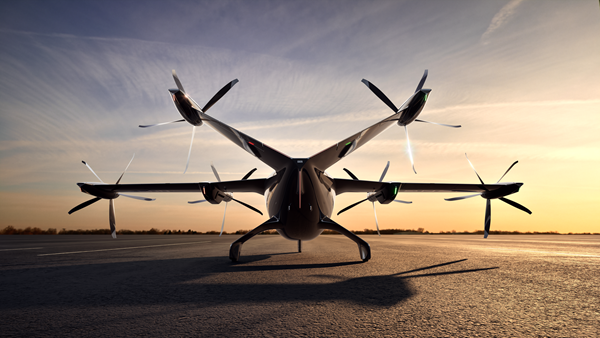
汇天发布全倾转混电飞行汽车
Zhong Guo Min Hang Wang· 2025-11-06 11:20
Core Insights - The event themed "Emergence" showcased the A868 fully tilting hybrid electric flying car and announced the upcoming mass production of the "Land Carrier" flying car, marking a new era in low-altitude travel [1] Group 1: Product Development - The A868 features a self-developed Kunpeng power system, with an expected range exceeding 500 kilometers and a maximum speed of 360 kilometers per hour, designed for both business and family travel needs [2] - The prototype of the A868 completed its first test flight in November 2023 and is currently in a critical flight verification phase [2] Group 2: Manufacturing Capabilities - The mass production factory for the "Land Carrier" flying car began trial production on November 3, 2023, successfully rolling out the first unit [2] - This factory, the world's first modern assembly line for flying cars, has an annual production capacity of 10,000 units, with an initial capacity of 5,000 units, aiming to produce one flying vehicle every 30 minutes upon reaching full capacity [2] Group 3: Research and Development - The company emphasizes a fully self-researched development path, achieving breakthroughs in four core technology areas: power systems, flight control, composite materials, and aerial intelligence [3] - The team consists of over 1,600 members, with 80% in R&D and more than 40% holding master's or doctoral degrees, holding over 1,000 patent applications related to flying cars [3] Group 4: Future Plans - The company plans to establish over 200 flying camps nationwide by 2026, covering major cities and popular self-driving routes [3] - The first flying camp is expected to be operational by July 2026, enhancing travel experiences by integrating aerial and ground travel [3]

定位面向全球的具身智能公司 小鹏科技日公布物理AI涌现成果
Zheng Quan Ri Bao· 2025-11-06 07:39
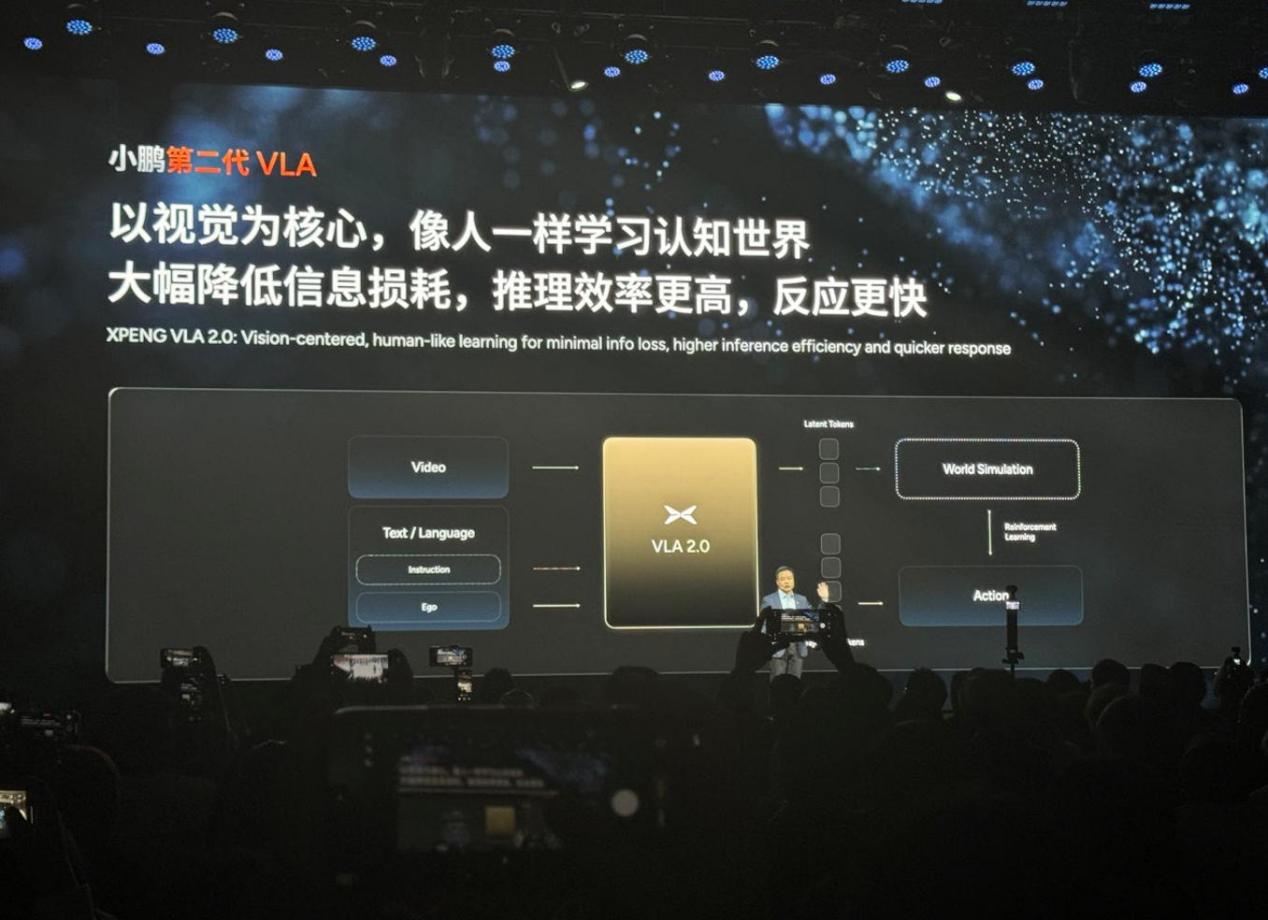
Core Insights - Xiaopeng Motors has officially redefined its positioning as a "global embodied intelligence company exploring mobility in the physical AI world," marking a transition from a traditional automaker to a multi-domain embodied intelligence enterprise [2] Group 1: Technological Breakthroughs - The second-generation VLA represents a significant advancement by eliminating the "language translation" step, enabling direct generation of action commands from visual signals, thus becoming Xiaopeng's first mass-produced physical world model [3] - The second-generation VLA is supported by a cloud computing cluster with 30,000 cards, maintaining over 90% operational efficiency, and has deployed a model with 720 billion parameters that can iterate every five days [3] - The training data for the second-generation VLA consists of nearly 100 million clips of real driving videos, equating to the extreme scenarios encountered by human drivers over 65,000 years [3] Group 2: Product Development and Commercialization - Xiaopeng plans to launch three models of Robotaxi in 2026, equipped with four Turing AI chips, achieving a vehicle-side computing power of 3000 TOPS, and utilizing a pure vision solution without relying on LIDAR or high-definition maps [6] - The new generation of the IRON humanoid robot features 82 degrees of freedom and is designed for various body types, with a focus on commercial applications such as guiding and inspection [7][8] - The flying car "A868" is designed for multi-passenger business travel, with a range of 500 km and a maximum speed of 360 km/h, currently in the critical phase of flight verification [8][9] Group 3: Production and Operational Capacity - The flying car production facility has commenced trial production, with the first land carrier rolling off the line, aiming for an annual production capacity of 10,000 vehicles [9] - Xiaopeng has established a data factory in Guangzhou to address the lack of training data and is opening its SDK to attract global developers for ecosystem building [8][9]

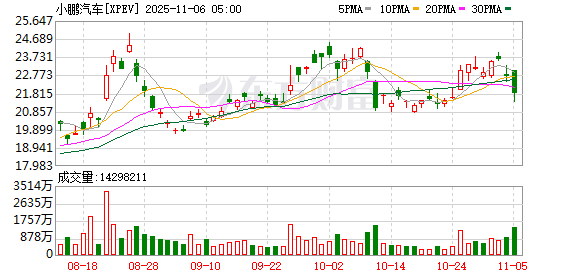
小鹏汽车科技日
数说新能源· 2025-11-06 07:05
Group 1: Second Generation VLA Progress - The second generation VLA physical world model eliminates the need for language as an intermediary, enhancing reasoning efficiency and translation speed through human-like cognition, allowing for larger model parameters and higher frame rates [1][11] - Development of the first generation VLA has ceased as of Q2, with increased focus on the second generation [1][13] - The second generation VLA boasts a parameter count 10 times that of competitors, with testing results surpassing FSD V13.2.9 [1][14] - A small road/park NGP is set to launch, with pioneer user experiences planned for December 2025 and full deployment in ultra models by Q1 2026 [1][16] - The second generation VLA will be open-sourced to global commercial partners, with a new mass-produced vehicle from Volkswagen China set to feature the second generation VLA [1][17] Group 2: Robotaxi Development - Three Robotaxi models are scheduled for launch in 2026, featuring fully self-developed hardware and software, capable of operating in unrestricted areas [1][22] - Hardware configuration includes four Turing chips (three at 2250 TOPS and one at 750 TOPS for redundancy) [1][22] - An SDK will be made available, with Gaode as the first global ecosystem partner, aiming for a large-scale operation of tens of thousands [1][23] Group 3: Humanoid Robots - The humanoid robot project involves over 1,000 personnel across 10 R&D teams and 20 collaborating departments, with direct involvement from the founder [1][27] - The humanoid robot will feature three Turing AI chips (2250 TOPS), a solid-state battery, and 22 degrees of freedom in each hand, with a total of 82 joints [2][28] - Initial applications will focus on exhibition and sales environments, with a partnership established with Baosteel for inspection scenarios [1][39] Group 4: Flying Cars - The A868 model has entered the test flight phase, featuring an aviation-grade hybrid system with a range exceeding 500 kilometers and a speed of 360 kilometers per hour [1][3] - The land carrier model has received over 7,000 orders [1][4] - Plans are in place to establish low-altitude flight camps and a flagship store for flying cars, with training for exclusive flying licenses [1][42]

小鹏科技日分享物理AI涌现成果 第二代VLA大模型与三大具身智能产品齐发
Zhong Guo Zhi Liang Xin Wen Wang· 2025-11-06 03:26
Core Insights - The 2025 XPeng Technology Day showcased the company's advancements in "Physical AI" and its applications in future mobility [1][3] - XPeng's CEO announced a strategic shift in positioning to become a "global embodied intelligence company" focused on Physical AI [3][5] Group 1: Technology Developments - Four key applications of Physical AI were unveiled: the second-generation VLA, Robotaxi, the new generation IRON, and two flight systems [3][5] - The second-generation VLA is designed to directly generate action commands from visual signals, eliminating the traditional language translation step [10][12] - XPeng has developed a comprehensive self-research Physical AI system covering chips, operating systems, and smart hardware, which will support various intelligent vehicles [7][12] Group 2: Product Launches - The second-generation VLA will enhance the performance of complex driving scenarios, with a 13-fold increase in average takeover mileage [15] - XPeng plans to launch three Robotaxi models in 2026 and initiate trial operations [18][20] - The new generation IRON robot features advanced humanoid design and capabilities, with plans for mass production by the end of 2026 [30][32] Group 3: Market Strategy - XPeng aims to open-source the second-generation VLA to accelerate global applications and ecosystem development [18] - The company is collaborating with partners like Didi to build a Robotaxi ecosystem [26] - XPeng is also venturing into low-altitude economy with its flying vehicles, including the A868, which is currently in the flight verification phase [34][36] Group 4: Future Outlook - XPeng's new headquarters and smart manufacturing plant will open in December, showcasing its commitment to technological innovation [42] - The company is focused on creating a robust ecosystem for its humanoid robots and flying vehicles, aiming for widespread commercial applications [32][40]
小鹏汽车的AI野心:明年量产无人出租、机器人和飞行汽车
Nan Fang Du Shi Bao· 2025-11-06 02:22
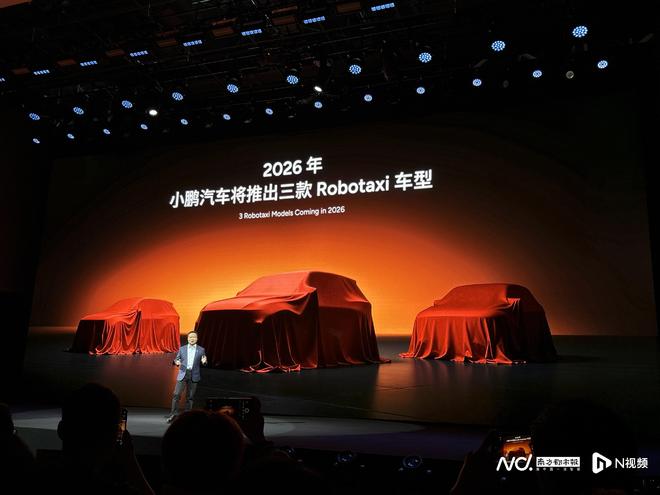
Core Insights - Xiaopeng Motors plans to achieve mass production of three major product lines: Robotaxi, humanoid robots, and the split flying car "Land Aircraft Carrier" by next year [1][10] - The upgraded second-generation VLA (Vision-Language-Action) intelligent driving model will also be implemented next year, enhancing efficiency by directly converting visual signals into motion instructions without language translation [1] - Xiaopeng has partnered with Volkswagen as the first strategic partner for the second-generation VLA model, with its self-developed Turing AI driving chip selected as a supplier [1] Robotaxi Development - Xiaopeng Motors aims to launch three Robotaxi models next year and initiate trial operations in cities like Guangzhou [2] - The company has been exploring the Robotaxi business since 2021, with its G9 model obtaining road testing licenses in Guangzhou [4] - Xiaopeng's Robotaxi will not rely on high-precision maps or LiDAR, instead using a pure vision-based approach to navigate various road types and traffic environments [5] Humanoid Robot Insights - The new IRON humanoid robot will be launched in November 2024, featuring a more human-like appearance and advanced capabilities [7] - The IRON robot will utilize solid-state batteries, which offer higher energy density and safety compared to traditional lithium-ion batteries [8] - The initial application scenarios for the IRON robot are limited to guiding, shopping, and inspection, with challenges in manufacturing and home environments [9] Flying Car Developments - The "Land Aircraft Carrier" flying car has successfully completed its first production run, with a planned annual production capacity of 5,000 units initially, scaling up to 10,000 [10] - The flying car can carry two passengers and has received over 7,000 global orders, with plans for commercial operations in the Middle East [10][11] - A new hybrid electric flying car capable of carrying six passengers and achieving a range of 500 kilometers is set to enter trial flights in 2025 [11] Competitive Landscape - The flying car sector may see increased competition as Tesla's CEO Elon Musk hinted at the potential release of a flying car by the end of 2025, which could position Xiaopeng Motors against Tesla in this emerging market [13]

打通全部生态“涌现”的2025小鹏科技日
Xin Lang Cai Jing· 2025-11-05 14:36
Core Insights - The 2025 Xpeng Technology Day showcased significant advancements in "Physical AI," highlighting four key applications with clear mass production plans, indicating that "Physical AI" is becoming a tangible reality rather than a distant concept [1][3][5] Group 1: Company Positioning and Strategy - Xpeng's CEO announced a major shift in the company's positioning to become a "global embodiment intelligence company exploring mobility in the Physical AI world," supported by a comprehensive self-developed Physical AI system [3] - The second-generation VLA (Visual-Language-Action) represents a breakthrough by eliminating the traditional "language translation" step, enabling direct generation of action commands from visual signals [5][9] Group 2: Technological Advancements - The second-generation VLA operates on a robust "computing power + data" foundation, featuring a cloud computing cluster with 30,000 nodes and a base model with 720 billion parameters, ensuring rapid model iteration every five days [7] - The deployment of the second-generation VLA in vehicles is set to enhance intelligent driving performance, with the upcoming "Xiaolu NGP" feature expected to increase the average takeover mileage in complex environments by 13 times [9] Group 3: Product Development and Launch Plans - Xpeng plans to launch three Robotaxi models in 2026, utilizing four Turing AI chips for a total computing power of 3000 TOPS, which is among the highest globally [13] - The new generation of the IRON humanoid robot features advanced design and capabilities, including 82 degrees of freedom and the industry's first all-solid-state battery, addressing traditional robots' limitations in terms of endurance and safety [17][20] Group 4: Innovations in Aviation - Xpeng's Huitian has developed two flight systems, including a personal low-altitude flying vehicle and the A868, which is designed for efficient multi-passenger travel, with a projected range of 500 km and a maximum speed of 360 km/h [22] - The land carrier has received over 7,000 global orders, setting an industry record, and is on the verge of mass production, featuring innovative safety and operational designs [24]
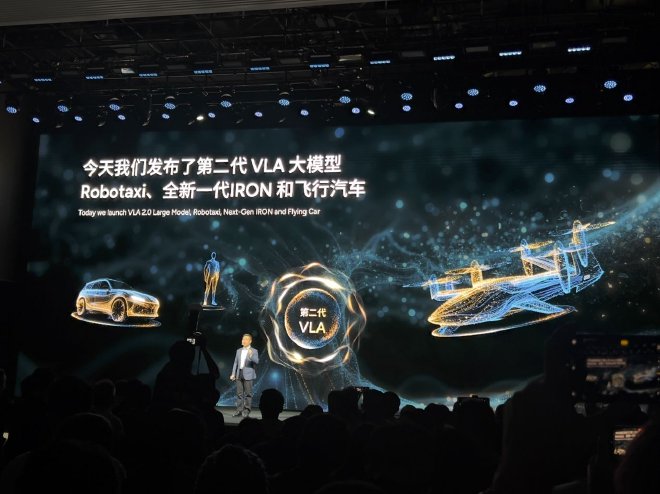
小鹏科技日发布第二代VLA大模型 三大具身智能产品集体进阶
2 1 Shi Ji Jing Ji Bao Dao· 2025-11-05 11:29
Core Insights - Xiaopeng Motors successfully held the 2025 Xiaopeng Technology Day in Guangzhou, unveiling four significant applications centered around "Physical AI," including the second-generation VLA, Robotaxi, the new generation of IRON, and two flight systems, all with clear mass production plans [1][5][18] - The company has repositioned itself as a "Explorer of Mobility in the Physical AI World, a Global Embodied Intelligence Company" [3][5] - Xiaopeng Motors has built a fully self-developed Physical AI system over nearly a decade, covering chips, operating systems, and smart hardware, which will support the deployment of AI vehicles, Robotaxi, humanoid robots, and flying cars [9][10] Technology Developments - The second-generation VLA was introduced as a groundbreaking model that eliminates the "language translation" step, enabling direct generation of action commands from visual signals, thus redefining the traditional V-L-A architecture [10][12] - Xiaopeng's cloud-based model has a massive scale with 720 billion parameters and achieves full-link iteration every five days, supported by a cloud computing cluster with 30,000 cards operating at over 90% efficiency [12][14] - The second-generation VLA can utilize vast amounts of real driving videos for training without manual data labeling, significantly enhancing its ability to handle rare scenarios [14][16] Product Launches - Xiaopeng Motors plans to launch three Robotaxi models in 2026, addressing current industry challenges such as high modification costs and limited operational scope [18][20] - The Robotaxi is designed for L4-level autonomous driving, featuring a high computing power of 3,000 TOPS and a dual-redundancy hardware architecture for safety [20][22] - The new generation of IRON humanoid robots was showcased, featuring advanced bionic structures and AI capabilities, aiming for mass production by the end of 2026 [24][26][28] Future Vision - Xiaopeng is constructing a low-altitude travel ecosystem with two flight systems: the land carrier for personal low-altitude flying and the A868 for efficient multi-passenger travel [32][31] - The company aims to launch the first low-altitude self-driving tourism route in Northwest China in 2026, enhancing the commercial application of flying cars [35] - Xiaopeng's new headquarters and technology park are designed to foster interdisciplinary innovation, with over 10,000 employees working across AI, automotive, robotics, and flying car sectors [35]
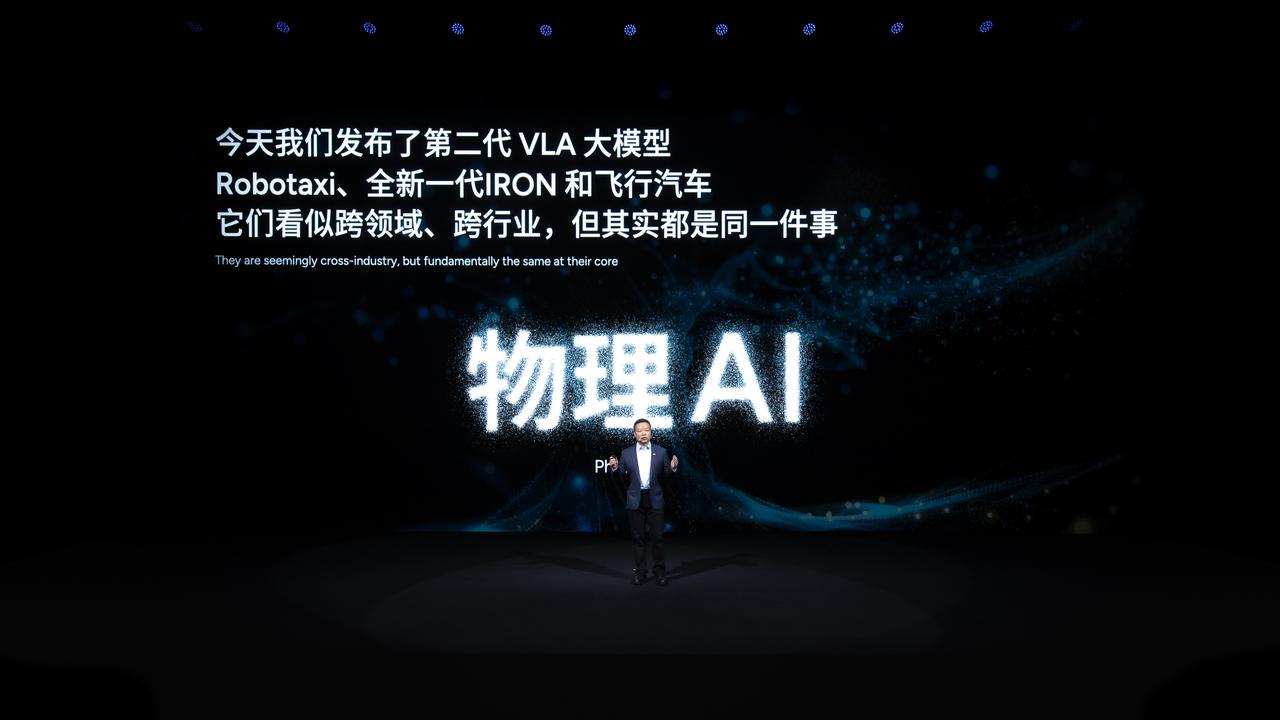
发布第二代VLA、Robotaxi、全新一代IRON和飞行汽车,小鹏科技日剑指物理AI
Zhong Guo Qi Che Bao Wang· 2025-11-05 10:33
Core Insights - Xiaopeng Motors held the 2025 Xiaopeng Technology Day, unveiling four key applications centered around "Physical AI," including the second-generation VLA, Robotaxi, the new generation of IRON, and two flight systems, all with clear mass production plans [1][3] - The company has redefined its positioning as a "global embodiment intelligence company exploring the Physical AI world" [1][3] Group 1: Technological Innovations - The second-generation VLA eliminates the "language translation" step, achieving direct generation from visual signals to action commands, thus exploring a new physical model paradigm [6][4] - Xiaopeng's second-generation VLA is the first mass-produced physical world model, capable of self-evolution and learning from real-world interactions, utilizing nearly 100 million clips of driving data for training [6][7] - The company has a cloud computing cluster with 30,000 cards, maintaining over 90% operational efficiency, and has deployed a model with 720 billion parameters, iterating every five days [6][7] Group 2: Robotaxi Development - Xiaopeng plans to launch three Robotaxi models in 2026, addressing current industry challenges such as high modification costs and limited operational scope [9][10] - The Robotaxi will feature four Turing AI chips, achieving a computing power of 3,000 TOPS, and will operate without relying on LiDAR or high-definition maps [9][10] - The Robotaxi will support low-latency interactions with the autonomous driving system, enhancing safety through a dual-redundancy hardware architecture [10][11] Group 3: Humanoid Robots - The new generation of IRON humanoid robots features a highly human-like design with 82 degrees of freedom and is equipped with three Turing AI chips, achieving a computing power of 2,250 TOPS [13][14] - Xiaopeng aims to achieve mass production of high-end humanoid robots by the end of 2026, leveraging its self-developed technology stack [14] - The humanoid robots will initially serve in commercial scenarios such as guiding and inspection, with SDKs open for global developers to build applications [14] Group 4: Aerial Mobility - Xiaopeng's new flying car, A868, is designed for personal low-altitude flight, with a range of 500 km and a maximum speed of 360 km/h, currently in the flight verification phase [17][18] - The company has established a production facility for flying cars, aiming for an annual capacity of 10,000 units, with the first unit successfully produced [17][18] - Xiaopeng plans to launch a low-altitude self-driving tourism route in collaboration with local governments in 2026, enhancing the application of flying cars in tourism [18]

巡航速度超360公里/小时!小鹏展示新款飞行汽车汇天A868
Xin Lang Ke Ji· 2025-11-05 05:48
Core Viewpoint - Xpeng Motors showcased its "Huitian A868 flying car" at the Technology Day, positioning it as a high-end future transportation tool [1][3] Group 1: Product Features - The flying car is equipped with full tilt-rotor technology, allowing it to take off and land vertically like a helicopter while cruising efficiently at high speeds like a fixed-wing aircraft [3] - It supports a hybrid power system, utilizing both oil and electricity, which aims to balance long-range capabilities with performance [3] - The design target for the flying car's range exceeds 500 kilometers, indicating its potential for intercity routes rather than just short urban travel [3] Group 2: Performance Metrics - The cruising speed of the flying car is designed to exceed 360 kilometers per hour, significantly faster than ground transportation, which could greatly reduce travel time [3]
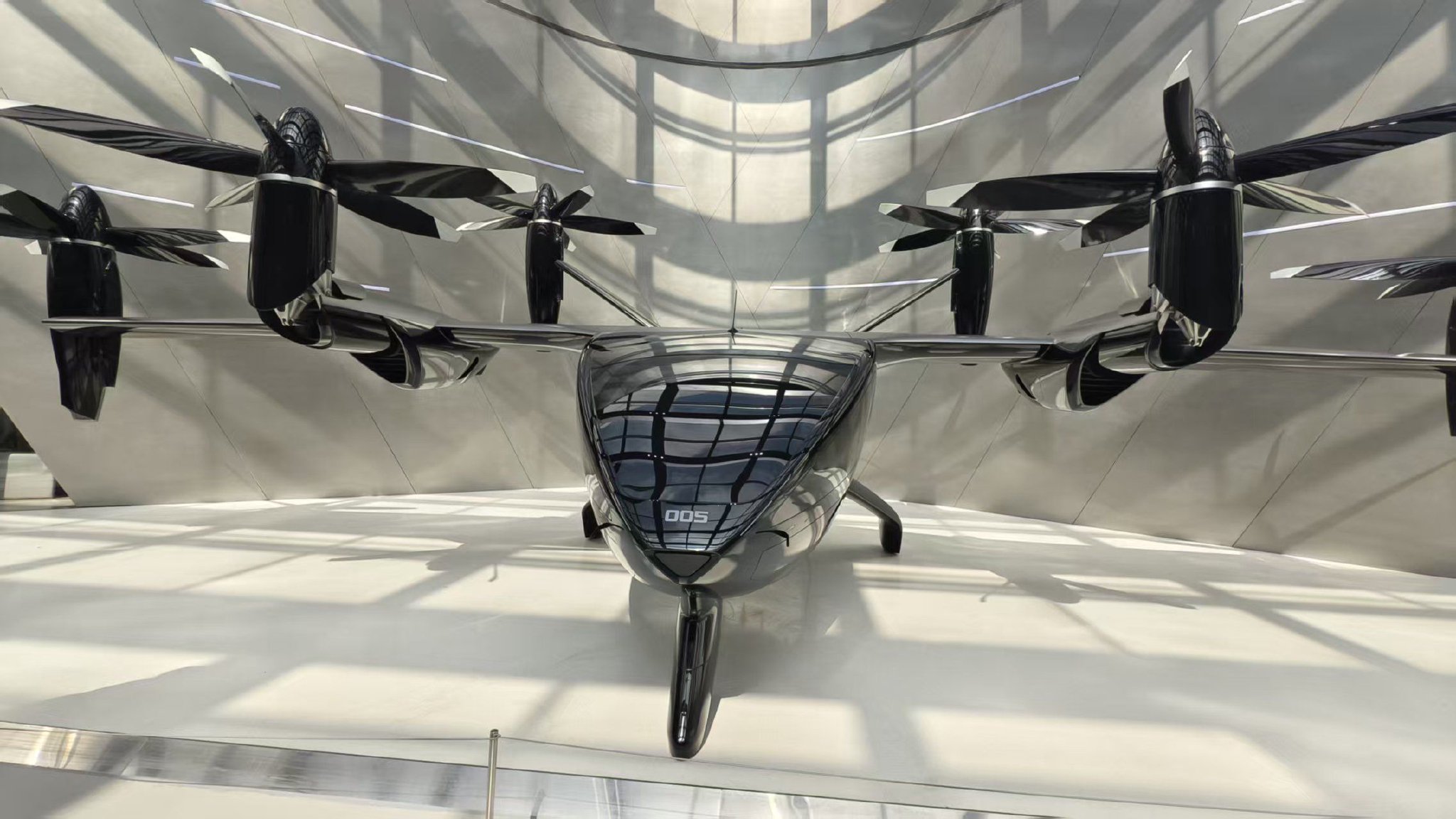
全球首个飞行汽车量产工厂试产
Qi Lu Wan Bao· 2025-11-04 16:02
Core Insights - The production facility for flying cars located in Guangzhou has successfully completed its trial production and has rolled out the first "land aircraft carrier" flying vehicle, marking the world's first production line for flying cars [1] Group 1: Production Milestone - The facility represents the first global production line for flying cars that utilizes a modern assembly line for mass production [1] - The first mass-produced split-type flying car, known as the "land aircraft carrier," features a split design consisting of a land vehicle and an aircraft [1] Group 2: Vehicle Design and Capabilities - The land vehicle, referred to as the "land mother ship," is designed with a three-axis six-wheel configuration, enabling 6×6 all-wheel drive and rear-wheel steering [1] - The vehicle is noted for its strong load-bearing capacity and off-road capabilities [1]