
高新技术产业

Search documents
擦亮自贸港建设的惠民底色(人民时评)
Ren Min Ri Bao· 2025-10-15 22:07
Group 1 - Hainan has launched a series of new initiatives under the "duty-free +" concept during the recent National Day and Mid-Autumn Festival holidays, effectively meeting diverse consumer needs and showcasing the achievements of the free trade port construction [1] - The upcoming full island customs closure in Hainan is expected to bring significant changes in customs supervision and tax collection systems, creating real opportunities and benefits for businesses and the public [1] - The expansion of the "zero tariff" product range to approximately 6,600 tax items is a key feature of the customs closure operation, which will also include reforms such as overseas certification trials and tax incentives for high-tech industries [1] Group 2 - Systematic improvements in people's livelihoods are fundamentally reliant on development, ensuring that more individuals and businesses benefit from the customs closure operations [2] - The focus on developing future industries such as seed industry, deep-sea, and aerospace, along with high-efficiency tropical agriculture, is expected to enhance the quality of life for both local residents and incoming talent [2] - The establishment of a market-oriented, legal, and international business environment is crucial for stimulating internal motivation and innovation, with reforms aimed at reducing human intervention in administrative processes [3]
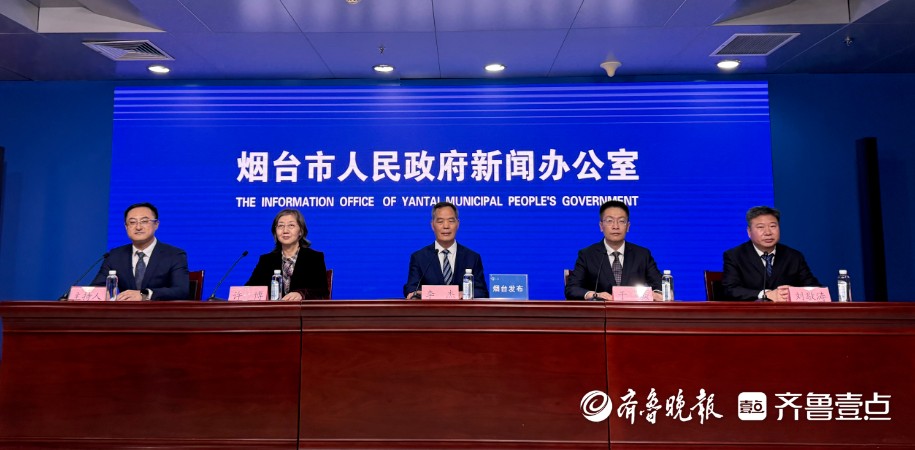
总量翻番!“十四五”期间,烟台高新技术企业增长到2523家
Qi Lu Wan Bao Wang· 2025-10-14 06:52
Core Viewpoint - Yantai City is focusing on technological innovation and industrial upgrading during the "14th Five-Year Plan" period, with significant investments and projects aimed at enhancing the core competitiveness of its industries [3][4]. Group 1: Technological Innovation and Support - Yantai has organized 99 major technological innovation projects with a funding of 182 million yuan during the "14th Five-Year Plan" period, and is striving to implement 61 provincial major innovation projects with a total funding of 614 million yuan [3]. - The city is concentrating on eight key areas for technological breakthroughs, including advanced manufacturing and green low-carbon technologies, and has developed a list of around 300 critical technology needs to guide research efforts [3]. Group 2: Growth of Technology Enterprises - The number of high-tech enterprises in Yantai has increased from 1,120 to 2,523, effectively doubling during the "14th Five-Year Plan" period, while technology-based small and medium-sized enterprises grew from 2,861 to 4,317, achieving an annual growth rate of 14.7% [4]. - High-tech industries now account for 63.78% of the total industrial output value, which is 10.46 percentage points higher than the provincial average [4]. Group 3: Industrial Platform Development - Yantai has established 447 provincial-level and above scientific innovation platforms, with 15 key industrial chains having dedicated innovation platforms, including 13 with national-level platforms [5]. - The city has successfully restructured key laboratories and innovation centers, achieving breakthroughs in critical technologies and launching 16 innovative drugs [5].

工信部开展制造业企业融资需求征集工作 强化科技成果转化和产业化融资服务
Zheng Quan Ri Bao· 2025-10-12 15:41
Core Viewpoint - The Ministry of Industry and Information Technology (MIIT) has initiated a financing demand collection for manufacturing enterprises, aiming to enhance collaboration with financial institutions and improve financing efficiency for these companies [1][2]. Group 1: Financing Demand Collection - The MIIT's notification targets manufacturing enterprises with various financing needs, including credit, bonds, equity, insurance, and mergers and acquisitions [1]. - The MIIT will collaborate with the People's Bank of China and provincial industrial departments to share enterprise data and identify companies facing financing challenges [1][2]. Group 2: Support for Technology and Innovation - The initiative emphasizes strengthening financing services for the transformation and industrialization of technological achievements, including comprehensive financial service models like "pilot insurance + R&D loans" [1]. - The MIIT aims to integrate financial services with high-level manufacturing pilot platforms and incubators to promote innovation [1]. Group 3: Tailored Financial Solutions - The initiative includes dedicated follow-up for key enterprises and collaboration with industry associations to provide diverse financing tools suitable for different stages of enterprise development [2]. - For regions with concentrated financing needs, the MIIT will promote innovative financial products and services tailored to local conditions, enhancing the accessibility and convenience of financing for enterprises [2].
科技自立自强迈上新台阶
Jing Ji Ri Bao· 2025-10-01 23:05
Group 1 - The core viewpoint emphasizes that the key to China's modernization lies in technological modernization, with a strong focus on self-reliance in technology [1] - The "14th Five-Year Plan" period is highlighted as a milestone for China's technological development, aiming to build a strong technological nation by 2035 [1] - Significant achievements in China's technological sector are noted, including a steady increase in R&D investment and a rise in the number of high-level international research papers and patents [1][2] Group 2 - The number of personnel in basic research has grown from 472,000 in 2021 to 575,000 in 2023, indicating a robust talent pool [2] - China's national innovation index ranking improved from 14th in 2020 to 10th in 2024, reflecting enhanced overall effectiveness of the national innovation system [2] Group 3 - The integration of innovation chains and industrial chains has accelerated, with high-tech manufacturing value-added increasing by 42% compared to the end of the "13th Five-Year Plan" [3] - The contribution of the "three new" economies to GDP reached 18%, with significant advancements in AI, biotechnology, and other frontier fields [3] - The number of high-value invention patents per 10,000 people reached 15.3, and China has 343 unicorn companies, ranking second globally [3] Group 4 - The reform of the technological system has deepened, with pilot programs for technology transfer leading to a cumulative contract amount of 12.09 billion yuan, a 126.5% increase compared to the previous three years [4] Group 5 - The scale of re-loans for technological innovation and technological transformation has increased to 800 billion yuan, with a reduced interest rate of 1.5% [5] - The market capitalization of the A-share technology sector exceeds 25%, with an increase in the number of technology companies among the top 50 by market value [5] Group 6 - The restructuring of the technology management system has highlighted the advantages of a new national system, with enhanced coordination between central and local governments [6] - China has made significant strides in major technological infrastructure and original achievements, such as the discovery of over a thousand pulsars by the "Chinese Sky Eye" [6] Group 7 - The rapid development of international and regional technology innovation centers has strengthened the overall progress of other regions, providing robust support for building a technological powerhouse [7] - The next five years are deemed critical for achieving the goal of becoming a technological powerhouse, with a focus on enhancing investment in scientific research and innovation [7]
20cm速递|科创板100ETF(588120)盘中涨超3%,机构:资本市场服务科技创新的步伐不断加快
Mei Ri Jing Ji Xin Wen· 2025-09-30 06:58
Group 1 - The capital market is increasingly supporting technological innovation, with the proportion of technology sector market capitalization in A-shares exceeding 25%, significantly higher than the combined market capitalization of the banking and real estate sectors [1] - The number of technology companies among the top 50 by market capitalization has increased from 18 at the end of the 13th Five-Year Plan to 24 currently, indicating a growing emphasis on technology innovation within the capital market [1] - The STAR 100 ETF (588120) tracks the STAR 100 Index (000698), which has seen a price fluctuation of 20%, reflecting the performance of 100 large-cap, liquid securities in high-tech and strategic emerging industries [1] Group 2 - The STAR 100 Index includes companies from sectors such as new generation information technology, biomedicine, and new materials, showcasing the overall performance of quality enterprises in the STAR market [1]
广东省区域创新能力蝉联全国第一,实现“九连冠”
Zhong Guo Fa Zhan Wang· 2025-09-30 06:41
Core Insights - Guangdong has maintained its position as the top region in China's innovation capability for nine consecutive years, with a score of 68.11, significantly higher than the second-ranked region at 57.15 [1][2] - The "Shenzhen-Hong Kong-Guangzhou" technology cluster has ranked first in the global top 100 innovation clusters, highlighting Guangdong's strong innovation ecosystem [1] - Key indicators such as the number of high-tech enterprises, R&D expenditure intensity, and new product sales revenue all rank first in Guangdong, demonstrating the province's vibrant innovation performance [1] Summary by Categories Innovation Capability - The "China Regional Innovation Capability Evaluation Report 2025" serves as an annual assessment of regional innovation capabilities across the country [1] - Guangdong ranks first in enterprise innovation and innovation environment, second in innovation performance and knowledge creation, and fourth in knowledge acquisition [1] Investment in R&D - Guangdong's R&D expenditure has surpassed 510 billion yuan, leading the nation with an R&D intensity of 3.6% [2] - The province's focus on innovation is reflected in its top rankings for fiscal science and technology spending, invention patent authorizations, and education funding [2] Support for Innovation - The report indicates that Guangdong has strengthened the role of enterprises in driving innovation and has continuously improved its regional innovation system [2] - The ongoing development of the Guangdong-Hong Kong-Macao Greater Bay Area as an international technology innovation center is supported by the province's strong performance in key technological indicators [2]
广东区域创新能力实现“九连冠”
Shen Zhen Shang Bao· 2025-09-28 06:43
Group 1 - Guangdong has achieved the top position in regional innovation capability in China for the ninth consecutive year, according to the "China Regional Innovation Capability Evaluation Report 2025" [1] - The report evaluates regional innovation capabilities based on five primary indicators, with Guangdong ranking first in enterprise innovation and innovation environment, and second in innovation performance and knowledge creation [1] - Guangdong's R&D expenditure has surpassed 510 billion yuan, maintaining the highest level in the country, with an R&D intensity of 3.6% [1] Group 2 - The Guangdong-Hong Kong-Macao Greater Bay Area has established multiple major scientific infrastructure projects, including 45 national key laboratories [2] - Guangdong's enterprises have shown strong performance in innovation, ranking first in design capability and technology enhancement, with 77,000 high-tech enterprises contributing significantly to innovation [2] - The "Zhuo Yue" plan has been implemented to strengthen foundational research, allocating over one-third of provincial science and technology innovation funds to basic research [3]
《中国区域创新能力评价报告2025》发布江苏保持全国第二,创新能力全面均衡
Xin Hua Ri Bao· 2025-09-27 23:01
Core Insights - Jiangsu ranks second in the national regional innovation capability, with a narrowing gap from Guangdong, which holds the top position [1] - The report highlights Jiangsu's balanced innovation capabilities across five primary indicators, with the province scoring above 50 in all categories [1] - Jiangsu's overall innovation performance score has improved to first place this year, reflecting significant advancements in various metrics [2] Group 1: Innovation Performance - Jiangsu's innovation performance score has risen from second to first place this year [2] - The province ranks second nationally in high-tech industry employment, sales revenue from new high-tech products, high-tech product exports, and tertiary industry added value [2] - Jiangsu maintains third place in knowledge creation, knowledge acquisition, and innovation environment, while holding second place in enterprise innovation [2] Group 2: Innovation Infrastructure - Jiangsu has established a series of innovation highlights, including special funds for basic research and the construction of three major provincial basic science centers [3] - The province has successfully developed the world's first multi-electrode vascular ablation device and the largest unmanned cargo aircraft [3] - Jiangsu leads the nation with over 57,000 high-tech enterprises and the highest number of newly recognized unicorn and potential unicorn companies [3]
江苏保持全国第二,创新能力全面均衡
Xin Hua Ri Bao· 2025-09-27 21:45
Core Insights - Jiangsu ranks second in regional innovation capability in China, with a narrowing gap to Guangdong, which holds the top position [1] - The report highlights Jiangsu's balanced innovation capability, being the only province with all five primary indicators scoring above 50 points [1] - Jiangsu's innovation performance has improved, moving from second to first place overall in 2023 [2] Group 1: Innovation Performance - Jiangsu's scores in high-tech industry employment, high-tech product sales revenue, high-tech exports, and tertiary industry value added all rank second nationally [2] - The province leads in several foundational indicators, including the number of technology incubators and the number of graduated companies from these incubators [2] - Jiangsu's innovation environment and enterprise innovation capabilities are continuously improving, with the province maintaining a strong entrepreneurial atmosphere [2] Group 2: Innovation Highlights - Jiangsu has established special funds for basic research and is developing three major provincial centers for basic science [3] - The province has achieved significant technological milestones, including the global first discovery of the graviton and the development of the world's first multi-electrode vascular ablation device [3] - Jiangsu is home to over 57,000 high-tech enterprises and has the highest number of new unicorns and potential unicorns in the country [3]
8小时速抵59个国家和地区,这座海岛何以“圈粉”全球?
Jin Rong Shi Bao· 2025-09-23 09:23
Core Insights - Hainan is positioned as a significant hub for international trade and tourism, with its free trade port construction entering a critical phase, aiming for full island closure operations within three months [1][4][6] - The island's duty-free shopping sector has matured, with a total of 12 duty-free stores covering major cities, and has seen over 200 billion yuan in shopping amounts since the new policies were implemented [2][3] - Hainan's economic growth is driven by a robust consumer market, with retail sales reaching 176.2 billion yuan in the first eight months of 2025, growing 9.6% year-on-year, outperforming the national average [3][6] Duty-Free Shopping and Consumer Trends - Hainan has established a comprehensive duty-free shopping landscape with 7 operators and 12 stores, covering over 500,000 square meters [2] - New delivery methods such as "mail delivery" and "immediate pick-up" have been introduced to enhance consumer convenience [2] - The cumulative shopping amount in the duty-free sector has surpassed 2.5 trillion yuan, accounting for over 68% of the national market [3] Policy and Regulatory Developments - The announcement of full island closure operations on December 18 has led to the implementation of key policies, including a significant expansion of the zero-tariff product list from 1,900 to approximately 6,600 items [4][5] - A smart customs supervision platform has been launched to support efficient customs operations post-closure [4] Foreign Investment and Economic Growth - Hainan has attracted significant foreign investment, with actual foreign capital usage reaching 102.5 billion yuan over five years, growing at an annual rate of 14.6% [6] - The province has seen a substantial increase in foreign direct investment, with a year-on-year growth of 97% [6] Industrial Development and Innovation - Hainan is focusing on building a modern industrial system, with GDP reaching 370.2 billion yuan in the first half of the year, and industrial output value growing by 11.4% [8] - The province is enhancing its industrial structure, with key sectors such as tourism, modern services, high-tech industries, and tropical agriculture contributing significantly to economic growth [8][9] - Hainan has established itself as a center for commercial aerospace, with successful rocket launches and the development of a commercial launch site [7][8]